

My critique would be this: we must take him at his word. He devotes some two score pages to a description of the Enlightenment (primarily the French Enlightenment; in the sections about the individual Founders, the Scottish Enlightenment gets many nods, but not so much here, though the distinctly non-French Kant does get a few mentions). In the 80-100 pages each of the figures gets, he describes their take on (and sometimes rejection of) various strands of Enlightenment.
But he does not much quote from them. Yes, he has extensive citations, but not owning all those primary sources (and also having a job and a family which takes up some of my time), I must accept his interpretations and assessments at face value. And, as I mentioned, I’m not one hundred percent on his vision of the Enlightenment (which sometimes bleeds into early Romanticism).
But on those assertions.
Adams, he claims, saw class conflict, as vital. It was the tension which preserves the Republic. If the aristocratic elite become too dominant, you have baronial oligarchy. If the masses win, some charismatic general, a la Napoleon, takes power. Interesting and also begging for some contemporary commentary (where he have a populist who simultaneously works to put the economic oligarchs in power).
One nearly unforgivable statement is that he writes it is ‘probable but not certain’ that Jefferson fathered Sally Hemming’s children, which is true (though by 2005, when this book was published, it would have already been more to say it is ‘nearly certain and widely accepted’), but what makes it so frustrating for me and what makes me question him, is that he goes on to cite the theory that it could have been his younger brother. That is a canard that had been used by unscrupulous historians and pseudo-historians for years to try and deny the heritage of his descendants by Hemmings. What makes this so much more frustrating is that Staloff is unstinting in pointing out the racism that undergirded too much of Jefferson’s public life, including how his own actions to drive American Indians (oh, and why does he insist in writing ‘Amerindian?’) from their land lay the foundation for Andrew Jackson’s later, genocidal actions.
In general, it was about Adams that I learned the most (though my trust in what he writes was deeply shaken by what he wrote about Hemmings in the final section, about Jefferson). It’s been many, many, many years since I that McCullough biography and the section on Adams spoke a lot more aspects of his presidency that had (to my mind) little to do with whatever point he was trying to make about the Enlightenment, but I didn’t know about his critical support for Haiti’s revolution, opening up relations with the revolutionary government and allowing American ships to bring needed supplies. Again, though, not clear how this relates to Adams supposedly somewhat skeptical view of Enlightenment ideas.
In fact, he doesn’t do a great job on how their actual political lives were or were not guided by their own takes on the Enlightenment. When he writes about the Enlightenment, he mentions the Physiocrats who can be directly linked to Jefferson’s agrarianism, but then he posits Jefferson as being a post-Enlightenment Romantic. And if the Physiocrats are an emblematic facet of Enlightenment, how does Hamilton’s singleminded focus on commerce and finance fit in? He does place the Enlightenment in a uniquely urban context, which fits well with Hamilton (and Adams, though he doesn’t make that point).
This is an interesting book, but frankly, the arguments are little muddled.
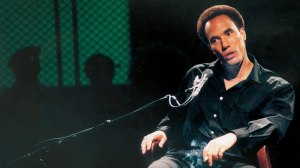 Guenveur Smith (who I had never seen before nor, to my knowledge, since) and powerfully staged and directed by Spike Lee in a very stagey manner, but in a theater that resembles a panopticon.
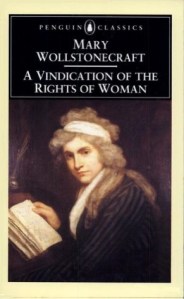 To me, the heart of her argument’s current value (assuming that we can all agree that women are not inherently inferior to men and don’t need to be told that anymore; though it is still almost certainly true the we do still need to be told) is an educational one (perhaps why she take special offense at the educational writings of Rousseau). Proper education leads to people of any gender becoming fully moral creatures. The failure to properly educate women leads to them lacking, in most cases, full moral agency. At the same time, the rearing of children, who we want to be grow into moral creatures, is left to them, so shouldn’t we educate them properly so that they can raise the next generation of moral agents?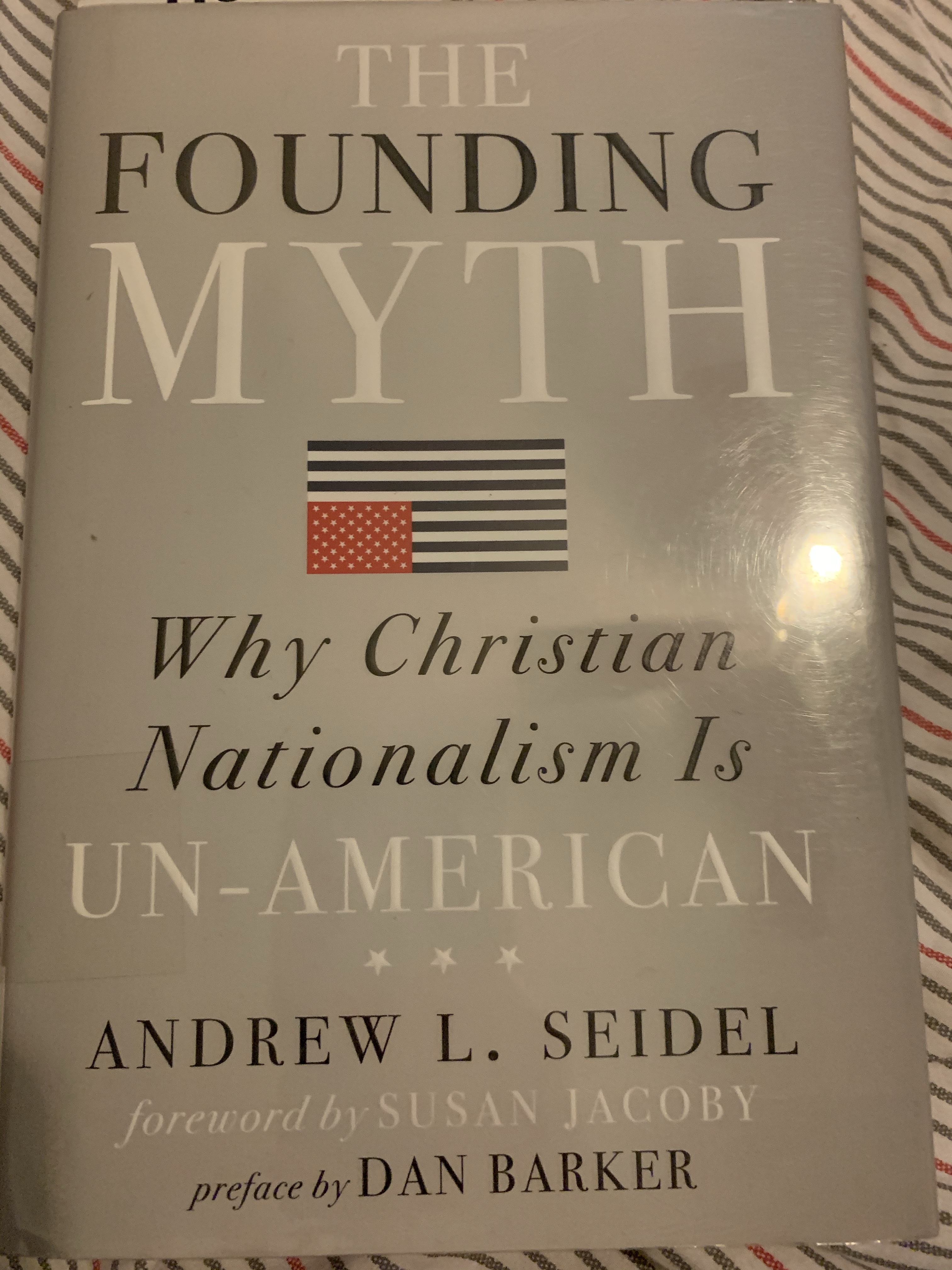
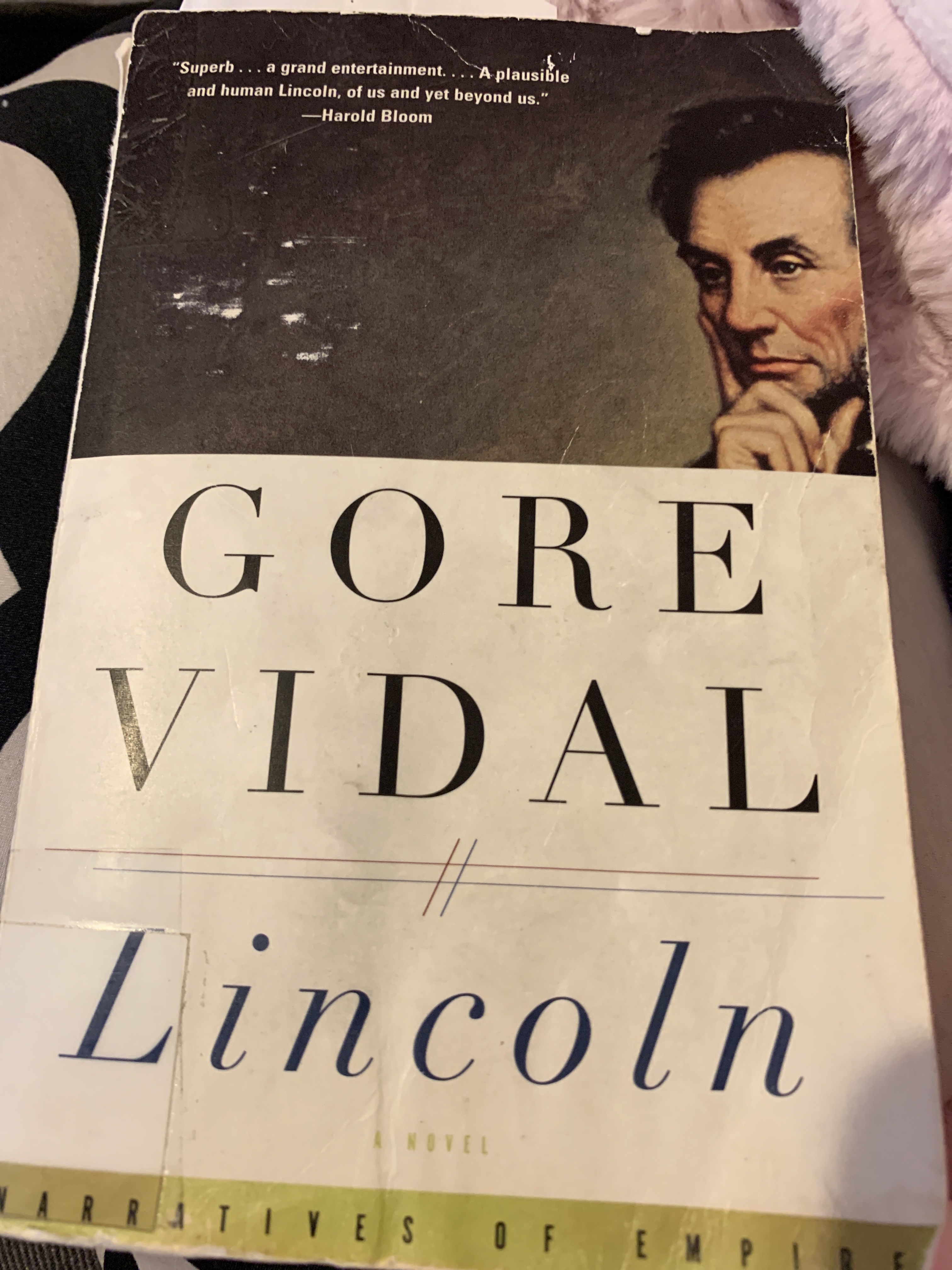 One of his most famous novels (second only, these days, perhaps, to Burr), but I was somewhat disappointed. The quality improves immensely towards the end, but I am trying not let the magnificent writing of the last quarter of the novel (and recency bias) to make me overlook the first seventy-five percent. Part of the improvement is that he mostly drops – until the very end – a subplot about one of Booth’s fellow conspirators: a callow fellow named David. The less of him the better!
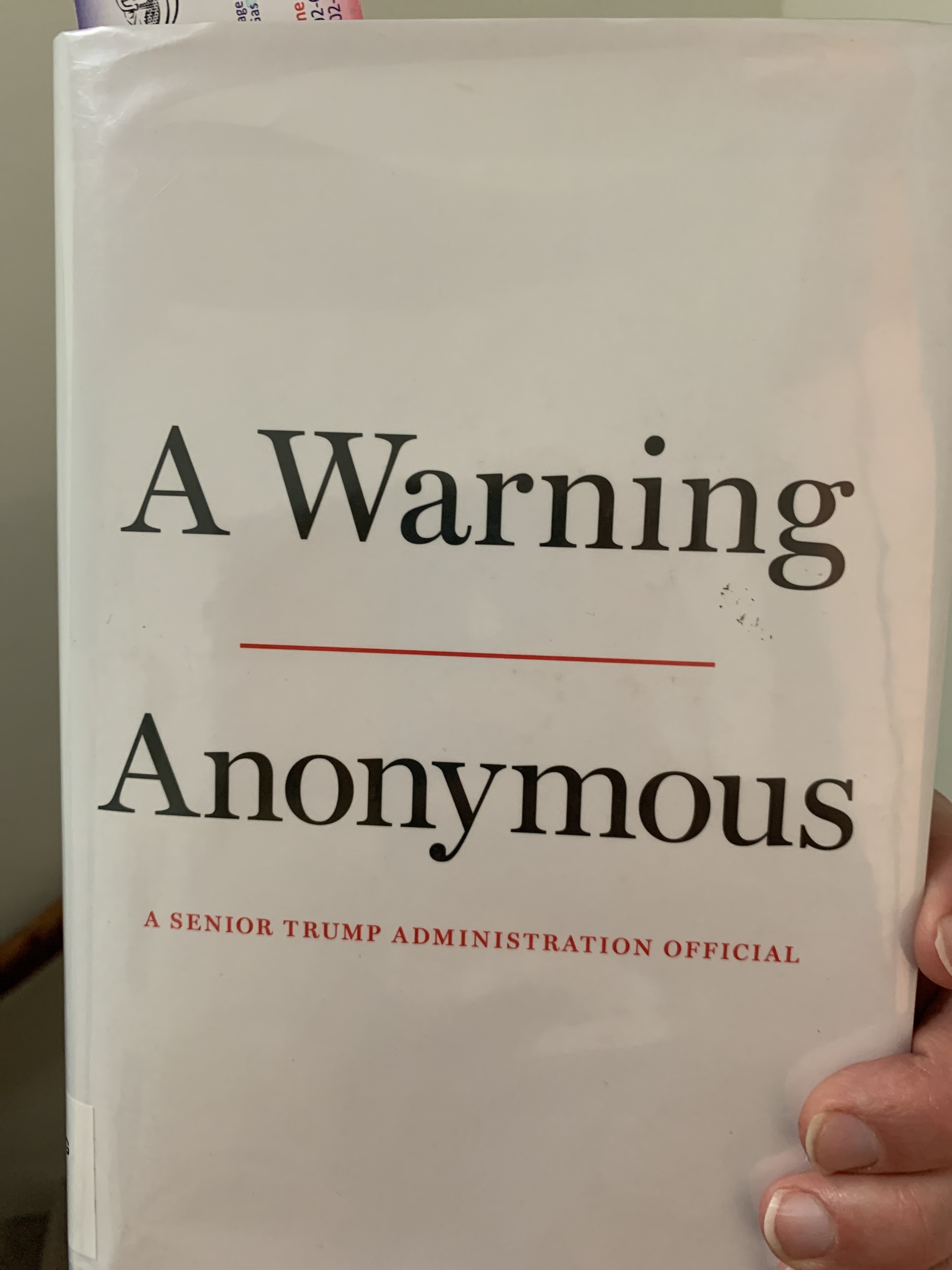 Anonymous is not an intellectual. S/he is not a member of the conservative intelligentsia. You may think that this is a good thing. A good advisor to the president need not be one, but it just seems to me that s/he wears their learning, such as it is, not so much lightly as shallowly. A few sprinkled quotes from the Founding Fathers and great leaders of the past (a bit of classical “learning” and the occasional snippet from the Gipper or, rather, his speechwriters) but their understanding of ethics, as a field of study is thinner than even that annoying Starbucks philosopher talking to loudly to his embarrassed girlfriend. They refer to classical thinkers because they both need to pad their moral case and because they want to show they know that stuff (I don’t think they really do; I don’t think they actually read Cicero’s De Officiis. I think they did more run just read a Wikipedia article, but something much less than actually reading him. Which, by the way, you should. He’s really good.
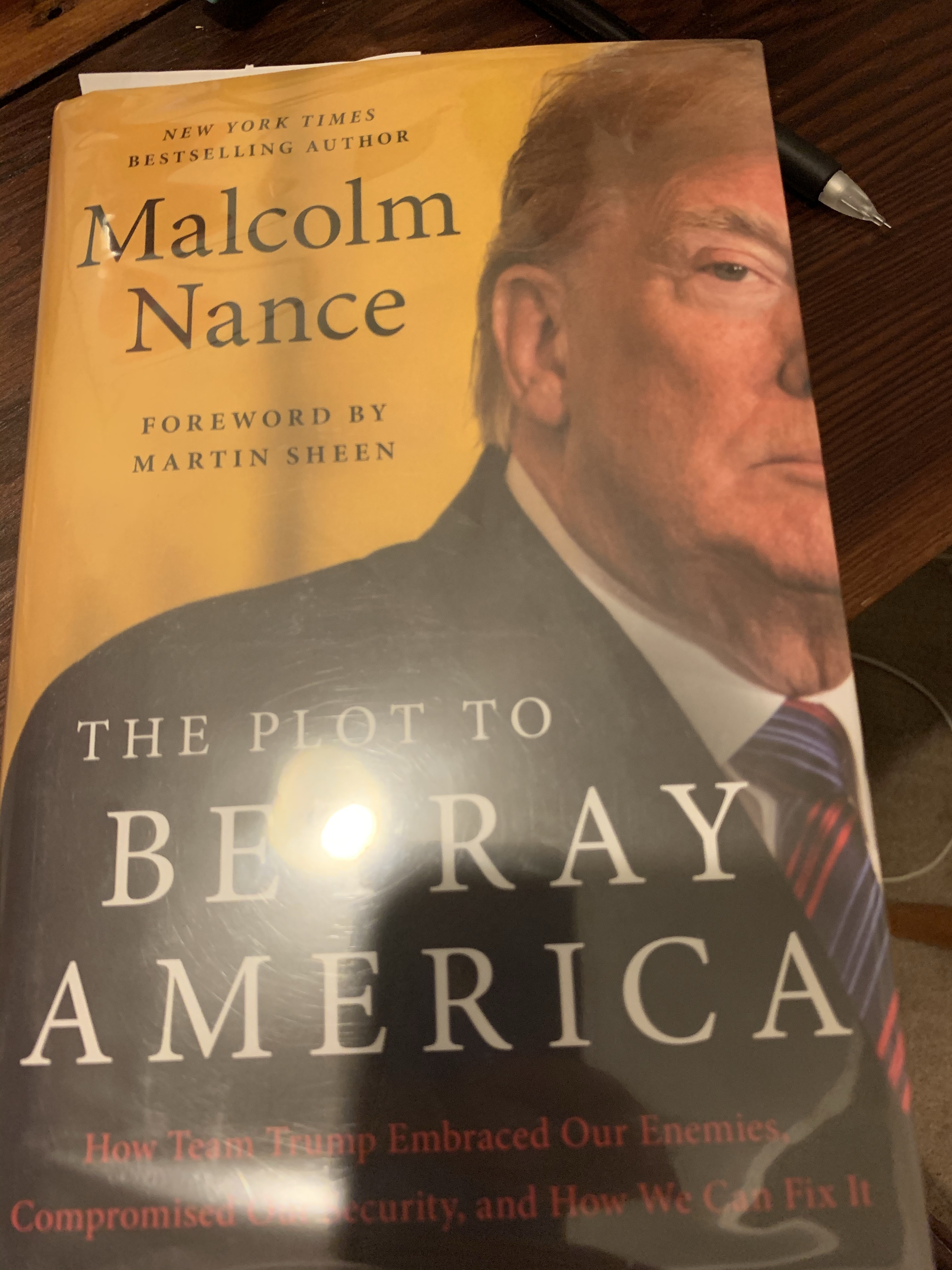 I thought I was done with these kinds of books, but I read a good review and the wait to get it from the library wasn’t long, so here we are.
 the coffee philosopher