Perry Barely Outraises Romney


Rick Perry raised $17 million in the last quarter.

Mitt Romeny raised $14 million.

This is good for Mitt.

Why? Because the expectations on Perry were huge. Romney’s team won the expectations game in setting the bar high for Perry, implying he would significantly outraise them. Perry did not.

And worse, Perry has a much greater need to spend that money. Romney can carefully husband his, but Perry needs to spend a lot more if he’s going to catch up with Mitt in key, early primary states (mainly Iowa and South Carolina).


What I Think About The GOP Field – Post Debate Thoughts


Thought #1:
Rick Perry is having to spend some of his impressive haul ($17 million in the last quarter, I believe) on paid media because his attempts to move up via earned media (interviews, debates, public events, etc) have seen him move in the opposite direction.

In one sense, it should be no surprise that debates seem to have been his downfall. While running for re-election in Texas, he explicitly refused to debate his Democratic opponent, calculating that no good could come of it. Well… apparently, he had a point. He’s just not very good at it.


Thought #2
Herman Cain is just the flavor of the month. Even if the conservative right/Tea Party coalesces around him, he just lacks the resources and the campaign nous to pull it off. He doesn’t have a staff and he isn’t ticking off the boxes in those early primary states (mainly Iowa and South Carolina; Romney appears to have New Hampshire locked up and Cain isn’t the right kind of candidate to knock him off, unless something very unexpected happens).

A campaign doesn’t just happen. A winning candidate doesn’t just happen. You still need a good team behind you and Cain doesn’t have that and isn’t moving to put that together. Even Ron Paul has a legitimate operation of some kind; it’s not the best in the biz, but it’s not nothing. Cain’s is very close to nothing.


Thought #3
Romney thinks he has this wrapped up.

How can you tell? Did you watch the debate?

Hedging his bets on the financial bailout, talking about his success in covering uninsured children? Those a general election points. He gave a general election debate appearance, not a primary election one.

At the immediate previous GOP debate, people cheered at the mention of a young man dying for lack of health insurance. Talking about one’s success at covering more children and criticizing an opponent (Perry) for having one million uninsured children in his state is not a talking point aimed at the crowd in the room. It was targeted at a general election audience.

You only do this when you think you have things locked and feel comfortable pivoting to the general election.

His biggest challenger, Perry, has seen his support collapse. And he knows as well as I do that Cain is not a serious threat. Heck, he wants Cain to do well. Cain isn’t a danger to Romney; his rising poll numbers are a buffer, sucking oxygen from the campaigns of people like Perry, who potentially could be (could have been?) a real challenge.

Gertrude Stein’s (Fascist?) Politics


This article touches on an issue I’ve been grappling with for some time.

We are used to our towering cultural figures being a–holes (does anyone seriously think that being Beethoven’s girlfriend was anything less than a living hell, for example?).

But we still struggle with when these figures support morally repellent political views.

And it is true that many figures of early twentieth modernism were seduced by fascism and anti-semitism.

Pound, of course, I have spoken about a great deal.

Nobel Prize winner Knut Hamsun is another.

At the article above focuses on Gertrude Stein.

And no, I still don’t have a pat answer to the  dilemma.

Robert Pinsky At The Folger


I’m late getting to this, but last Tuesday, former U.S. Poet Laureate Robert Pinsky read at the Folger Shakespeare Library.

As Poet Laureate, he was tireless in his promotion of poetry to the American people and, to my mind, no one has performed the role better. Poet
Laureate, really, has little to with the recipient’s poetry and everything to do with how well they raise the profile of poetry and literature in this country. Pinsky passed that test, unlike so many others – [cough, cough] Merwin [cough, cough] – who did little to promote the art.

I like, but do not love his poetry, but you don’t need to love his poetry to enjoy his reading. Pinsky is also a public poet or public intellectual and his readings are also conversations about poetry, culture, and politics and how they should, could, and do relate.

He also wonderfully encapsulates a particular image of what a poet should be. A face like some character actor you know that you’ve seen and liked but just can’t remember his name or where you saw him. Slightly mismatched, but expensive looking cloths (pin striped pants from a suit; blue crew neck pull over; stylish houndstooth jacket; and burgundy shoes with blue socks).

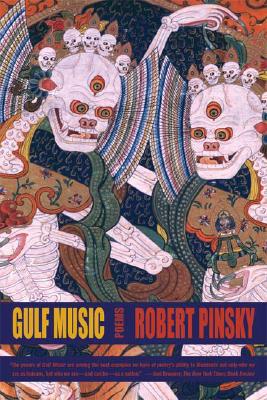
For this reading, I bought and had autographed a copy of Gulf Music.

The Tennis Court Oath


For my birthday, father bought me a copy of John Ashberry’s The Tennis Court Oath.

I had asked for that book because I was trying to get into Ashberry. I liked him, I’m influenced by him, but I also knew there was something that was missing.

The Tennis Court Oath was not his first book (I believe it was his second), but it was the one that exploded him onto the national poetic consciousness (whatever that is).

While it still has his trademark speed of thought, his fast directional changes, and intensely urban feel, it is also different from his later works.

Among other things, it is surprisingly romantic – something that he is not known for (though his most recent book of original poetry was praised for containing some rare love poems; but The Tennis Court Oath doesn’t contain ‘love poems,’ but is merely touched by romantic love) – as well as political, again not what you expect from Ashberry.

And yes, you can see why he and the other New York School poets flipped things upside down when they broke out.

Great book.

The Meaning Of Banned Books Week In Contemporary Culture


An interesting article about BBW – Banned Books Week – which is to say this week.

Argues that, in today’s world, it less about fighting censorship and more about creating, if only for a week, a certain kind of cultural solidarity around traditional liberal values for freedom and free expression and thought.

Times in Rhymes


Something a little nifty, current events described in verse.

Sort of connects to what I was saying about the decline of satirical, political verse as a phenomenon (though this, of course, would be an effort to bring it back).

Satirical Poetry


I read Scarriet merely for the occasional pleasures of being outraged by the writing of ideologues. Consequently, I don’t go there too often. I live near our nation’s Capitol,  so I get exposed to enough Republican rhetoric to satisfy whatever desire I might have to expose myself to the gamma rays of ideological bulls–t. But sometimes I’m a glutton for punishment.

Anyway, Scarriet published this little gem of poem recently.

Silliman’s Lament
by Marcus Bales

For Ron Silliman, who posted on FB how far he’d driven.

I’m a poet and critic, a serious man –
The School of Quietude’s my famous phrase –
From right around the Chatterley ban
Til now I’ve followed my poetry plan:
To argue that poetry ought not scan.
I’ve driven for 1200 miles in the last three days.

There isn’t a city where I won’t go –
My revolution important and potent as Che’s –
To see that no more arts are beau
So quietudeness doesn’t grow,
And maybe make a little dough:
I’ve driven for 1200 miles in the last three days.

I also write my famous blog
Where only I may speak, but all may gaze,
No meter, only prose’s slog
Should leave the po-biz crowd agog
And that’s the lang-po creed I flog:
I’ve driven for 1200 miles in the last three days.

With postmodernism’s new malaise –
Not just wrong, but wrong in the wrong maze –
I must redouble my drive to raze
Your art so our art may amaze
As all that’s left us after the blaze.
I’ve driven for 1200 miles in the last three days.

Envoi

Armantrout! Mix your final muddle
Uninspired enough for me to praise!
Then join me in a pure Platonic cuddle:
I’ve driven for 1200 miles in the last three days.

It’s not my cup of tea, but it did make me think about satirical poetry.

Satire used to be one of the prominent uses of poetry, especially in the seventeenth and eighteenth centuries. Kings and princes treated satirical poems as serious matters. The original coffeehouses in the seventeenth century – the ones that Samuel Pepys patronized – were considered potential hotbeds of insurrection for the satirical poems distributed with the polemical pamphlets.

You don’t see that too often anymore.

And perhaps this is an argument for poetry having become too self-important for its own good and that political and personal satires of this sort were once the key to poetry’s prominent place in letters.

But it should also be noted that 99.95% of those kinds of satirical poem were absolute crap (Alexander Pope excepted).

(Relatively) Recent Books of Poetry Worth Looking Up


Seth Abramson tends to divide opinion.

He’s sort of the anti-Anis Shivani.

If Shivani’s role in the intellectual ecology of poetry is to be a blowhard a–hole and bomb throwing provocateur, then Abramson is the ultimate defender of the status quo – the status quo, in this case, being the importance of MFA programs in the aforementioned intellectual ecology of poetry.

However, at least both write with some regularity about contemporary poetry in more or less prominent venues. God knows poetry needs people with the means and desire to do so.

God knows a blogger-cum-poet-cum-activist with a blog whose reach extends not far beyond his own family doesn’t meet that criteria.

But to get back on topic.

Abramson recently posted on the Huffington Post Ten Recent Books of Poetry You Should Read Right Now.

After all of that earlier discussion of provocateurs versus defenders of the established order and intellectual ecologies, this is all just a misbegotten excuse to post my own top ten.

I know. Ugh. But here it is (in no particular order):

Charles Wright, Sestets: Poems
I was not a Wright fan until I heard him read at the Folger Shakespeare Library and heard his recent work. To me, he was sort of a Merwin-lite, which is like Corona Light. Really – what’s the point? Is Corona such a heavy brew that we need a watered down equivalent? But what Wright is doing these days just impresses the heck out of me. Sestets: Poems keeps some of the rawer edge of his contemporary work while working within a single form (the sestet, naturally) for an entire collection.

Anne Carson, Autobiography of Red: A Novel in Verse
I think this was the second or third book by Carson that I read. I know that I bought it while I was living in Iowa. It’s verse novel retelling of the tale of Herakles and the monster Geryon (slain during the accomplishing of Herakles’ seven labors). Geryon, an ugly, monstrous child, teased at school, finds purpose as a gay bohemian artist – a photographer to be exact – whose earlier love affair with Herakles makes his death at his former friend and lover’s hand so much more heart rending. Good stuff. As always, the way the contemporary and the classical intersect in Carson’s work is amazing.

Charles Simic, The World Doesn’t End
This book was from 1990, so it’s beyond the fifteen year limit Abramson set himself, but I think that Simic gets short shrift these days. Yes, he’s tending to repeat himself, but his best work is very, very good. And this is one of his best. It’s also the first book by him I ever read. I was in Montgomery, Alabama and these surrealistic prose poems opened up contemporary poetry for me. The intersection of lightheartedness with undertones of barely held memories of war torn Eastern Europe is still worth appreciating.

Adrienne Rich, An Atlas of the Difficult World: Poems 1988-1991
Adrienne Rich’s style was a huge influence of my writing when I was younger (maybe it still is – certainly the echoes remain). An Atlas of the Difficult World: Poems 1988-1991 and Dark Fields of the Republic: Poems 1991-1995 deeply affected me. I was not necessarily “up” on things like feminist poetics and queer/LGBT poetics, but I could tell something was going on there that was important and that I needed to understand better. I picked Atlas over Dark Fields because the time period it covers was also important for me and my creative and intellectual development. Dark Fields has a cooler title though (it’s from The Great Gatsby – “And as I sat there, brooding on the old, unknown world, I thought of Gatsby’s wonder when he first picked out Daisy’s light at the end of his dock. He had come such a long way to this blue lawn, and his dream must have seemed so close he could hardly fail to grasp it. But what he did not know was that it was already behind him, somewhere in the vast obscurity beyond the city, where the dark fields of the republic rolled on under the night.”)

Kim Addonizio, Lucifer at the Starlite
Let’s get something out of the way first. Kim Addonizio is hot. She’s mid-fifties, but looks like mid-thirties. And she looks and talks like she’s living the bohemian dream of a twenty year old lit major dreaming of life as an artist-cum-shaman. And her poetry has that aura of college rebellion and youthful sexual transgression. There’s also a certain shamanistic quality to her writing (it is no surprise that she has also published two books on the creative process). But there is also a Bukowski-esque despairing darkness of the stories in her poems (a lot of narrative poetry in her oeuvre). Of two pack a day failure. She appears to be living the dream, but her poetry often tells of that dream’s failure. Oh, and she is originally from Washington, DC.

Bob McCann, Warehouse
You won’t find this chapbook, I expect. It was self-published by Bob in the early nineties. Frankly, he over edited the titular poem, Warehouse. But listening to him read its various iterations at the weekly poetry group we attended was incredible. It was filled with lines and images that blew away this young would be poet (or poet who was young then; funny to think that I am almost now the same age he was then). I haven’t seen hide nor hair of him in years. I don’t even know if he still lives in St Petersburg, Florida. You’ll find a brief reference to him and to the poem here.

Fanny Howe, Selected Poems
I am not very comfortable including “selected” or “collected” poems in here. It feels like cheating. But when I came across this book, I thought she was something special – someone I should have been reading for years. Howe hit a certain zeitgeist in my life and I’ve got to include it.

Anonymous, Beowulf (tr. by Seamus Heaney)
Heaney, of course, is a Nobel Prize winning Irish poet. Despite myself, I am a fan of his poetry. If I were to name a favorite, it would be his 1979 collection, Field Work. He has a certain hard empirical concreteness (in my mind) to his lilting (what a cliche – to call an Irishman’s literary voice ‘lilting’) lyrical voice. Makes the pastoral touches enjoyable. But his masterwork may not be any of his original works, but his translation of the Anglo-Saxon epic, Beowulf. I bought this book at Chapter 11 Books near the Kroger’s grocery store in midtown Atlanta.

Ted Joans, WOW
Ted Joans meant a lot to me, though I hardly knew him. For a young man in Paris for the first time, what massive figure to meet (I was both young and short [still am short], so it was pretty easy for folks to seem to tower over me). I have to include this, his last (to my knowledge) book. Chapbook really. Read more here.

Abdellatif Laabi, The World’s Embrace: Selected Poems
I was visiting my friend Mike in San Francisco (I was living in Los Angeles at the time) and insisted (of course) on visiting City Lights Bookstore. Upstairs, they have a lovely room devoted to poetry. By chance, I came across this book. Loved it. Had a couple of quibbles with the translation (the translator seemed to translate a particular line without realizing that it was a reference to Baudelaire, so the English didn’t reflect it), but the beauty of the poems comes through. Great way to integrate political sentiment into beautiful, lyrical pieces.
No – Adam Smith Did Not Actually Believe in Unfettered Free Markets


No. Really. He didn’t.

Read this.

And when you’re done, actually read The Wealth of Nations.

And when you’re done with that, read Adam Smith’s The Theory of Moral Sentiments.

And you might actually read something by David Hume (this year is the three hundredth anniversary of his birth, if anyone’s counting), who is far closer to the spirit of the founding father (intellectually speaking) of capitalism than Ron Paul, Michele Bachmann, of the fellows residing at the Cato Institute or the Heritage Foundation.