The Intellectual Indiscretions Of Youth


Atlas Shrugged might have been a sin of youth, like Siddhartha and Thus Spake Zarathustra, except that Ryan never repented the sin.

That’s a quote from a Leon Wieseltier piece on Paul Ryan in The New Republic.

As someone who resides on the left, I have the some mixed feelings about that publication’s cheerleading of the Iraq War (and harsh admonition’s that the rest of the Left’s moral and factual doubts were immoral and counterfactual). But that line (which was not favorite line; there were a good many barbed witticisms like one that says that Bill Kristol once tried ‘establishing the definition of the intellectual as a person who knows how to talk to William Kristol’).

Having gone back over, not so long, another Herman Hesse book (I am not so foolish as to suspect that revisiting his Siddhartha would reveal anything more than a westerner’s self help guide, feel good vision of a complicated religion).

But the left does have its youthful extravagances, but they seem more easily outgrown. At the very least, the themes of both Siddhartha and Zarathustra involve throwing aside illusions. And the latter, certainly, can be an entré into much better, deeper works by Nietzsche.

Midweek Staff Meeting – The Rumble In The Journal


5917-Books-WomenKuhn versus Popper.

The habits of the Victorian reader.

What is ‘Yellowism?’

The makings of a successful chapbook press.

Old Magazine Articles


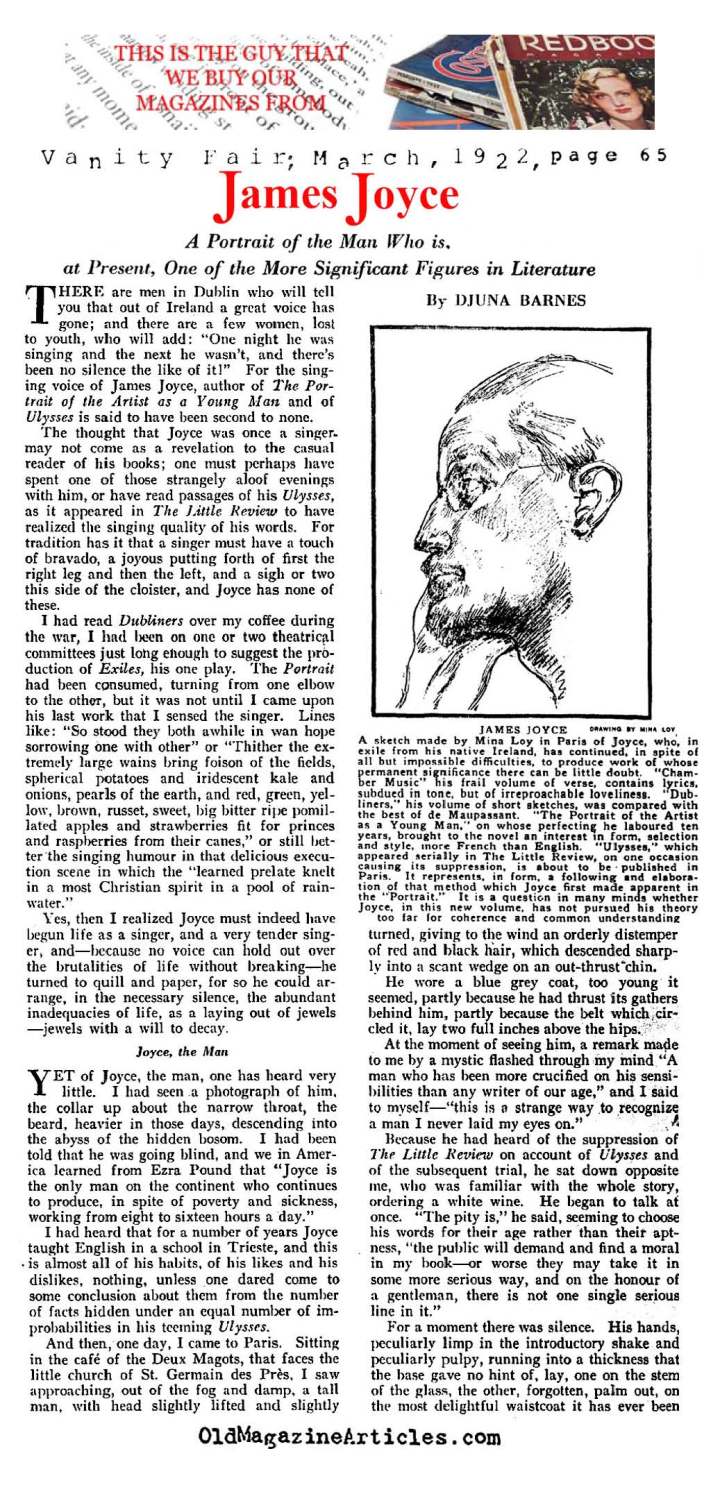
I’m just pitching this website, Old Magazine Articles, which collects (mostly PDFs) of old magazine articles.

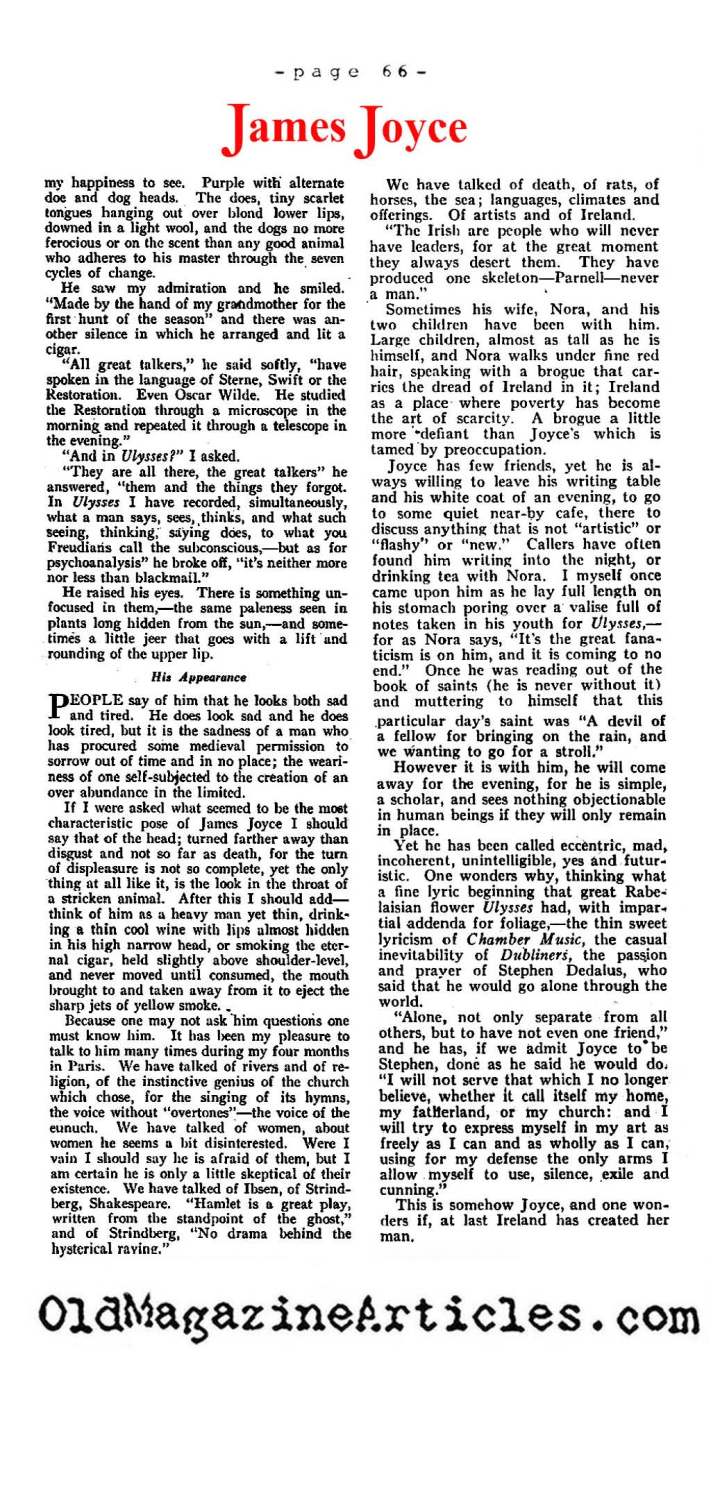
I came across via an article iy posted, a little character piece, but written by Djuna Barnes (of Nightwood fame) about James Joyce (of too much fame to mention).

This Vanity Fair article from 1915 on Marcel Duchamp in New York City or this 1935 article about the rise of secularism in America (not a new topic, as you can see)… so much to explore.


First Staff Meeting Of The New Year – No Kids, Please


Red, 1963, San Francisco Museum of Modern Art, San Francisco, Evelyn and Walter Hass, Jr. Fund Purchase, 82.155, © Ken Price

Philosophers should stop talking about their kids.

What’s killing opera? Hint: it’s not opera.

Philosophy, poetry, Craigslist, and language.

The humanities: not as bad as you thought!

This year, be still.

The theater and drink.

The best of art in 2012.

Justify


‘An intellectual might be defined as someone who elaborates justifications for his own tastes and preferences, as metaphysics was once defined as the finding of bad reasons for what we all believe on instinct.’

Midweek Staff Meeting – The Key To A Healthy Relationship Is Roleplaying


You can’t possibly write good literature unless you play Dungeons & Dragons.

DC recognizes that an intersection that has more pedestrians than cars should really be engineered around pedestrians.

Notes from the Cosmic Typewriter

It’s about time the Hirst bubble collapsed (I have a great affection for conceptualist art, but even if you say that Hirst is engaged in meta-commentary on the art market, collectors, and most especially on commodification, it’s just too god d–n much).

The secret lives of used books.

What is lost, what is gained?

Your poetry gift guide.

Amis and Larkin.

Monday Morning Staff Meeting – There’s Always A Woman


121210_HIS_RogerWilliams3.jpg.CROP.article568-largeThe love triangle that caused Camus and Sartre to break up.

What do you think of when you think of Africa?

Some bookstores are doing just fine.

The secret code of a colonial-era theological rebel.

Poetry makes you weird.

A Second Look At ‘The Moviegoer’


Perhaps I was too hard on Binx Bolling, the titular moviegoer of Walker Percy’s Pulitzer Prize winner.

I initially saw a character ceding personal volition to fit into the image that others had of him.

What if the ending is, like the ending of Brideshead Revisted, inextricably tied to the author’s Catholicism? When you first read Brideshead Revisted (assuming you were young enough), I suspect that you were somewhat appalled by Julia’s decision that she could not divorce her (serially philandering) husband to marry Charles (who would subsequently divorce his unfaithful, estranged wife) because she believed that had to recommit to her Catholic faith. It’s still hard to read, but a little easier, particularly if you view the older Charles as having coming to the same conclusion, that older traditions are worth keeping to.

What if, what I interpreted as a depressing abdication of volition, should rather be taken as an expression of obedience? Handing one’s self over to a higher power, as it were? Now, I’m not saying that his aunt should be interpreted as speaking with the voice of the Holy Spirit, but rather that it could be read as symbolic of a spiritual acceptance of obedience.

On Progress


I wanted to draw some attention to this George Scialabba essay, Progress and Prejudice.

It’s a discursive, elegiac (nostalgic, really, but ‘elegiac’ sounds better, and there is an unspoken mournfulness in his particular nostalgia, so we may call it a sort of elegy) and looks at what formed his own idea of progress and the writers of the past, mostly those who regretted it, but also some who… I don’t know? Accepted it without too many regrets.

He puts a significant portion of the words in talking about Arthur C. Clarke’s Childhood’s End, which I read not so long ago. Scialabba put his finger on several things that passed me by until he brought them up, including the theological aspect of the novel.

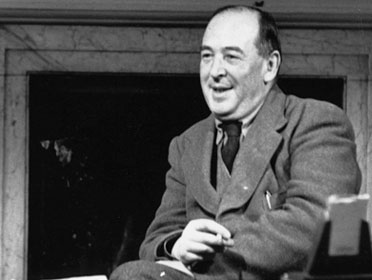
Happy Birthday, C.S. Lewis


Despite being named Clives Staples Lewis, he apparently went by Jack. Must be an English thing.

Lewis is a writer who I have gone back to at various times in my life. As a child, naturally, I read the Narnia novels. The Lion, The Witch and The Wardrobe being the first and best loved, of course (it has the most ‘magic,’ you might say – and the description of Lucy’s tea with Mr. Tumnus, with the sardines on buttered toast and a dozen other lush, tasty descriptions of the sorts of traditional English food that an American boy in a naval town had never heard of; still makes my mouth water). Though I gather it has a poor critical reputation, I always loved The Horse and His Boy. It’s a great book for a lonely boy who doesn’t feel quite at place in the world (am I Freudanizing myself? maybe, I don’t know – piss off). Also, the romance in that one is of a perfect level for a child who isn’t quite old enough or is only barely old enough to appreciate the opposite sex (or same sex, depending on orientation).

His science fiction books were never of great interest to me. The Christian apologetics never quite felt natural in Out of the Silent Planet, the only one I read (though as I think about it, I want to read it again, partly to trace its lineage back to A Princess of Mars).

My mother had a boxed set of some of his treatises and explicit apologetics: The Screwtape Letters (which I read several times in junior high), The Great Divorce (which I read once in junior high, but didn’t have the theological background to understand what he was driving at), Mere Christianity, The Problem of Pain, and I think one other…

Later, as an adult, I read A Grief Observed, a naturally heartbreaking but comforting book (I was mourning a love affair, not a death, actually).

Basically, he’s got something for everybody.