Prayers For The New Holy Father


Our prayers that our new Holy Father, Jorge Mario Bergoglio, who has taken the name Francis, will lead the church with compassion and wisdom and will be a loving and faithful shepherd to all God’s creatures.

He is known for advocacy for the poor and one suspects he has taken the name after St. Francis.

Majestic Nights (New Year’s Resolution, Book Nine)


I bought Majestic Nights: Love Poems of Bengali Women at the Rubin Museum in New York City.

The Rubin has a wonderful collection of Himalayan art. At least, that’s how they describe themselves, but really, it’s a Tibetan art. The whole thing is an unsubtle argument against China’s argument that Tibet is historically part of greater China. The Rubin implicitly argues that parts of China and India and pretty much all of Nepal and Bhutan are historical parts of greater Tibet. My own opinion is, well, free Tibet, but let’s be careful about how history is used, particularly when historical boundaries (much more fluid) are used to pick the borders of modern nation-states.

It is a relaxing museum with moderately priced admission. I will say that notes on the objets d’art were entirely too large and imposing, as if trying to compensate that the pieces themselves, mainly paintings and small statues, were by and large not physically imposing. Let the art speak for itself a bit more. A medieval triptych by Fra Angelico is not going to blow you away based on its size, but on its delicate artwork and driving faith the inspired it. I would have liked to have seen the Rubin’s collection in a setting that would give me a better opportunity to understand these religious works in the same way.

Also, after my experience at the Cloisters, I had to re-think my opinion about a large collection of religious artifacts accumulated and displayed in a secular institution. This is different, I feel, just because of the great need to protect uniquely Tibetan works from being misused or destroyed by the Chinese government, but it’s good that we stop to think about these issues more carefully.

But on to this book.

I’ve got to say, I’m wondering if Kenneth Rexroth hasn’t had a pernicious effect on translation, because it seems that any translation of eastern love poetry always seems to carry some memory of his translations of Chinese and Japanese love poetry.

So far as I can tell (and, I’m sorry, the fact that I don’t for certain is a failure by the editor and publisher to be clear), these are all poems by more or less contemporary women poets from Bangladesh (though at least one lives in relative exile in France).

There is an ebb and flow to the order of things. Rather than arrange things chronologically, it is arranged more in order of the early stages, maturity, and ending of a romantic relationship. Except that the editor didn’t include many poems in the middle section, so it goes too quickly from a lot of hot, sexy poems about skin and lips and desire to a lot of poems about women being left distraught and alone by men. It’s whiplash.

I love erotic poems, so I loved the first 40% of the book, but those poems also had a certain sameness to them. In truth, a lot of the poems had a certain sameness… a certain Rexroth-ishness.

Honestly, I can’t properly say how I feel about this book. I’ll never sit down and re-read it through again, but I might occasionally re-read a poem or two from it at random; something to keep near the bed or the desk for a quick, mental health poetry break. But, I guess, I’m disappointed. I had low expectations, but then I started liking the poems and then I started getting bored by the similarities.

Lest I end this on too mediocre a note, the next to last poem, Rice Sheaves This Alluvial Night by Khaleda Edib Chowdhury, is the collection’s only prose poem and what a prose poem it is. Six paragraphs desperately piling sex, desire, and despair:

But still this night must be understood once more. A man must know the object of his longing.
Essay On Man And Other Poems (New Year’s Resolution, Book Seven)


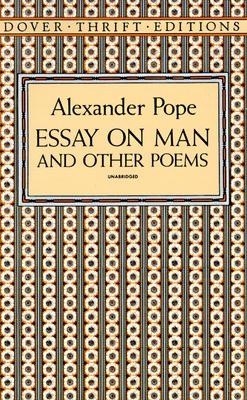
While I had surely read some snippets of Pope before, this was my first real dive into his writings. The shorter pieces, the lyric poems, were good. Good enough to say that, had Pope written nothing or little else, he would still be remembered as a worthwhile minor poet of his age. Rather like Ralph Waldo Emerson. But like Ralph Waldo Emerson (who was a serviceable poet, but no great), he is better known for his essays.

But Pope’s essays tend to be a little different from the New England mandarin’s.

This really struck me while reading the poem, Essay on Criticism: Alexander Pope is writing a critical essay entirely in verse form. In heroic couplets, to be specific (which are, and I had to look this up, rhymed couplets written in iambic pentameter).

Imagine opening a copy of The Nation, The New Republic, Harper’s Weekly, or The American Conservative and reading an article on a serious subject, like drone war, that written entirely in rhymed verse form. And written seriously, not as a meta-commentary on something or as a joke (which is why I left out The National Review, because, since Buckley’s death, that rag is more home to a particular brand of youthful idiocy, like Jonah Goldberg’s unreasoned idiocies, than anything serious). Go back further and what if Podhoretz’s editorials for Commentary had all been rhymed sestets or Petrarchan sonnets?

Beggars the mind.

Oh, and the Essay on Criticism includes the line:

A little learning is a dangerous thing;

Pretty cool, huh?

He gets into a great many localized, time specific references – The Rape of Lock is entirely about a particular scandal du jour – and my edition doesn’t really give the reader an heads up on this stuff.

Though not a long collection, Pope is slow read. To appreciate his rhymes and also the lines of his arguments is not a fast process. I had thought to finish it in well under a week but actually struggled to finish it by today.

Conclusion? I would read Pope again.

20130218-105456.jpg

Weekend Reading – We Have Ways Of Making You Talk, Professeur Derrida!


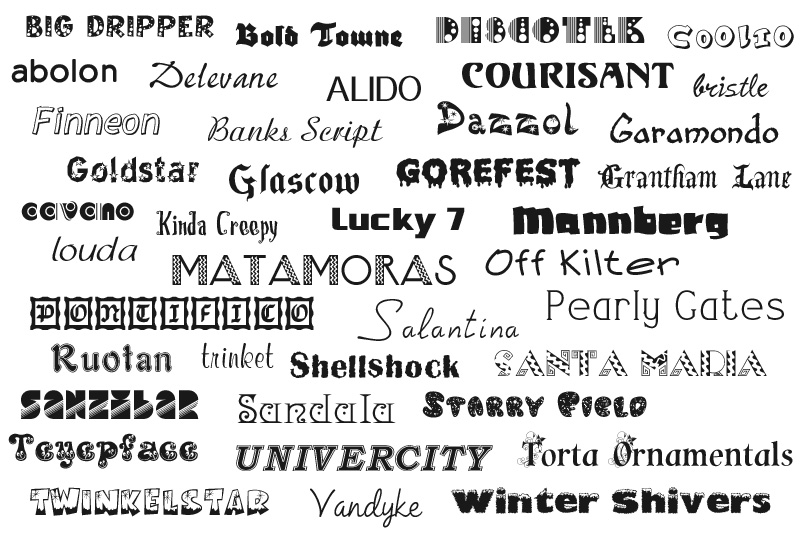
40-free-mac-fontsWhen Jacques Derrida was arrested.

“It is hard to imagine a destination like Union Station without a fully stocked bookstore…”

“We lost Borders. We cannot bear to lose you too.”

You are your font.

Out Of The Silent Planet (New Year’s Resolution, Book Six)


Reading the first book in C.S. Lewis’ trilogy of Christian science fiction, I realize how huge his debt is to the planetary romance of early pulp writers like Edgar Rice Burroughs and his Mars and Pellucidar books.

Lewis certainly gets his theological apologetics in, but the descriptions of his hero (Dr. Elwin Ransom, professor of philology) exploring the planet (which is Mars by the way!), encountering native flora and fauna, and his interactions with the native life, including quickly learning their language… well if you replaced Dr. Ransom with John Carter and added a couple of sword fights (though, there is a harpoon hunt of a giant, freshwater monster in Out of the Silent Planet) you could probably have sold this as a long lost novel of Barsoom, especially since it even takes place on Mars, though the natives here call it Malacandra, not Barsoom. It also uses the trope of having this story be Ransom’s unbelievable story told to Lewis so he can sell it as a novel, because it would otherwise be too unbelievable if sold as fact.

The apologetics come in the time honored fashion of presenting a fictional (or fictionalized) society as expressing the utopian ideals of the author’s religion or philosophy. There was one little throw away line where Ransom wonders whether it is his duty to evangelize to the alien hrossa and then realizes they more truly represent the ideals of his High Anglican Christianity than whatever he could express in their alien tongue.

The (more or less) climax is a little preachy and Lewis lays it on too hard in one area. Ransom must translate the arguments being made by the villains of the novel (Devine and Weston, if you must know) into the native language of Malacandra. Because of both the limitations of the language (having a relatively utopian society, they don’t have words for some negative things) and his own understanding of it. The result is Ransom giving the Malacandrans such a straw man version that it becomes irritating.

Despite that Caveat, Lewis is always and engaging and earnest writer, though never as good a writer as his fellow Inkling, Tolkien (upon upon whom, apparently, Ransom was based). This book is not as good nor the world as well thought and engaging as that built in his Narnia books, but it is still a good book by an important twentieth century writer.

I read this book years ago, but this time, I will go on and read the rest of the trilogy (though not next week, I’m thinking Alexander Pope for next week). In fact, I have the complete trilogy already downloaded onto my Nook. So, maybe sometime in March… Perelandra.

The Sunday Paper – Roman A Clef


Politic0: The Novel

Beyond the ‘big six.’

Ferlinghetti: The Movie

Animal poetry.

Small town poetry scenes.

Mainstreamin’ Marx.

The Cloisters


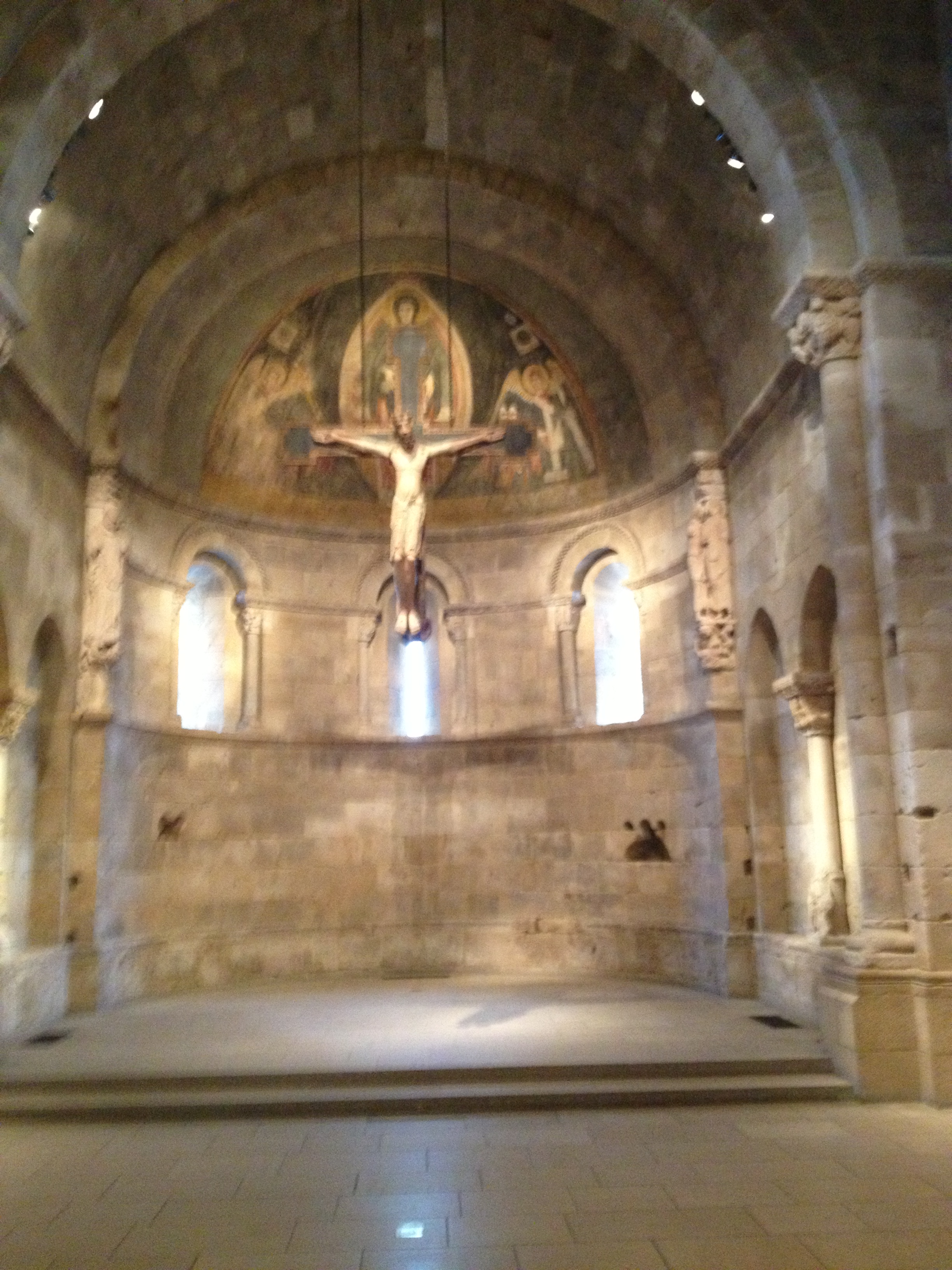
photo-4The Cloisters are a beautiful museum, filled with some of the most amazing sacred art from the high middle ages.

The entire place left me feeling uncomfortable.

Did you know that I’m vegetarian? Did you know why? I was in college and I stopped by my father’s house to raid the fridge and when I opened the freezer, looking for a tv dinner, I saw shelf after shelf filled with great, red chunks of meat. It seemed as if an entire cow might have been slaughtered and stashed in that fridge. The sheer mass of it struck me, by driving home the truth that a living, feeling creature had died so that we might have beef three times a week. That was when I quit.

The picture you see is off an apse taken from a Spanish church. The entire apse disassembled, removed, and then reassembled in New York.

The building is filled with such things. Columns. Door ways. Cloisters. Meeting rooms.

Also altars. Lecterns. Reliquaries.

More. Hundreds of items.

Things taken from churches and monasteries across Europe. Items that were, literally and formally blessed and sanctified. And not just formally, but objects used in the worship and devotion of how many generations? Taken from monasteries sanctified not just from a bishops prayer and holy water, but by the blood and bodies of thousands of monks and nuns who lived and died in those abbeys.

There was an altar and all its trappings and chairs were set up for those who wished to formally respect it. There was a picture of the church from whence they were taken. It was still standing. That church hadn’t been otherwise destroyed. That altar could still have been used for worship, had it not been moved.

The volume was overwhelming and, for me, with rare exceptions, the place felt very secular.

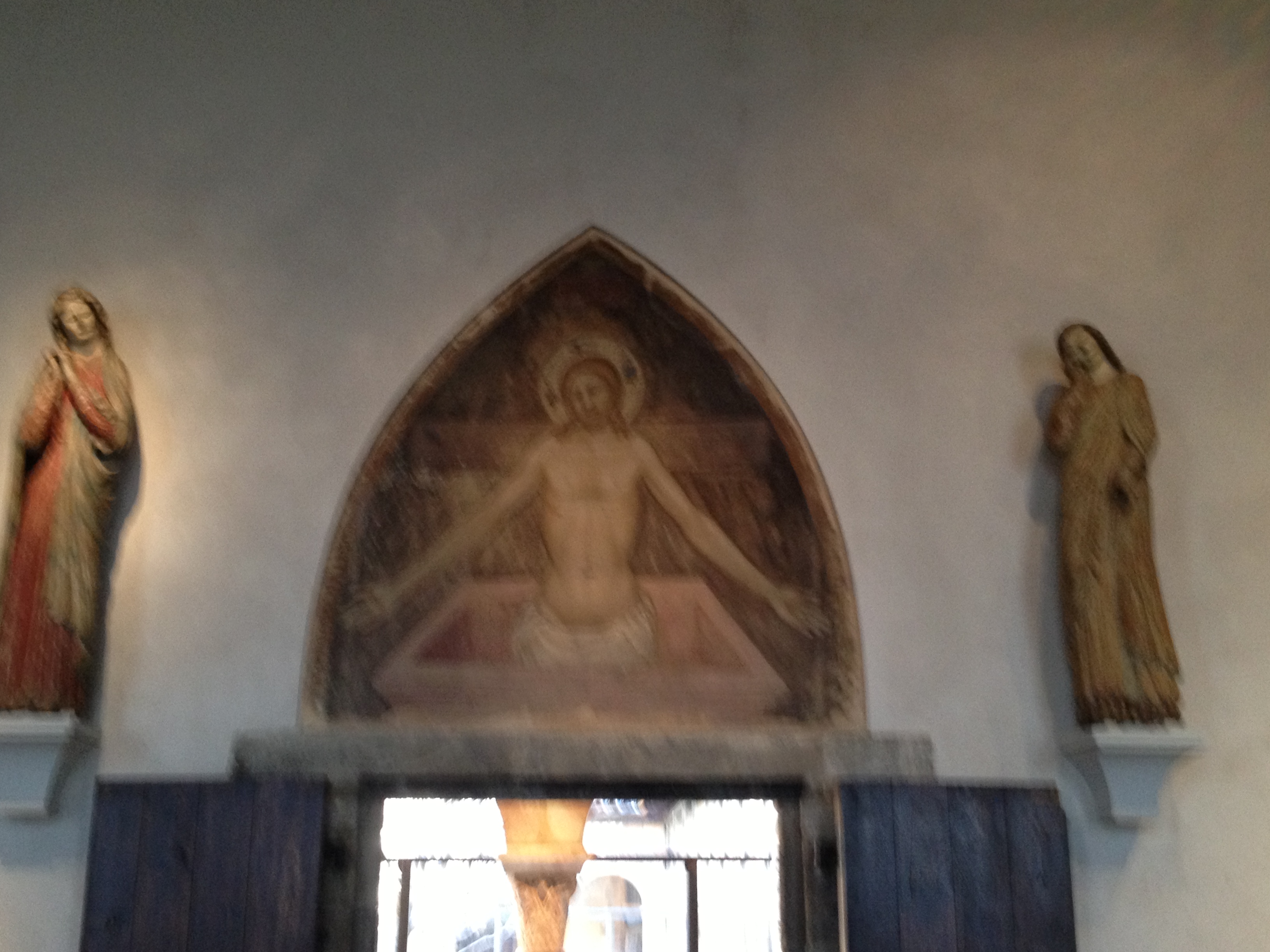
Only a single spot, some art on the wall above a doorway, felt at all holy to me.photo-3

The art was beautiful and I’m glad I came, but…

I went to the Rubin Museum later during my visit to New York City. The Rubin is a museum dedicated to Himalayan art. Essentially, Tibetan art (some work from Nepal and Bhutan and India, but Tibetan culture is at the center of the museum). I realized that the act of collecting the sacred art that was exhibited in that museum was different because of the unique and tragic nature of Tibet’s occupation by China and the Chinese government’s efforts to eradicate Tibetan culture, particularly it’s religious culture. Collecting and preserving that art could be viewed as a means to protect it from destruction or at least usurpation and shameful manipulation by the Chinese government.

But last I checked, western Europe was relatively free from Chinese occupation, excepting tourists.

Weekend Reading – There Are Different Kinds Of Freedom


5918-Nunberg-cabinetNote taken.

Achieving Keynes’ utopia.

Which ‘self’ is helped by self help books?

Am I a clown?

Build a better library.

The Sunday Paper – Freakin’ Texas


IMG_2599Sexism (and harassment) are too prevalent for comfort in male dominated university philosophy departments.

That’s right: the first ‘book-less’ library is in, you guessed it, Texas. Apparently, the Texas GOP has decided to  turn the lemons of their embarrassingly low literacy rate into the toxic lemonade of deciding to save money on buying books.

Rethinking decline.

Weekend Reading – Here To Stay


CE-books on the wane, printed books here to stay?

I’m more the traditional type.

Binary poetics.

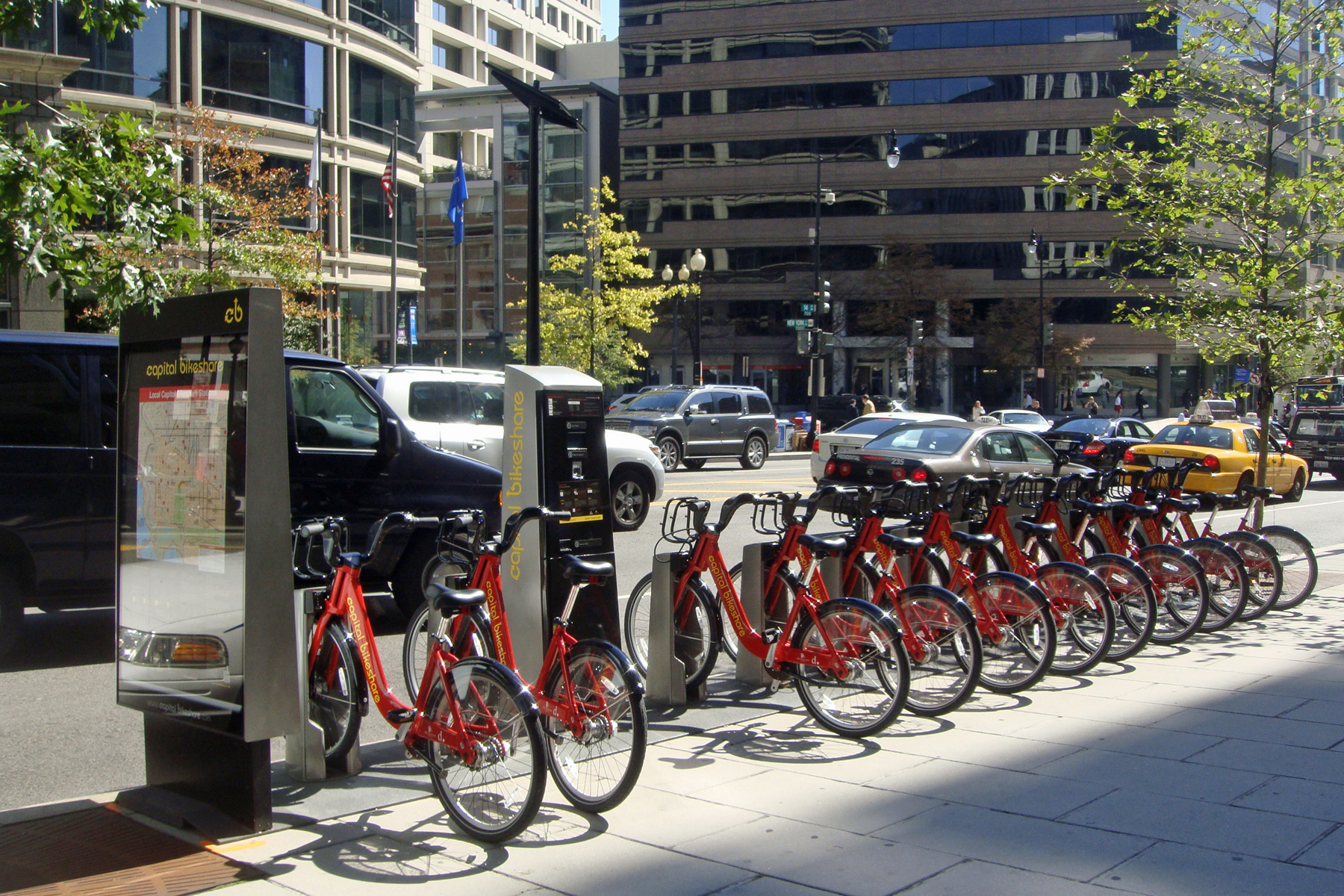
The best bikes around (but why are they acting so surprised? DC the living city is different from DC the short hand for what’s wrong with Congress).

Le Poseur.

Favorite philosophers.

Do it like the French.