Weekend Reading – Through The Wardrobe


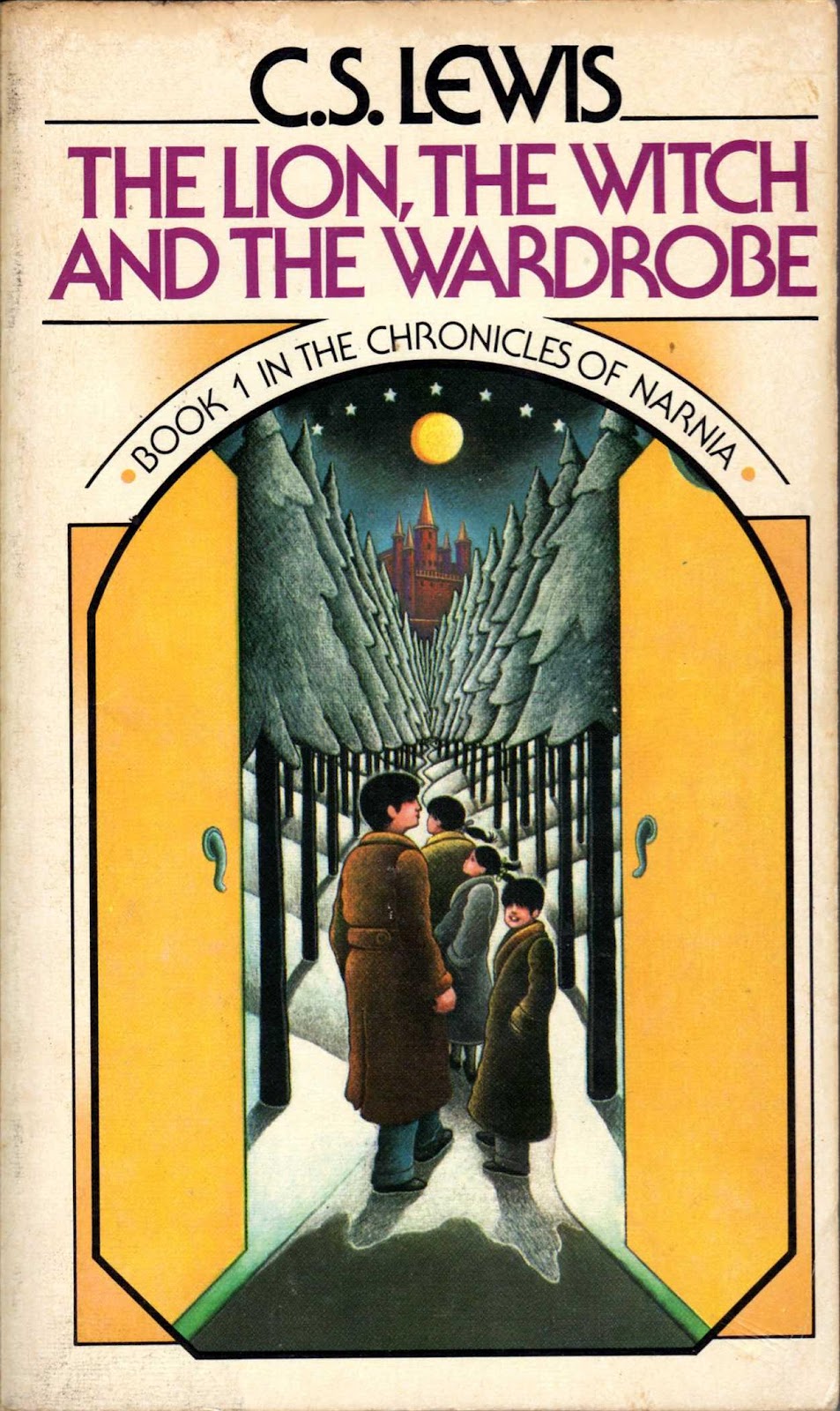
The Lion, the Witch, and the WardrobeI’ve never read Grossman… and I still may not. There are a lot of books on my ‘to read’ list, after all, and I’m not feeling like moving him up to the top of the queue. But now, I want to go back and devour C.S. Lewis. The picture is the cover of the edition I read as a child. It was the only one available at the time and sometimes it was sold in a big, boxed set. Mother searched everywhere to find all the books for me – this being back in the days when the internet was something that only DARPA used. They’re still magical books to read and Grossman touches on something very true when he notes the great economy of language in The Lion, The Witch And The Wardrobe. Great economy, but economy that feels very luxurious. I’m always amazed when I go back and read about the delicious foods that Tumnus the Faun served to Lucy: I remember sardines on buttered toast, in particular. But when I go back, it’s not as long as I remember. I remember it being a great, neverending feast with richly described (and very English) delicacies, but it’s really only a paragraph or two. If you want to move beyond the Narnia books but are wary of his Christian apologetics, try A Grief Observed about his own grief following the death of his wife and about grief in general.

Holy c–p! Slate.com published a review of a book of poetry! Should we have a party?

Weekend Reading – Dungeons & Dragons Made You Possible

thCA1MWRJ8Cutting one’s writing teeth on games of Dungeons & Dragons.

The worst part: we actually need to defend the importance of critical thought.

Lots of people read poetry, but not many people buy it.

Midweek Staff Meeting – Unpopular Philosophies


Michael Oakeshott and  the ‘politics of mortality.’

Books and bookstores are an essential social good. So say the French. Can you really disagree with them on this?

Amazon invents a library. That costs money to rent books.

Just because I love poetry, does not mean I appreciate sentimental blather about poetry.

My all-time favorite reply to the question “What is the one thing you like least about reading in print?” came from an American: “It takes me longer because I read more carefully.” Isn’t careful reading what academe was designed to promote?

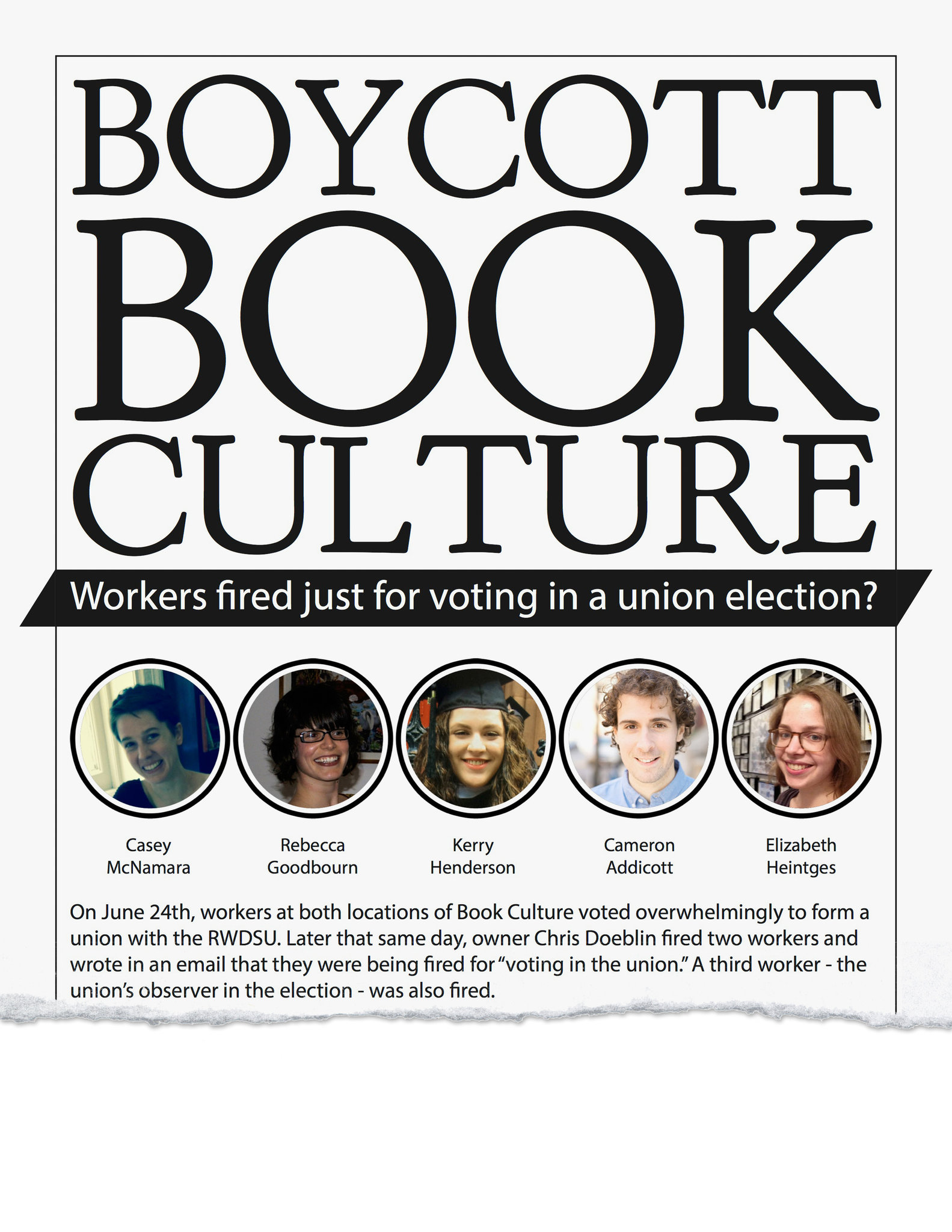
A union for bookstore employees!

Please note: this is from the organizing campaign. Book Culture employees are not unionized and the store rehired a bunch of fired workers.

Weekend Reading – Animal Metaphors


immanuel-kantI like hedgehog novels. I think. I don’t know. This is confusing.

The year of living Kantically.

‘The liberal state is in crisis, basically, because its regulatory, legal, and political institutions have either been captured, or have been laid siege to, by the economic interests they were created to control. While the liberal state was never intended to enforce distributive equality, it was always supposed to keep the power of big money from suffocating competition and corrupting the political system. This is the task it struggles to perform today and must recover fully if it is to regain the confidence and support of the broad mass of its citizens.’

Midweek Staff Meeting – Old School


The original avant-garde.

Philosopher Anthony Gottlieb is not a philosopher. Or something like that.

Go ahead – be wrong.

Class poetry.


Thursday Morning Staff Meeting – Reuse, Recycle


Attention is a debt, a tax; and no one likes those.

Palimpsets. Look it up, or else just click.

If you love to read old books, you’ve seen these.

bookpattern3

Monday Morning Staff Meeting – Local Boy Done Good

gal1-243x366If you read through the whole article (fascinating, in and of itself), you’ll see a contribution made by the Folger Shakespeare Library!

A great little way that the Indiana Poet Laureate is promoting a bit o’ poetry literacy.

Deep reading Dickinson.

I gotta recommend Diego’s. Have the Greek fellow do it, if he’s available.

I worry that the quality of public intellectuals has gone down in correspondence with the decline in the quality of the public’s intelligence.

But they’re doing something right over there – in this case, protecting brick and mortar bookstores from predatory pricing practices.

Weekend Reading – Utilitarianism


dc_guerrilla_poetry_insurgency_t_shirt-r25d98f20201d429295cd22d5cef3e520_804gs_512I need it.

The internet age and its reading discontents.

Approaching fatherhood philosophically.

The economist as novelist. The economist as literary critic/theorist.

The canon will never die. Or, rather, the debate about the canon will never die. Nor the canon, really. It will just get bigger. But if it gets too big, does it also get meaningless. It’s a legitimate question, though my own opinion is ‘no.’

Teach poetry.

Review: ‘The Catholic Writer Today’ By Dana Gioia


The good folks at Wise Blood Books sent me a chapbook of Dana Gioia’s long essay, The Catholic Writer Today. Unfortunately, it was sent to my mother’s house, so I’m just now finishing it.

First thoughts. Gioia is an excellent writer and a better poet and I share with him a disappointment in the decline of English language and especially American writers who are willing to explicitly let their Catholic faith be part of their public identity and let it inform their writing that way that O’Connor, Tolkien, Greene, and others did.

But I think that he goes down the wrong track and misses greater obstacles to a Catholic writer renaissance than his lament for the decline of literature friendly, Catholic periodicals.

What absorbs the Catholic intellectual media is politics, conducted mostly in secular terms—a dreary battle of right versus left for the soul of the American Church. If the soul of Roman Catholicism is to be found in partisan politics, then it’s probably time to shutter up the chapel. If the universal Church isn’t capacious enough to contain a breadth of political opinion, then the faith has shriveled into something unrecognizably paltry. If Catholic Christianity does not offer a vision of existence that transcends the election cycle, if our redemption is social and our resurrection economic, then it’s time to render everything up to Caesar.

I fear he understates the pernicious influence of reactionary radicals co-opting public faith. Furthermore, I fear he deliberately understates it so as to avoid drawing ire and by doing so, he fails to stake the ground that a revival needs. The Catholic League, under its stridently partisan leader, William Donohue, would certainly have no stomach for the brilliant grotesqueries of a modern Flannery O’Connor.

Art. Literature. Poetry.

These things are inherently liberal and progressive (even if individual practitioners are not) and when faith wears a conservative face, it becomes inherently unwelcoming to artists, writers, and poets.

Which is why Gioia’s criticism of the liberalizations of Vatican II are so infuriating and wrong headed. The Catholic writer did not fade into the background because the Latin Mass did! Vatican II was an open, spiritual engagement with the material world, much like the great, mid century Catholic writers Gioia so lauds. They emerged out of the same spirit and their influence has declined because of the same backlash against liberalism.

Here is my hopeful prophecy: I will wager that one of the legacies of His Holiness, Francis I, will be artistic. By giving the church a welcoming, loving, and liberal face, he is also welcoming writers and artists and poets and intellectuals back into the church and opening up greater possibilities for writers to let their work by informed by their personal association with the church because they will be able to do so with the knowledge that church is not going to judge or reject them, anymore than Waugh, Greene, Tolkien, or O’Connor were for their guilt, sins, doubts, gothicism, or obsessions with lost, pagan worlds.
Weekend Reading – We Are Confined


painfully-blueMyself without not others does not fully exist; or, Heidegger on the prison industrial complex.

There is no progress without philosophy.

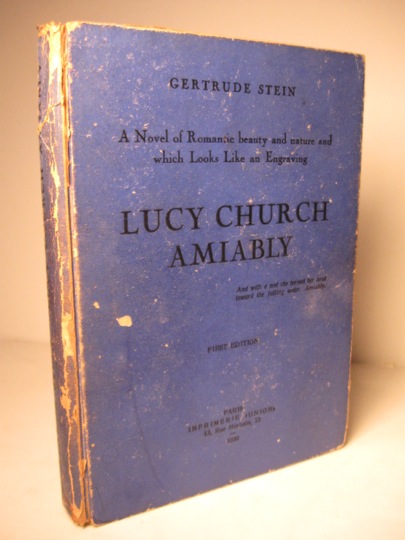
Gertrude Stein’s unofficial flak.

When poetry was a profession.

Gertrude Stein the bookmaker.