The Flail At Twins Jazz
Saturday night, I saw the New York based jazz quintet, The Flail, at Twins Jazz on U Street. They were joined by a local guitarist (whose name, if I heard correctly, was John Lee; but don’t quote me on that).
They are clearly a very good group, with an innovative sound and great chemistry. You can hear the ‘but’ coming, can’t you? But… I was disappointed. Honestly, I thought the addition of the electric guitar was a bad thing. His sound was very demanding, very dominant. Except for one song, I felt it was distracting. The insistent noise of the guitar left little room for the band members to switch up and let others take the lead and solo, because it rarely seemed able to slip into the background and let others take center stage.
On another note, the pianist looked like a clean cut Allen Ginsberg – his wild, middle aged Ginsbergian mane pulled back in a pony tail and his thick, leftist beard well trimmed in its fullness. I had to go home and read Kaddish after seeing him.
Return Of The Mack
Weekend Reading – Take That, Hitchcock!
Sunday Paper – Buying Banned Books In China
Manon Lescaut
I saw Manon Lescaut performed by the Washington National Opera at the Kennedy Center on Wednesday night.
I was very much looking forward to it, seeing it as sort of counterpoint to the wonderful Don Giovanni I saw last year, but with the unreliable lover being a woman (the titular Manon) rather than a man.
The music was wonderfully romantic, as you’d expect from a tragic love story by Puccini. But I just didn’t feel like, at least at this performance, the singers added much to it. No one really had that moment that made me go, ‘wow, that person just nailed it.’ The closest anyone came was Manon’s brother (simply called ‘Lescaut’), who captured the character’s rakish, lascivious greed, while never ignoring the (somewhat corrupted) core of fraternal love. Everyone else did their part, but maybe not much more.
Blue Rider (New Year’s Resolution, Book Eleven)
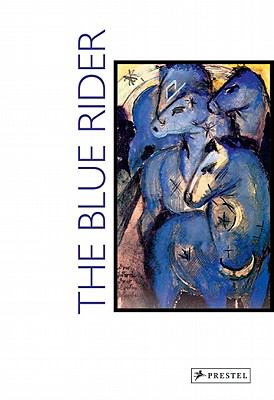 I was at MoMA in New York back in January and they had a wonderful exhibit on abstract art – Inventing Abstraction 1910-1925. There was some kind of an effort to make some kind of a point, but they failed quite masterfully at that. So, as a thematically/narratively curated exhibit… well, it really wasn’t. But as a grab back of awesome, early abstraction, it was freaking awesome. I love avant-garde art from that period. And I love how they incorporated music and especially poetry. Some Mallarme and Appollinaire, some of those lovely old journals and publications, with the poets wild typographies. Good stuff.
They also had some Italian futurist stuff, including a long poem/dramatic prose creation by Filippo Tommaso Marinetti, the manifesto writer extraordinaire of the Italian Futurists. Of course, those folks devolved fairly rapidly into Fascism.
Looking at some of the graphic design on Marinetti’s pieces in the exhibit, I couldn’t help but notice how much it looked those iconic covers of Ayn Rand’s novels (see here and here). They shared an obsession with technology and progress (Rand’s novels, Marinetti, and Fascism). Especially in Atlas Shrugged, her obsession with phallic, thrusting trains and long beams of powerfully strong steel.
But at the very beginning of the of the MoMA exhibit, was a little something about the Blue Rider Almanac, the love child/brain child of folks like Kandinsky (who claimed to be deeply influenced and move by Schönberg’s innovative music.
So, it seemed like fate when, a day or two later, I was in Rizzoli Bookstore (a great place for art books and for Italian language works) and I saw a book on the Blue Rider movement. Since I was on a kind of quest to buy a book at a bunch of famous bookstores and Rizzoli was on the list. I’d been to Rizzoli once before and it’s such an indulgent and decadent feeling place (though also pricey; don’t like for a bargain bin over there; but you do pay for quality).
So, I bought The Blue Rider and I”m now getting around to reading it.
The book itself reads rather like a catalogue or monograph written on an exhibition that never took place. Which isn’t a bad thing. If exhibition catalogues weren’t so darn expensive, I’d own a lot more of them.
When reading about the Blue Rider group on the little placards and seeing the collection of works and documents associated with it, I wanted to learn more about this group. I wanted to read about Kandinsky and Schönberg sitting down at a bar and chasing the same woman and then Franz Marc and August Macke struggling with the typesetting and printing of a broadsheet. I don’t know if these things actually happened (and the first one seems very unlikely), but that’s what wanted that went beyond just a catalogue and I didn’t get it.
Sure, there was some talk at the very beginning about which group drank at which cafe, but for heaven’s sake man, I learned that about some pre-Blue Rider groups! Where in the good Lord’s name did Kandinsky get drunk and take his coffee?! Part of this also about an incredibly drowsy writing style. We’re talking about some of the twentieth century’s most influential cultural figures, yet sometimes, I can hear a voice in my head while reading this saying, ‘Bueller… Bueller… Bueller…’
The book’s progression is also weird. First, there is a description of the cultural environment leading up to the formation of the Blue Rider group. Then there is some description of how they set up their first exhibition. Then there are brief bios of some major figures associated with the group. Then some bios of minor figures. Followed by a narrative history of later exhibitions and activities of the group and its members. And then the author tries to explain what Blue Rider group was about and wanted to accomplish. Then there are a bunch of photos and descriptions of places associated with the Blue Rider group. But those descriptions sometimes appear pulled from brochures. One of these places is actually a walking route across swampy moors. The author recommends that the reader, should the reader take this walk, bring some water. There’s even a recommendation that I, the reader, visit the Wernstein Am Inn in Austria. See what I mean? That’s not history, that’s… I don’t know. Advertising? National park service?
It feels like this whole thing was written without an outline. Like I said earlier, it feels a bit like an exhibition catalogue, but it’s not about an exhibition, so it lacks the unifying drive an actual exhibition might have imparted to it.
But I shouldn’t complain that much. For $19.95 plus tax, I’ve got reproductions of some stunning art work from my favorite period in art, plus some good history about a subject I knew little about (despite a great fondness for Kandinsky, if I ever knew about the Blue Rider group, I’d forgotten it by the time I’d reached MoMA.
Music For The City Of Light
On January 11, I dragged my better half and her parents to a concert at the National Cathedral entitled, Music for the City of Light.
The program consisted of a mixture of choral and orchestral music from the second half of the seventeenth century by Lully and Charpentier. I was very excited to hear the music by Lully, because his name sounded very familiar; while I enjoyed his pieces, I know realize that I was thinking of the Spanish born philosopher usually known as Raymond Lully. This other Lully isn’t bad, though.
The music was beautiful. I particularly loved the sacred pieces.
But…
It all sounded like thin water because the National Cathedral is a terrible place of the kind of intimate music being performed. We’re talking purely acoustically. The sound that reached us (and we weren’t that far back) was very weak. I’m sorry, I’m not paying to hear concerts at the National Cathedral just so I can strain to hear it. That rich, full sound we associate with early Baroque music is lost and replaced by something much reedier in those acoustical conditions.
I had hoped to introduce my mother and father-in-law to some of my favorite kind of music and make a pitch for the richness of my culture’s musical canon. Instead, I wound boring them literally to sleep. But who can blame them? After all, it wasn’t like there were any loud noises to keep them awake.
Weekend Reading – Here To Stay
First Staff Meeting Of The New Year – No Kids, Please

Philosophers should stop talking about their kids.
What’s killing opera? Hint: it’s not opera.
Philosophy, poetry, Craigslist, and language.
 the coffee philosopher