The Value Of Art


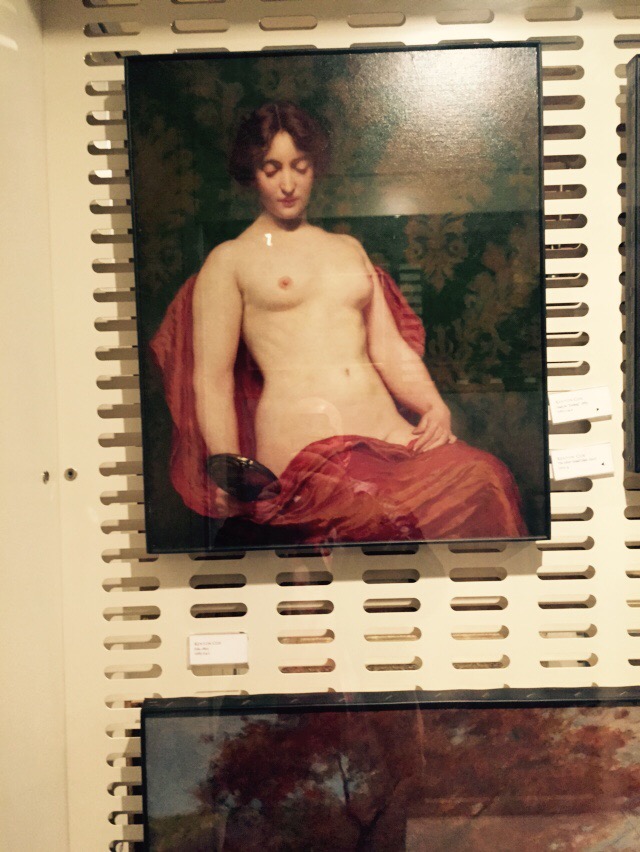
While walking through what I think of as my secret galleries in the American Art Museum, I was arrested by a series of nudes by Kenyon Cox. Something between Manet’s breakfast heresies, classical/traditional nineteenth century nudes, and Pre-Raphaelite romanticism. I couldn’t call them great paintings. They weren’t great paintings – certainly not equal to those predecessors – but inexplicably arresting. And I can’t deny that my interest – my affection – for these nudes was not just aesthetic, but also erotic.

After seeing those paintings, I wandered over to the painting conservation studio where you could watch the conservators work through glass walls. Despite being the painting conservation studio, the only item being worked on was a life sized neo-classical statue of a young woman. A conservator was crouched down, rhythmically brushing below the statue’s right knee with a soft brush. It must be a gift to be able to work in the arts, I thought to myself. I also reflected that it was nice that her co-worker, working on a computer not a painting nor sculpture, flashed me a pretty smile. Less happily, I wondered if they might actually be grad students with little hope for real and decent paying job in the field due to the sequester (recently) and general disinvestment in the arts (long term trend).

The artistic vocation is a bit of unicorn now, isn’t it? Art, including literature, is undervalued and we are no longer taught to appreciate it. Even worse, we are no long taught to engage with it.

I’m going to praise Taylor Swift, here. I know. Crazy, huh? But not for her music. God, no. But for withdrawing from the streaming service Spotify. Services like that teach us that artistic production has no value to the consumer. Swift formally said f–k you, my work has real monetary value and Spotify is not valuing it. That’s worth something.
  

‘Whiplash,’ Jazz, & Good Luck


We went to see Whiplash at the next last day before closing forever West End Cinema. Firstly, awesome film. Really awesome. Made jazz drumming incredibly visceral and also, J K Simmons is as awesome as you’ve heard. Awesomer. Awesomererest. Also, the lighting was very good and evocative. Great use of a sort of cinematic chiaroscuro, but without drawing attention to itself.

We were lucky because the three of us (Rockus, one of my oldest friends, and my better half) got the last three tickets to the showing.

Afterwards, I just had to see some jazz. So Rockus and I went to eat at Sala Thai before visiting Twins Jazz (my favorite jazz club in the city). Sala Thai had a decent, but not great jazz trio (guitar, bass, and drums). Then, we got the last two seats at Twins Jazz. The last two. After getting the last three at Whiplash. Karma, dudes. Coming through.

The band have an excellent trumpeter and a very impressive pianist. The sax man was, sadly, uninspiring. You kept waiting for him to really bust out… but he never did.

Anyway. A fine night.

Weekend Reading: The Persistence Of Memory


On the persistence of print.

The loss of faith and the decline of classical music.

How do we read cases of divine deception?

The immortal fame of the poet’s soul.

2 3s


That’s just a silly bit of titling, really. Last week, I saw Emmanuel Ax and the National Symphony Orchestra play Beethoven’s Third Piano Concerto (for piano and orchestra), followed by an Ax-less performance of Beethoven’s Third Symphony. That’s the Eroica (not the Erotica; check your CD cover more closely and you’ll see that I’m right).

Both are nicely epic pieces. I’m not a good enough judge of piano playing to really know, but it was obvious that Ax conveyed great feeling through those keys. The orchestral moments felt like a massive tide of humanity’s emotions crashing and the piano as Beethoven’s personal, passionate dialogue with humanity.

The Third Symphony, which was famously had its title changed after Beethoven became disillusioned with Napoleon, is, of course, like the earlier concerto, an epic work. Ludwig didn’t do small symphonies. There were moments when the brass took center stage and you could feel, beneath an otherwise very positive score, a certain simmering resentment. Maybe it’s just, but it felt like those small moments were the expressions of his disappointment and anger with Napoleon’s perceived betrayal of revolutionary sentiments.

At the end, Ax came out and played a solo piano piece – I’m not sure what it was; possibly Chopin, but it sounded a little more recent than that.

Ensemble Galilei At The National Gallery


I used to regularly attend the Sunday concerts at the National Gallery of Art. Usually they were some small group – a quartet or a duo (piano and voice; flute and guitar; harpsichord and violin; etc) – playing a mixture of older classics and some modern composers or off the beaten track.

This one was lured me in because it mentioned Marais, who was a great seventeenth and eighteenth century composer for the viol de gamba. But though they played a piece by Marais (and it was, of course, fantastic), they mostly played Scottish and northern European pieces and the combination was… eclectic. Frankly, I unsatisfied. I didn’t cohere for me. The mixture of Shetland reels, Greensleeves, and French composers from the Baroque was like a poorly curated exhibit, especially because little effort was made to explain to us (the audience) how the pieces made up a single program, beyond the simply fact of just being played together.

On the other hand, they have a nice exhibit of El Greco paintings. Mostly, they are paintings from the National Gallery’s permanent collection and some paintings from nearby museums (Dumbarton Oaks in DC and the Walter in Baltimore). Nothing spectacular, curation wise, but it’s just nice to see a bunch in one place.

Happy Haydn


Last Thursday was a pretty awful day. And it was capped off by a hellish commute. But near the end, I was listening to WETA (our local classical station) and the final movement of Haydn’s Trumpet Concerto in E Flat Major came on. Actually, the host had announced it earlier and I was waiting (not patiently for it).

If you heard a few bars of it, you’d immediately recognize it. Haydn will never be considered the greatest composer, but damn if that concerto doesn’t immediately lift one’s spirits. I once heard that Haydn only wrote one concerto in a minor key. He’s not a melancholy guy (even though he wrote some funeral Masses). His love of the music of the common man always comes through (Copland could have learned something from him) and there is something about so much of his music that just makes you feel better.

That finale to the trumpet concerto almost made up for the thirteen odd hours that preceded it.

‘La Boheme’ At The Kennedy Center


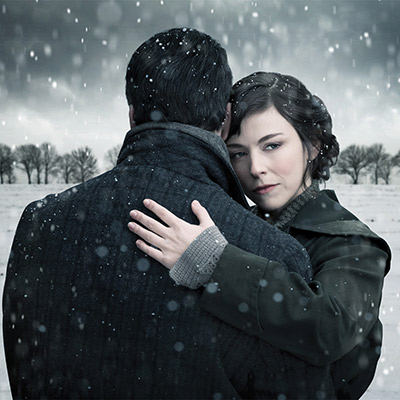
OPOSALa-boheme_400x400It’s hard to go terribly wrong with La Bohème. And to their credit, the Washington National Opera did not. They had two casts, but I checked a friend of mine who sings in the WNO (mostly small roles and the chorus) and he assured me that it was a case of an ‘A’ cast and  ‘B’ cast. And certainly, the folks I saw were pretty good. No one stood out in massive way (the way Abdrazakov did in Don Giovanni a few years ago), but everyone excellent. And while one thinks of a couple of the arias, really, La Bohème is an ensemble drama, so that’s just fine.

And yes, I cried. A moment, when Mimi is lying in bed and Rodolfo and all her friends are about – it was actually a moment of silence. And that was when I lost it. All the music building up this incredible sadness and regret and when it pauses, the floodgates open. The magic of Puccini, to take such a melodramatic plot, which is, on its own, too nonsensical to cause tears, and build this incredibly romantic, longing music around it.

Hirshhorn, Zola Jesus, Green Screens & The Sublime


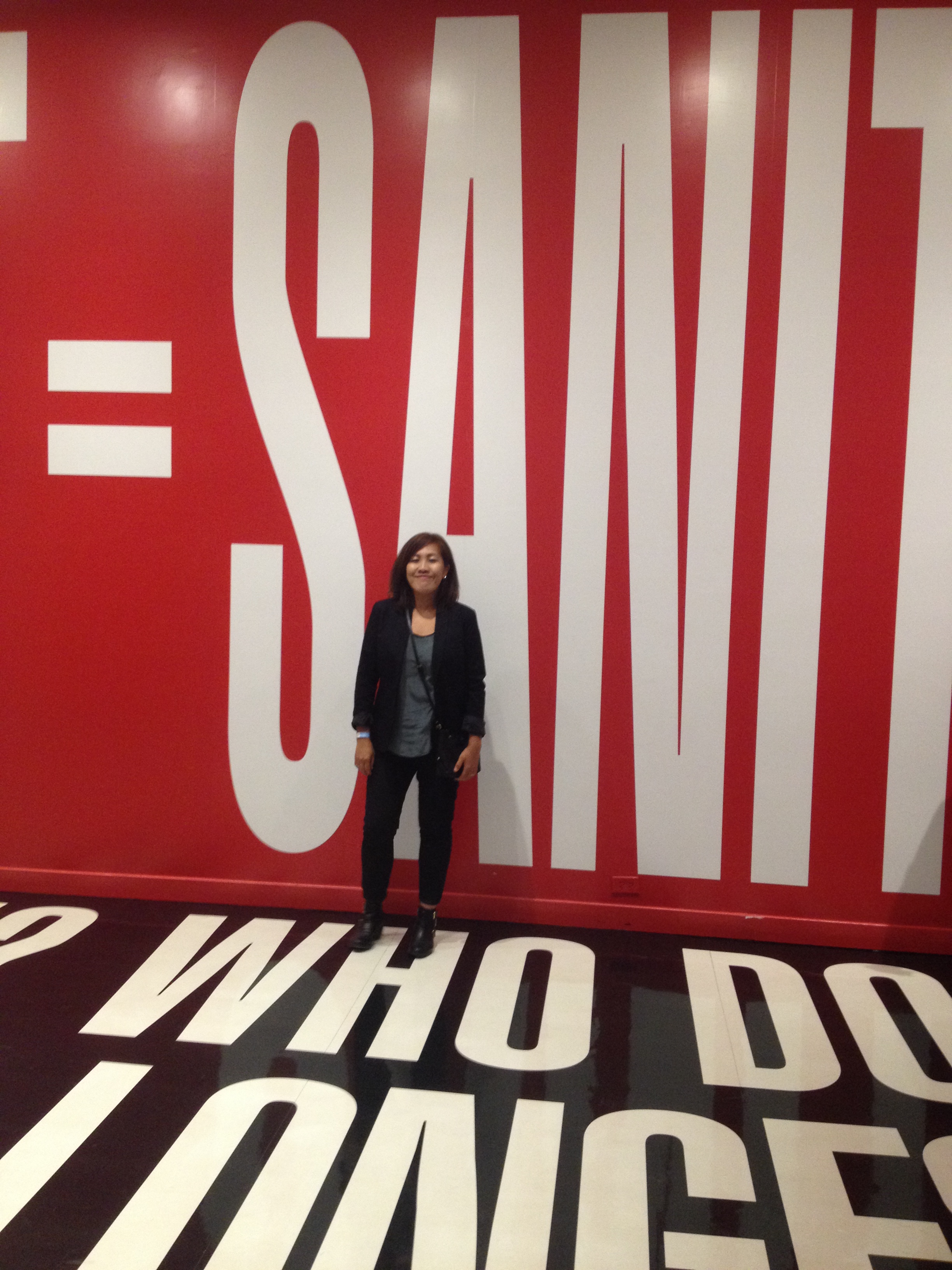
A beautiful woman at the Hirhhorn standing in front a wall that reads 'Sanity'
A beautiful woman at the Hirhhorn standing in front a wall that reads ‘Sanity’

Friday night was ‘Hirshhorn After Hours,’ which we went to four years ago. We loved it and I’ve kept checking for it, but this the first time I’ve seen it come back.

It was done for the opening of two exhibitions, Days of Endless Time and The Hub of Things. The former is a new exhibition of video installations and the latter was a somewhat disappointing curation of art from the existing collection.

The Hub of Things is advertised as a fresh look at some of the best works from the collection, but the selection and arrangement and overall curation just didn’t make any sense to me. I expect an exhibit to be something beyond ‘hey look at this cool stuff,’ but for me, this didn’t rise above that.

Days of Endless Time was cool, though. The first two installations were very affecting, especially the very first one, which featured a cellist with her back to us playing on an impossibly green plateau among the Swiss Alps. When she played, the sound echoed back, sometimes nearly perfectly, what she just played. The description of the piece (Su-Mei Tse’s L’Echo) talked about ‘the sublime.’ As soon as I saw that word – sublime – it really clicked. It’s a very Romantic vision of the sublime. Think of Wordsworth visits to the Alps or the Swiss born Rousseau’s (who is really the link between the Enlightenment and the Romantics) book about his walks or also Kant’s idea of the sublime (the noble sublime and the beautiful sublime; not really the terrifying sublime, in this case).

The singer Zola Jesus played outside. Unfortunately, there really wasn’t any dancing, but I liked her music. It was sort of the bastard child of Faith and the Muse and the Cranes playing a combination of Tori Amos covers and gothic noise musical settings of the final, scribbled ramblings of a poisonously suicidal Taylor Swift.

Also, there was done objection to the wearing of my super awesome Speed Racer t-shirt. But then a security guard walked up to me and yadda yadda I sang the Speed Racer theme song and there was general agreement that my super awesome Speed Racer t-shirt is super awesome.

Les Fêtes De l’Hymen Et De l’Amour Ou Les Dieux d’Égypte


lesfetes_banner_text_EditThis was my first time back to see the Opera Lafayette in five years. Probably because it’s been five years since they were offering really cheap tickets (for their twentieth anniversary, they offered twenty dollar tickets; five years ago, for their fifteenth anniversary there were, you guessed it, fifteen dollar tickets; hopefully, I can go back before their twenty-fifth anniversary).

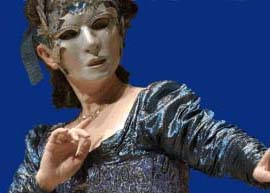
In this eighteenth century opera-ballet by Jean-Philippe Rameau, the word ‘pleasures’ (plaisirs) kept coming up. ‘Pleasure’ was even a character in the slightly connected tableaus that made up the work. Pleasure, really, is what it’s all about. The music, the plots (such as they are) are all about sensuous, though rarely actively erotic, pleasures. It’s like a massive, pleasure generating machine. You can almost see elegantly dressed figures in mid-eighteenth century garb walking about an immaculate garden discussing the pleasure of love and poetry and music and dance.

A classical Indian dance troupe was incorporated into the work and it was absolutely seamless. It blended with the faint orientalism of the work and, unless you already knew, the average viewer would not have guessed that this wasn’t a regular part of any production of the work.

Six dancers played ‘water’ or, to be more specific, the Nile River. Even when they were not the focus, they were also moving in an undulating fashion to represent their liquid nature and their biggest solo dance was the highlight of the show, but later, some contemporary, hip hop style dancing was briefly thrown. While it put a smile on my face, it also took me out of the piece. I was no longer sitting in a bower next a French noblewoman, watching Rameau’s latest piece, but something modern staged for me in Washington, DC.

Anyway, go see it if you can. And while I’m not about to place Rameau above Lully, I do now count myself a fan.

Midweek Staff Meeting – Philosophy, The Opera


Yes, they made an opera out of Wittgenstein’s Tractatus.

Assigned reading that’s worth reading.

Ringing church bells for exercise and mathematics (group theory, to be exact).