Before They Are Hanged


I don’t know why I chose to return to this series, having read the first volume a couple of years ago, while visiting the in-laws in Thailand (pre-fatherhood, I used to get a lot reading done in Thailand; not that it wasn’t constantly fascinating, but a time whenever around you is speaking a language you can’t understand is a pretty good time to read a book).

While my memory of the first book isn’t as sharp as it could be, I felt that several characters got some nice fleshing out, relative to their introduction in the earlier volume, and some interesting new characters were introduced.

But we also got some clunky exposition dumps and… was the major, continuing plot thread a snipe hunt?

But I reckon that I will finish this series, regardless.

Behind The Throne


This is a good old fashioned space opera. The technology is well thought out and reasoned to (mostly) logical conclusions, but this is not hard sci fi. This is blasters and space empires.

And pretty good ones. It’s exciting and fast paced, breezing you past some iffy world building to keep you in the action (which is the point; space operas don’t make complete sense, so it’s the author’s job to make sure it’s thrilling and interesting enough to keep your disbelief suspended).

A matriarchal space empire, founded, apparently, by folks from India, with a plots to steal the throne, poison the empress and inspire a rival space kingdom to invade. And the protagonist is a princess who fled to find her father’s killer and became a smuggler and gunrunner before circumstances force her to return and (eventually, I don’t think it’s giving much away) become Empress of the Indaran Empire.

I look forward to reading the next volume.

Oathbringer


I read some mediocre reviews of this novel, but I enjoyed it. In general, I’ve enjoyed the series (known as the Stormlight Archive; I find the use of the word ‘archive’ to be positively ridiculous).

It was exciting, with some interesting expansion upon the world building (Sanderson is very good at world building; his fantastical locales are well thought out, generally consistent and, while detailed, do not let the world building get in the way of a decent story). There was a sort of big reveal – a dark secret at the heart of this particular fantasy world – which I didn’t find nearly as morally earth shattering as, apparently, I was supposed to find it. But that’s a small(ish) thing.

A few things felt silly, but, c’mon, it’s a fantasy novel. In the end, it’s just quality pulp, right? Don’t be so hard on him for these things. The stakes felt high and while I wish he wouldn’t feel compelled to write such enormous, backpack busting tomes, it didn’t drag for me.

I suppose that I could try and describe the plot and events, but as the third book in a series where each book is longer than it’s predecessor (the first was, if I remember, eight hundred odd pages; this one is over twelve hundred pages), that seems like a fool’s mission.

Ice


Ice is considered a sort of lost classic and it didn’t disappoint. Technically science fiction in a post-apocalyptic mode, it takes place after an event (probably man made, but the unnamed protagonist honestly does not know for sure) results in a quickly creeping ice age enveloping the earth, constantly narrowing the band of habitable land and resulting in civil breakdown, wars for ever more scarce resources and the rise of local warlords.

The protagonist is obsessed with a girl with pale skin and nearly white hair who has known since she was a child. Abused in some way, she is drawn to abusive men. The protagonist, it is made clear, is probably no more than the best of a bad bunch.

The tone is stark and nameless (no names of people nor countries) and matched by the first person narration of a soldier for hire who is driven by his obsession/love/nostalgia for this mostly unattainable woman (partly because she is often kept by more violent and powerful men than he).

I hate to use this term, but I kept on thinking of this as Kafkaesque. The lack of definite names and quest for something close, but unattainable and also incomprehensible.

Great book. Really. Great.

Shadowheart


He, umm… he did not, shall we say, stick the landing.

The final volume of Shadowmarch series managed to both be frenetic and also to drag terribly, an impressive accomplishment, but not fun to read.

Much of the book is an extended battle sequence – a series of engagements around the primary locale (Southmarch, if you’re interested) that are so frequent that they cease to hold the attention.

The climactic battle, involving a freed/awoken (though not ‘woke’) god, depended on some world building that the book didn’t earn. And some story lines turned out to be absolute nothings. There was, for example, a potentially interesting and morally weak poet named Tinwright who managed to take a large quantity of pages only to not do anything important or meaningful, in the end. It was like someone fired Checkhov’s gun, but missed and then did nothing more with it.

Finally, the ending went on for something like two hundred pages after the climax. Sure, Tolkien did that… but he was Tolkien. I didn’t know Tolkien, but I read a lot of his works, and you, sir, are no J.R.R. Tolkien.

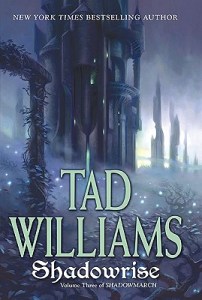
‘Shadowrise’ By Tad Williams


The Tad is back! By which I mean that Shadowrise, the third book in his Shadowmarch tetralogy, is much better than the disappointing second, Shadowplay.

This one is more exciting and the characters have grown so that they are less irritating than they sometimes were in previous installments (though I would have liked more from the perspective of Chert, the funderling [read: fantasy dwarf]) and he seems to have firm control over the narrative.

I’m already reading the fourth book and will blog about it soon, if my daughter will let me finish it.

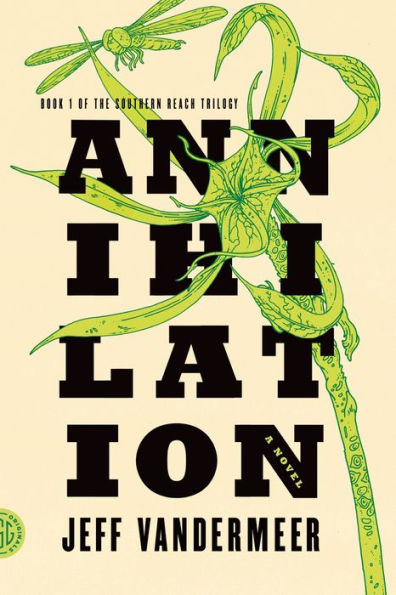
Annihilation


Annihilation got excellent reviews and while I’d wanted to read it for a while, was only compelled to read it, for fear that I might see the upcoming movie before reading the book.

Let’s just say that I was surprised. Read more

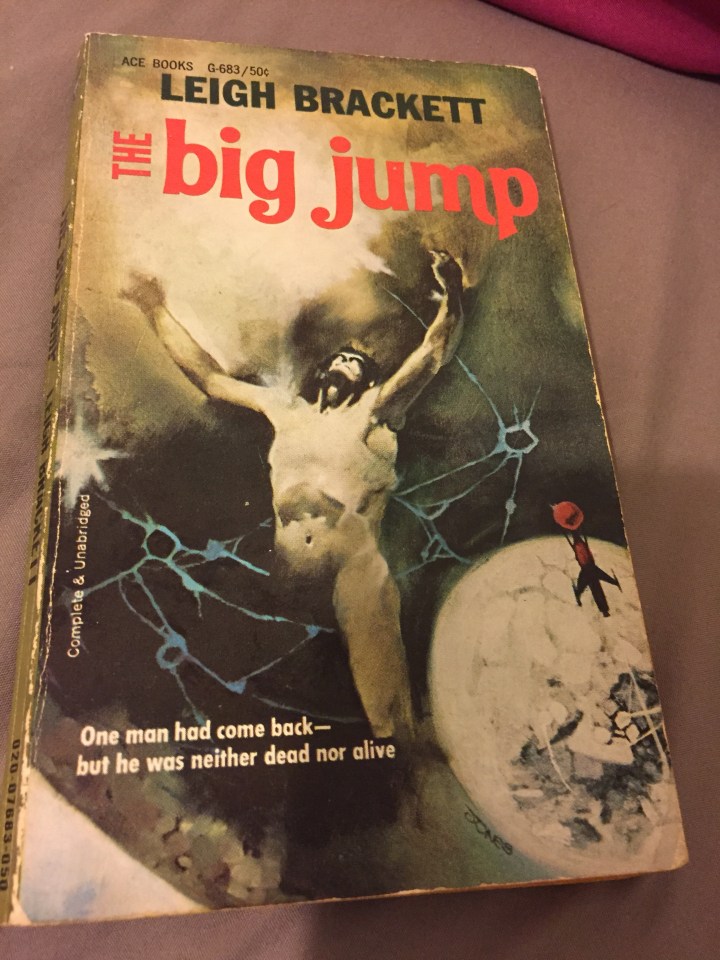
‘The Big Jump’ By Leigh Brackett


Leigh Brackett is one of the great pulp science fiction writers of the twentieth century. While definitely writing pulp, most of the time, her writing is several degrees better than most every one of her contemporaries. And if you’re a feminist, she was one of the few female sci fi writers of the period (Andre Norton is probably the one who comes closest in output and quality; LeGuin was something like a contemporary, though a little later than Brackett, but is one a whole other level – which is no dig on Brackett [nor Norton]; at least 99.9999% of all writers are not as good as LeGuin). Read more

‘Shadowplay’ By Tad Williams


Point number one, Williams’ writing is not relentlessly grim, but his books are far too grim, at least, for the writer to go by ‘Tad.’ It’s just weird.

Second, I think I have merely transferred my bibliomaniacal tendencies to buy books towards checking them out from the library. Books on hold are being made available faster than I can read them (and certainly, fatherhood has slowed down my reading – a nearly seven year old, precocious, and active adopted child does not lend itself to quiet contemplation, though the trade off is certainly worthwhile). I had to renew this book once and I feel like the other two borrowed books in my possession will not be done before they are due. And I have more in the queue. We all have problems. This one, I suppose, is not even the worst of mine.

The level of ‘high fantasy’ – magic and monsters and the like – is higher than before. In fact, this series is actually, pretty textbook high fantasy, but it feels like it isn’t, because there is a certain grimness running through it.

I miss the realpolitik of the first volume, but it did a decent job of fleshing out the world and making the threats faced by the ‘good guys’ (two of whom are actually girls; arguably to primary protagonist is a self-possessed adolescent girl) more three dimensional than before.

But I still don’t feel one hundred percent convinced, though his writing is good enough, clearly, that I have now read five books by him (in two series).

‘Shadowmarch’ By Tad Williams


I recently finished Williams’ Memory, Sorrow and Thorn series and this book (the first of four in a new series) is both better and worse than the earlier series. Better in that Williams has a better handle on how to manage the plots and characters, making it seem less sprawling than it really is. What is, in truth, place setting for future volumes, feels more organic. It also feels more mature, in a sense. The political scenery feels more realistically entangled.

There is, however, nothing so wonderful as the lengthy opening of The Dragonbone Chair, which lets you immerse in the quotidian life of the future hero as a lazy kitchen helper, as well as get solid glimpses of the forthcoming plot through his eyes, in part.

I will definitely keep reading, though I won’t rush out and get the second volume right now.