Paul Krugman was inspired by Isaac Asimov’s Foundation novels.
Mistborn Trilogy
 A while back, I wrote about the first book in Brandon Sanderson’s trilogy, the eponymously titled Mistborn. Well, I was at the laundromat last night and while waiting for some clothes to dry, I finally finished off the third volume: The Hero of Ages (which follows The Well of Ascencion). And they’re all three pretty good. They’re don’t rise to the level of ‘literature,’ assuming we want to get into the argument, but they’re very good. And perhaps let me find a nicer, less controversial way to put it than to bring up the ‘L'(iterature) word: Brandon Sanderson is a solid writer with good plotting and characterization skills, but he’s no J.R.R. Tolkien nor Ursula K. Le Guin nor the lately lamented Ray Bradbury (he’s also not a George R.R. Martin, but maybe that’s another discussion – where does Martin fall on the ‘L’ word scale).
I’m not interested in rehashing plot, but his characterizations, as I’ve said, is pretty good. Mainly his heroes (his villains are actually a little unimaginative, except when one, in particular, appears as voices in the heads of other characters, but that’s more about those other characters than it is about that villain; and the names, too – ‘Lord Ruler’ and ‘Ruin?’ – c’mon, take some time with it and come up with something better, and that last book’s title, too – The Hero of Ages? – pretty unimaginative name for your prophesied saviour). And their relationship, including the romantic ones, feel less cheesy than is the norm in the genre.
I will say that the last two books read a bit like Sanderson hadn’t necessarily intended to write a trilogy or at least hadn’t fully mapped it out (though he clearly had done so when it came to writing the final two books).
He’s written a sequel to the trilogy, taking place hundreds of years later and called The Alloy of Law. I’m not driven to read it.
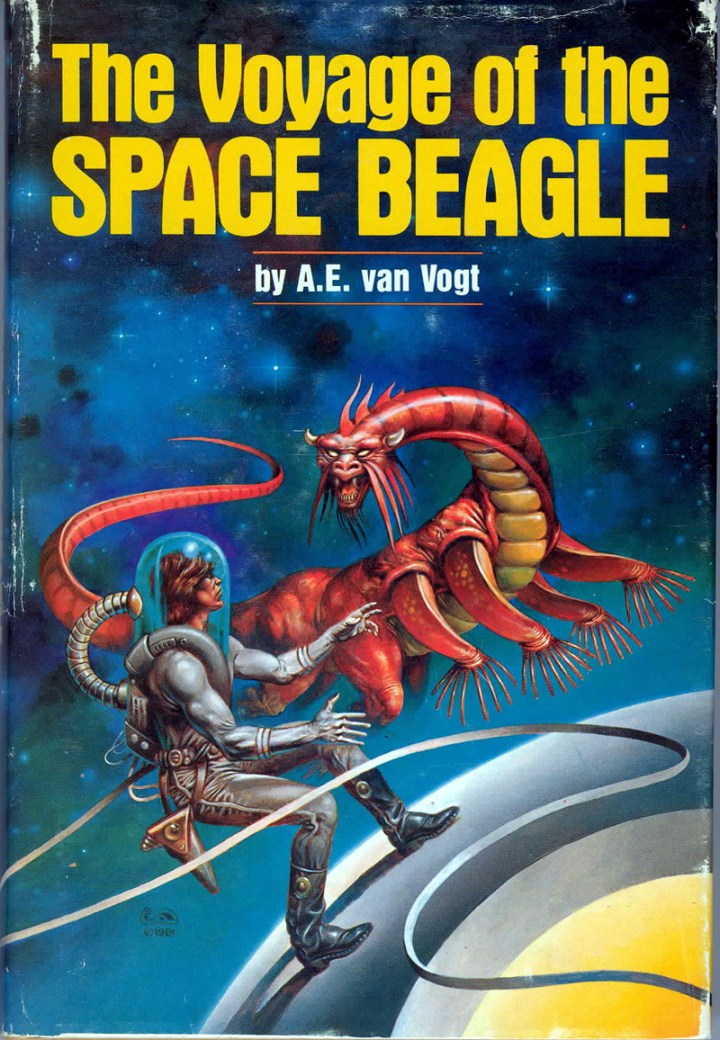
But Sanderson is clearly a skilled and enjoyable writer of fantasy. Right in the sweet spot of all those rows of thick paperbacks (when I was a kid, in used bookstores, sci fi and fantasy books were all old pulp and mostly relatively thin, but in the new bookstores, like the B. Dalton’s at Countryside Mall, they were thick tomes of at least four hundred pages) with the colorful, detailed covers that I would frequently manage to convince my mother to buy one from.
Ray Bradbury Has Left The Earth
 My mother loved two science fiction writers – Ray Bradbury and Isaac Asimov – and used to often give me their short stories to read when I was child. I confess that I read more Asimov than Bradbury, but when my mother gave me his Dinosaur Tales… well, like all good boys, I loved my dinosaurs.
Midweek Staff Meeting – The Space Ether Will Give You The Power Of Flight
The Nerd’s Guide To Reading…
Suggestions For Next Season

Love & Sleep
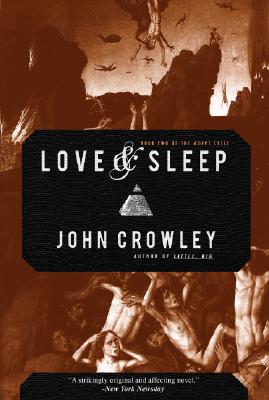 Having nearly finished the second of John Crowley’s AEgypt novels, Love & Sleep, I was finally beginning to understand Crowley’s purpose in his Aegypt novels: he creates a sort of dreamy atmosphere, topped with some new age mysticism, whose purpose is to capture the small mysteries of life.
The long digressions into Elizabethan and Renaissance alchemy and magic serves mainly to inform the sense of mystery and confusion Rosie Mucho feels when her daughter picks up an ordinary ear infection. In short, it is not really fantasy. Nor is Crowley attempting to be the American Umberto Eco.
But then, when I reached the last few pages, he threw in this bit of fantasy, implications of a possible real mystic conspiracy (though admittedly, a low stakes one) and the possibility that all the discussions of magic and alchemy was not actually a means to understand one’s present life, but that actually there used to be (and maybe still is) such things.
I should step back and talk about one premise of the book. The main character, Pierce Moffett, is writing a book. The premise of that book is that things changed. That sometime in the sixteenth century, magic ceased to work. Not only that, the records of it truly working are gone. Erased. All those miracles happened. But not really. Because when the shift occurred, the world changed so that they never happened. But some memories remain of the world where they did happen (could happen again). In short, that our world, is not the first (which, by the way, is the premise of the whole Maya 2012 prophecy thing – not that the world will end, but that the world will change dramatically, so that, in a sense, the old world will have ended and a new one begun).
So, I’m curious what the next volume (Dæmonomania) will hold.
I Am Telling The Truth
“I am an artist…and therefore a liar. Distrust everything I say. I am telling the truth.”
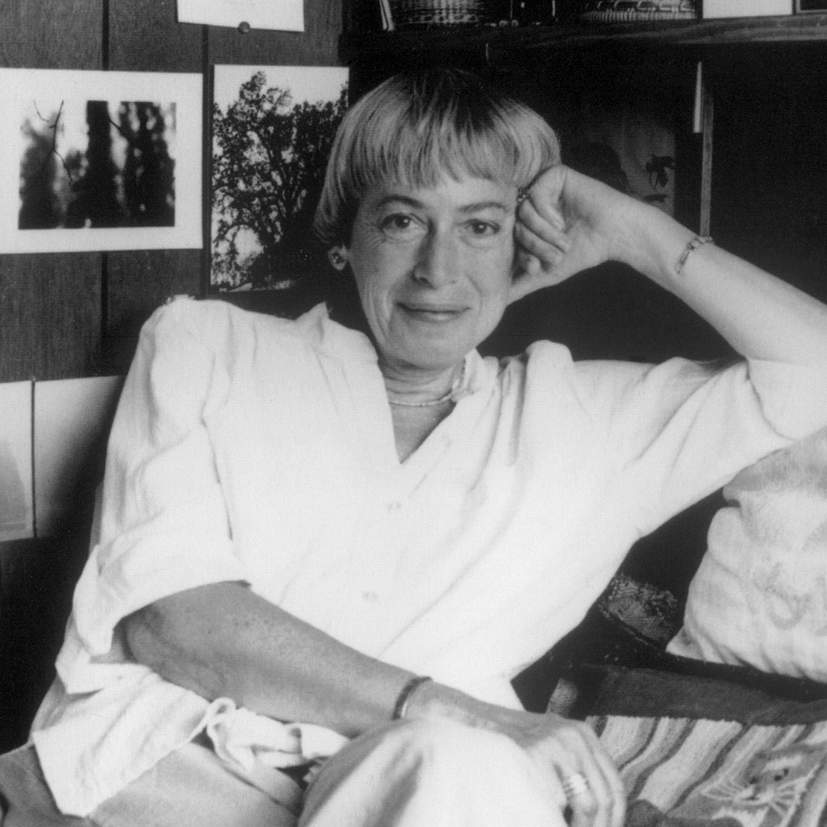
-Ursula LeGuin
This Caught My Eye
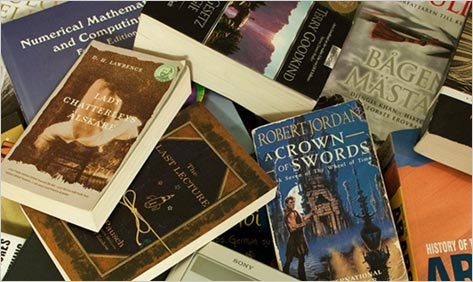 In this article about spring cleaning – the hard task of getting rid of books you no longer have any intention of reading again – my eye was caught by one of the books in the picture: Robert Jordan’s A Crown of Swords.
This is a book I read recently (I’m now on it’s successor, The Path of Dagger, the eighth book in the series) and a book that I will, in time, sell to a used bookstore. The Wheel of Time series is thirteen books long and I think may have one more to go, so no, I’m not going to re-read it. Also, it’s not that well written. Jordan fails to make his sprawling cast of characters as interesting as George R. R. Martin makes his. But still I keep reading. And I will finish the series. And then probably pick up another.
I have read people blame Jordan for the recent proliferation of multi-volume series that stretch beyond even the usual trilogy and sometimes I wonder how it is that I am on the eighth book and how the author keeps finding ways to keep the story going (and he does keep it going, I’ll give him that; it may be flawed, but it never feels like he’s stretching things out just to stretch it out, but rather that the task is so large that it necessarily takes a while and he also has a good idea for how political impediments can so easily multiply and tumble down upon each other).
Why The Death Star Was A Bad Investment
The Death Star was not an intelligent allocation of resources towards the goal of maintaining power.
Gregory Koger explains why, offers some alternative investments the Emperor could have made.
 the coffee philosopher