Coffee Diary – July 24, 2012


My first coffee of the day was at a perky pink diner in Georgetown called Serendipity III that we ate at while waiting for the Thai Embassy to re-open. Everything there was enormous and good, but not so good as the price was high. They spelled ‘coffee’ ‘caffe’ and charged three dollars and twenty-five cents and didn’t do refills. But it was good coffee. This was before walking down to Bridge Street Books. They still have tables set outside with piles of inexpensive books – mostly Dover Press editions. When I was living in a bathroom on Prospect Ave and making $1500 a month, I spent virtually all my disposable income on books at that table. Today, for just twenty-five cents more than my coffee, I picked up a copy of Veblen’s economic classic, Theory of the Leisure Class. Painfully relevant economic insights, though his historical insights… meh. Has the book comparing Veblen’s leisure class to Debord’s spectacle been written yet? Someone ought to get to work on that. And if it has been written, someone needs to send me a complimentary copy.

The second cup was at a Barnes and Noble in Alexandria. An espresso, which was disappointing, as most espressos are. I bought a copy of Asimov’s Science Fiction. I was torn between Asimov’s and sister mag Analog, but Asimov’s had a picture of a dinosaur on the cover and a story called Mating Habits of the Late Cretaceous (which is actually a banal and unrealistic bit of marital realism in the style of Carver, except it’s not really very realistic – the marriage I mean, not the thin sci fi veneer around it), so I was suckered into picking that one.

Tuesday Morning Staff Meeting – #Occupy Literature


Germany not prepared to let books be devoured by Amazon.

Where did science fiction find you?

Heroic poets.

#OccupyGaddis

Yeah, sometimes the government does it better than private industry. Sometimes a lot better.

Should the ban on the publication of Mein Kampf in Germany be lifted?

Monday Morning Staff Meeting – Monaco Is Officially The Least Poetic Nation In The World


Tor/Forge (sci fi and fantasy division of Macmillan) has a DRM free e-book store coming.

The Folger Shakespeare Library is releasing its editions as e-books.

You’re not procrastinating quickly enough.

There is simply no poetry in Monaco. None. Zip. Nada.

Who are your poets?

Re-Read


This article asked a bunch of folks about the books they have re-read numerous times over their lives. Naturally, many a young adult or children’s books.

For me, it’s probably Tolkien’s Middle Earth novels, from The Hobbit through The Return of the King. Though the latter is the one Middle Earth novel I have re-read the least (including The Silmarillion) because the ending is just damn sad and hard to get through. All that struggle, just to come back and find that your home has been warped into a nightmare of the early industrial age (of course, Tolkien was capturing was he felt coming back from the Great War to a pastoral England that had changed while he was away). But I can still read The Hobbit over and over and hear those opening descriptions of what a hobbit hole is (and is not).

Sorry We Missed You


Midweek Staff Meeting – New Sci Fi


Are public intellectuals disappearing, or is their ‘art’ simply in decline?

New sci-fi you could be reading right now.

Getting a massage from Marshall McLuhan.

A DC poet’s homage to the poet Jack Gilbert.

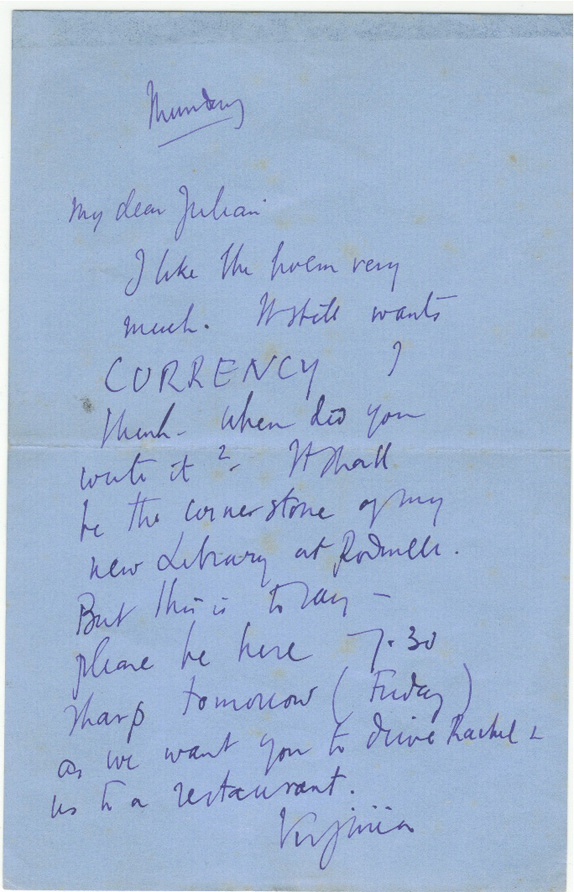
Tuesday Morning Staff Meeting – The Wit & Wisdom Of Woolf


Rilke wasn’t the only one to write letters to a young poet…

There is more than just art in a good arts district (because, as they say, art is life).

Should I buy a new translation of Mallarme?

Dungeons & Dragons… not very good at card games.

The Path Of Daggers


So, I finished book eight of the Wheel of Time (WOT) series by the late Robert Jordan (he died, so Brandon Sanderson of Mistborn fame is finishing up the last couple of novels in the cycle).

This all started because my field director left the second WOT book lying around. But just six more books to go (I think).

Let me just sum up briefly. You’ve got the chosen one who uses special magic only available to males (but it also, eventually, drives them insane). You’ve got women who can use magic (mostly members of an order called Aes Sedai) who don’t trust male magic because, you know, the insanity part. But many do understand that chosen one (his name is Rand) is the only one capable of defeating the evil force threatening the world. And he’s got a bunch of friends. The total cast of characters from who ‘viewpoint’ (I put it in quotes because the novels are written in third person omniscient) is Song of Fire and Ice sized, which can be unwieldly. Jordan generally handles it well, though sometimes it seems to slip out of his control.

In the past, I’ve talked about some of the weaknesses, like Jordan’s laughable inability to depict romance with any realism (it can get really bad in Path of Daggers; one character tells another how to better relate to his wife, saying you should do x because your wife is thinking y, and he follows that advice and the wife literally thinks to herself, ‘thank heavens my husband did x because of I was thinking y before’). Also, Rand, the ostensible main character, was okay in the first few books, when he was basically Frod-esque, country boy cipher, but now he’s simply insufferable and the sections featuring him are just a pain to read for that reason.

All that was a digression, actually. To begin anew, ‘In the past, I’ve talked about some of the weaknesses, but now I want to talk about some strengths.’

Jordan gets some of the politics and difficulties right. One of the most frustrating parts of the book is the way that challenges and obstacles keep mounting for the intrepid heroes. It can be overwhelming for the reader and sometime I want to scream, ‘for heaven’s sake, quit dumping c–p on the heroes and let them win the freaking war against evil, already.’ But…

But this is, like most fantasy novel worlds, a roughly medieval style society, except with magic. And while some characters can ‘Travel,’ or move long distances instantly via magic, most can’t. This means long, long delays in communications and movement, which causes grand schemes to constantly unravel because the people who think they’re in charge are unaware of a crisis occurring half a world away. Which is about right. It’s frustrating, as a reader and empathizer, but it’s ‘realistic.’

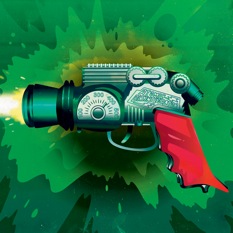
That’s Right… A Science Fiction Musical Western Starring Gene Autry….


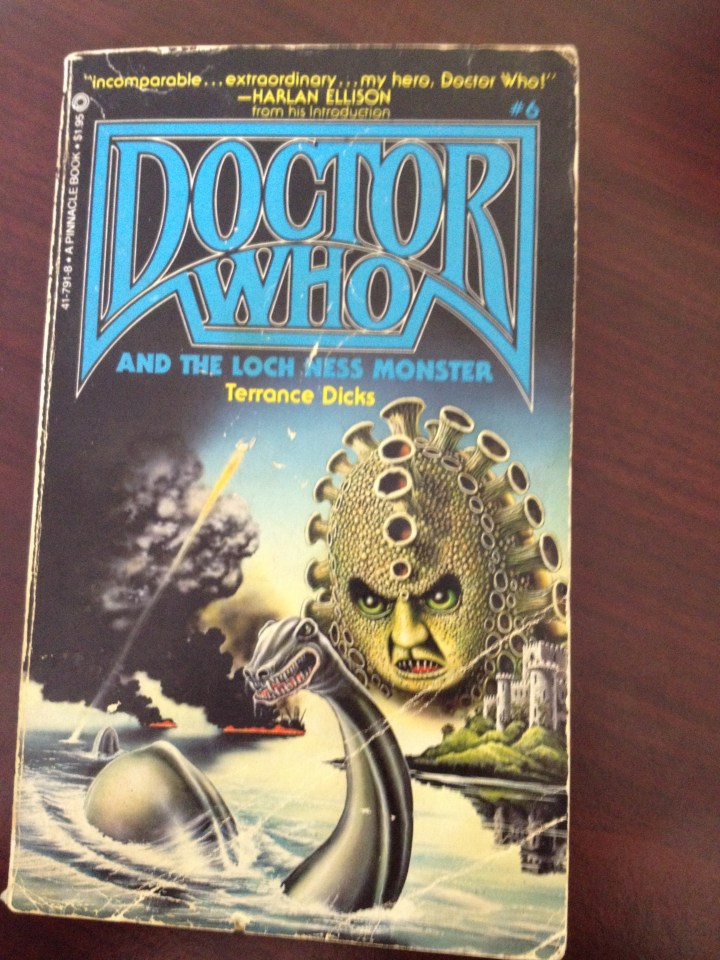
Doctor Who And The Loch Ness Monster


I read a dozen  Doctor Who novelizations long before I ever saw a single episode of the actual show. My sister, who lived in England for a bit, told me about it and when I was in the third grade, I purchased novelization from a booth at a science fiction convention in Norfolk, Virginia.

Initially, the only novelizations available were a series of ten books published by Pinnacle. Nine of the ten were based on episodes featuring the Fourth Doctor, the inimitable Tom Baker (though one, the first one I ever read, Doctor Who and the Dinosaur Invasion, was actually a Third Doctor story on television).

I am re-reading a bunch of these.

Today, Doctor Who and the Loch Ness Monster.

Like a lot of novels, it was written by the producer who managed the show that particular season (and either wrote or had a hand in writing many of the scripts). As you can imagine, that person might have been busy, so yes, these are just dashed out novels. So stylewise, it’s pretty minimal. You read them because you’re fan.

The actually read a bit lit scripts, with occasional internal musings by the characters, as if the writer suddenly remembered that this would be read and not seen on the screen. So the style is your basic, propulsive pulp style – which is just fine with me, by the way.

When broadcast, it was called The Terror of the Zygons, which was just silly, because no one knows who the Zygons are, whereas ‘Loch Ness Monster’ is a pretty recognizable brand name, so it made sense to rename it when they got the chance.

You can tell this was done early in the Fourth Doctor’s career, both by the presence of Harry Sullivan and Sarah Jane Smith as companions (who were holdovers from Jon Pertwee’s Third Doctor) and by the fact that, stylistically, it is a Third Doctor style alien invasion of earth story. Otherwise, it’s got a kind of 1950’s paranoid style sci fi feel to it (body snatchers, mists, unstoppable monsters).

I was a big fan of monsters as a kid and I love the Loch Ness Monster (I still sort of believe it exists, mainly because I want to believe) and I’m glad that, even after the Zygon conquest is thwarted, the monster (a Skarasen, which is a sort of giant Zygon milking cow/killing machine) goes back to Loch Ness and lives happily ever after.

Incidentally, I purchased this book with a gift certificate I won as a ten year old after being named co-winner of a costume contest for my awesome dragon costume that my mother made for me (with an awesome tail with a surprisingly complicated system for attaching it while also allowing it ‘play,’ i.e., to swing about in imitation of Godzilla destroying Tokyo).