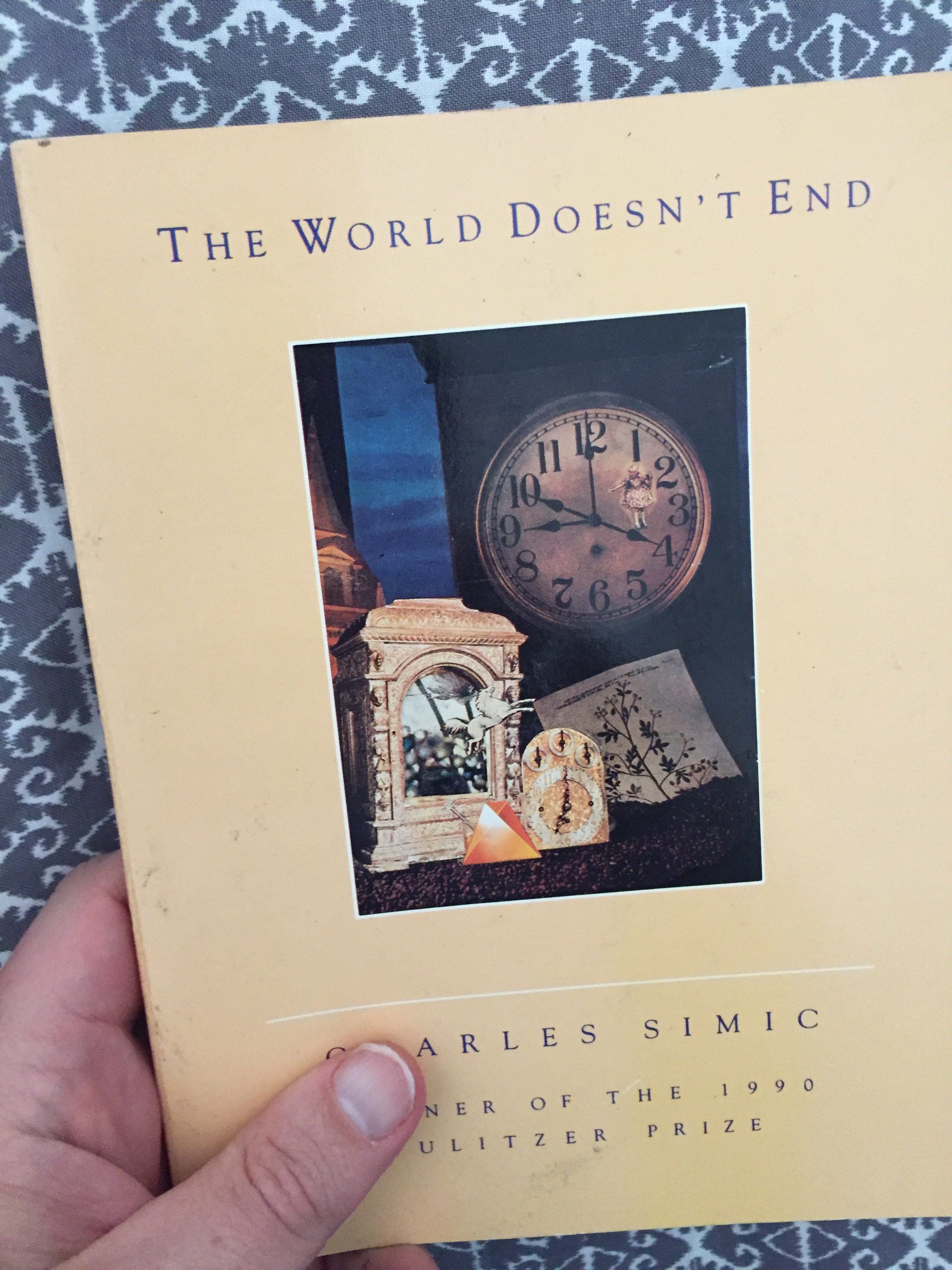
Maria Edgeworth, William Wordsworth & David Ricardo


I read this little piece on William Wordsworth’s visit to Ireland and the extent to which he was influenced by what he saw there (both in terms of the political and ecological content of his poems). It also noted his encounter with Maria Edgeworth, the author of Castle Rackrent.
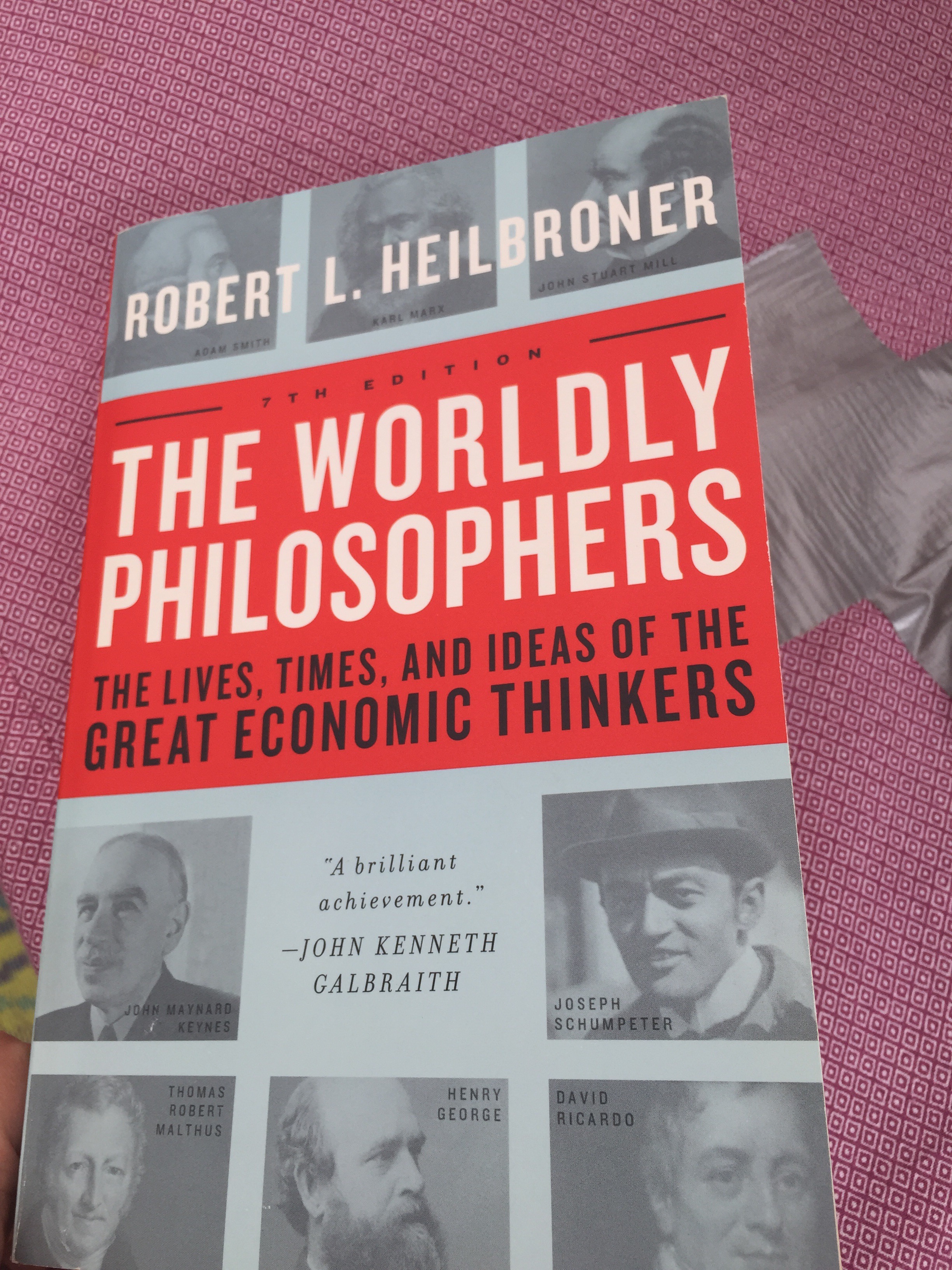
Later, I was re-reading my favorite bit of a beloved book, The Worldly Philosophers. My favorite bit of that book (after the description of Thorstein Veblen washing dishes with a garden hose) is the section on Thomas Malthus and David Ricardo in the late eighteenth and early nineteenth centuries. In that section, it notes the correspondence (and influence) one Maria Edgeworth had on Ricardo.

When I saw the Edgeworth name on page 85, I wondered, could that be the same one? Flipping over the page, when I saw Castle Rackrent mentioned, I obviously knew it was.

That’s it. Just a fun little thing. But you should definitely read The Worldly Philosophers. I actually had it in my bag because I have been intending, for some time, to loan it to a friend who going to be studying business. My father once semi-famously said that one should never confuse a business degree with an education. I thought that a book about influential economists might split the difference a little bit. So I had it in my bag, in case I should run into him.

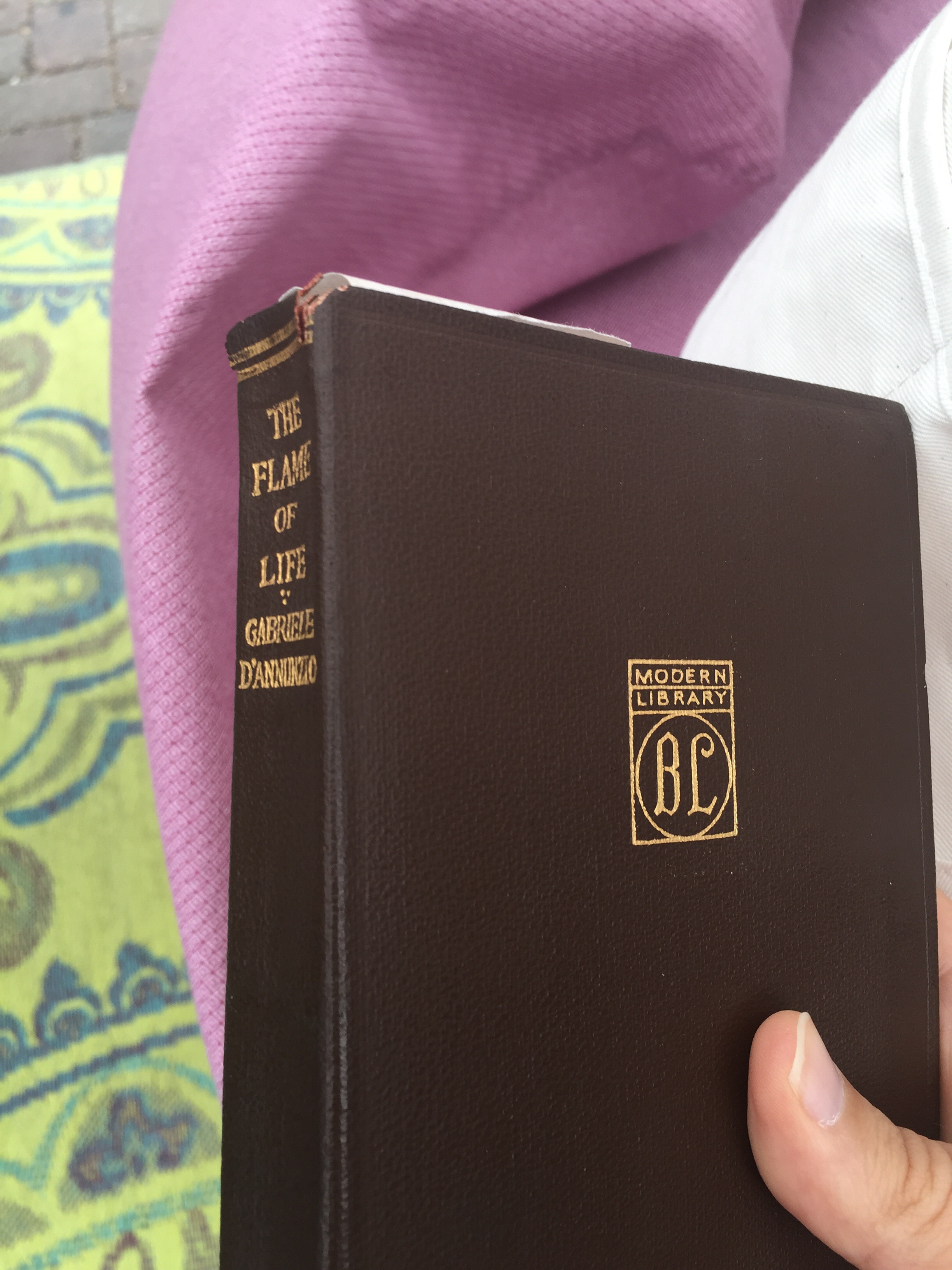
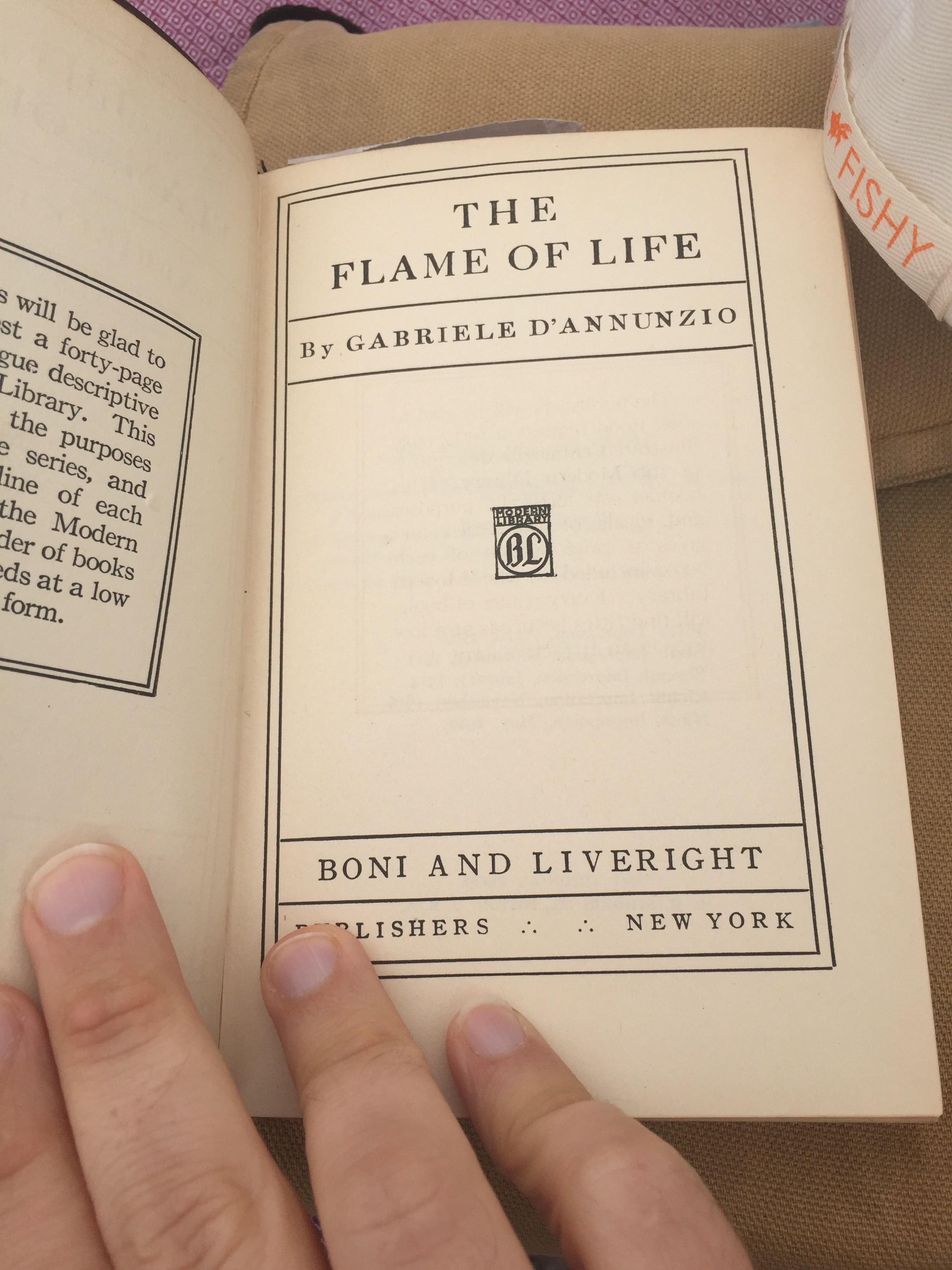
‘The Flame Of Life’ By Gabriele D’Annunzio


I bought this book in complete ignorance of anything buy visual and tactile beauty; as a physical object. But I wasn’t wrong in guessing that I would enjoy what would surely be some wonderfully overwrought prose.

The plot is wafer thin (Monty Python reference) and driven by issues and concerns that seem positively ridiculous. A dionysian poet named Stelio enthralls a lushly imagined Venice with his wild declamations on art and beauty. Among those enthralled a beautiful actress (former courtesan, too?) alternately called Perdita and La Foscarina. Their love (and presumably, their passionate sex, though that is never mentioned nor described) is voluptuously erotic, but it is haunted by La Foscarita’s greater knowledge of impending knowledge. Yes, she is a nearly decrepit thirty-four (I’m guessing the young genius poet is in his mid-twenties). I’ll admit, those concerns pulled me out of the narrative a bit. Maybe if he had been twenty and she was thirty-nine, I’d have seen the problem more clearly… She is also haunted by the memory of a beautiful and, needless to say, virginal singer named Donatella. Poor Perdita believes that Donatella is destined to be Stelio’s life partner.

But it’s not about plot. It’s about lengthy digressions on art and poetry and architecture and Richard Wagner’s death (which bookends the novel; placing the action around the year 1883). It’s about painfully decadent prose stylings that you will either love or that will force you set the book down before the fifth page.

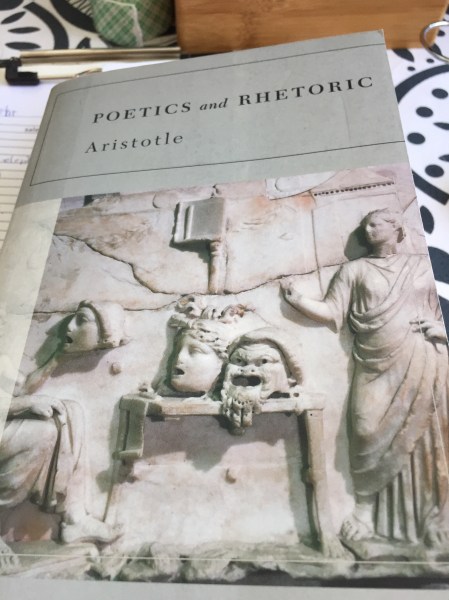
‘Rhetoric’ By Aristotle


I probably owned this book for at least a decade before I started reading it recently. Just a quick glance would have indicated it’s not nearly so long as it appears. First, because it also have the Poetics, which I’ve already read (not that it would hurt me to read it again, but we are focusing on reading Rhetoric for the first time) and second, because the left hand side of the page is just for notes on the text, which, even if you read them, means lots and lots of empty real estate on half of the pages.

I’ve been on a minor ancient (western) philosophy kick, having also read some Sextus Empiricus recently.

My motivation for picking this book was two fold: availability (I owned it) and a (misguided) belief that this would actually contain a great deal of logic. I don’t know where I got the idea, but I had been under the impression that a good chunk of Aristotle’s inductive logic writings could be found here. Smart readers of this blog will have figured out by now that I was wrong (less intelligent readers may still be waiting for the answer to be revealed).

Can’t really say that I got many deep insights in the actual art of rhetoric. In that respect, Quintilian is a much better guide. There was a little logic, in the form of Aristotle’s frequent references to enthymeme’s, a type of syllogism. But, of course, syllogisms themselves are discussed in the Topics, not Rhetoric.

So do I get some more Aristotle? Something beyond his Politics or De Anima and try to find one of his actual books on logic?

Maybe, but it seems like a lot of work and possibly relatively expensive and I’d have to hide the purchase from my better half.

No, I’ve got a nice looking copy of Cicero’s De Oficia on the shelf that I saw the other day, and that seems like a much more likely choice.

‘A Philosophy of Walking,’ By Frédéric Gros


I had a B&N gift card, a coupon, and an hour to kill when I bought this book, which is light reading; something playful that is a very good way to kill an hour or two.

The structure is more or less alternating chapters, with a introspective musings by the author on the nature of walking (and of walking in nature; urban walking gets short shrift) being followed by a biographical sketch of writer or philosopher (usually, though also Gandhi).

Overall, the first half or so of the book is the best. The first author delved into deeply is Friedrich Nietzsche and his story of the German philosopher’s mental and physical decline was downright moving and his deftly illustrated the importance of (usually solitary) long walks in the countryside to his process and mental well being. The section on Rimbaud was almost as good. The one on Kant provided an interesting counterpoint to Nietzsche. The one on Rousseau… was okay. I said he gives short shrift to cities (the walking about which Gros philosophizes is more hiking than a stroll) and the chapter on, ostensibly, Baudelaire, the great flâneur, contrives to be mostly about Walter Benjamin and is not terribly respectful of that mode.

But shouldn’t criticize too much. It is not philosophy, in an academic sense, but a brisk read. Perfect, perhaps, to take on a long, silent walk. Silent because, as Gros writes, ‘But above all, silence is the dissipation of our language.’

The Sunday Paper – Shuffling The Tarot Deck


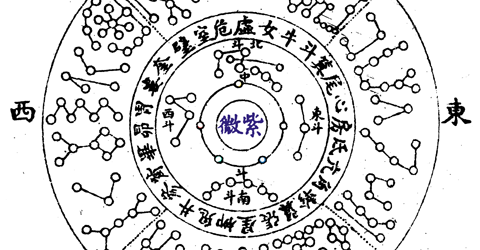
Economic model or astrological tool?

Economists use ‘mathiness’ to disguise their astrologies.

Old fashioned literary hate mail is the best literary hate mail. Today’s internet trolls just can’t compare to the greats of the genre.

We just don’t make good polymaths anymore.

‘Thunderbird’ By Dorothea Lasky


I feel vaguely guilty about this book, because I got it for free from Wave Books, because they were late getting some books I’d ordered sent out (Wave Books is a great publisher of contemporary poetry and I feel guilty about inconveniencing them and cutting into their margins; on the other hand… free poetry!).

This was my first time reading Lasky’s poetry and, at first, I found it a struggle. Not difficult, just not my kind of thing.

But I persevered and was pleasantly rewarded by a series of political and feminist explorations. Basically, I didn’t like the first two poems in the book, but thought everything else was pretty super awesome.

From ‘I Want to Be Dead’

I want to be dead
After all the ultimate act of self-indulgence is to be dead
Histrionic bareback

I will make one tiny objection, though. The fonts are terrible. Or rather, the titles of each poems are in a terrible, bold, gothic-y font that strains the eyes and take me out of the poem whenever my attention wanders to the top of the page.

Happy Birthday, Ginsberg


Collected Poems Of Chika Sagawa


SagawaCoverSPDI took my time reading this book because, more than most poetry, each poem needed to be read slowly and read at least twice. She died at age twenty-four, which is not only sad because of how much potential literature was lost, but also a reminder of how little I’d accomplished at twenty-four. Ugh.

As for the poetry itself, you have probably guessed that I found it amazing. We could go into a discussion here about translation and what not, but I’m really not in the mood. It’s free verse and, according to the intro, this was a wildly revelatory new movement in the Japan of the twenties and thirties. Supposedly, there wasn’t even a word for ‘poetry,’ merely ‘haiku’ and ‘tanka.’ Which is something like if, in English, there were no word for poetry, but only sonnet and villanelle. Besides the long nightmare of too many villanelles, imagine the astonishment of T.S. Eliot’s strange poetry suddenly appearing?

In English, we don’t get an appreciation for how formally groundbreaking her poetry was (not that she was the only, or even the first, Japanese writer to experiment with this), but we can appreciate it’s strange beauty. Heavily influenced by French poetry, it also (in my crude, sad, poor understanding of Japanese culture, which is probably just a horrible mash up of ridiculous stereotypes) feels distinctly Japanese.

Nature and the natural movement towards death (and decay? or do I mean ephemerality?) is frequent. I was constantly struck by how often ‘green’ appeared, but not in a natural sense. Or perhaps underlying that everything is part of nature (and inevitably dies? or is inevitably resurrected?). Snow is the second most common… motif? No, not motif. Maybe just a recurring word. And not so recurring as green.

Here is a short one, maybe not the best, but one whose first line repeatedly struck me:

GATE OF SNOW

People’s outdated beliefs are piled up around that house.
— Already pale, like gravestones.
Cool in summer, warm in winter.
For a moment I thought flowers had bloomed
But it was just a flock of aging snow.


East City Bookshop


While I missed its opening, fortuitously scheduled for April 30, also know as Indie Bookstore Day, because I was in Chicago or somewhere like that, I did eventually make my way over to East City Bookshop last Sunday.

It’s a little funky to get to, though it’s very near Eastern Market, and my first impression was a little off putting, it bears further exploration.

I was off put (or put off) because the first floor is small, with not many books. There were many shelves of books placed cover out, instead of spine out, which screams (to me), we have a small and poor selection!

Luckily, there were some stairs to a much larger downstairs which had a very nice and large children’s section and a well curated fiction and poetry section. The poetry section was not large, but I found Ocean Vuong’s much talked about debut (which I eventually bought), and Last Words from Montmartre by the late Taiwanese writer Qiu Miaojin (published by the awesomely reliable folks at NYRB; they had a number of books from that imprint and it’s a sure sign of quality).

While I didn’t partake, there was a big comfy couch and what looked like a play area for artsy activities for kids, though there also seemed to be a lot of wasted space.

In the end, it’s super close to an area where I spend a lot of time and someone clearly spent some time and attention to selection, even if there are some (to my mind) missteps in organization.

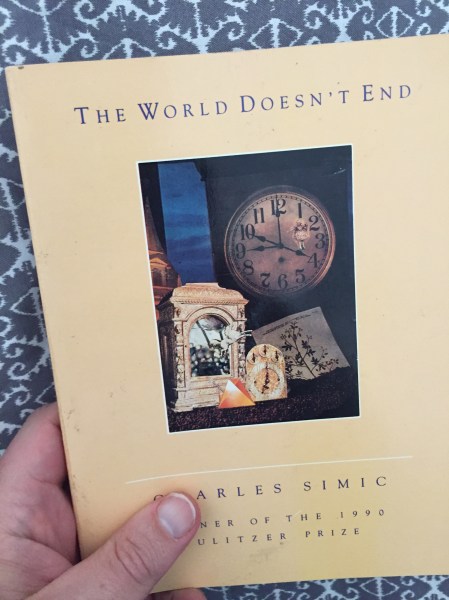
Re-Reading Charles Simic’s ‘The World Doesn’t End’


It’s hard to overstate how much this book affected me, because it opened my eyes to the infinite possibilities of contemporary poetry and poets. Upon re-reading, I found it as good or perhaps better than I remembered. The poems were more melancholy than in memory, as well. The world may not end, but that is also as much to say that suffering does not end, as well.