Ezra Pound: Canto LIII


The Fifty-Third Canto might be the longest yet (twelve pages) and, at first glance, appears almost like an academic chapter, filled with Chinese characters, references to figures from the history of China.

Woven within a sort of history of Chinese rulers (and other figures, as well, but it is hardly post-colonial historiography that Pound practices), is another tale, that of the development of accounting techniques (like using knotted rope to record figures) and early money (metal disks, pierced in the middle so that they can be strung onto a string). Within also are admonishments to rulers on how govern effectively and justly.

And MOU-OUANG said:
                 ‘ as a tiger against me,
                          a man of thin ice in thaw
aid me in the darkness of rule’ 

While I won’t pretend to offer a definitive meaning (particularly since it is a fragment taken out of a much larger whole), I simply want to draw attention to that Asian style of writing – which, as I have noted before, should perhaps be better described as ‘style of English translations of Asian literature.’
Ezra Pound: Canto LII


As noted earlier, this begins a new section of The Cantos, though I can’t say whether this was a determination made by Pound or by the publishers at New Directions. Judging by the notes (warning?) that open this new section, we are entering into some Cantos heavy on the poet’s Chinese phase.

Know then:
             Toward summer when the sun is in Hyades
Sovran is Lord of the Fire
                  to this month are birds.
with bitter smell and with the odour of burning
To the hearth god, lungs of the victim
              The green frog lifts up his voice
                  and the white latex is in the flower

It goes on for some time in such a fashion. I would rather think of this passage, and similar transcendent and lyrical passages throughout, than on the most explicitly anti-semitic line yet, which occurs early in the Fifitieth Canto and which I don’t intend to repeat here.

Ezra Pound: Canto LI


Finished the Fifty-First Canto and yet not even a quarter of the way finished!

This one is equal parts glorious and frustrating. It opens thusly:

Shines
in the mind of heaven   God
who made it
more than the sun
in our eye.
Fifth element; mud; said Napoleon 

The rare, explicitly religious reference (though the Cantos have been chock full of references to popes and priests, they appear more in their temporal capacity than spiritual) then almost immediately knocked down by the ‘mud’ and ‘Napoleon’ line.

Almost immediately following, he goes on a tirade about usury or ‘usura’ (he wields the latter almost as if it were the name of some Greek deity. as when he writes I am Geryon twin with usura). Throughout though, he uses strongly archaic language – like a pre-Raphaelity poem – and some hints of a back to the land aesthetic. Much of it is beautiful. Like some other sections, I am reminded of nineteenth century translations of classical Greek and Roman poets.

He ends with a disconcerting switch to what we might call ‘Pound’s Chinese style.’ The next to last line reads very much like a line from one of Pound’s translations from the Chinese: in the eel-fishers basket

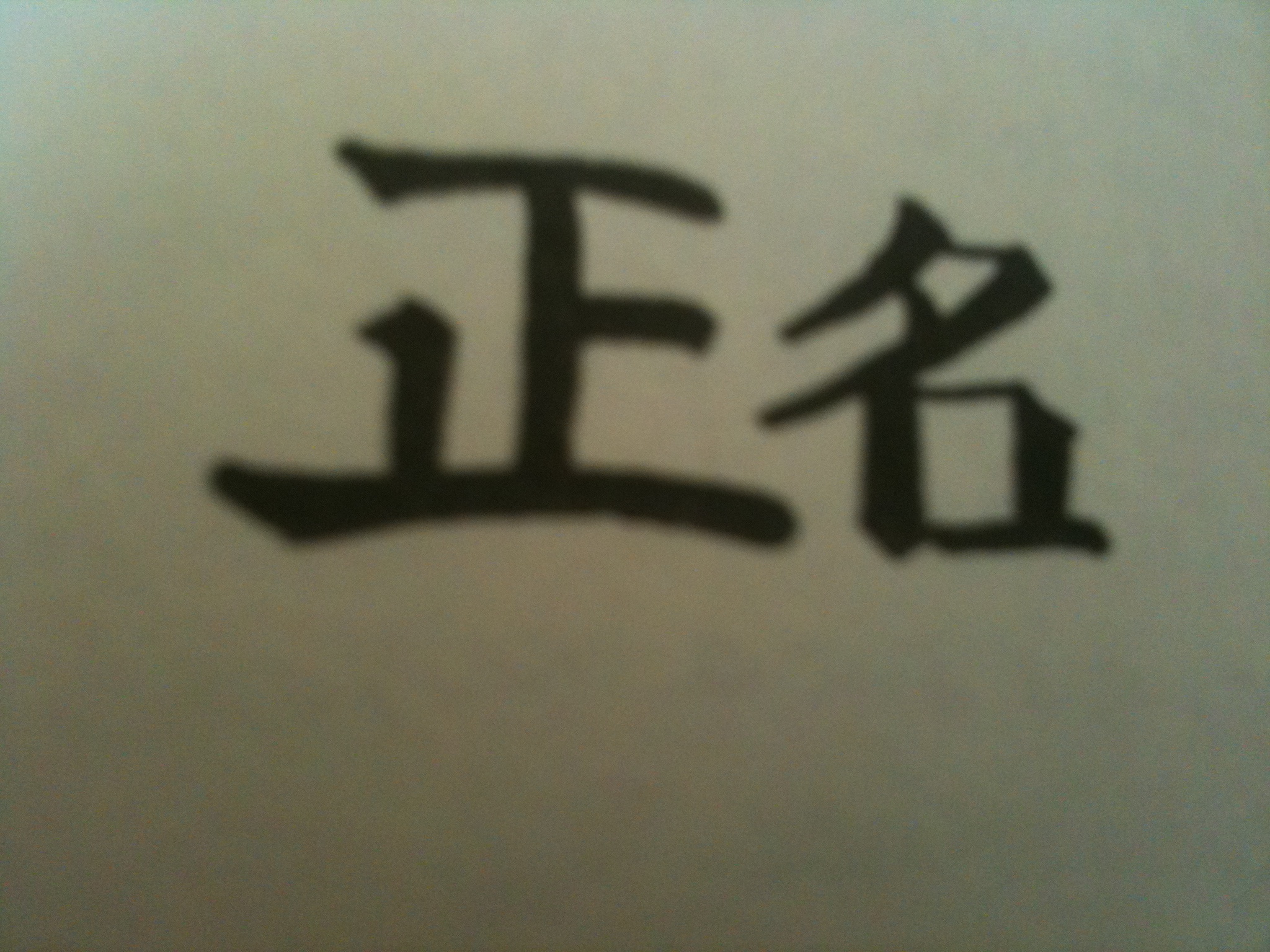
Then, he ends the Canto – and also this section of Cantos, for a new one, LII-LXXI, begins after this – with the (I assume) Chinese character shown in the photograph. Any one understand its meaning or provenance?

Ezra Pound: Canto L


Revolution ‘ said Mr Adams ‘ took place in the
            minds of the people
            in the fifteen years before Lexington ‘ ,

I take this opening stanza to be a reference to John Adams and the American Revolution, but the entire rest of the Canto is about Italy (there is a reference to Marengo, and famous early victory by Napoleon in Italy, so I take the years referenced to be the very early nineteenth century, though other references, such as to the Medici, counter that – but who ever said a poem had to be chronologically consistent?) and finance and frankly I do not understand how these first lines fit in with the whole.

He gets more ‘normal’ towards the end, but the first half of the Fiftieth Canto has Pound playing a great deal with different line indentations.

Sadly, we also see this line:

Pius sixth, vicar of foolishness, no Jew God
wd. have kept THAT in power.

Arguably, this is the most explicitly anti-semitic line to appear yet.

Ezra Pound: Canto XLIX


The Forty-Ninth Canto is an anachronism, reflecting back on Pound’s earlier, imagist poems and on his translations from the Chinese. The lines and stanzas mostly depict a leisurely (though not indolent) rural life.

Autumn moon;  hills rise about lakes
against sunset
Evening is like a curtain of cloud,

This is very much reflective of Pounds “wet black bough” period than it is of what we have read so far.

It’s often beautiful, though sometimes also a little trite sounding, and very different from the dense, political, and historical Cantos we have been reading.

Ezra Pound: Canto XLVIII


Eighty percent of more of this Canto is all about banking and finance (again). It opens up thusly:

And if money be rented
Who shd pay rent on that money?

But instead of using this to jump off into a philosophical or historical poetics, he seems to just dropping historical names, places, and dates (Martin Van Buren, the Horn, 1926) without pulling it all together into a coherent and enjoyable whole.

Fortunately, he makes it all worthwhile with his final, gorgeous stanza.

Falling Mars in the air
bough to bough, to the stone bench
where was an ox in smith’s sling hoisted for shoeing
where was spire-top a-level the grass yard
Then towers, high over chateau –
Fell with stroke after stroke, jet avenger
bent, rolled, severed and then swallowed limb after limb
Hauled off the but of that carcass, 20 feet up a tree trunk,
Here three ants have killed a great worm. There
Mars in the air, fell, flew.
Employed, past tense; at the Lido, Venezia
an old man with a basket of stones,
that was, said the elderly lady, when the beach costumes
were longer,
and if the wind was, the old man placed a stone.

Ezra Pound: Canto XLVII


This one has Pound’s knowledge of classical literature in full bloom – including a reference to Tiresias.

I mention him/her (Tiresias spent seven years as a woman, according to Greek mythology, in addition to being the seer who identified the truth behind the prophecy that so baffled Oedipus) because Tiresias was prominent in Eliot’s The Wasteland. Pound was heavily involved in the editing and revising of that poem and one wonders if Pound had anything to with his insertion into the poem – or whether Eliot’s inspirational use of that classical figure inspired Pound to include him.

However, compared to Tiresias, more of the poem is devoted to references to Odysseus, though the overall feel is more pastoral than epic. In fact, the overall feel reminds me more of Virgil’s Georgics than Homer. The style is very much in keeping with nineteenth and early twentieth century translations of classical literature.

Tara Kainer’s ‘When I Think On Your Lives’


Rather than reprint the whole thing over here, I will just link to it – a review I wrote for Literatured.com.

Ezra Pound: Canto XLVI


This one represents something of a pivot from what we’ve seen before, stylistically speaking. It’s not the first we’ve seen, nor is it necessarily more drastic than earlier ones. But it is in a new direction, though still evolving from earlier Cantos.

I am reminded of the writings of Gertrude Stein. Not so much her famous Autobiography of Alice B. Toklas but more of earlier works like Tender Buttons.

More than any other time, Pound puts a systematic focus on capturing colloquial dialogue (something Stein is notably famous for achieving).

This dialogue is focused on charting the decline of the United States and other western nations due to the influence of the banking industry (and with a hat tip towards his dislike of President Franklin Delano Roosevelt), but through the lens of conversations about legal cases.

I am also struck by how relevant some of his complaints seem today. This stanza, for instance:

Hath benefit of interest on all
the moneys which, the bank, creates out of nothing.

Forgetting for a moment the author’s disturbing and despicable prejudices, taken on its own, doesn’t this sound like an indictment against the global financial system, creating fake money and turning it into real wealth for millionaires and billionaires, and then turning it all into real tragedy and the destruction of America’s real wealth.

Ezra Pound: Canto XLV


Being away from Pound has renewed my affections for him. I was on a series of vacations – one visiting family followed by another with my significant other. On each, I made the decision to leave my computer behind.

While lounging in Florida and doing little of value, I came across a quote by the poet Robert Duncan, noting that in the Cantos  ‘all ages are contemporaneous.’

This reminded me of the immense scope of Pound’s achievement and the huge challenge its existence presents to future poets, much as Proust and Joyce challenged future novelists in regards to the scope available to the writer, no matter how quotidian his subject (Joyce, a single eventful, though hardly world shattering, day in the life of two Dubliners; Proust, the life of an upper middle class Parisian interacting with his contemporaries).

Today’s Canto is a strident and attention demanding jeremiad. Indeed, it is almost a sermon.

He rails against ‘usura’ and the troubles it has caused, using a style drawn from King James Bible.

The very end, though, diverges to a modernist (postmodernist) stunt of unexpectedly shifting tone and and style, thusly:

                                        CONTRA NATURAM
They have brought whores for Eleusis
Corpses are set to banquet
at behest of usura.

N.B.  Usury:  A charge for the use of purchasing power,  levied
without  regard  to  production;   often  without  regard  to the
possibilities  of  production.   (Hence  the  failure of the Medici
bank.)