What are the most well-read cities in America? Come visit me and I’ll show them to you.
We also buy a lot of freaking books.
Happy birthday to Fernando Pessoa, the man of a thousand heteronyms!
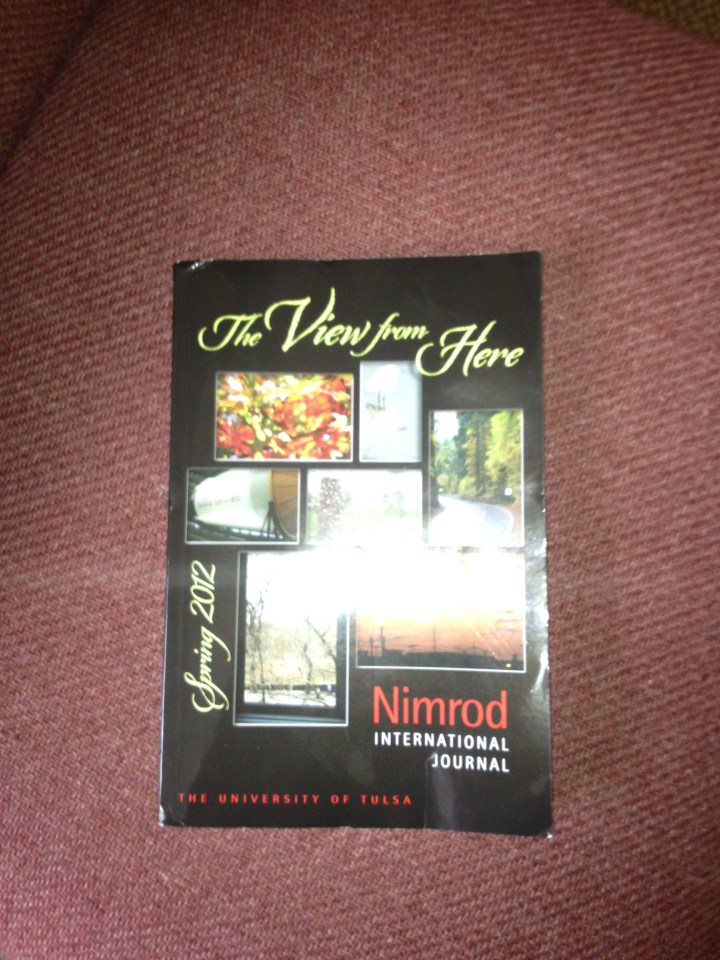 Not as in an insult, but rather the unusually (unfortunately?) named lit mag of the University of Tulsa.
From my point of view, it’s a good bit of work. Heavy on the poetry, which is always my priority (to the extent that I tend to read not to read lit mags that have anything but poetry, excepting those focused on sci fi, Asimov’s or Analog).
Overall, it’s good, rather great. Some well known poets published in this issue (Grace Cavalieri, for example), but the overall sense is of safety in the editors’ choices. Not a place one would go to see who is pushing the envelope nor what the coming trends will be.
I did actually read some of the fiction and read into it a certain aesthetic. Oklahoma is, geographically, a big place, but not densely populated and still with a lot of farm land. There was a recurring theme of isolation in the fiction that I related to Oklahoma’s flat and lonely geography. But maybe that’s just me or even if it wasn’t, maybe it was just a one off. Nonetheless… and the issue’s theme was ‘the view from here.’ From where? Just saying – a theme like that could make editors unconsciously think of their state’s many mostly empty spaces.
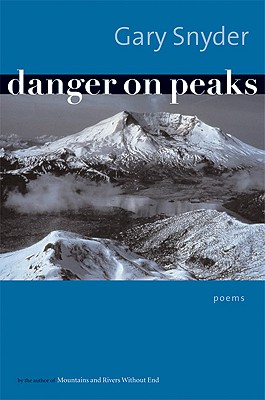 Danger on Peaks is Gary Snyder’s most recent book of poetry. Recent being 2004.
It is also the book I purchased when Snyder read at the Folger Shakespeare Library as the final reader in 2011-2012 poetry season.
What do I think?
Danger on Peaks is good but not great. Not his best work. Not up to earlier works like Turtle Island (the first of his collections that I ever encountered).
His conversational, semi-narrative tone is still strong, but sometimes it can come close to touching on parody – the wilderness activist, living life (somewhat) off the grid – but fortunately does not actually cross over.
But there’s no question that too many lines (though fortunately, not many complete poems) miss their mark.
He’s at his best when he experiments with form, especially playing with Asian influenced forms and styles. When he does that, he gets furthest away from those aspects of his work that get too close to the ‘Gary Snyder, wilderness man nature poet, myth.’
When he indulges in the nature-loving equivalent to macho male posturing, he can write lines like this:\
I just finished a five page letter to the County Supervisors
dealing with a former supervisor,
now a paid lobbyist,
who has twisted the facts and gets paid for his lies. Do I
have to deal with this creep? I do.
I’m frankly over knee jerk criticisms of politicians. Even if you don’t share my belief that most are actually decent people, trying to do something useful (particularly at the local level), surely we can agree that just dropping a criticism of politicians and lobbyists “paid for [their] lies” is crude, knee jerk hackneyism.
But then, in another poem, he plays with something deeper about nature (and, as it typical of the better poems in this collection, also plays with form).
Saying, “this was me”
scat sign of time and mood and placelanguage us breath, claw, or tongue
Also, in that particular excerpt, kudos to Snyder for using the oxford comma!
Good stuff, that one.
Before I go, check out this article/interview with Snyder.
Nathasha Trethewey was just named the new U.S. Poet Laureate.
I had the good fortune to hear her read at the Folger Shakespeare Library six weeks ago as part of the ‘Dark Room Collective.’ She’s a good choice and will a strong advocate for poetry.

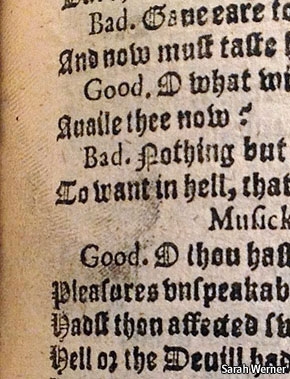
 I certainly hope not!
 the coffee philosopher