Monday Morning Staff Meeting – Where The Poets Are


And the hottest new poetry scene is in… Queens.

Or Melbourne, Australia.

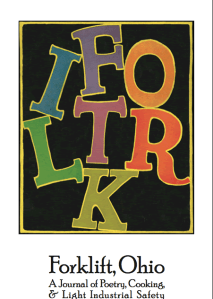
Or Forklift, Ohio (not a real place).

Or Seattle, Washington.

Sadly, none of these places are Washington, DC or St. Petersburg, Florida.

DC is, perhaps, a little too institutional. Though it’s got a thriving visual arts scene. But the local poetry scene is very slam-centric. There is the Beltway Poetry Journal, but that’s exclusively online and I’m looking for more. I’m just not a slam person, as I’ve said before. I love poetry on the page, even when I read it aloud. Yes, there are the readings at the Folger Shakespeare Library, which I attend religiously, as well the Poet Laureate and other readings at the Library of Congress. But nothing which seems half so interesting as what’s happening elsewhere. But they – the residents of elsewhere – they feel that way too, don’t they?

And Florida is Florida. We elected Rick Scott for governor, for heaven’s sake. The man ran a company that in a very real and tangible way defrauded the taxpayers of this country for billions. You can’t write an elegy that depressingly sad.

Sunday Paper – Don’t Make Poets Angry


You wouldn’t like them when they’re angry.

Monsters. All monsters.

I’m going to Kathmandu! I’m really really going to!

Is Ursula K. LeGuin the best writer alive?

A flowering of English language poetry in India.

Saturday Post – President Heidegger


Goes straight after John Ashberry, doesn’t he?

What if Heidegger had become leader of Germany?

The ultimate in existentialist blogging.

The myth of the ‘Liberal Media.’

John Keats


I’ve been carrying around a little leather bound copy of the collected poetry of John Keats. It’s a little smaller than a trade paperback (though larger than a mass market paperback). It’s a beautiful piece of art and not the sort they make anymore. Leastways, I only ever see such things for sale in used bookstores.

My mother-in-law and father-in-law have been in town and the latter and I have been spending a lot of time together.

I don’t speak much Thai and he doesn’t speak a great amount of English (though vastly more than my Thai), but we both like to get out and about and do things. We went to see some museums over the weekend (the Library of Congress’ Jefferson Building and the National Gallery of Art) and I carried that copy of Keats with me, on account of it fitting so nicely into a coat pocket and on account of it always being a good time to read good poetry. When moments presented themselves, I pulled it out, opened it to the section marked by the satiny ribbon, and read snippets of Endymion.

I do wonder that, as the e-books over take books, will books like my Keats come back? As physical books become as much objets d’art as anything else, will little, beautiful things like this come back into fashion? But will that also presage the end of something else? After all, don’t I love my collection of pulpy books, the symbol of a great error of mass publishing and also of mass reading?

Jack Gilbert Died


The poet, Jack Gilbert died. I picked up his Collected Poems after a local blogger recommended him.

Now, I feel kind of bad for not liking very much. Not disliking him nor feeling my time reading him wasted (or, at least, not too much). But just generally not ‘clicking.’ If it had been a first date, I wouldn’t have complained about her to my friends, but neither would I go out with her again.

So maybe I should give him another look, out of guilt. I think the book is still on the floor beside my bed.

They’re All Supercalifragilisticexpialidocious


I’m talking about Seth Abramson’s reviews, of course! Nothing but awesome.

But I actually own one of them – Tao Lin’s Cognitive-Behavioral Therapy – and it blew me away (am I sounding like Seth here?).

If you want to know why conceptual and tricksy, flarf-sy poetry can be awesome, but don’t have the patience to read one of Kenneth Goldsmith’s patience testing tomes, check out Cognitive-Behavioral Therapy. It has a weird emotional depth that’s hard to explain. And poems about hamsters.

The Sunday Newspaper – Poetry In Jakarta


The Call to Poetry festival.

T.S. Eliot Prize nominees announced.

In Newark, poetry matters.

Do you young people still read and go to libraries? (hint: yes, they do)

Which Iliad?


When I was either in junior high or high school, I spent a summer reading The Iliad and was very taken by it (though, as I think many modern readers feel when they read it, I was more sympathetic to the Trojan side and was disappointed at how easily poor Hektor was dispatched and how cowardly he was made in his next to last moments).

I read the Richard Lattimore translation. Not for any particular reason, it was what I found in, I think it was, A Blue Moon Bookstore in Clearwater.

This LA Review of Books piece looks at the various English translations out there.

After reading it, I’m glad I happened to read Lattimore. It seems like he’d most be my style. It also makes one want to go back, though to be entirely honest, I find it hard to imagine going back and reading The Iliad again, which does not, I admit, reflect so well on me. And if I did, I don’t know. I might read Chapman, just because he comes so high recommended by John Keats.

At The Folger Shakespeare Library – Red, White, and Blue: Poets on Politics Nikky Finney and Brian Turner


Before the reading, I picked up a copy of Phantom Noise by Brian Turner. It wasn’t that I necessarily had a preference, merely that I was in a bookstore and they had a copy of one of his books and not one by Nikki Finney.

I am always unsure about poetry and politics. I think we desperately need political poetry, for the sake of both our inter/national political discourse and for the sake of poetry (which must be engaged to be vibrant; though that is not to say that all poetry needs to be engaged, merely that if there is no engaged poetry or very little, poetry becomes too disconnected from the life of the people and risks becoming little more than a pretty art for the wealthy and comfortable).

This one was originally scheduled for October 30, but that pesky hurricane postponed that, of course. I can only imagine they worked hard to get this rescheduled so as to at least take place before the election, but nothing could help the comparatively sparse crowd that we can surely blame on the new date.

Nikki Finney was relatively quiet. Whether she is naturally restrained, or felt constrained by the garrulous Brian Turner and the too intrusive host/moderator, Alice Quinn.

Alice Quinn is executive director of the Poetry Society of America, she a wonderful and erudite speaker on poetry, but I frankly did not attend to hear to her speak. I just didn’t. But she really seemed to want to speak.

I rarely ask questions during this things, but this time I did. My question was about success – that if there is a purpose to political poetry beyond aesthetics, how is success judged. And Quinn asked who I wanted to answer this, seemingly thinking maybe she was the intended recipient.

Oh, hell no. I came to hear Nikke Finney and Brian Turner read poetry and speak about their work and the night’s theme, politics and political poetry. I would happily attend a future lecture by Alice Quinn, but that’s not what this was.

Turner was a very open and talkative man. He knew my old boss, Congresswoman Grace Napolitano, on account of her work with veterans and on PTSD and mental health issues. He gave me his email address and told me to send him my address and he would send me copies of his first book, Here, Bullet – one for me and one for her. Well, I couldn’t have that happen, so I bought two copies, in addition to Phantom Noise, and asked him to sign one for her. He asked me to offer her his assistance, any time, any place. Once he found out I worked for union, he made the same offer to me.

I enjoyed Phantom Noise more than I expected. It’s very much about the experience of coming home from Iraq and the ongoing trauma of PTSD, which I don’t always feel makes for very good poetry. Phantom Noise is a bit of an exception (or perhaps, I just haven’t read enough in the genre to understand how good things have gotten, poetry-wise, even if its mere existence is a reminder of how bad things still are and can be for veterans). It does tend to be a bit much. Too many poems about bloody memories interrupting ordinary, man-woman relations.

He did ask me how I read books of poetry, whether I skipped around or read them front to back like a novel. I told him, like a novel. Perhaps his work is better read in a different fashion and he realized that. In bunches, too much. His own reading style was very conversational and dialogical in between the poems, as if he knew the importance of the spaces between poems (and not just within a poem).

Anyway… super excited about Kay Ryan coming up. Saw her read as Poet Laureate and saw her once when I was still living in California.
The Sunday Newspaper – Death & Poetry


The dying poet.

If you want a confessional, read his books, not his diaries.

The (not so) secret radicalism of Paul Ryan.

Has she seen Episode II?

Send someone you know (or someone you don’t know) a book of poetry.