Marilyn Hacker On The Influence Of Adrienne Rich


The Unknown Hipster Diaries


mix_l


Who is the unknown hipster?

Midweek Staff Meeting – The Key To A Healthy Relationship Is Roleplaying


You can’t possibly write good literature unless you play Dungeons & Dragons.

DC recognizes that an intersection that has more pedestrians than cars should really be engineered around pedestrians.

Notes from the Cosmic Typewriter

It’s about time the Hirst bubble collapsed (I have a great affection for conceptualist art, but even if you say that Hirst is engaged in meta-commentary on the art market, collectors, and most especially on commodification, it’s just too god d–n much).

The secret lives of used books.

What is lost, what is gained?

Your poetry gift guide.

Amis and Larkin.

Monday Morning Staff Meeting – There’s Always A Woman


121210_HIS_RogerWilliams3.jpg.CROP.article568-largeThe love triangle that caused Camus and Sartre to break up.

What do you think of when you think of Africa?

Some bookstores are doing just fine.

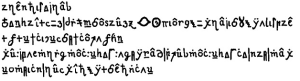
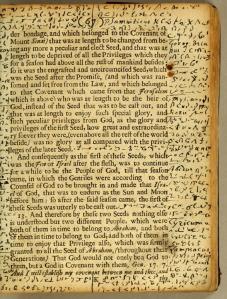
The secret code of a colonial-era theological rebel.

Poetry makes you weird.

Poetry Magazine, December 2012


Poetry is still decorating its covers with this ‘100 Years’ thing to celebrate their centenary. Though the cover art, which includes a picture of a pegasus, is by Art Chantry, it can’t help but draw one’s mind to Andy Warhol’s appropriation of the Mobil logo.

The issue is subtitled ‘The Q&A Issue.’

After every author’s poems, is a question and answer session, if you will.

I understand the conceit and the goal, but I don’t think it works very well. Poets have never seemed very good at explaining the meaning of their poems. In the Howl trial (memorialized in the movie of the same name), one of the defense witness says something to the effect that, you can’t put poetry into prose sentences; that’s why it’s poetry. Invariably, a good poem has an ineffable quality of transmitting something which could not have been transmitted any other way. That’s why you’ll see poets speak well about process or about other people’s poetry, but not so much about their own. Kind of how it is here.

The issue also has four poems by Mary Karr. When I saw Mary Karr read at the Folger Shakespeare Library, I found her a bit of an attention grabber, stealing the spotlight from the more interesting and better poet on stage with her. So… not a fan. Maybe if I could start afresh, but the very name puts a bad taste in my mouth. And, frankly, her bits in the Q&A suggest to me she wasn’t just having a megalomaniacal moment, but is actually that annoying all the time.

The highlights are a series of poems by Richard Kenney, a poet I was not familiar with. Included were a series of math and science inspired poems with short, abrupt lines and sometimes startling enjambments. At first glance, they can seem to be a driven by dream logic/surrealism, but actually are merely adopting the poetic forms associated with it to carry along a more traditionally logical progression. It also helps that this progression makes Kenney’s explications in the Q&A much more interesting than the rest.

Marilyn Chin’s excerpt from a long poem, a elegy to boyfriend who died too early, is not great. I don’t know whether it suffers from being taken out of the whole or what, but one feels bad not liking because of the sensitive, personal subject but… I’m sorry. I don’t think it’s very good.

Eliza Griswold’s poems were a bit of a revelation. They were in correspondence with the classical world (including a bit of the non-western world), with politics… great stuff. The style is flat and declarative, but still eminently poetic. I’m going to look her work up in the future, I’m sure.

Midweek Staff Meeting – 12-12-12, Secret Radicals


They Cracked This 250-Year-Old Code, and Found a Secret Society Inside - Danger Room - Wired.comThe secret manuscript of the Oculists.

Was Keats writing politicized poetry?

Were the 1950s the golden age of science fiction novels?

An ancient Libyan kingdom.

The Final Stage Is Acceptance


I am coming to terms that Seth Abramson is writing poetry reviews for one of the most widely disseminated outlets in the world (Huffington Post).

I am even coming to terms with his praiseful style of reviewing.

Don’t get me wrong. I wish he’d be a little more… critical, perhaps? That he’d insert himself into his reviews, by which I mean, Abramson, you, me… we all have styles and writers we particularly like and it’s okay to be out in front with that a little. You don’t want to say, ‘I don’t like rhyming poetry, so I hate this book.’ But you do want to own your likes, dislikes, influences, etc. Own your favoritism. Otherwise, your reviews tend to get a little too consistently, unabashedly full of voluptuous praise without the reader being able to a clear distinction between works. Because when I read a positive review by him, I still don’t have much idea if I’ll like the book, because I don’t have a clear idea of what the reviewer likes, because he seems to like everything (‘good poetry’ is not a helpful category, in this regard).

But, here are his November reviews (yes, I know it’s freaking December, get off my back) – November 2012 Contemporary Poetry Reviews

If you read ’em, you’ll see why I am coming to terms with his style, because he’s starting to do what I’ve been looking for.

His review of Eyelid Lick, despite being ostensibly positive, can’t really hide that fact that Abramson clearly just ain’t a fan. Nope.

And if Abramson’s review of The Talking Day had anymore backhanded compliments, it’d be playing professional tennis (get it – ‘backhanded compliments’ and ‘backhand’ is the swing you use in tennis when the ball is coming towards your off hand; whatever, it’s an awesome joke and you’re a jerk for not getting it right away).

Emily!


I didn’t realize, but today (December 10th) is Emily Dickinson’s birthday!

Happy birthday, you strange, strange poet.

TOUT VA BIEN By Suzanne Stein – AT THE MOVIES


AT THE MOVIES (this section’s titled was not boldface type) mimics title cards (I’m sure they have other uses, but I think of them as the title cards showing dialogue in silent movies).

There are classical references to the myth of Orpheus, Eurydice, and their trip to the underworld and also to Jean Cocteau (there is a ‘character’ named Heurtebise, after a character in a Cocteau film, but like much of this, I don’t know what the references are supposed to accomplish).

Overall, it’s not bad. The problem is that Anne Carson has done it all and generally done it better.

In terms of integrating classical myths into contemporarily relevant poetry, read Autobiography of Red.

For this conceit of films and title cards? Carson did a series of poems called TV Men (I particularly remember her TV Men: Artaud, utilizing the brilliant, tragic, mad figure of Antonin Artaud).

There is a running theme about death and (lack of) existence. Conceptual poetry seems almost invariably to be ontological poetry (sometime epistemological, but more often ontological) and this does implicitly ask the implied questions in that model and does so in a fashion that is interesting and well done. But neither interesting nor well done enough, I fear.

What Is Poetry About? Bill Cosby Will Tell You!