
Your typewriter can read your mind.
Your typewriter can read your mind.
 I bought Majestic Nights: Love Poems of Bengali Women at the Rubin Museum in New York City.
The Rubin has a wonderful collection of Himalayan art. At least, that’s how they describe themselves, but really, it’s a Tibetan art. The whole thing is an unsubtle argument against China’s argument that Tibet is historically part of greater China. The Rubin implicitly argues that parts of China and India and pretty much all of Nepal and Bhutan are historical parts of greater Tibet. My own opinion is, well, free Tibet, but let’s be careful about how history is used, particularly when historical boundaries (much more fluid) are used to pick the borders of modern nation-states.
It is a relaxing museum with moderately priced admission. I will say that notes on the objets d’art were entirely too large and imposing, as if trying to compensate that the pieces themselves, mainly paintings and small statues, were by and large not physically imposing. Let the art speak for itself a bit more. A medieval triptych by Fra Angelico is not going to blow you away based on its size, but on its delicate artwork and driving faith the inspired it. I would have liked to have seen the Rubin’s collection in a setting that would give me a better opportunity to understand these religious works in the same way.
Also, after my experience at the Cloisters, I had to re-think my opinion about a large collection of religious artifacts accumulated and displayed in a secular institution. This is different, I feel, just because of the great need to protect uniquely Tibetan works from being misused or destroyed by the Chinese government, but it’s good that we stop to think about these issues more carefully.
But on to this book.
I’ve got to say, I’m wondering if Kenneth Rexroth hasn’t had a pernicious effect on translation, because it seems that any translation of eastern love poetry always seems to carry some memory of his translations of Chinese and Japanese love poetry.
So far as I can tell (and, I’m sorry, the fact that I don’t for certain is a failure by the editor and publisher to be clear), these are all poems by more or less contemporary women poets from Bangladesh (though at least one lives in relative exile in France).
There is an ebb and flow to the order of things. Rather than arrange things chronologically, it is arranged more in order of the early stages, maturity, and ending of a romantic relationship. Except that the editor didn’t include many poems in the middle section, so it goes too quickly from a lot of hot, sexy poems about skin and lips and desire to a lot of poems about women being left distraught and alone by men. It’s whiplash.
I love erotic poems, so I loved the first 40% of the book, but those poems also had a certain sameness to them. In truth, a lot of the poems had a certain sameness… a certain Rexroth-ishness.
Honestly, I can’t properly say how I feel about this book. I’ll never sit down and re-read it through again, but I might occasionally re-read a poem or two from it at random; something to keep near the bed or the desk for a quick, mental health poetry break. But, I guess, I’m disappointed. I had low expectations, but then I started liking the poems and then I started getting bored by the similarities.
Lest I end this on too mediocre a note, the next to last poem, Rice Sheaves This Alluvial Night by Khaleda Edib Chowdhury, is the collection’s only prose poem and what a prose poem it is. Six paragraphs desperately piling sex, desire, and despair:
But still this night must be understood once more. A man must know the object of his longing.
I can’t rightly call it one of the my favorite bookstores, but only because favorite bookstores are developed through a history of repeated visits and memories of discoveries and encounters over time.
When we visited New York, I literally took a day specifically to visit the Strand Book Store (and also neighboring Forbidden Planet, a well known comic shop).
But it is a wonderful, wonderful place. It didn’t have everything I wanted (Mary McCarthy’s The Company She Keeps, for example), but a truly amazing selection. I bought:
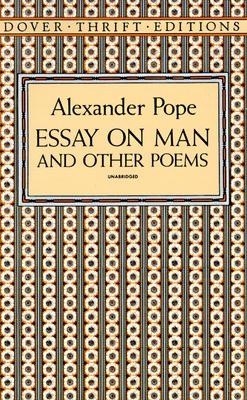
Alexander Pope, Essay on Man and other Poems
William Carlos Williams, Spring and All (with a lovely rubbery, leathery powder blue cover that’s wonderful the the touch)
Ron Silliman, The Alphabet (which, so long as I am reading a book a week, will probably not be read this year, since it’s a 1000+ page difficult poem/poetic series)
Karl Marx, The Capital (it’s was a used, inexpensive, hardcover edition, the sort of thing one wants in one’s permanent library)
Nicholson Baker, The Anthologist
The Anthologist is a novel about poetry.
I hadn’t planned to be reading it now. I bought the book during an epic binge at the Strand in New York (I was also victimized by poetry collections by William Carlos Williams and Ron Silliman and a nice, hefty tome of Marx). No question, I intended to get to it. After a fashion, it’s a book that I’ve been meaning to get to since it came out several years ago. I don’t read very much contemporary fiction, barring genre fiction, but I used to and hoped to use this to get myself back in the habit.
But, my plan was to make some more headway into The Wheel of Time or perhaps finish the final volume in Brin’s Uplift Trilogy.
For some reason, I read a bit of The Anthologist when I should have been finishing up Pope, but there was such a strange connection between the two that I knew it had to come next.
 The narrator is a mediocre to minor poet who write free verse but loves to read rhyming poetry and is flailing in an effort to complete a paying gig: the writing of a lengthy (forty page) introduction to an anthology of rhymed poetry.
The narrators lengthy discursive internal monologues on poetry just brought to mind what I had learned and felt diving into Pope.
So that’s why I read this book next and not something else. I’m reading something else now, so I guess it all evens out.
The Anthologist is driven by chronology, rather than plot. You see, the story, at least until the very end, where something like a climax and resolution occurs, is the internal narration of the narrator, a semi-successful poet name Paul Chowder. The internal narration is driven by chronology because Chowder, the character, is driven by procrastination. The book is a chronicle of the narrator distracting himself to avoid working on this introduction to an anthology (hence the title) that is supposed to be working on. The pleasure comes from both the head shaking chuckles inspired by how he weasels around buckling down and getting to work, as well as his erratic, discursive monologues about poetry and the history of poetry. Interspersed are some ‘interactions’ with dead poets (seeing some great poet in the supermarket, for example). You know they’re not actually there and Chowder isn’t trying to convince the reader of their reality. While interesting, I don’t actually see the point nor necessarily feel that they fit terribly neatly into the whole.
That resolution I mentioned is, invariably, unsatisfying. The voices in one’s head (not talking auditory hallucinations here, just the running commentary we all have with ourselves and which makes up the bulk of this novel) do not end, they do not resolve themselves. As a result, any ‘ending’ was pretty much always going to feel rushed and inadequate. And so it was, but that’s okay. He kept that part very short, so that parts that will still linger a month from now will be the lovely stuff that came before.
This essay, Poetry slams do nothing to help the art form survive, struck a chord with me.
I have always had mixed feelings about slams. And I have always felt that the quality of poetry heard in poetry slams is lacking and certainly it works against innovative and experimental poetry (try reading Gerard Manley Hopkins or John Ashberry in front of a mirror and in a slam style and then ask yourself how well they’d hold up).
The only division in poetry is between those people willing to take the time to read it and those who will not.
Nathan Thompson, the essayist wrote that line in refutation of the idea that slam poetry is a democratization of poetry. He writes, not without merit, that ‘Most slam poems are not strong enough to be published in even minor poetry journals.’
Slam poetry is not a substitute for… poetry. In some ways, it’s like the girl in school who can hit the high notes and who sounds great, but then you hear Billie Holiday sing Strange Fruit and how she can do it with subtlety, tone, and emotion and without even raising her voice.
Perhaps. I don’t know. I just with slam and performance poetry were used to also direct audience members and participants towards the great mass of poetry culture, from Homer to Natasha Trethewey.
Ha! I tricked you! It’s not pornography after all – it’s poetry!
Though it does have some profanity. A lot actually. Don’t actually play this at work. You might get in trouble.
While I had surely read some snippets of Pope before, this was my first real dive into his writings. The shorter pieces, the lyric poems, were good. Good enough to say that, had Pope written nothing or little else, he would still be remembered as a worthwhile minor poet of his age. Rather like Ralph Waldo Emerson. But like Ralph Waldo Emerson (who was a serviceable poet, but no great), he is better known for his essays.
But Pope’s essays tend to be a little different from the New England mandarin’s.
This really struck me while reading the poem, Essay on Criticism: Alexander Pope is writing a critical essay entirely in verse form. In heroic couplets, to be specific (which are, and I had to look this up, rhymed couplets written in iambic pentameter).
Imagine opening a copy of The Nation, The New Republic, Harper’s Weekly, or The American Conservative and reading an article on a serious subject, like drone war, that written entirely in rhymed verse form. And written seriously, not as a meta-commentary on something or as a joke (which is why I left out The National Review, because, since Buckley’s death, that rag is more home to a particular brand of youthful idiocy, like Jonah Goldberg’s unreasoned idiocies, than anything serious). Go back further and what if Podhoretz’s editorials for Commentary had all been rhymed sestets or Petrarchan sonnets?
Beggars the mind.
Oh, and the Essay on Criticism includes the line:
A little learning is a dangerous thing;
Pretty cool, huh?
He gets into a great many localized, time specific references – The Rape of Lock is entirely about a particular scandal du jour – and my edition doesn’t really give the reader an heads up on this stuff.
Though not a long collection, Pope is slow read. To appreciate his rhymes and also the lines of his arguments is not a fast process. I had thought to finish it in well under a week but actually struggled to finish it by today.
Conclusion? I would read Pope again.
 the coffee philosopher