‘A Short History of Decay’ By E.M. Cioran (New Year’s Resolution, Book Twenty-Seven)


9781611457360What a disappointment.

I’d read so much about this book the Romania-born, French-writing Cioran, but all I read was a shallow combination of a Nietzsche wannabe and a Camus wannabe. And it was translated by Richard Howard, whose poetry collection, Inner Voices, has to rank as one of the most boring books I have tried to read.

Listen to this:

And this nothing, this everything, cannot give life a meaning, but it nonetheless makes life persevere in what it is: a state of non-suicide.

The book is series of aphoristic segments, between half a page and two pages, usually. That bit I quoted above, from a segment entitled Coalition Against Death, sounds to me like little more than someone who decided to write some stuff within minutes of glancing at the first page of Camus’ The Myth of Sisyphus.

But mostly, it is warmed over Nietzschean aphorisms. Except that Friedrich’s aphoristic bits were sandwiched between much better scholarly writing. No, he wasn’t usually a rigorous philosopher, but there is some real stuff in there (think The Birth of Tragedy).

I am going to include one longish quote just because it was damn near the only bit that stuck with me.

(The implicit plural of ‘one’ and the avowed plural of ‘we’ constitute the comfortable refuge of false existence. Only the poet takes responsibility for the ‘I,’ he alone speaks in his own name. He alone is entitled to do so. Poetry is bastardized when it becomes permeable to prophecy or doctrine: ‘mission’ smothers music, idea shackles inspiration. Shelly’s [sic] ‘generous’ aspect cripples most of his work; Shakespeare, by a stroke of luck, never ‘served’ anything.

And a paragraph later…

How then to fail to turn to poetry? It has, like life, the excuse of proving nothing.)

He’s very taken by the idea of art for art’s sake. And his idea of prophecy (insofar as he has consistent ideas) seems to be more about political engagement than anything else. He is very much an interior writer, to the extent of rejecting the exterior. Let’s just say that he was never in danger of becoming a civic activist.

Anyway. It’s off my list. I can now saw I’ve read Cioran.

Weekend Reading – How Far Would You Go For A Poem?


Would you spill your own guts for it?

The message within the gibberish.

Hamlet‘s law.

Midweek Staff Meeting – You Could Always Be Wrong


Ex Cathedra and fallibilism.

Study philosophy. Get a decent job. In that order.

Freedom is just another word for French existentialism.

The typewriter and Modernism are behind the very notion of ‘revising your work.’

A new defense of poetry.

Your New Seth Abramson


Seth Abramson recently wrote a full throated defense of contemporary poetry. You can probably google it and find it somewhere online.

His florid, grad student speak-y style is almost as endlessly embarrassing as his as constant state of eager beaver overexcitement. But he’s trying. And he reviews poetry monthly on the widely read Huffington Post. The reviews irritate me, but they may be the only exposure to titles by contemporary poets many readers get.

Anyway.

Here are his June poetry reviews.

Happy Birthday, City Lights!


CL60_01

A History Of A Beard(s)


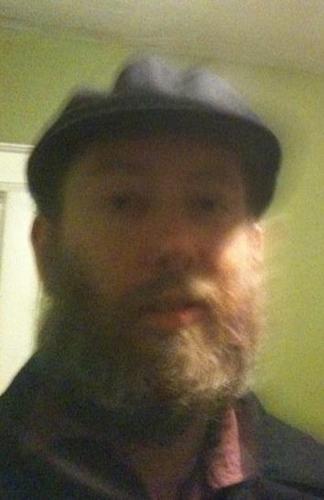
That’s my beard. I include it because of this piece by the poet Donald Hall (I enjoy his work a great deal and have fond memories of lying in bed with a particular woman and read from The Painted Bed, one of the collections he wrote after the death of the poet Jane Kenyon, who was also his wife, but I put poet first because that’s how she should first be remembered).

Anyway. Read his essay, Three Beards from the New Yorker.The_Beard

Weekend Reading – All The News That’s Fit To Print


Where do you get your news from?

Who are you without memory?

Someone new to decline your bad poetry.

Midweek Staff Meeting – Dinosaurs Of Tibet


The Dalai Llama as a man of the right.

Just… so sad.

A portrait of Descartes.

Poetry doesn’t need to be nice and maybe it oughtn’t be.

I won’t lie. Being Texas, I’m surprised that any group of white people clung to bilingualism for this long.

A Poet Asks, ‘Am I Poet Enough?’


Joseph O. Legaspi’s musings.

The Trouble With Poetry (New Year’s Resolution, Book Twenty)


I am not, normally, a fan of Billy Collins. But he read at the Folger Shakespeare Library and I just don’t miss those.

Actually, he read at the church across the street (Lutheran Church of the Reformation – for the bigger draws, they set up next door and we listen prayerfully from the pews). This will be important later.

So, he read. And he’s better than his reputation. He has built this aww shucks reputation, the poet for people who don’t like poetry because it is too stuffy. He was unashamed about writing a good deal of comic poetry, but, perhaps emboldened by the academic and literate nature of the hosts, spoke deeply about a great many poets, including non-stuffy, difficult poets.

When I got up the front of the line to have my book signed, he took a moment with me. He looked at me and asked whether it bothered me, holding the poetry reading in the church. I said no. But I wished I’d added, did it bother you? Perhaps he looked at me and felt he recognized a (slightly) aging, anti-religious anarchist. But I can’t but think that he was, beneath his Garrison Keilor-esque poetic image, a bit of an anarchist himself. That he was bothered by it and that he thought I would understand. Missed opportunity, I reckon.

The Trouble with Poetry was better than I expected (though it’s unlikely to go on my ‘best loved books’ shelf). It was also darker than I expected.

A mood of quiet alienation, of feeling uncomfortably separated from one’s fellow man, abounded. Death came up not infrequently (three poems struck me in particular: ‘Bereft,’ which said I liked listening to you today at lunch/as you talked about the dead,/the luck dead you called them,/citing their freedom from rent and furniture – which poem went to outline a sort of dislocation with the objects of this world; ‘Flock’ which opened with an epigram noting that it is said that each Gutenberg bible required the skins of 300 sheep to produce, which is to say, that 300 living animals had to die to make it; and finally ‘Building with Its Face Blown Off’ about a war zone).

There is some of Collins’ (signature?) comedy, but not much, and tinged with sadness and failure.

Also, as you might expect from the title, too much poetry about writing poetry. I can’t think of another art form so obsessed with creating art about the particulars of the creation of that particular art form. I might suggest that this, more than stuffiness, is holding back contemporary poetry. It’s frankly too much and poets, in general, need to cut it out. Yes, a poem about poetry every once in a while is fine, but I counted half a dozen in this volume and a quick perusal of poetry mags will easily find you more.