3 Sections


At the last poetry reading at the Folger, they brought together three poets published by Graywolf Press: Vijay Seshadri, Claudia Rankine, and Matthea Harvey. Stephen Burt moderated the conversation that followed brief readings, where he was, to be generous, more of an enthusiastic rather than moderating presence (he was deeply interested in hearing what all the poets had to say, but in his excitement, inadvertently made himself the subject).

Claudia Rankine’s fiercely political collection, Citizen: An American Lyric, is the poet du jour and she did not disappoint. But I had already bought Seshadri’s collection, 3 Sections, a month prior.

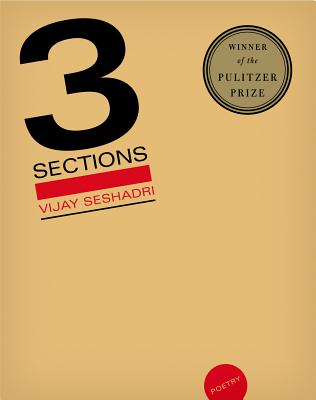
3 Sections9781555976620 is an interesting collection. There is a gentle thread of politics that winds through it all. At the time, it was hard not to compare that more wistful scent of the political to Claudia Rankine’s, who writes far less gentle political poems (which is not to say strident; but they are fierce). Maybe that less parenthetical word is the key: he does not write fiercely, but with a touch of melancholy, a lot of gentle humor, and something approaching fatalism.
Rankine participates in the Other as a black woman born in America. Seshadrii participates as an Indian born outside of this country. The comparison made vivid two different kinds of alienation.

There were several long poems, including a long (over ten pages) prose poem. During the conversation, he resisted the term ‘prose poem,’ as being something belonging specifically to the surrealist poets of the 30s. But it will do as a shorthand.

It’s about fishing, with discussions of the character and prejudices of fishermen in the American northwest, and also Russian fishermen. And also the Cold War. And a journey onboard a Japanese fishing vessel and the narrator (is he?) getting debilitating seasickness. It could be read as a longform essay, but it is, in a way I can’t articulate, definitely poetry.

He also has an ambivalent view towards technology. Or jaded. He doesn’t believe it changes much.

Here is the fourth (of five) stanzas from a poem entitled New Media:

It’s not the thing,
there is no thing,
there’s no thing in itself,
there’s nothing but what’s said about the thing,
there are no things but words

HTMLGiant Cloes Down Tomorrow


In the founders’ words:

Today is a few days after our sixth anniversary. Blake Butler and I started this place because we wanted a hub for all of the writing we love, all of the people we enjoy reading, and to do it with a certain openness that we both appreciate. Along with everyone else that came along with us, we succeeded (and occasionally failed) at that for many years.

October 24th, 2014 will be the last day of operation for Htmlgiant. I’m going to step aside as managing editor effective immediately, and in the next few days I’ll open posting up for nearly everyone that has ever been a part of this site. On October 24th I will disable posting privileges for everyone and leave the site up for as long as we can afford it.

The next few weeks will hopefully be interesting, because if there’s anything this website deserves it’s an uncontrolled flameout.

The amount of respect and admiration I have for so many of the writers and editors that we’ve worked with over the years cannot be overstated. There are so many special people I want to hug and thank, and I have a feeling I’ll be doing it in person for years to come.

See you soon.


It was a great place that paid a great deal of attention to poetry – especially new poets and small publications, including chapbooks. It will be missed.


There is no such thing as a large whiskey. – Seamus Heaney

Mary Szybist At The Hill Center


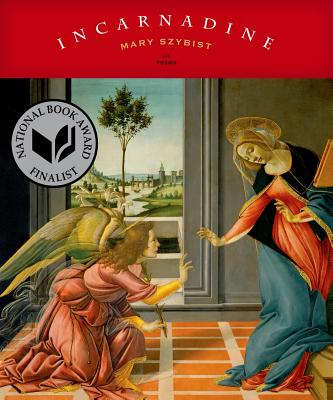
9781555976354Ron Charles, the Washington Post book editor, remains a good, if somewhat charmless host for these conversations with poets at the Hill Center. I’d seen Edward Hirsch earlier in the year and I’ll gladly see more in this series.

Szybist was given more opportunities to read her poems than Hirsch was and she has a wonderful voice for reading her own poems, emphasizing their gem-like (though not precious) qualities. She really is an amazing writer of poems. And though Incarnadine is a clear whole – with the theme of the Annunciation tying everything together – it’s best to be read slowly, one poem at time, over the course of a week or more. Slow reading, as it were. Their lapidary nature demands a gentle pace. When I tried to read them too quickly, I almost felt as if I were suffering from eye strain. Charles made a wonderful point when he compared her very carefully poetic style (this sounds bad; it sounds precious; but it’s really not at all) to John Donne and the Metaphysical Poets. Donne is especially relevant because of the deeply religious – the deeply Catholic – nature of her writing, despite having rather suddenly lost her faith as an adolescent (though, when I asked, she admitted that she still sometimes goes to Mass with her husband). Dickinson, too. Unlike Linda Pastan, Szambist does have that erotic, lapidary quality of Dickinson (though is less elliptical).

In addition to writing for slow reading, she spoke slowly and carefully in response to questions. Almost tentative. Which I can relate to (it’s something I can tend to do and it frustrates the heck out of my wife).

If I have a complaint about the collection, and I am not sure that I do, it is that it is almost but not quite a concept book. The ones that break from the concept, such as the gentle love poem (after a fashion) to an (the) octopus, are wonderful, but why not make the whole book so closely interwoven as ninety percent of it already is?

In any case, a new (to me) poet has not so affected me since I read Fanny Howe (and the two are connected by their sometimes diffident but also deeply ingrained Catholicism). So… two thumbs up?


slide_367734_4206654_free

Have You Ever Wanted To Own An Emily Dickinson Tarot Card Deck?


Well… now I do!

Available (apparently) from Factory Hollow Press.

untitled

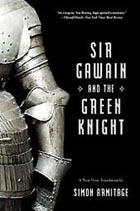
‘Gawain And The Green Knight’ Translated By Simon Armitage


FC9780393334159I purchased this particular book in this particular poem because Armitage will be reading at the Folger later in the season.

It’s a fast paced and enjoyable read. Armitage uses some alliteration and meter and also (as in the original Middle English) rhyming quatrains (ABAB) to end stanzas. The plot is that a green knight marches into King Arthur’s court, carrying an enormous axe (it’s later described as being ‘Danish’ in style). He says that anyone may take a swing at his neck with the axe and, in return, he gets to swing back on New Year’s Day next (it’s currently Christmas Eve, so in just over a year). Gawain, Arthur’s nephew, takes up the challenge and chops off the green knight’s head. The green knight promptly picks up his own head and says, see you in just over a year – by the way, you can find me at the Green Chapel.

Gawain dilly dallies and then heads off into adventure. A cold and unpleasant adventure. No great battles are described, but long, rainy nights and near starvation are described. He find a castle and takes refuge and lord of the manor goes hunting and offers to give Gawain whatever he wins at the hunt, if Gawain will give him whatever the Arthurian warrior wins at the castle. There then follows some humorous scenes of Gawain hiding under his sheets while the lord’s wife shameless tries to seduce him. She does ‘win’ some kisses, so when the lord comes home, Gawain gives him a kiss. Lather, rinse, repeat. On the third day, she also gives him a green sash, but Gawain keeps that rather than giving it to the lord.

He then goes off to find the green knight, he does and the knight’s axe merely nicks him. It was all a test. The green knight was the lord of the manor! But Gawain feels pretty guilty about the sash and takes that as a symbol of weakness, but the green knight laughs it off. Gawain goes back and starts a new fashion in sashes for knights in Camelot the end.

I was hoping for a bit more blood and thunder, but the bloodiest part if the description of the aftermath of the hunt. From lines 1325 to 1361 are the most graphic descriptions of how to butcher and skin a deer in the field that you could ever imagine. It’s bloody enough for torture porn and precise enough for an instruction manual. Yuck.

Armitage does a good job, but sometimes his tone is a little too modern for me. But in his defense, the Middle English (where intelligible to a fellow like me) is also clearly pretty relaxed and not ‘high falutin.’

Charles Wright’s First Reading As U.S. Poet Laureate


9780374525361I saw him read at the Folger and was impressed by his warm, personable reading style. It was also the first time that I really gave his poetry a chance. At the time, I bought his collection of sestets, helpfully entitled Sestets: Poems.

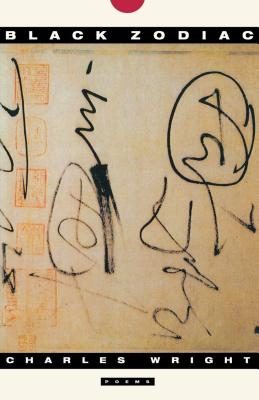
A reading at the Library of Congress is a less intimate event than at the Folger but has the advantage of being free. I bought his early collection, Black Zodiac, because the first time I had ever heard of him was when he won the National Book Critics Circle Award in 1997 for that particular collection (the awards ceremony was shown in C-SPAN2 and 1997 was probably the year when I watched the most ‘BookTV’ on CSPAN-2).

It’s a dark book. Actually, much of his poetry is dark. Even when playful, it’s got a sort of gallows humor to it. Black Zodiac, though, has less humor and more gallows. Really, it is a pretty grim collection. It’s also got this beautiful poem entitled POEM HALF IN THE MANNER OF LI HO that is partly, or at least superficially, about the T’ang poet and his fear of never being recognized for his work, which was really a fear of death (and he did die very young) and it’s also about implacable landscapes that have no interest in our desire for immortality or, rather, our desire not to be mortal. It’s too long to write out the entire poem and just writing out a few lines or a stanza wouldn’t do it justice, but if you see this book in a bookstore or library, even if you don’t buy or check it out, at least read this one poem and tell me it’s not heartrending. The reference to the ancient China is also another reflection of the deep influence of Ezra Pound on his writing, something Wright readily admits to.

The last poem, DISJECT MEMBRA has got this throw away reference to the ‘Rev. Doctor Syntax.’ I don’t know why it is in there, but several months ago, I splurged and spent $75 on a book containing all three, book length narrative poems detailing the comic adventures of Doctor Syntax. That’s all. Tickled me pink to know who the heck ‘Rev. Doctor Syntax’ was. Unless it is a reference to something else.

Also, check out the cover. Except for those tell tale stamps, you’d swear it was by Robert Motherwell or someone like that, but it is ‘Autobiographical Essay’ by Huai Su, a calligrapher from the T’ang era.

Just as an endnote, he got a standing ovation at the end and even walked back out for an encore.

First Folger Poetry Reading Of The New Season


9780393342680It was a great lineup, featuring four poets who had all had early poems published in Bethesda’s Poet Lore: Traci Brimhall, Terrance Hayes, Cornelius Eady, and Lina Pastan. I’d seen Hayes read before, had never heard of Pastan nor Brimhall and Eady, at least partly on account of co-founding Cave Canem and having taught at American University, casts a pretty wide shadow ’round these parts. I brought with me a collection by Pastan which I had bought earlier. I chose one by Pastan for the excellent reason that it was the only one available at Barnes & Noble by any of the four poets.

The reading was briskly paced, with Poet Lore editors Jody Bolz and E. Ethelbert Miller providing engaging commentary and introduction. Hayes was probably the most engaging of the poets, with Eady (unsurprisingly) a close second.

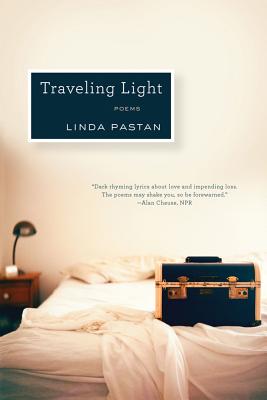
I don’t regret getting Pastan’s collection, though. I’d picked up Traveling Light, a nicely elegiac collection with mostly short lines (though a couple of denser pieces with longer lines that almost resemble prose poems). The positive quote from NPR on the front talks about the ‘rhyming lyrics,’ but honestly, there are very few rhymes. There is a comparison with Emily Dickinson that can be(and has been) made, but Pastan is not nearly so elliptical as Dickinson. There’s a combination of a certain melancholy of growing older with a heaping dollop of the pastoral that reminds me of the Yves Bonnefoy poems I’ve been reading lately (but nothing so amazing as Bonnefoy’s poems about snow). The combination of short lines and two or three line stanzas really works for me, which is why I’m disappointed when I come to a ‘block’ poem. Subject-wise, too, the denser typographic poems tend to be more narrative and a little… I don’t know… flighty? That’s not right. But something.

But there’s something in the comparisons I’ve made. Pastan is very, very good. Really good. But she does frequently remind me of better poets, which pulls me out of the work itself.

For example:


Late September Song

With the sound of
a freight train
rushing
through the trees
the first strong wind

of autumn
makes each
leaf
sing the song
of its own
execution.


Tell me that doesn’t sound like Dickinson (though less elliptical and erotic than Dickinson’s best works)?

There is one very weak section entitled somewhere in the world that contains political poems. The poems, I’m sorry to say, are made of sentiments and conceits of the most trite variety. Sitting on the steps of the Jefferson Memorial and then, in the last lines, thinking about one of his slaves or the 9/11 poem which avoids the terrorist attack until the very end before explaining a version of ‘it changed everything.’ It’s all basic ‘talk about something else and then BAM! as if someone will actually be surprised that you’ve changed the subject to something serious but ultimately uncontroversial.’ Punches pulled. These are the politics of checkbook liberalism outrage.

Finally, congratulations to Hayes who just won a so-called ‘Genius Grant’ (formally, a MacArthur Fellowship – this year, it’s an award of $625,000 over five years).


Charles Lamb & Algernon Swinburne


I went to the beach last weekend and brought with my a selected poems and prose of A.C. Swinburne (who, it seems, is only ever read in England anymore, which is too bad, because he’s got some great gloomy, decadent landscapes in his poetry and kind of reads like a sexier, more comprehensible version of Robert Browning). I’d also been reading an old book, tattered book that is something like the collected writings of Charles Lamb, volume II. It’s mostly his letters to folks like Coleridge and Southey and others. He’s not really very famous.

But Swinburne wrote and essay about William Blake and said that Lamb was the only contemporary that understood Blake’s greatness. Lamb, wrote Swinburne, was the best predictor and judge of quality in the first few decades of the nineteenth century. Maybe I underestimated Lamb’s value?