‘Drama & Verse: Simon Armitage & Peter Oswald’


The other night, the Folger’s poetry reading was titled, Drama & Verse: Simon Armitage and Peter Oswald.

It was a wonderful night, except that both men took oddly exceptional steps to distance themselves from poetry and towards drama.

Oswald performed a reading of an verse adaptation/translation of an Italian folktale. It was a wonderful experience, done in a mixture of modern and timeless (not timeless, in a cheesy, ‘this is eternal’ sense, but rather in lacking in major, time-sensitive stylistic signifiers beyond ‘modern, post-Austen English) language and also in iambic pentameter.

The iambic part was cool, because earlier that evening, I had been talking about iambic pentameter with my mother and how much of Moby Dick is written in – or in something close – to iambic pentameter. Another reminder that that meter doesn’t have to stick out like an attention-seeking anachronism.

Oswald also did the adaption of Mary Stuart that I’m seeing on February 11. I bought a copy and had him sign it to my mother. She’s been wanting read about figures from Elizabeth I’s time who aren’t actually Elizabeth I. However, I can’t give it to her until I read it and while I started reading it, I decided that I don’t want to finish it until I see the play. But I like it so far.

I’d read Armitage’s translation of Gawain & the Green Knight earlier and enjoyed it thoroughly. So I splurged and bought his translation of The Death of Arthur. Not to be confused with the Malory one. Apparently, this one is known at the AMA or Alliterative Morte d’Arthur. You learn something new every day.

I just wish either man had been more willing to step forward from their roles as translators and (verse) dramaturgists and say, ‘I am a poet and this is poetry.’ I would have been quite happy with that.

The moderator was somebody named Smith from the British Embassy, serving in some cultural capacity. He had a that longish, semi-leonine mane of white hair that only the English and French seem to ever adopt. He looked rather like someone who could have played Doctor Who (a bit of the Third Doctor, Pertwee, in his look; and Armitage looked a bit like a more dour Second Doctor, Patrick Troughton).

If You’re Under Thirty Or Forty Or Whatever, This Is Not James Franco


2015/01/img_3838.jpg

‘The Albertine Workout’ By Anne Carson


The Albertine WorkoutThe Albertine Workout is really more of a chapbook than a traditional book, a saddle stapled booklet.

Some sort of official description calls it:

The Albertine Workout contains fifty-nine paragraphs, with appendices, summarizing Anne Carson s research on Albertine, the principal love interest of Marcel in Proust s A la recherche du temps perdu.

I actually read it as a sort of poem. Or rather, like much of Carson’s work, a mixture of sui generis and something else. The way her The Economy of the Unlost is an academic work on the poets Simonides and Paul Celan, yet is also sui generis, to me, The Albertine Workout is poetry/sui generis.

There. I just used ‘sui generis’ more times in a single, short paragraph than I did in the entirety of the year of our Lord, two thousand and fourteen.

But it is fifty-nine paragraphs of about Albertine. Her sexuality (lesbian? bisexual?), her unattainability, her lack of desirability after attainment, her presence only being felt when her presence is an absence. The paragraphs are numbered and it leads my mind to Wittgenstein’s ordered of the Tractatus Logico-Philosophicus, which, insofar as I understood it, which is not much, is also about a certain unattainability and unknowability.

And yes, damn it, it is poetry. At least, if you have half a mind to read it that way, it is. And I read just assuming it was poetry. So, there it is – a classic case study of reader expectations and reader subjectivity. We’ll discuss author intentionality some other time.


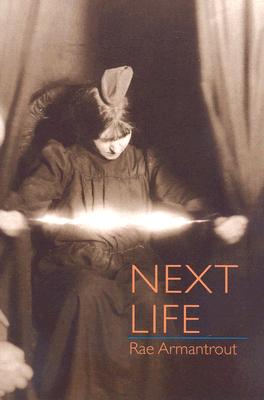
‘Next Life’ By Rae Armantrout


Next LifeRae Armantrout reminds me of Kay Ryan. Maybe it should be the other way, but I read Kay Ryan first, so there you have it.

Armantrout is more intensive, sadder, more melancholy, more interior, and maybe more urban. I’m not sure about that last one. It’s not that Armantrout writes about cities and Ryan writes so much about nature or the country, but Armantrout’s ‘voices’ are not of people living close to nature. I don’t know. Anti-pastoral voices, perhaps?

Her short, abrupt lines and abrupt (though never jarring) enjambments and brief, tangentially connected stanzas convey a voice trying to pierce through the overwhelming haze of sensory overload. Not a uniquely contemporary sensory overload (‘curse the internet and television for their incessant distractions!’). No, this is more ancient, though still modern. Think Freud’s Civilization and Its Discontents.

The poems are implicitly political in their critique of society, though she stumbles when becoming explicitly political. There is a poem that ends by drawing a metaphorically comparison between a cat licking himself and Fox News and, yeah, it’s funny and I can’t say it’s wrong, but all it does it paper over a certain triteness and a too, too direct manner. Armantrout excels at obliqueness.

Similarly, a prose poem loses the effects she achieves elsewhere and never convinces me that this particular poem had to be a prose poem. A prose poem must have a reason for being what it is. I’m not saying a reason that can explained in words, but like obscenity, I know it when I see it. And I don’t see it.

She is an amazing poet. I’m looking forward to having her sign it when she comes to read the Folger Shakespeare Library next month.

Theophile Gautier’s ‘Selected Lyrics’


9780300164336I am not going to finish this book. I’m just not.

It contains the complete poems of his crowning poetic achievement (sort of his Leaves of Grass) – Émaux et Camées.

Émaux et Camées is brilliant. It’s decadent. It’s supremely erotic. Gautier the poet, the voice, the eye stares lustily at the genitals of an androgynous statue, as do others around him, each praying that hidden there are the sex organs of their choosing. The translation is wonderful and I give it full credit for succeeding in translating it into rhyming English.

Now, I’m reading poems from an earlier book by Gautier: España

Sweet Mary, mother of God, is it boring. Ugh.

And it’s so sad, because when, in December, I was reading through Émaux et Camées, I was so happy. Thrilled. What a find! And then. The disappointment. It’s taken me a month to accept that it’s just not getting better and I’m not going to read it all.

C’est la vie, eh?

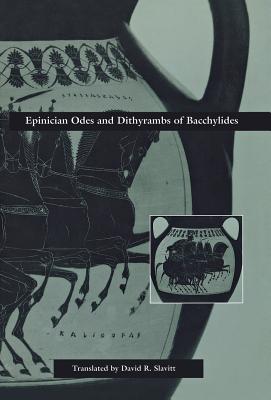
‘Epinician Odes And Dithyrambs Of Bacchylides,’ Translated By David R. Slavitt


Epinician OdesI bought this book at the Strand in NYC. I entered the store half an hour before closing. In less than ten minutes, I’d spent $49 on books. Seven books total.

The first piece, Ode I, won me over quickly with lines like:

I am, she says, bereaved, with a double-edged
grief sharp as a Cretan axe………..

The “…….” represents missing parts of the poem.

And then:

here in our town that is washed
into loveliness in the evening sunlight….

Tell you can’t dig that? I had no idea that Cretan axes were famed for any particular sharpness, but you are instantly caught up in the simile. It reminds me of the opening line to William Gibson’s Neuromance: ‘The sky was the color of television tuned to a dead channel.’ You’d never heard such a metaphor before (nor seen the art design style based around ‘pale Milanese plastics’) but you are instantly transported in time and space by it. Same with Cretan axes, I say.

After my good time reading Virgil, I’m thinking that I need to add more classical Greek and Latin poetry to my diet. It seems to agree with me.

And one thing I learned – epinician poems are poems celebrating the winners of sporting event. I mean, it was obvious that the poems were doing that, but I didn’t know that’s what epinician meant. Apparently, the ‘nic’ comes from Nike, the goddess of victory.

The old standby of the occasional poem (which is to say, a poem written for a particular occasion, not some poem only read infrequently) has really fallen out. You have poems written by poet laureates for presidential and gubernatorial inaugurations, but beyond that, the only occasional poet I can think of is Calvin Trillin and no one is going to confuse him Bacchylides.

On a related note, did you hear about the South Carolina kerfuffle? The state’s poet laureate, who has read at the last three inaugurations, had her spot cut from the program. The official word is that there wasn’t time for the two minute reading, but no one believes that. While celebrating the state, it also mentioned things like slavery and migrant labor and the state’s conflicted past and future, which is just not cool to acknowledge, apparently. Would you be surprised if I told you that the governor of South Carolina is a Republican? Of course, you’re not.

Rafael Campo At The Folger


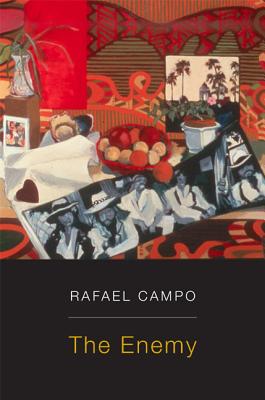
9780822339601Rafael Campo read a wonderful lecture on Emily Dickinson and her relationship to science and medicine, interspersed with readings from Dickinson and his own poetry. Of course, I would have preferred less reading from a prepared lecture and more speaking. Among other things, the inevitably monotony of the reading voice sometimes made it hard to distinguish when he had left the realm of ‘discourse about Dickinson’ and started reading a poem by himself or Dickinson.

I bought a collection by Campo called The Enemy that was far better to read than I would have guessed by his earnest, but uncharismatic style behind the podium.

I wasn’t sure about Campo as the designated reader on a day honoring Emily Dickinson. I didn’t know much about him, but what I did know seemed far from Dickinson’s aesthetic. But he explained that he studied in Amherst and the Dickinson house was a source of poetry inspiration and solace to him, so all is forgiven! The collection even has a poem about reading Dickinson on the quad in college and the solace that she (along with Coleridge) provided.

As for Campo’s poetry, it is mixed.

There is a section about a trip to Paris which is beautiful and often haunting, with subtle politics, usually touching on issues around AIDS and its effect on America’s gay community. But there are also less subtle political poems in other section which comes across as heavy handed and too pat in their sentiments.

In general, he is very good when his poems are driven by place – or rather by memory of place. Provincetown, for example, appears often and is used to think about current loves, past loves, and how relationships have changed – for good and for ill – over time.

Poetry East


Poetry East is a magnificent journal! A throwback of high culture and, as often as not, high modernism. It trucks heavily in translations and, if fault is to be found, it is that it can resemble a sort of poetry-centric Lapham’s Quarterly. I first came across it in a Barnes & Noble in the Christiana Mall in Delaware whilst on my way back from New Jersey.

The theme and title of this issue is Paris, but that’s not entirely an accurate one. It’s really about surrealism in the twenties and thirties, as well as surrealism’s antecedents. And really, that should be ‘Surrealism,’ capital ‘S.’ Not Surrealism as a modified adjective, but as a capital noun – Breton, et al.

Within are Surrealists and their close cousins: Appolinaire, Eluard, Dali, Soupault, Man Ray. Also, antecedents like Baudelaire. Also, for some reason, Proust and Huysmans.

I do love Eluard, in particular. As a little thing that stuck out for me, Eluard’s poems were transposed with a little essay by Dali and also reproductions of some of his works. The Dali essay mentioned Gala, who was had been Eluard’s wife, before leaving him for Dali. So, there’s that.

/home/wpcom/public_html/wp-content/blogs.dir/378/2301340/files/2014/12/img_1992.jpg

Gautier & Balzac


I am something less than halfway through Theophile Gautier’s Selected Lyrics and just finished a poem entitled The Loft. It somewhat celebrates and somewhat more punctures the romance of la vie boheme of the poet, artist, or musician.

One stanza struck me because of how exactly it mirrored part of the corrupting journey of Lucien from Balzac’s Lost Illusions:

Long since, the poet, seeing how
Tired he grows of rhyme’s fleeting call,
Has turned gazette reporter now
And more from loft to entresol.

‘Leaving The Atocha Station’ By Ben Lerner


Leaving the Atocha StationIt’s a great book. Well written. That’s obvious.

But I’m too told for it. Ten years, even, but especially twenty years ago (though you’d have to take out the references to the internet; maybe you could put in some stuff about AOL keywords, instead), I would have loved this book and carried it with me and made it into a shibboleth.

A young graduate from Brown University goes to Madrid on a fellowship to write poetry. He takes white pills for an unspecified psychological distress (I suspect depression or bipolar, but Lerner wisely doesn’t say). He smokes a lot of hash and drinks a lot more than the forty year old me is capable of drinking.

But things rang true. He has relationships with two young women (girls?) and I have experienced myself that feeling where suddenly what you thought was something is actually… nothing? Something? Certainly, less than one thought. Isobel (incidentally, the name of Nicholas Jenkins’ wife in the A Dance to the Music of Time novels) reveals that she hadn’t considered their relationship… monogamous. Her real boyfriend was just temporarily out of the picture. Or maybe not (later, some related statements are found untrue; or not; no one ever gets a chance to interrogate). Another, Teresa, is more aloof and the narrator (Adam; did I fail to mention that?) never does figure out what their relationship is (if it is more than some occasional fooling around that stops short of sex).

The novel is also partly about Adam becoming comfortable with the idea of himself as a poet with worthwhile things to say (in poetry, at least). But it is mostly about the pretentiousness of youth and myths we create around ourselves, while at the same time, we are confounded by the self protecting myths other create around themselves.

The ending comes across as almost a deux ex machina of success, except that the impression is of something too knowing. Lerner, if not Adam, seems to know that the happy ending is too pat to be come true in the way that the narrator envisions things unfolding beyond the last page.