‘Ooga-Booga’ By Frederick Seidel


ooga boogaI’d read about Seidel before (a profile in the New Yorker, some years back, I think when a large volume of collected poems came out), but had never read him. If you’ve read about him, the poems in Ooga-Booga are everything you’ve heard: frequently written in the disdainfully elitist voice of a born to wealth Manhattanite who is better than you by birth and wealth; frequently sexists; frequently voicing lines and phrases that, while perhaps not racist, are certainly retrograde and insensitive; and consistently brilliant. You finish the book overwhelmed by his talent and how much better he is than ‘nicer’ poets. He frequently rhymes, including playing with slant rhyme and rhymes within lines, yet avoids regular rhyme schemes, with the effect being both assonant and yet more conversational than more traditionally rhymed poems would be.

I’d have to quote an entire poem to get the full effect for you, so it’s up to you to read him (he’s almost certainly in your library system, people; it’s not that hard).

I Have No Title To Put Here


The Portuguese have an untranslatable word for the ineffable nostalgia of something that has passed away and perhaps never was: saudade.

Later, I came across another reference to a similar concept (also in a Paris Review article):

Hiraeth.

It’s pronounced “here-eyeth” (roll the “r”) and it’s a Welsh word. It has no exact cognate in English. The best we can do is “homesickness,” but that’s like the difference between hardwood and laminate. Homesickness is hiraeth-lite.

It’s a feeling I know well and which English lacks a good word for (and I’m not sure stealing from Portugal or Wales will resolve that lack).

When I read The Sun Also Rises, I was overwhelmed with a homesickness for a place and time I never knew, a mythical 1920s of high modernism. Of course, I was also a teenager, so I didn’t properly understand the sarcasm, satire, and self-loathing that drove the novel, or else I should not have felt saudade nor hiraeth.

More saudade, I suspect. Hiraeth is something more for my mother, a southerner who will never, despite her accent, fit properly in the South (with its desperate poverty and structural racism and the veneer which covers it up and makes believe we have moved past it in much of the ‘New South’), nor feel at home anywhere else (perhaps not surprising that she settled into Florida, which is neither here nor there).

I wonder if they are all myths. I think perhaps I have even lived through such times myself, but they are invariably disappointing to live through and unnoticed by the participants, who are merely getting by like everyone else and wishing to have been alive in the New York of the Abstract Expressionists or the Bay Area of the San Francisco Renaissance or even the pastoral delights of the Transcendentalists of the 1840s.

Monday Morning Staff Meeting – History


edbfdf99-69d8-41a4-a566-53a753748a74-2060x1236

Ancient Rome is relevant. Ancient Rome is not relevant.

What could we learn from the Britain’s Marxists?

Understanding national identity through poetry.

John Updike, the poet.

Buddha’s excluded middle.

Weekend Reading – The Real Thing


What is, instead of reading a mediocre poem by a white dude pretending to be an Asian woman, you read poems by actual Asians? Or, really, just don’t read stuff by white guys this weekend, as a kind of silent protest.

Another way our society devalues art – by stereotyping genuinely starving artists as entitled hipsters.

We are not a fashion conscious people, but we love our books (probably why I love living here).

Check out these amazing excerpts from a long, narrative poem, Voyage of the Sable Genius, by Robin Coste Lewis, proving once and for all the conceptual and found poetry can be moving, meaningful, and enthralling.


‘Dear Jenny, We Are All Find’ By Jenny Zhang


dear-jenny-3dI felt rather prescient, because I started on this poetry collection a little before the poet got some attention for her response (published on Buzzfeed) to the ‘yellowface’ debacle in the latest edition of Best American Poetry. A friend of mine even sent that essay to me and I got to say, ha, I know about her! I’m reading her poetry. Always a satisfying feeling.

Of course, I hadn’t read much of Dear Jenny, We Are All Find at that point and my subsequent reading of it has been colored (not a pun, but what the heck) by her essay.

I read it as an angry, frustrated collection. While it is risky and usually wrong to read poetry as being intrinsically autobiographical, without classifying the poems as being particularly confessional, it is easy to see a repetition of themes on the body of a person of color as… not really the ‘other,’ but perhaps as a contentious object. The body as physical and organic (some scatalogical lines, references to sexual fluids), the body as frustrated by desire (whether by fetishization by others or by the body’s own unfulfilled desires).

Actually, those poems were the best. Her lighter poems, especially those touching on poetry culture and mocking Brooklyn, millennial, hipster, MFA style pretentiousness were… meh. Disappointing compared to the more aggressive, more political (not in the sense of addressing immediate issues like Syria or voting rights, but in the sense that the writings of Judith Butler and Elaine Scarry are political – and since her bio says she went to Stanford and got an MFA form Iowa… I don’t think it’s a stretch to think that philosophers like them came up in conversation) poems.

The poem below has a title that makes it sounds like the ones I’m not so fond of… but it’s not. Maybe not the best poem in the collection (though very good), but an example of what I’ve been talking about.

Don’t fucking text your friends when I’m reading a poem I took two years to write

or if you do it then be
right and if you are right be
relentless like this was relentless
when you spoke to that bitch
she was just That Bitch
and you were just A Good Guy
and that was the first time My Lips
wanted to be lips and they were
just the lips that your little movers
loaded in a van that lived in Norway
like you live in a place that is so faraway
my entrenched feelings have a way
of making themselves known
to know me is to know my mother’s bad English
the time I charmed you with not wanting
to not want to not take a shit
in my pants which were yours
the smell was also yours
you gave me the constipated figurine
I washed it like it was my own
and it was your face that gave me the finest idea
the idea of not having any more ideas
was good enough if it meant saving the idea
of you or the time you yanked metal
from your hand which does not leave me
even when my face is no longer a face
and my ideas no longer ideas
just the fine French doors you live inside
like I live inside this promise
like you live inside my dreams
the best ones where you did not yet exist
though I knew this fine universe
would create you eventually
and I would never stop thanking my mother
for creating me too.

Who Will Win The Next Nobel Prize For Literature (Poll)


Sean Connery Reads Constantin Cavafy


The Sunday Paper: It’s Not Very Good


697_234On sort of defending Vanessa Place. But not really. But, yeah.

Two poets were included in the recent list of MacArthur Genius Grant winners (and yes, I know that we’re not really supposed to call them ‘genius grants’ or ‘genius awards,’ but, whatever, everyone does, so what are you clinging to? also, Ben Lerner is probably better known as a novelist, but, whatever).

If you’re looking for free tickets to concerts at the Library of Congress, you’re in luck – no more service charges from Ticketmaster! But you’re also out of luck, because they’re mostly sold out (though you can still try and get ‘rush’ tickets before the show).

And there may be a hurricane hitting me today or tomorrow. Wish me luck.


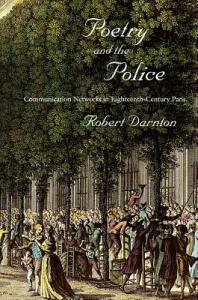
Poetry And The Police: Communications Networks In Eighteenth-Century Paris


Poetry and the PoliceI had been looking forward to this read for a while. It had been on my personal ‘must read’ list for a couple of years. You can probably guess where I’m going with this: I was a little disappointed.

Part of it is my selfness as a lover of poetry and Darnton gives little shift to the importance of poetry in and of itself.

I suppose I should summarize a little. In 1749, the police went a little crazy trying to track down the origins of some satirical poems mocking King Louis XV (and some of his ministers; his mistress, the famed Madame Pompadour [her maiden name is ‘Poisson,’ French for fish and some of the songs used that fact and… let’s just jokes about fish and the smell of a woman’s privates go way back]; and the King’s apparent cowardice in sending Bonnie Prince Charlie to die at the hands of the English). The tale goes over how very strata of society intersected with these satirical poems, usually set to popular music of the day.

But I wanted to know more about the poetry itself, its writing, and its writers. Surely it means something that poetry, literature was considered a threat. 

Also, the style of the writing of the book was a little undergraduate.

I Finally Got My Better Half To Come With Me To #LittleSalonDC


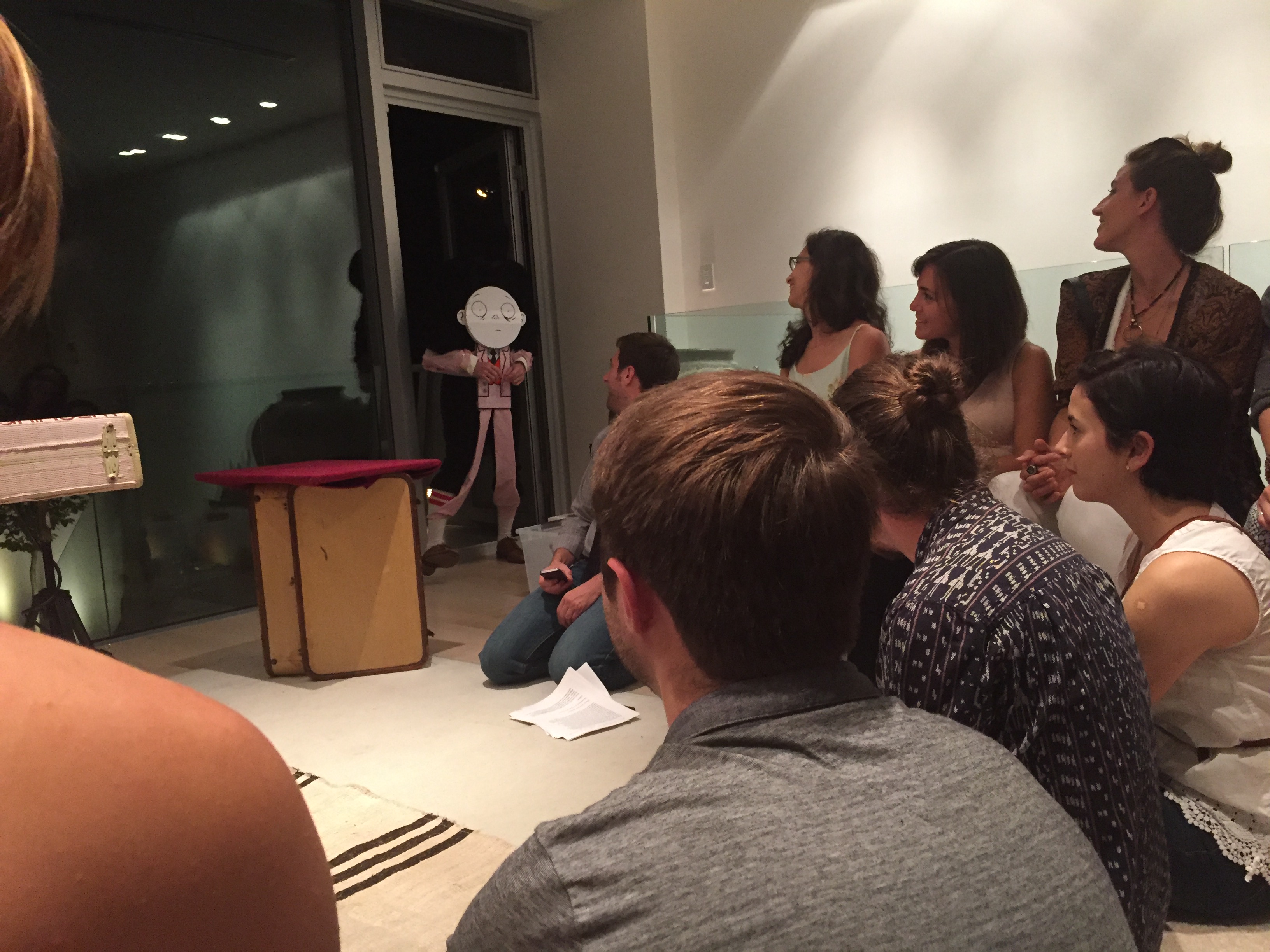
PuppetIt wasn’t that she found the idea particularly objectionable, but that she was out of town every time I went (purely coincidence, I assure you). She hemmed and hawed a little, but in the end, it was a great night and I think she enjoyed it.

Flying Guillotine Press launched new book of collaborative poetry by sixty odd writers called Breaking the Lines. I checked it out, but it wasn’t really my bag, but I did pick up another one of their books, Stephanie Balzer’s WED JAN 30 12:58:10 2013 – THU DEC 20 14:16:36 2012. There were also jam samples from PinUp Preserves, but someone I missed those.

The opening was some poetry by Lucian Mattison and… can I admit he didn’t really do it for me? From DC’s ‘Opera on Tap’ (wherein people sing opera at bars) were Kristina Riegle, Carla Rountree, and David Chavez. They actually sang from musical theater, but they were great performers, as well as being excellent singers. I even got some special attention during ‘I Hate Men,’ because when the line about men with chest hair arrived, well, I was the only person near the front with  suitably Sean Connery-esque fur. I don’t get a huge amount of attention from ladies these days, so we take what we can get, even if it’s being singled out during a song entitled, ‘I Hate Men.’ Finally, there was a vaudeville style act by Mark Jaster and Sabrina Mandell (from Happenstance Theater) and puppetry by Sarah Olmsted Thomas and Alex Vernon (also occasionally from Happenstance Theater). The puppetry was absolutely magical, though it would take too long to explain, so if you live near DC, try and find a time to see it and if you don’t, well, sucks to be you.