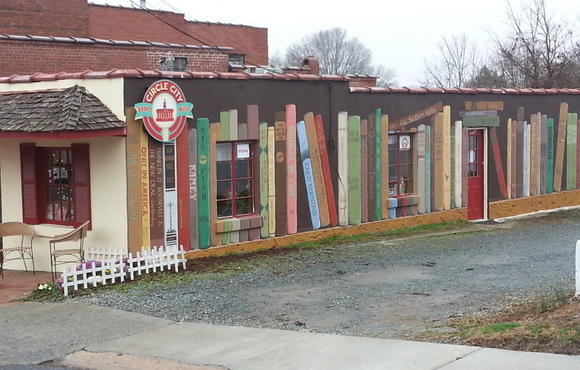
Circle City Books


la-et-jc-now-thats-a-wall-of-books-20130123-001

NSFW


Ha! I tricked you! It’s not pornography after all – it’s poetry!

Though it does have some profanity. A lot actually. Don’t actually play this at work. You might get in trouble.

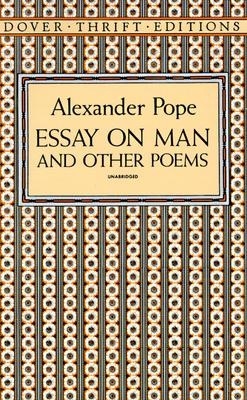
Essay On Man And Other Poems (New Year’s Resolution, Book Seven)


While I had surely read some snippets of Pope before, this was my first real dive into his writings. The shorter pieces, the lyric poems, were good. Good enough to say that, had Pope written nothing or little else, he would still be remembered as a worthwhile minor poet of his age. Rather like Ralph Waldo Emerson. But like Ralph Waldo Emerson (who was a serviceable poet, but no great), he is better known for his essays.

But Pope’s essays tend to be a little different from the New England mandarin’s.

This really struck me while reading the poem, Essay on Criticism: Alexander Pope is writing a critical essay entirely in verse form. In heroic couplets, to be specific (which are, and I had to look this up, rhymed couplets written in iambic pentameter).

Imagine opening a copy of The Nation, The New Republic, Harper’s Weekly, or The American Conservative and reading an article on a serious subject, like drone war, that written entirely in rhymed verse form. And written seriously, not as a meta-commentary on something or as a joke (which is why I left out The National Review, because, since Buckley’s death, that rag is more home to a particular brand of youthful idiocy, like Jonah Goldberg’s unreasoned idiocies, than anything serious). Go back further and what if Podhoretz’s editorials for Commentary had all been rhymed sestets or Petrarchan sonnets?

Beggars the mind.

Oh, and the Essay on Criticism includes the line:

A little learning is a dangerous thing;

Pretty cool, huh?

He gets into a great many localized, time specific references – The Rape of Lock is entirely about a particular scandal du jour – and my edition doesn’t really give the reader an heads up on this stuff.

Though not a long collection, Pope is slow read. To appreciate his rhymes and also the lines of his arguments is not a fast process. I had thought to finish it in well under a week but actually struggled to finish it by today.

Conclusion? I would read Pope again.
20130218-105456.jpg

Flash Gordon: An Underappreciated Masterpiece


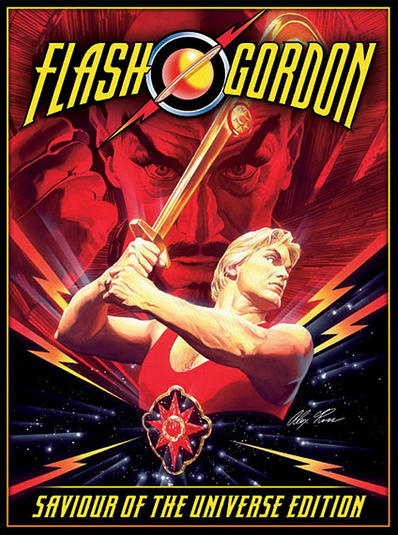
flashgordon-DVD-coverFlash Gordon is the greatest comic book movie ever made. It also contains one of the finest action sequences ever put to celluloid.

Yes, it’s high camp, but the strong actors (Max Von Sydow, Topol, Brian Blessed) chew the scenery appropriately and the merely adequate ones take the movie just seriously enough, but not too seriously (all in the proper spirit, is what I’m saying) that it doesn’t degenerate into something too ridiculous to watch.

And I will put the early action set piece where Flash defeats the elite guard of Emperor Ming using his skills as a running quarterback (with intergalactic fabrege eggs as footballs). No big stunts or wires or special effects needed. Just good ole American gridiron ingenuity.

Almost is good is when the hawkmen attack the space ship. Yeah, hawkmen, led by Brian Blessed, no less. Imagine the Battle of Agincourt from Kenneth Branagh’s Henry V, except that instead of playing of the Duke of Exeter, he’s king of the hawkmen, and that instead of wearing armor, he’s wearing leather hot pants and has wings. It’s that freaking cool.

Oh, and Queen did all the music. (‘Flash!! Ooohhoohh…’)

Weekend Reading – We Have Ways Of Making You Talk, Professeur Derrida!


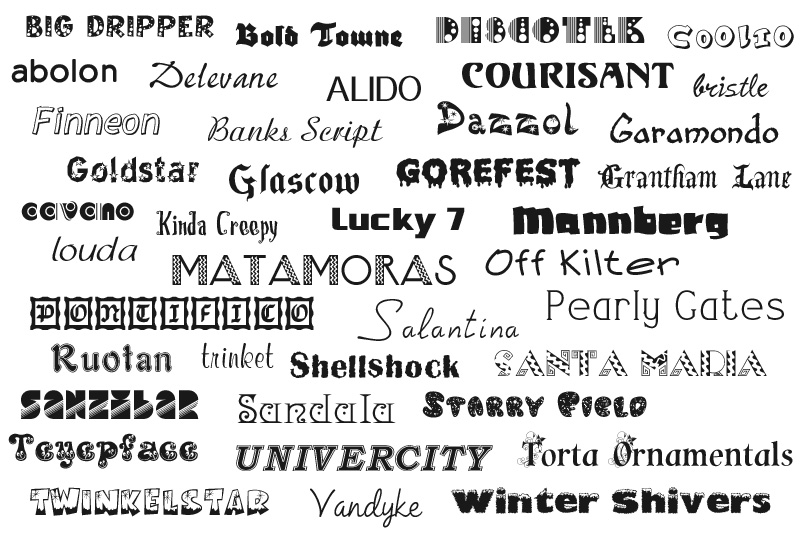
40-free-mac-fontsWhen Jacques Derrida was arrested.

“It is hard to imagine a destination like Union Station without a fully stocked bookstore…”

“We lost Borders. We cannot bear to lose you too.”

You are your font.

Treasure Them – They Don’t Come Around Very Often


I’m talking about poetry book reviews!

On Adrienne Rich’s posthumous collection of new and selected poems. Somewhat surprisingly (though refreshingly, even though I love Rich’s work from the 70s through the early 90s), a tepid review.

Nearly a thousand pages of Edward Dorn’s poetry is reviewed here, in a surprisingly short piece.

Seth Abramson is becoming more measured and more interesting to read, at least, as a review (I haven’t read his poetry, though I reckon that I should). He writes some longer review in this, his usual collection of individual reviews of five different works. He offers some criticism and damns with faint praise, rather than universally lauding. And his final review is less a review than something deserving of its own space: an essay on the changes and developments of the various publication philosophies of poetry book publishers.

And a decidedly mixed to poor review of W.S. Merwin’s translations.

Two minimalist poets.

Midweek Staff Meeting – Use Your Words


_65587521_20011de3-1c96-48cb-8fec-63b6a0141238Vocabulary is the secret to success.

Poetic picks.

Reading is expensive.

A city that truly loves its books.

Used e-books. This could be a real thing (actually, no it couldn’t be a ‘real thing,’ but it could be an elaborate scheme Amazon uses to get a monopoly on the business of books).

DC’s Best Bookstores


After DC got named the nation’s most literate city, someone got up and made themselves a list of our fine city’s best bookstores. Thankfully, they did not include some bookstore in Alexandria or another one of DC’s suburbs, which is something people do when making ‘best of’ lists about DC and which annoys me greatly. I don’t make a list of the five best coffeeshops in New York City and claim that number three is a hipster cafe in Jersey City, so don’t come around here and tell me the Arlington or Bethesda are part of DC.

You know what I like about this list? It doesn’t open up with Politics and Prose.

P&P is great bookstore, don’t get me wrong, but for the local man about town, I don’t actually think it’s the best.

This one names Kramer Books as the best. I’ll accept that. About ten years ago, I used to drink at the bar over there (yes, inside the bookstore) several times a week with a friend. Politics and Prose may be more nationally iconic, but as far as being a local culturally touchstone, Kramer Books probably better.

I’ve actually never been to the Lantern nor Books For America, both on the list. And I was disappointed that Bridge Street Books wasn’t on the list, though happy that our delightfully cluttered local hangout, Capitol Hill Bookstore, made the cut.


Out Of The Silent Planet (New Year’s Resolution, Book Six)


Reading the first book in C.S. Lewis’ trilogy of Christian science fiction, I realize how huge his debt is to the planetary romance of early pulp writers like Edgar Rice Burroughs and his Mars and Pellucidar books.

Lewis certainly gets his theological apologetics in, but the descriptions of his hero (Dr. Elwin Ransom, professor of philology) exploring the planet (which is Mars by the way!), encountering native flora and fauna, and his interactions with the native life, including quickly learning their language… well if you replaced Dr. Ransom with John Carter and added a couple of sword fights (though, there is a harpoon hunt of a giant, freshwater monster in Out of the Silent Planet) you could probably have sold this as a long lost novel of Barsoom, especially since it even takes place on Mars, though the natives here call it Malacandra, not Barsoom. It also uses the trope of having this story be Ransom’s unbelievable story told to Lewis so he can sell it as a novel, because it would otherwise be too unbelievable if sold as fact.

The apologetics come in the time honored fashion of presenting a fictional (or fictionalized) society as expressing the utopian ideals of the author’s religion or philosophy. There was one little throw away line where Ransom wonders whether it is his duty to evangelize to the alien hrossa and then realizes they more truly represent the ideals of his High Anglican Christianity than whatever he could express in their alien tongue.

The (more or less) climax is a little preachy and Lewis lays it on too hard in one area. Ransom must translate the arguments being made by the villains of the novel (Devine and Weston, if you must know) into the native language of Malacandra. Because of both the limitations of the language (having a relatively utopian society, they don’t have words for some negative things) and his own understanding of it. The result is Ransom giving the Malacandrans such a straw man version that it becomes irritating.

Despite that Caveat, Lewis is always and engaging and earnest writer, though never as good a writer as his fellow Inkling, Tolkien (upon upon whom, apparently, Ransom was based). This book is not as good nor the world as well thought and engaging as that built in his Narnia books, but it is still a good book by an important twentieth century writer.

I read this book years ago, but this time, I will go on and read the rest of the trilogy (though not next week, I’m thinking Alexander Pope for next week). In fact, I have the complete trilogy already downloaded onto my Nook. So, maybe sometime in March… Perelandra.

Washington Celebrities


So, I was walking down to the bank to withdraw some money for the offertory at church when I saw what seemed a familiar sight.

Andrew Schwartz, whose impromptu adoption of the lead role in the Folger’s Henry V had so impressed me, was walking down Pennsylvania Avenue.

Nothing special, but it was nice to be able to tell him in person how much I had enjoyed his performance.

So, that’s kind of what passes as a celebrity sighting in DC – or at least, what passes as a celebrity sighting once you’re bored of seeing Boehner standing outside a bar with a cigarette hanging out of his mouth.