Who Wants To Live Forever


So, Brian Blessed’s King of the Hawkpeople in Flash Gordon cries out, ‘Who wants to live forever!’

Queen wrote the music for Flash Gordon.

Queen also wrote the music for The Highlander, including the song Who Wants to Live Forever.

Just some trivia for you. Anyway… Flash! He’ll save every one of us!

Happy Birthday, City Lights!


CL60_01

‘Magician’s Gambit’ By David Eddings (New Year’s Resolution, Book Twenty-Five)


Economy. I’m going to keep using that word as I read through David Eddings’ multi-volume opus. It’s economical. In a good way. Usually. Not always. Economy of writing (and therefore, economy of reading). At $7.99 pop at the bookstore (assuming you can’t find a used copy of a particular edition), it’s also economical to purchase.

Now the bad. He’s starting to write about teen romance. No fantasy writer ever gets that right. Eddings, like most, understands that a fifteen year old is usually confused by their feelings and often don’t actually understand what would be perfectly obvious to an adult able to penetrate teen culture long enough to observe. What he doesn’t get, and neither do many others, is that fifteen year old are also horribly and frighteningly horny and prone to fingernail on chalkboard grating bouts of pseudo-romantic melodrama.

The hero, Garion (or sometimes Belgarion) starts getting very powerful, very fast. Too fast for me. Too much economy, perhaps? And some of his uniqueness has a certain deux ex machina quality that I don’t like. Maybe it’s that we’re on the third book and too many characters seem too roughly drawn considering all the time we’ve spent with them. Again, too much economy getting in the way.

The book, while not actually third person limited, does tend to focus on incidents where the young hero, Garion, is directly present. On the whole that’s fine and dandy but I did start to get a little disappointed at so much happening offstage, as it were. A lot of fun, tricksy, magical, violent stuff seems to be happening… elsewhere. I’d like to have seen some more of it.

The climax was… I don’t want to call it exciting, but perhaps… intense? Certainly, Eddings is more than capable of good fantasy writing and he accomplishes some here.

Inside the Printing Studio Where Obsolete Tech Will Never Die


Hemingway’s Typewriter


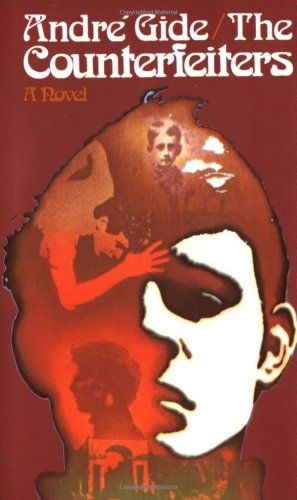
‘The Counterfeiters’ By Andre Gide (New Year’s Resolution, Book Twenty-Four)


tumblr_lr3w3gs0hD1qlehmlo1_400This is the first book I’ve read by the Nobel Prize winner, who won in spite of defending pederasty, but we do (or should, I would say) award literary prizes based on literary quality. Now, I’m reading this in translation, of course, but The Counterfeiters seems to have plenty of quality.

It’s an intelligent read, an insightful read, and a brisk read. I breezed through it, really. If you’re looking for one of the literary volumes that will not only expand your mind, but also expand your ability to show off that you’ve expanded your mind by reading great literature, you could do worse than this book. It’s French and it’s by a Nobel Prize winner, but you’ve also got a decent chance of being the only person in the room whose ever read it, so you get points for that. And you’ll enjoy it and, despite coming it at roughly four hundred pages, you’ll be able to finish it quickly.

The main characters, after a fashion, are two school boys. Sort of. Named Bernard and Olivier. They’re not really school boys in that they are about the take the finishing exam that will (or will not) allow them to go to university. But anyway. They are pursued by two men with more or less unstated sexual desires for young men. One is intended to be a rather villainous corruptor (I can’t help but compare him to the Lord Henry who corrupted the handsome, young Dorian Gray) and the other… not. The other, a writer named Edouard, who is also the uncle to Olivier is a major character, a sort of narrator of the tale of the two young men, with much done from his perspective and a great deal of the book being written in the form of Edouard’s diaries. Edouard, unlike the corruptor (Comte Robert de Passavant), does appear to have some romantic, if not obviously sexual, feelings for women. Passavant, in one delicious passage, does flirt with a girl, but only to hide his sexuality. It takes place during a wonderful party for a literary review, which features a drunken challenge that almost evolves into a duel and some characteristically crazy behaviour by the writer Alfred Jarry, who was a very real and very eccentric writer, who was (in)famous in the late 1890s and early part of the twentieth century, which I take to be the period in which the novel takes place (it’s never really said, though it was published in 1926, but clearly takes place before the Great War).

The oddest passages, at least by my reckoning, are towards the end when for an entire chapter (though Gide’s chapters tend to be short) Bernard finds himself (literally) guided by an angel – an angel with whom he later wrestles, Jacob-like, even ending with what seems a similar blessing. He gives up the woman he has been sleeping with (who is the sister of a woman he fell in love with, that woman being sort of beloved by Edouard and who had been impregnated by Olivier’s older brother, despite said woman, the sister of Bernard’s mistress, being married to a boring accountant) and decides on a career in something touching the literary (he talks about becoming a proofreader or the secretary of a writer, but is thankfully offered a position on a literary review). While there is some ‘growing up’ that takes place, plus some realizations that formerly admired figures aren’t so admirable, it’s not otherwise a book that features much religious/spiritual awakening. Not really its thing. There are some late attempts to tie things together, but the novel itself is episodic and the effort reminds me of the end of A Clockwork Orange, where Alex simply grows up (as someone who saw the movie first, reading the book and its ending was a shock), and the ending of The Counterfeiters is similarly unsatisfying. Not dreadfully unsatisfying. Just slightly so. Also, it conspires to make the whole read like a response, or perhaps making fun of, Decadent literature (Decadent with a capital “D,” as the writings of J.K.Huysmans or the earlier mentioned Wilde novel).

Happy Bloomsday!


In honor of the bard of Dublin, I will be putting some Easter eggs into today’s Dungeons & Dragons game.

A History Of A Beard(s)


That’s my beard. I include it because of this piece by the poet Donald Hall (I enjoy his work a great deal and have fond memories of lying in bed with a particular woman and read from The Painted Bed, one of the collections he wrote after the death of the poet Jane Kenyon, who was also his wife, but I put poet first because that’s how she should first be remembered).

Anyway. Read his essay, Three Beards from the New Yorker.The_Beard

Weekend Reading – All The News That’s Fit To Print


Where do you get your news from?

Who are you without memory?

Someone new to decline your bad poetry.

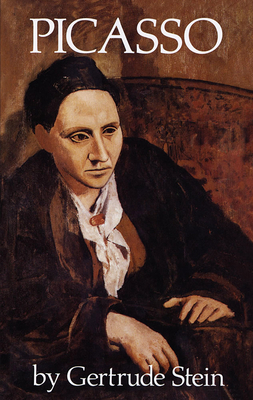
‘Picasso’ by Gertrude Stein (New Year’s Resolution, Book Twenty-Three)


At first it seemed to me that Gertrude Stein was writing like Hemingway. She’s actually writing very specifically like Hemingway did in A Moveable Feast. Especially the bits featuring… Gertrude Stein. Only with more commas (more about that later).

A Moveable Feast is a great read for content, but the writing itself is c–p. We pretend it’s not because we want so much to like it. Sort of like The Old Man and the Sea. When all either of them really are is better than the most execrable of Hemingway’s later work (I’m looking at you, Across the River and Into the Trees).

A friend once told me that Stein’s Making of Americans reads like Henry James, but with two out of three punctuation marks removed and replaced with ‘and.’ Well, Picasso reads like bad Hemingway, but with triple the number of commas and every third comma placed randomly within a sentence. This can make things difficult to understand, as you ask yourself, now, is she creating a new dependent or independent clause that will change the meaning of this sentence or is she just having fun with commas? And if you don’t know what I mean about commas changing the meaning of a sentence, check out the book Eats Shoots and Leaves.

No one in their right mind would read Stein on Picasso in order to understand Picasso. No, you read it in order to read Stein. Just like you don’t read Heidegger on Nietzsche to get anything like a better understanding of Nietzsche.

But… I did get a couple of insights.

She writes very briefly (little more than acknowledgement) of his blue period, but that talks about a slightly later ‘harlequin and rose’ period. She also says this period appeared twice! I had always thought of his clowns appearing in his blue period and don’t know what to make of this claim.

She eschews personal psychology (nothing, for example, about the melancholy of his blue period), but is obsessive about a sort of cultural psychology, with Picasso, in her estimation, being heavily defined by his ‘Spanish-ness.’ But this does lead her to make a remark about the influence of calligraphy on Picasso. You can see something of calligraphy in his ability to create images and complete shapes through a few broad strokes. And, thought she gets some facts and history wrong, she is clearly trying to show the influence of the non-representational religious art and the use of Arabic calligraphy in Muslim Spain.

Finally, and to close on something positive to say, I was pulled up short by one bit. I was dismissive of her attempts to connect his to a certain ‘Russian-ness’ and talk about a Russian period, but then I saw a reproduction of Picasso’s FEMME AU SOURIRE. It wasn’t Russian in the sense that Stein was talking about (or else she completely misreads whatever the Russian character might be), but that 1929 painting really does resemble something from the pre-Stalin, post-Revolution, Russian avant-garde!