‘The Masters’ By C.P. Snow


tumblr_lshgrttxXj1qatsq6o1_400I just finished The Masters by C.P. Snow. I enjoyed, I’m glad that I read, but I also can’t say that there’s a particularly good reason to read it except as an artifact of mid-century England.

The story is all about the election of a new Master at a(n apparently minor) college of Cambridge. The current Master is slowly dying and Fellows of the college strategize and campaign for their chosen candidate.

The narrator teaches law, but it’s not consistent narration. When he speaks in his own voice, he’s a little dense, but when (and it’s still, technically first person) the account switches to a more fly on the wall view, he’s surprisingly perceptive.

The events begin in 1937, but with one exception, there is little recognition that incredibly important stuff is happening in Europe.

The two candidates are someone who does something in the humanities named Jago and a scientist named Crawford. The narrator is a supporter of Jago.

The key here is that Snow delivered a famous lecture called the ‘Two Cultures’ where he laments the state of science education in England, which he feels has been neglected in favor of pointlessly old fashioned humanities. Crawford is Snow’s vision of the future.

I’m not really on Snow’s side here, as you might imagine. Check out this article about the dust up surrounding the lecture and guess who best represents my view.

On another note, I found this book at the annual Flower Mart at the National Cathedral. They always have a tent with books for sale that are cheap and they always have some great, under appreciated classics. I will probably sell this book, though – see what the owner of Capitol Hill Books will give me in terms of credit. It’s a good book. It’s not exactly a classic, but it is something to have read and perhaps even to own, but I’ve got to make space and decisions. I mean, let’s be honest – when would I read The Masters again?
‘The Stranger’ Was Published On This Day In 1942


Camus23

Monday Morning Staff Meeting – New Media, The Internet, Crowdfunding, Etc, Are Not A Replacement For Existing Cultural Institutions, But Are Add-Ons, At Best


1-prehistoric-code

The history of Historical Materialism.

This is what a clay envelope looks like.

This sucks. Is this true? Does no one read Henry Miller anymore? Seriously? Why not?

Let’s not overstate the promise of participatory democracy to drive, direct, and fund our culture.

Art in the service of labor.

Godzilla


I saw Godzilla (in Imax and in 3D), but I’m not going to write about it right now except to say, pretty freaking awesome.

Godzilla: 2000 is one of the Toho films from the ‘Millenium Period.’ There is some human tension between those who want to study Godzilla and those who want to kill him (and perhaps harness his near indestructible to… I don’t know, grow new spleens or an army of super soldiers – I can’t remember which). Whatever.

A alien flying saucer on the bottom of the ocean rises, floats over Tokyo and transforms into a monster. The monster steals some of Godzilla’s Wolverine-like healing abilities, but that doesn’t really help when the big guy unleashes his atomic breath. End of alien monster. Godzilla has saved the earth, right? Right, but he hasn’t saved Tokyo. Godzilla is force of nature and does not answer to our individual needs (including our need not to be destroyed). The movie ends with Godzilla rampaging through Tokyo. He is king of the monsters and the defender of earth from aliens (a recurring theme in the Toho movies of the last fifteen years or so), but is different from defending humanity. A force of nature, he defends nature, but, like nature, is pretty indifferent to us.

Spoiler alert: to some extent, that is the vision of Godzilla we see in the most recent movie (minus the aliens).

Weekend Reading – Captain Kirk Was Right (Of Course; And By Captain Kirk, We Mean William Shatner, Because He Is The Sean Connery Of Captains Of The Enterprise; Look, No One Is Denying That Picard Was Cool, But Shatner’s Kirk Was The Man)


mirror-universe-spock-kirk-e1303199243190The multiverse is real. Maybe. Probably. We think. I can’t tell. Is there consensus? I don’t know. But here’s a picture of Goatee Spock and Sleeveless Kirk.

“Books, simply as props that happen also to be quite useful if you open them up, are the best—perhaps the only—bastions of contemplative intellectual space in the world.”

So, yeah. My home state of Florida is going be mostly underwater.

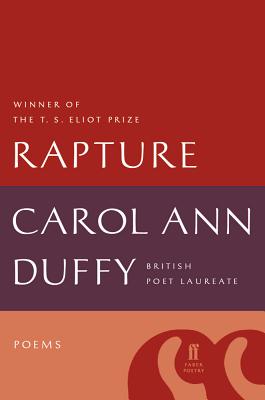
‘Rapture’ By Carol Ann Duffy


9780865478862British Poet Laureate Carol Ann Duffy closed out the 2013-2014 poetry season at the Folger Shakespeare Library.

A witty and warm reader, her style expressed her love of doing poetry readings and her love of the role of poetry ambassador.

I purchased (and asked her to sign) a collection of love poems entitled Rapture. They’re not really just love poems, but chronicle a love affair. Many poems are in correspondence with the sonnet and other traditional forms, with hints of rhyme, without every actually tipping into formalism. It makes for a nice combination of the contemporary, while still referencing the traditional. In fact, she made a great, off hand remark about the sonnet being so ideal for love poems and that being why so many of them are sonnet-like. The sonnet, she declared, is the “little black dress of poetry.”

Monday Morning Staff Meeting – The Pleasure Of Ruins


42912b9ceRuin porn from the nineteenth century until today, brought to you by Shelley, Turner, Ruskin, (Henry) James and others.

The daughter of one of my favorite poets!

Creativity and schizophrenia.

Books are histories and archaeologies.

Memorize poems. It’s healthy and it tastes good.

No. Seriously. Memorize poems.

Oh my gosh! I have to visit this museum!

Good recommendations do not come cheap.

Was Surrealism A Mistake?


No.

Not it was not.

This article says otherwise, but it’s a bit of a weak cup of tea (though, in the author’s defense, he’s not given much of a word count to make his case).

No one is asking a writer who submitting an article to the American Conservative to make a fierce case for the Marxian tinged politics of Andre Breton, but it’s more than a little disingenuous the way that surrealism has been dismissed artistically.

He starts by taking a very narrow view of surrealism. So narrow, that it is entirely limited to those who lived entirely by the strictures of Breton. By that definition, the following individuals were not surrealist: Salvador Dali, Rene Char, and the later works (after, say Capital of Pain) of Paul Eluard. This is a very narrow view of the surrealist practice.

And his use of American artists from the mid-century as an example of the… inadequacy?… of surrealism is irritating. I expect artists to appropriate and oedipally reject their predecessors, but that’s not a sign of their predecessors failure. By that metric, the impressionists were a failure because Matisse and Picasso weren’t painting in the style of Monet, but appropriating portions of his style and rejecting others. That’s not failure; that’s life.

Weekend Reading – Lost Arts


The value of memorizing (and sometimes even reciting) poetry.

Cool! He designed one of my favorite spots in Tampa!

Poetry publishers, poetry MFA programs, poetry reviewers (do they still exist? is that a real job? can I have it?), and poetry award givers all appear to be significantly less sexist as the rest of the (male dominated) publishing world.

Ancient mystery solved. Everyone go home now.

I don’t actually remember seeing all that much street art in Thailand. But LA? Yeah. Tons of it. Great stuff. Sometimes. You know.

Chicago Modernism.