Listening To Beethoven


The other weekend, we went to Wolf Trap for a performance of Beethoven’s Egmont Overture and Ninth Symphony and also of Benjamin Britten’s Four Sea Interludes (from Peter Grimes).

The pieces by Britten were pretty Britten-y. Not to knock him, because, I mean, c’mon – he wrote The War Requiem which is an amazing, mindblowing work. But he’s a sentimental sort of composer and these were small, sentimental works.

The Egmont Overture was new to me. It was composed for a production of a tragedy by Goethe named… Egmont. A political play about resistance to oppressive authority, it was right up the alley of the man who composed the Eroica Symphony. And what a great piece. So absolutely moving. And yes, it was very, very political. You didn’t need to know anything about the play or the background to know that this work was making a political statement.

Maybe it was because I was reading Geoffrey Hill’s A Treatise on Civil Power that I wondered if the best lens through which to view Beethoven’s works was political. Is Beethoven a primarily political artist?

Also, I thought about a line from a movie starring the late River Phoenix, for which he was nominated for an Oscar, entitled Running on Empty. It’s a good movie, blah, blah. But what came to me was a line where River Phoenix’s character, to answer his music teacher’s question as to the difference between Beethoven and some piece of popular music (the Beatles or someone like that). ‘You can’t dance to Beethoven,’ he said.

But that’s not really true is it? Because you can’t help but dance to Beethoven. Yes, yes, I understand the whole issue of rhythm, but when Beethoven is played, watch your body and watch the bodies around you. Everyone will start attempting to tap and sway with the music. They’ll fail, of course, but they will try. And so will you. Beethoven makes you want to dance!

During the Ninth, everyone tries to become a conductor, gesticulating in the air because it impels you towards motion, towards action! (political action?) It is more than merely hopeful. It is a rejection of hopelessness in the face of valid reason for despair, and in that, it is inherently religious.
‘Careless Rambles’ By John Clare


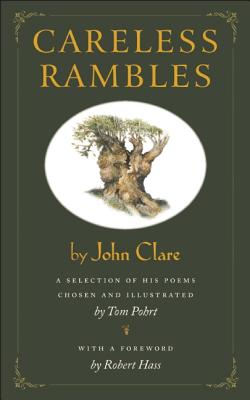
9781582437859The title comes from one of the poems in the collection, but it should be noted that Clare’s rambles are far from careless. They are animated by a reverent, careful naturalist’s eye, even if only an amateur one.

A gifted, if unadventurous poet, it is easy to see why he holds a patriotic place of pride in the English canon. He is the supreme, naïve chronicler of the rural England that Tolkien mourned for.

There are three longer poems in the collection: A Morning Walk, The Eternity of Nature, and The Holiday Walk. The first one drags, the second indulges in a Wordsworthian philosophical fantast that Clare is ill-equipped to pull off, but the last one is a fine encapsulation of Clare’s view (though it is not the finest poem in the collection). In The Holiday Walk, schoolchildren go on a supervised expedition into nature. A kindly schoolmaster provides some small education gobbets and also chides them against injuring insects via admonitions to love all nature, from beetles to beech-trees. The attention to insects is especially telling as an example of Clare’s deep love of the natural world and a commitment to observe, without interfering (a nineteenth century ‘Prime Directive’).

Clare shines best in the smaller poems, which, at their best, focus on small aspect of the countryside. A particular tree, an insect, a small animal’s nest, a small bird. He then chronicles the small, mundane beauty within it. And it is beauty he seeks. Not metaphor nor meaning, but the unforced beauty of small things viewed simply and honestly.

The book is illustrated by watercolors by Tom Pohrt which are good but, meh. I could take ’em or leave ’em. The introduction, though, by Rober Hass (an excellent poet himself), is worth reading, though.

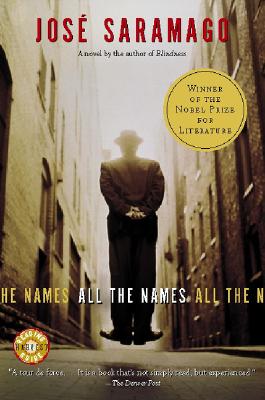
‘All The Names’ By Jose Saramago


9780156010597I’d read Blindness back in 2001 or 2002, when I was living in Atlanta. I’d bought it at the same Chapter 11 Bookstore where Bruce Campbell has signed my copy of his autobiography.

Like its predecessor in my reading history, All the Names is good, but not great. Maybe it’s the translation. I don’t know, if I knew, that would mean I read Portuguese and wouldn’t need to read a translation. Think before you ask these questions! They make you look silly.

Blindness reminded me greatly of Camus’ The Plague, but not as good. This one brought to mind Kafka’s The Castle, except with a middle aged, nebbish, and frightened narrator.

There is some concept. Some metaphysical point that Saramago is making, but frankly, it’s not clear what it is. Some desire to undo death? To give honor to the unnamed and forgotten? It’s not clear.

On the plus side, this was the first book I read as part of a new book club I joined. We met at a Mellow Muhsroom Pizza (another reminder of my Atlanta day! Mike and I used to play Simpsons trivia at a Mellow Mushroom near Piedmont Park) and afterwards watched the game (World Cup – Costa Rica versus Greece) and have a few drinks. Or, at least, I did. The game was like the book, okay, but really not great.

Monday Morning Staff Meeting – Local Boy Done Good


gal1-243x366If you read through the whole article (fascinating, in and of itself), you’ll see a contribution made by the Folger Shakespeare Library!

A great little way that the Indiana Poet Laureate is promoting a bit o’ poetry literacy.

Deep reading Dickinson.

I gotta recommend Diego’s. Have the Greek fellow do it, if he’s available.

I worry that the quality of public intellectuals has gone down in correspondence with the decline in the quality of the public’s intelligence.

But they’re doing something right over there – in this case, protecting brick and mortar bookstores from predatory pricing practices.

Rhyming Poetry


I’ve been reading a lot more rhyming poetry lately, which has never been my thing, but I’m on a real kick lately. Algernon Swinburne, John Clare, and William Combe (the first two in selected poems type editions and Combe’s Tours of Doctor Syntax – a trilogy of comic epics that I heartily recommend; they’re funny and well written, or, at least, what I’ve read so far [I’m only a little way through Doctor Syntax Tours in Search of the Picturesque]).

I would never advise anyone to leap, unprepared, into Swimburne. He’s sort of a kinky Browning (though never quite so indecipherable as Browning’s densest works). Imagine Christina Rossetti’s Goblin Market written from the point of view of a sexually voracious, leering male onlooker, but never actually so undisguised as the scarcely disguised ‘goblin rape in the forest,’ so simultaneously more and less and kinky.

I’d probably also never suggest Combe unless that were your thing. If you’d read Candide and thought to yourself, ‘this would be ever more awesome if it rhymed!’

But Clare is a great place for simple, enjoyable rhyming poetry. I’m not very far into a collection entitled Careless Rambles but I already feel pretty safe saying that I love it. Not only that, but it’s threatening to make me want to move to the country. Not deep in the country. Maybe Vermont. Somewhere with easy access to independent bookstores, folk concerts, and art museums. But back to Clare. Think Wordsworth, but with end rhymes and without the melancholy ruminations of human mortality and indifference and without the mixed feelings about politics and revolutions. Or, really, any feelings about revolution. I should also not the Clare is not one for extended metaphors. Things are what they are. Which all makes him sound boringly simple and he should be, by all rights, but all I can tell you is that he is not. He’s got a nice, amateur naturalist approach the nature, though when he gets philosophical, he also gets a little less interesting to read.

Last year, my year of cramming in as many books as I could, was not conducive to reading rhyming poets because a good, rhyme schemed poem takes time to read. It’s an incredibly time consuming process and I find that I have to consciously read it to myself, not necessarily out loud, but as if reading it out loud. There is a scene in the movie, The English Patient (I can’t remember if it was in the book, too; I like Michael Ondaatje, but I’m going to commit some heresy here and say, in this case, the movie is better than the book), where the titular patient tells a character to read Kipling at the rate of Kipling’s pen moving across the paper. It’s not bad advice and it’s a good way to think about reading Clare or Swinburne or even Frost. Read as if laboriously writing the poem yourself by hand.

It’s hard for me because I’ve always been a fast reader, but suddenly I am forced to slow down drastically, more even than reading supposedly more difficult poets like Pound or Eliot (though not as slow as Gerard Manley Hopkins, who’s ridiculously complex schematics require a skeleton, infinite patience, and a glacial pace, all just to unearth the unsurprising revelation that a deep love of God and Christ is not actually sufficient to cure homosexuality).

But perhaps this is my entre into the so-called ‘slow reading movement.’ It feels odd to be taking so long to read fairly short books (and I don’t expect I’ll read all of the Swinburne right now, nor that I’ll finish Doctor Syntax anytime soon, though I intend to finish Clare, who has been on my ‘to do list’ for a long while), but maybe good training and a good way to slow down in general.

Weekend Reading – Utilitarianism


dc_guerrilla_poetry_insurgency_t_shirt-r25d98f20201d429295cd22d5cef3e520_804gs_512I need it.

The internet age and its reading discontents.

Approaching fatherhood philosophically.

The economist as novelist. The economist as literary critic/theorist.

The canon will never die. Or, rather, the debate about the canon will never die. Nor the canon, really. It will just get bigger. But if it gets too big, does it also get meaningless. It’s a legitimate question, though my own opinion is ‘no.’

Teach poetry.


bloomsday

Tomorrow Is Bloomsday


There is no good reason not to participate in something.

Call your local bookstores and libraries and Irish pubs and find out what Bloomsday events are happening near you.

Review: ‘French Decadent Tales’


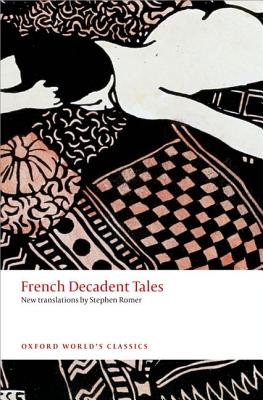
9780199569274I just finished reading semi-recent collection/translation of short stories from the French Decadent movement. The title is helpfully entitled: French Decadent Tales. No confusion there.

And no confusion within, either.

I read it over some time – three months, in fact – because otherwise, the stories can quickly run into each other. It’s a great beach read, but bring something else to read in between each of the stories. Reading it over some months also means that the stories are not so clear in my mind anymore.

The first half of the collection is strongest in the memory and is undoubtedly where most of the gems can be found. These stories are ripe, gothic, (in the sense that the Cure and Bauhaus are gothic, not a gothic church, nor even necessarily a gothic novel; they are far too gem-like for the wordiness of a Radcliffe) and indulgent. Don Juan’s Crowning Love-Affair is sad, stately paced, erotic, and disturbing. Presentiment reads like a lost tale of Poe, rediscovered, with the odor of an unfallen but still suicidally melancholy House of Usher and The Dandy of the Unpredictable is amusingly perverse.

The best ones are of a piece with the German writer, E.T.A. Hoffmann and his tales (which my father gifted me with when I was in junior high). Don Juan is a recurring theme and figure here and it is hard not to recall the ghostly companion in the opera box in Hoffmann’s tale.

But the collection, on the whole, is uneven and it did not win me over from the side of French poetry to the side of French prose. The obsession with death is sickly sweet in large does and the proto-Freudian conflation of sex and death/Eros and Thanatos can feel overwhelmingly in such compact forms, pressed close against each other.

Oh. And happy Friday the 13th.

Review: ‘The Catholic Writer Today’ By Dana Gioia


The good folks at Wise Blood Books sent me a chapbook of Dana Gioia’s long essay, The Catholic Writer Today. Unfortunately, it was sent to my mother’s house, so I’m just now finishing it.

First thoughts. Gioia is an excellent writer and a better poet and I share with him a disappointment in the decline of English language and especially American writers who are willing to explicitly let their Catholic faith be part of their public identity and let it inform their writing that way that O’Connor, Tolkien, Greene, and others did.

But I think that he goes down the wrong track and misses greater obstacles to a Catholic writer renaissance than his lament for the decline of literature friendly, Catholic periodicals.

What absorbs the Catholic intellectual media is politics, conducted mostly in secular terms—a dreary battle of right versus left for the soul of the American Church. If the soul of Roman Catholicism is to be found in partisan politics, then it’s probably time to shutter up the chapel. If the universal Church isn’t capacious enough to contain a breadth of political opinion, then the faith has shriveled into something unrecognizably paltry. If Catholic Christianity does not offer a vision of existence that transcends the election cycle, if our redemption is social and our resurrection economic, then it’s time to render everything up to Caesar.

I fear he understates the pernicious influence of reactionary radicals co-opting public faith. Furthermore, I fear he deliberately understates it so as to avoid drawing ire and by doing so, he fails to stake the ground that a revival needs. The Catholic League, under its stridently partisan leader, William Donohue, would certainly have no stomach for the brilliant grotesqueries of a modern Flannery O’Connor.

Art. Literature. Poetry.

These things are inherently liberal and progressive (even if individual practitioners are not) and when faith wears a conservative face, it becomes inherently unwelcoming to artists, writers, and poets.

Which is why Gioia’s criticism of the liberalizations of Vatican II are so infuriating and wrong headed. The Catholic writer did not fade into the background because the Latin Mass did! Vatican II was an open, spiritual engagement with the material world, much like the great, mid century Catholic writers Gioia so lauds. They emerged out of the same spirit and their influence has declined because of the same backlash against liberalism.

Here is my hopeful prophecy: I will wager that one of the legacies of His Holiness, Francis I, will be artistic. By giving the church a welcoming, loving, and liberal face, he is also welcoming writers and artists and poets and intellectuals back into the church and opening up greater possibilities for writers to let their work by informed by their personal association with the church because they will be able to do so with the knowledge that church is not going to judge or reject them, anymore than Waugh, Greene, Tolkien, or O’Connor were for their guilt, sins, doubts, gothicism, or obsessions with lost, pagan worlds.