IMG_6556.JPG


slide_367734_4204716_free


ScienceAndInvention_2402


tow_1940summer

‘The Finite Canvass’ By Brit Mandelo & ‘Swift, Brutal Retaliation’ By Meghan McCarron


full_finitecanvasI read the later the other day but the first, I read some time ago, but just never got around to marking my thoughts. They were both nominated for Nebula Awards for best short story, which is how I came across them.

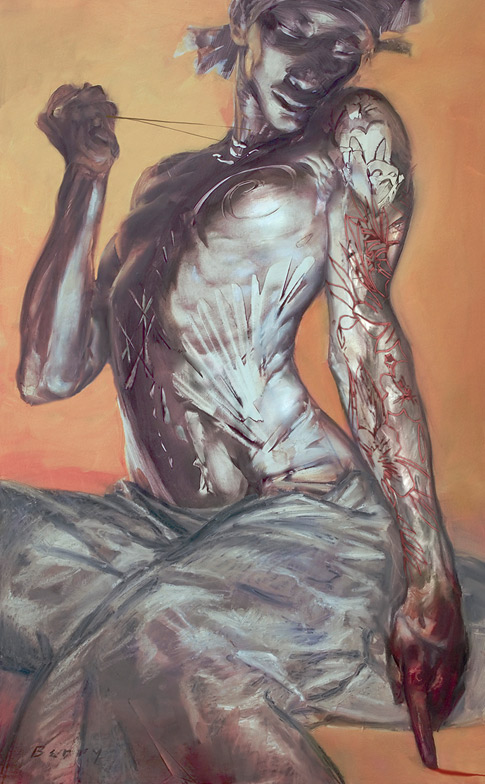
The first one is traditional sci-fi taking place in a wonderfully and economically crafted world and is basically a two person show between two people involved in organized crime groups (‘Syndicates’). One is a doctor who crossed them and is now banished to a climate change ravaged Earth and the other is an assassin. Both are women. In a variation on the idea of yakuza tattoos, the hitwoman has scars crafted onto her body to memorialize each assassination. Her final scar, done while on the run after her Syndicate was taken down by law enforcement, is to honor her lover, the man who sold their Syndicate out to law enforcement. She loved him and she wants him well remembered and she tells the tale while the doctor carefully cuts her and ensures that they will form scars. Yada yada. The mob killer is herself killed and the doctor cuts herself scars to remember her. Despire the ‘yada yada’ it’s a gripping little read. It’s available for free on Tor.com, so don’t be shy.

The second one is also available on Tor.com and it’s really a psychological ghost story told from the limited perspectives of two sisters – one on the edge of puberty and the other a little younger – in the days immediately after the death of their older brother by leukemia. His ghost haunts the two girls and causes the household tension to escalate. Oh, and the father is a cruel minded alcoholic and the mother self-medicates herself with prescription drugs. And the dead brother/son… well, it sounds like he was his father’s son, which is to say, a cruel little cuss. The ghost seems to pressure the girls into an escalating series of cruel pranks and retributions (it’s in the title: swift, brutal retaliation) and, during the final one, the ghost of the brother, who had already been engaging in some poltergeist-y destruction, starts smashing dishes and causing all sorts of chaos at dinner. And then it ends. No letdown, no satisfying conclusion – which is satisfying in its own way, because their is no real hope of one from those parents and because it is in keeping with the title. This story is about familial destruction, not happy endings.

Mary Szybist At The Hill Center


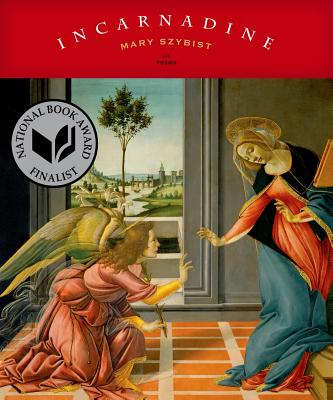
9781555976354Ron Charles, the Washington Post book editor, remains a good, if somewhat charmless host for these conversations with poets at the Hill Center. I’d seen Edward Hirsch earlier in the year and I’ll gladly see more in this series.

Szybist was given more opportunities to read her poems than Hirsch was and she has a wonderful voice for reading her own poems, emphasizing their gem-like (though not precious) qualities. She really is an amazing writer of poems. And though Incarnadine is a clear whole – with the theme of the Annunciation tying everything together – it’s best to be read slowly, one poem at time, over the course of a week or more. Slow reading, as it were. Their lapidary nature demands a gentle pace. When I tried to read them too quickly, I almost felt as if I were suffering from eye strain. Charles made a wonderful point when he compared her very carefully poetic style (this sounds bad; it sounds precious; but it’s really not at all) to John Donne and the Metaphysical Poets. Donne is especially relevant because of the deeply religious – the deeply Catholic – nature of her writing, despite having rather suddenly lost her faith as an adolescent (though, when I asked, she admitted that she still sometimes goes to Mass with her husband). Dickinson, too. Unlike Linda Pastan, Szambist does have that erotic, lapidary quality of Dickinson (though is less elliptical).

In addition to writing for slow reading, she spoke slowly and carefully in response to questions. Almost tentative. Which I can relate to (it’s something I can tend to do and it frustrates the heck out of my wife).

If I have a complaint about the collection, and I am not sure that I do, it is that it is almost but not quite a concept book. The ones that break from the concept, such as the gentle love poem (after a fashion) to an (the) octopus, are wonderful, but why not make the whole book so closely interwoven as ninety percent of it already is?

In any case, a new (to me) poet has not so affected me since I read Fanny Howe (and the two are connected by their sometimes diffident but also deeply ingrained Catholicism). So… two thumbs up?


IMG_6556.JPG


slide_367734_4206654_free

Have You Ever Wanted To Own An Emily Dickinson Tarot Card Deck?


Well… now I do!

Available (apparently) from Factory Hollow Press.

untitled

‘Gawain And The Green Knight’ Translated By Simon Armitage


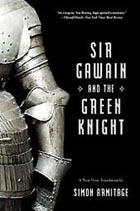
FC9780393334159I purchased this particular book in this particular poem because Armitage will be reading at the Folger later in the season.

It’s a fast paced and enjoyable read. Armitage uses some alliteration and meter and also (as in the original Middle English) rhyming quatrains (ABAB) to end stanzas. The plot is that a green knight marches into King Arthur’s court, carrying an enormous axe (it’s later described as being ‘Danish’ in style). He says that anyone may take a swing at his neck with the axe and, in return, he gets to swing back on New Year’s Day next (it’s currently Christmas Eve, so in just over a year). Gawain, Arthur’s nephew, takes up the challenge and chops off the green knight’s head. The green knight promptly picks up his own head and says, see you in just over a year – by the way, you can find me at the Green Chapel.

Gawain dilly dallies and then heads off into adventure. A cold and unpleasant adventure. No great battles are described, but long, rainy nights and near starvation are described. He find a castle and takes refuge and lord of the manor goes hunting and offers to give Gawain whatever he wins at the hunt, if Gawain will give him whatever the Arthurian warrior wins at the castle. There then follows some humorous scenes of Gawain hiding under his sheets while the lord’s wife shameless tries to seduce him. She does ‘win’ some kisses, so when the lord comes home, Gawain gives him a kiss. Lather, rinse, repeat. On the third day, she also gives him a green sash, but Gawain keeps that rather than giving it to the lord.

He then goes off to find the green knight, he does and the knight’s axe merely nicks him. It was all a test. The green knight was the lord of the manor! But Gawain feels pretty guilty about the sash and takes that as a symbol of weakness, but the green knight laughs it off. Gawain goes back and starts a new fashion in sashes for knights in Camelot the end.

I was hoping for a bit more blood and thunder, but the bloodiest part if the description of the aftermath of the hunt. From lines 1325 to 1361 are the most graphic descriptions of how to butcher and skin a deer in the field that you could ever imagine. It’s bloody enough for torture porn and precise enough for an instruction manual. Yuck.

Armitage does a good job, but sometimes his tone is a little too modern for me. But in his defense, the Middle English (where intelligible to a fellow like me) is also clearly pretty relaxed and not ‘high falutin.’