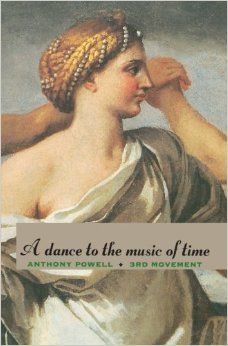
 I was impressed for the ten thousandth time by the fact that literature illuminates life only for those to whom books a necessity. Books are unconvertible assets, to be passed on only to those who posses them already.
That line, spoken by the narrator, was a reminder of the subtle class distinction between Nick Jenkins, who used a coincidental encounter at the end of the last book to secure himself a officer’s role in the Army as World War II began. He is a low ranking sort of officer and is older than most of his compatriots, including more senior officers. There is a definite divide and though he doesn’t mind his colleagues, he is not of them. But that difference is not stated until that line above, towards the very end.
It’s one thing to read that as a sort of intellectual statement, but knowledge of books, connection to books, and even the leisure to read a great many books is also a product of socio-economic class.
Like many of the later books, Jenkins’ schoolboy chums are hardly present. But that’s accurate in life, isn’t it? We have our first friends, the ones made when we are younger and most open and vulnerable and they, by virtue of timing, are tied most closely to our hearts and embedded the deepest in our memories and sense of self. The later ones, the ones we meet through work, come and go. If you’ve ever changed jobs or moved in your adult life, then you know that feeling of realizing how easy it was, after a comparatively short time, to not miss these work friends who once seemed so important and such a part of one’s life.
These early stages of the war remind me of reading about the first months of the First World War, when no one realized how brutal and desperate it would be. It’s a bit of amateurish lark and it only slowly sinks as Belgium falls that this might be serious. Their preparations for an invasion of England by Germany seem less silly.
Old friends rear their head as Jimmy Brent, who was revealed in an earlier book to have been the true love of Jenkins’ former lover, Jean. He’s a sad, shallow bastard, really. And the encounter reaffirms that Jean was the great love (if not a particularly great person) of Jenkins’ life. Rather like Julia in Brideshead Revisited.
The book ends with Jenkins’ being summoned to a central office where Widmerpool has called him in to be his… right hand? I want to say lieutenant, but this is war and that title has a specific meaning. Again, Widmerpool is slowly being built up to be a sort of villainous character. Having been on the outside all his life, he has mistaken the accumulation of power for the sense of belonging to the ‘in-crowd’ that will forever be denied him. Like Jenkins, he is not quite of the right birth to be anything other than near the in-crowd. Unlike Jenkins, who was sufficiently cool and charming and also a sort of observer character (like another Nick – Nick Carraway), so he is both more accepted and less bothered by it all.



 the coffee philosopher