More on ’36 Arguments for the Existence of God’


On my commute to work this morning, I began thinking about what it was that I found unsatisfying about 36 Arguments for the Existence of God.

It’s not a linear narrative, but a series of flashbacks. The longest series of flashbacks consists of episodes from the main character and his interactions with a Bellow-esque professor and intellectual (think Herzog or Ravelstein). A slightly shorter series of flashbacks return to when the main character met his current (live-in) girlfriend. The ‘present’ consists of the time when our hero’s successful book has garnered him an offer from Harvard, his girlfriend returning from a conference and then promptly leaving him, and a debate between our soon-to-be Harvard prof and a famous conservative commentator (who turns out to be little more than a straw man with an aggressive attitude).

Not earth shattered, but I don’t need that in a novel.

What bugs me is that the three parts don’t cohere, except insofar as the all involve the main character. The longest flashback, in particular, doesn’t seem to me to sufficiently inform the ‘present.’ The author seems to be setting up various characters (the Bellow-esque intellectual, the hero’s current girlfriend, his college girlfriend, and arguably the hero himself) to be archetypal, but the roles are too vague, the counterbalances don’t interact enough.

Besides showing off some decent writing, what was the point?
Ezra Pound: Canto XLVI


This one represents something of a pivot from what we’ve seen before, stylistically speaking. It’s not the first we’ve seen, nor is it necessarily more drastic than earlier ones. But it is in a new direction, though still evolving from earlier Cantos.

I am reminded of the writings of Gertrude Stein. Not so much her famous Autobiography of Alice B. Toklas but more of earlier works like Tender Buttons.

More than any other time, Pound puts a systematic focus on capturing colloquial dialogue (something Stein is notably famous for achieving).

This dialogue is focused on charting the decline of the United States and other western nations due to the influence of the banking industry (and with a hat tip towards his dislike of President Franklin Delano Roosevelt), but through the lens of conversations about legal cases.

I am also struck by how relevant some of his complaints seem today. This stanza, for instance:

Hath benefit of interest on all
the moneys which, the bank, creates out of nothing.

Forgetting for a moment the author’s disturbing and despicable prejudices, taken on its own, doesn’t this sound like an indictment against the global financial system, creating fake money and turning it into real wealth for millionaires and billionaires, and then turning it all into real tragedy and the destruction of America’s real wealth.

Poetry East


I know that I’ve been slacking on my Cantos, but in my defense (and isn’t there always an excuse?), I just started a new job doing communications for a labor union, I am writing a review for my good friends at Literatured, and have been trying to remedy some backwardness on writing a review of a book by a Washington, DC area poet. Also, please notice that I have not abandoned the Oxford Comma, though Oxford itself may have. Suck it.

But it is lunchtime and I do have a few spare minutes, so let me promote a truly awesome poetry magazine, Poetry East. I’m working off of a small sample size (one, to be precise – the Spring 2011 issue), but was instantly blown away.

The magazine is associated with DePaul University in Illinois and one can assume is part of the rich cultural and literary heritage of Chicago.

I was in a Barnes and Noble at the Christiana Mall in Delaware, with a gift card burning a hole in my pocket. I picked up a copy of Tony Judt’s devastating jeremiad, Ill Fares the Land (read it, weep, and then commit yourself to changing this country), which I already knew I was going to do. But I always make a point of browsing through the literary magazines.

And that’s when I saw Poetry East. No commentary. No reviews. Just page after page of poems. Translations. New poems. Poems by well known names like A.R. Ammons. Poems by poets I had never heard of before. But poem after poem.

Nothing hackneyed (not even the one by Billy Collins!). Many touched by the influence of twentieth century European avant-gardists (there was even a translation of a Bertolt Brecht poem). And in case you haven’t noticed, that is my favorite influence (shout out to brother surrealists Eluard, Char, and Desnos! rest in peace).

Now that I’m working regularly, I may even indulge in a subscription to this one.

‘Paroles’ and ‘Men in the Off Hours’


While digging through some old books while visiting the family in Florida, I came across two poetry collections that hold particular places in my personal archaeologies.

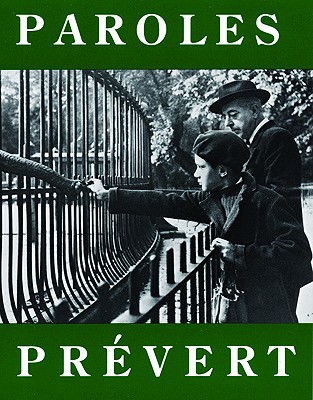
The first is Jacques Prévert’s Paroles.

The second is Anne Carson’s Men in the Off Hours.

I purchased the first towards the end of the nineties. I was attracted to the idea of the book… to its history… as much as to its actual poetry.

This edition was translated by Beat godfather and proto-Beat poet Lawrence Ferlinghetti and was published by his own press, City Light Books.

Paroles struck a chord with the young people who lived through Pétain, the Occupaion, la Resistance, even though Prévert, who was born in 1900, was part of an earlier generation. The book sold hundreds of thousands of copies.

For me the early nineties was a special moment. The economy sucked, but I was discovering poets like Adrienne Rich and Ezra Pound. We gathered in homes and at scruffy coffeehouses and read from notebooks and cheap printouts of our original (though frequently derivative poems), we drank coffee and parsed the finer points of Marxian philosophy, and we read so damn much. Unsurprisingly, these were the days before the internet was much of anything and thirty channels of television seemed like a lot.

Reading about Paroles reminded me that maybe we were part of a longer literary tradition of young people running heedlessly towards poetry for understanding and solidarity.

The poems themselves are heavily tinged with Existentialism, Surrealism and Symbolism. They are not spectacular, but I can easily see the attraction of theses stanzas.

The second collection, Men in the Off Hours, I found in 2001 in a Books-A-Million on Dupont Circle (it’s still there). I don’t know why it struck me. I had already picked out Beauvoir’s novel, The Mandarins. I didn’t need another book. At least not on that day.

Carson’s combination of classicism and contemporary media – imagining television interviews about or of Lazarus and Antonin Artaud. Poems about the works of painter Edward Hopper combined with quotes from Saint Augustine’s Confessions.

This book mattered because Carson has since gone on to become my favorite poet.

Brief Review: ’36 Arguments for the Existence of God’


I picked up a copy of Rebecca Goldstein’s novel, 36 Arguments for the Existence of God: A Work of Fiction. The work had been well reviewed as contemporary philosophical novel of note.

But I was disappointed. 36 Arguments isn’t a bad novel. In fact, it’s well written. But I wanted more.

It was neither a true roman a philosophe (as something by Voltaire, Goethe or Sartre) nor a great addition to the line of c0mic novels about academia (the standard being set by Amis’ Lucky Jim, though I would also add Robertson Davies’ The Rebel Angels).

As a philosophical novel, you could see some murmurings, as characters represented various points of extremes on the scale of rationalism and science on one end and anti-rationalist mysticism and poetry. But to work in this way, it frankly needed to be more didactic.

As something in the tradition of Lucky Jim, the conflicts were, well unconflicted, even by the standards of the genre.

Ezra Pound: Canto XLV


Being away from Pound has renewed my affections for him. I was on a series of vacations – one visiting family followed by another with my significant other. On each, I made the decision to leave my computer behind.

While lounging in Florida and doing little of value, I came across a quote by the poet Robert Duncan, noting that in the Cantos  ‘all ages are contemporaneous.’

This reminded me of the immense scope of Pound’s achievement and the huge challenge its existence presents to future poets, much as Proust and Joyce challenged future novelists in regards to the scope available to the writer, no matter how quotidian his subject (Joyce, a single eventful, though hardly world shattering, day in the life of two Dubliners; Proust, the life of an upper middle class Parisian interacting with his contemporaries).

Today’s Canto is a strident and attention demanding jeremiad. Indeed, it is almost a sermon.

He rails against ‘usura’ and the troubles it has caused, using a style drawn from King James Bible.

The very end, though, diverges to a modernist (postmodernist) stunt of unexpectedly shifting tone and and style, thusly:

                                        CONTRA NATURAM
They have brought whores for Eleusis
Corpses are set to banquet
at behest of usura.

N.B.  Usury:  A charge for the use of purchasing power,  levied
without  regard  to  production;   often  without  regard  to the
possibilities  of  production.   (Hence  the  failure of the Medici
bank.)

Ezra Pound: Canto XLIV


This one addresses a new (for the Cantos) period in Italian history, beginning in 1766 and moving up through 1814. The latter being important, of course, as the date of Napoleon’s first fall (when he was temporarily imprisoned on Elba, rather than his final fall and imprisonment in the island of St. Helena).

But, of course, it all comes back to finance:

‘ The foundation, Siena, has been to keep bridle on usury.’
Nicoló Piccolomini, Provveditore.

Ezra Pound: Canto XLIII


I found this one a little confusing. The language is exceptionally fragmented and well salted with Latin phrases, Pound’s tendency towards eclectic spellings and mixtures of various histories.

This one does have some of the balance sheet style musings that touch on early banking, but also many, many references to the Church and Catholicism, with ‘characters’ frequently invoking the Virgin Mary.

While mainly taking place in Renaissance Italy, there are several references to ‘fatherland’ and I don’t think I’m alone in relating that phrase to the German speaking world.

Ezra Pound: Canto XLII


This one is another attempt to merge Pound’s historical interest in finance with what I have been referring to as the poetic (which is an amazingly inadequate and problematic term to be using in this context. does using it this way suggest, for example, that the work of Kenneth Goldsmith is not ‘poetic’ and hence not poetry? should I used another phrase, like lyrical? but that word also is problematic, too, isn’t it?). Certainly it is more successful than many such efforts.

The second stanza has the first instance of a word, which appears in various forms throughout, and which I have identified as key:

FIXED in the soul, nell’ anima, of the Illustrious College
They had been ten years proposing such a Monte,
That is a species of bank–damn good bank, in Siena

To me, the key word is “Monte” (which also appears as ‘mount’ and ‘mont’).

I think that this is actually intended to reference the word ‘mountebank,’ which of course means a financial swindler or fraud, which naturally follows from Pound’s opinion of the world of finance and banking.

Ezra Pound: Canto XLI


The Forty-First Canto is an odd duck. It is a series of conversations about work and finance in Italy and Germany, with numerous statements by “characters” in Italian.

There is some play with form here, with bits like this:

delivered in ports of France @ 8 sous
                                                               9 million 600 thousand
at the rate  6 sous to manufacture
                                                               7 million and something
revenue to the King                       30 million
to the consumer                              72

The style is a balance sheet, of course.

This Canto marks the end of… well, something, because the page after this one reads:

THE FIFTH DECAD
OF CANTOS
XLII-LI

We had not seem such a demarcation at the beginning of our readings.