‘Where Is Our Culture Heading?’


That was the question Warren Adler asked in this piece.

Leaving aside his pompously self-conscious and clearly deliberate, “old-fashioned fuddy duddy” voice, does he have a point?

I know that before a million channels of television, internet at home (can you believe that I used to only use it at work or in the university computer lab?), I read a lot more. Is there something to his concerns? It’s something I have wondered about before.

Of course, it is very, very hard to get beyond Adler’s irritating style and attitude, so I won’t blame you if your conclusion is ‘no, because that guy is just an a–.’

The Windup Girl


I’ve been slammed at work, so not much time to say much of anything.

But I will offer a recommendation for The Windup Girl.

Not quite post-apocalyptic, but definitely a vivid and believable bit of world building (critical to any good sci fi or fantasy novel) for an earth after global climate change and made it suicidal to continue to use fossil fuels, coastal cities either used to be inland or are protected by high sea walls, and “calories” (as in both food calories, but also calorie meaning a measure of any form of energy) become the source of power.

It’s sort of like Neuromancer for the Audubon Society set.

Good News! Reading In The Bathroom Generally Safe For You And Your Loved Ones


Thankfully, someone has looked into this issue.

And I admit it – I read a lot on the toilet. I finished Norman Spinrad’s Agent of Chaos on the toilet. That is where I have almost finished Goethe’s The Sorrows of Young Werther. So I’m glad that this habit won’t cause untold destruction on my household.

Who Gets To Call One’s Self A Writer?


When do you get to say, ‘I am a writer.’ Not yet, according to this person.

Readability Versus Literary Quality


I want to thank British poet Andrew Motion for making this point, that the dichotomy between literary quality and readability is almost entirely a false one.

War and Peace is not a good book because it’s beautifully written but well-night unreadable. No, it’s a damn fine read.

Even so-called difficult books, if well written, are also readable and enjoyable. In different ways than other books, perhaps, but then again, the best selling and very readable Guns, Germs and Steel is readable and enjoyable in a different than The Hobbit.

I’m not reading The Cantos because they’re boring and unreadable. Yes, they are often difficult, but it is not painful to have one’s view expanded and one’s mind challenged. Or rather, if it is, then you are a sad, sad person.

Great literature is great literature for many reasons, none of them are ‘unreadable’ nor ‘providing no pleasure in the reading of it.’

Here’s another bit of (not misplaced) grousing about the direction of the Man Booker Prize.

Will Literature Live Forever?


I don’t universally agree with what Curtis White writes here, but does pen some lines that chills this would-be poet to his very bones:

Even allowing for the possibility that Amazon will be a benign monopoly and will encourage or at least tolerate the continued unruly flowering of this thing we have known as literature, if you thought it was hard to find a book spine out at a superstore, try finding that book of poetry that changes your life and that you didn’t know you were looking for in the web’s ether, “in the cloud,” as the techno-hip say. You’d have better luck finding a speck of gold in a bucket of sand.

Mr. White does bemoan the death of  book culture, but seems to think that great works will live on. He doesn’t say ‘literature’ because part of his purpose is doing away with that concept.

But, I wonder whether ‘it’ (literature, great works, etc) will really live on? He quotes a bit of Keats as an example of something immortal.

But will such things remain immortal?

How many plays by Sophocles were lost time? Or the rumored lost play of Shakespeare? What about the lost books of Artistotle? The books burnt when the Library of Alexandria caught fire?

How were they immortal?

Or on a more philosophical note, in what way does a great poem exist truly exist if no one reads it?
The Next Big Place In Literature


In the years following WWI and WWII, Paris was the center of literary life (while it’s easy to point the city’s long and great artistic history, the American writers who went there didn’t so much go for that reason as for the favorable exchange rate – which meant that pocket change from their families in America could support a comfortable life in France).

When I was in college, Prague was the next big thing.

New York, of course, has always had a special place in literary geography.

And to this list we add… Nairobi?

Ezra Pound: Canto LXII


This Canto returns to the western world. Specifically, Revolutionary America.

It begins as if by a (presumably) pro-British governor, but the ‘narrator’ seems to change. This can only be determined by subject matter as the voice does not change much (though it does get colloquial in its spelling in parts).

The subject matters moves to discussions of attempting to secure funding and support for the Revolution from various European powers, including the French and also Dutch banking houses. Surprisingly, he shows little venom towards those Amsterdam banks.

There is an odd lines: in consideration of endocrine human emotions

Correct me if I’m wrong, but I don’t think an 18th century speaker would even know of the endocrine system, much less of the affect of hormones and glands on human emotion.

An accident or a deliberate anachronism by Pound?

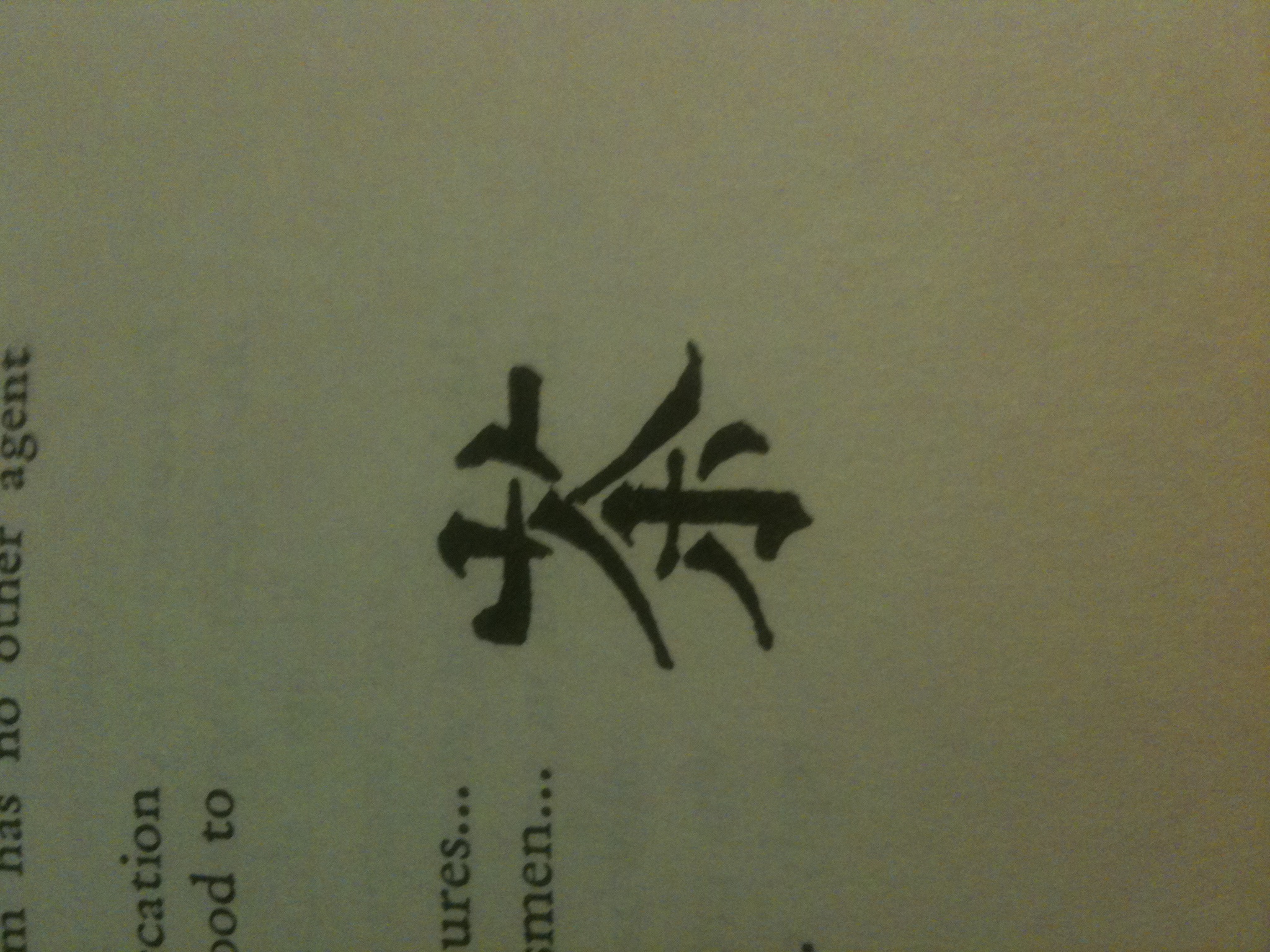
He also includes a Chinese character (see picture) near the beginning of this (fairly long) Canto. What does it mean? And what did Pound intend by including it, despite having left China, so to speak.

On Poetic Prose


Mucking Up the Landscape: Poetic Tendencies in Prose

Archimedes Manuscript Revealed


An ancient manuscript by the Greek mathematician Archimedes (the one who saw water spilling out of his bathtub and leaped out and ran naked through the streets, yelling eureka, having realized that he’d figured out that whole mass displacement thing) was decoded or deciphered or whatever you want to call it after years and years or work.

The original writing had been scraped off by a medieval monk who was short on paper, so the challenge was determining the writing beneath and generally putting together a jigsaw puzzle.

You can see it at the Walters Museum of Art in Baltimore.