Paul Bowles Died On This Day In 1999


Paul Bowles died twelve years ago today.

I’ve read most of his cold, asexual and deeply alien/alienated prose. And I would offer him up as one of the great short stories of the twentieth century, next to F. Scott Fitzgerald. His novels though, we must admit, do not improve upon his short fiction by length; and his latter writings lost much of that strange and uncomfortable voice that made him best work so compelling (“Pages From Cold Point” – how creepy can you get? I still remember the sensation I got when I realized what was happening, what that unreliable narrator would never come out and say. I won’t tell you what it is – you have to read it). But that best work, ahh… it was something else.

When I was young, I went to Tangiers, but was too afraid to knock on his door. A pity, because apparently, he would often welcome such random guests.
The Public Library Under Threat


Do you take your public library for granted?

Ezra Pound: Canto LXIV


Another lengthy Canto.

This one is about the disputes leading up to the American Revolution, namely the Stamp Act.

He spends a lot of time complaining about taxes and regulations (keeping in mind that “strict regulations” in the eighteenth century allowed for things like slavery).

A reminder that though Pound may be most appreciated these days by liberal lovers of literature, he was, by contemporary standards, very conservative. Sort of a Grover Norquist/Tea Party Republican.

One amusing thing, at least for the modern reader, is Pound’s use of the word “bro” in the very first line of the Canto:

To John’s bro, a sheriff, we lay a kind word in passing

He also inserts himself into the action in an amusing fashion:

Upon which he offered me a retaining fee of one guinea
which I accepted
                   (Re which things was Hutchinson undoubtedly scro-
                                                                 fulous ego scriptor cantilenae
                                                                                                          (Ez. P)

Post Mortem


Even though it is now gone (and feels long gone, too, because the death was so drawn out and because browsing half empty bookshelves during a liquidation sale doesn’t feel like being in a real bookstore), here’s a post mortem on Borders.

If you read all the way to the end, you may be heartened by the comment that smaller bookstores (2500 sqaure feet – like many independent bookstores) should remain modestly profitable into the foreseeable future. Let’s hope that’s true.

An Ode To Penguin


Not the bird. The book publisher.

And yes, I remember them, too (though not in Woolworth’s – I was born in 1974, the year he found Woolf in a Woolworth’s).

St Mark’s Bookshop Saved (For Now)


St.  Mark’s Bookshop on the Lower East Side was saved, at least temporarily.

An increase in rent would have forced the iconic bookshop and literary performance space to close down.

Their landlord, Cooper Union, had originally increased their rent to $20,000 per month. St. Mark’s had asked that to be lowered to $15,000 and when Cooper Union refused, an organizing campaign was launched on the bookshop’s behalf.

As a result (one supposes) of the campaign, their new rent was set $17,500 for one year (though after a year, it will presumably go up to the $20,000 that St. Mark’s could not afford in the first place) and their unpaid back rent was forgiven.

Let’s hope that they keep going. You might consider purchasing a book from them, though, in order to help keep them alive. I bought this one.

Writing Long Hand


Just a fun little article arguing for doing one’s creative writing the old fashioned way – with paper and pen.

I do like to write long hand. Though I probably also qualify as one of the notebook fetishists mentioned. I have a large collection of notebooks and I almost exclusively write in them with a fountain pen (which is currently giving me trouble; I would have expected such an expensive pen [I don’t skimp when it comes to this particular fetish] to not be leaking after only a year).

Despite the article’s title, Why creative writing is better with a pen, it’s not really an empirical argument so much as subjective bit of nostalgia.

This article, Take Care of Your Little Notebook, makes a similar point.

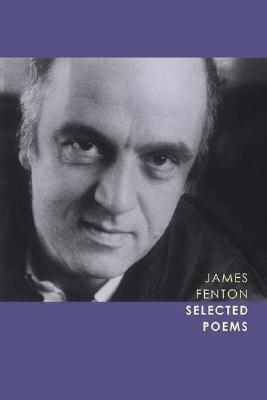
James Fenton and Mark Kraushaar


The Folger Shakespeare Library‘s most recent poetry reading featured the 2011 Anthony Hecht Poetry Prize winner, Mark Kraushaar, who won for his second book, The Uncertainty Principle, and British poet James Fenton. Fenton was also the final judge of this Hecht Prize this year and selected Kraushaar for the honor.

Kraushaar was a somewhat awkward reader and his poetry not completely to my taste. I know that The Uncertainty Principle has wound up on several “best of” lists and I won’t deny its quality. It is just not my cup of tea.

His poems are very prosy and narrative with colloquial language. When introducing him, Fenton noted that his poems are indubitably “about something.”

Fenton suggested that too many poems are inscrutable for the sake of being inscrutable, or rather because of a vicious loop in the MFA community (there’s a lot of discussion about MFAs and their effect on poetry lately). He held Kraushaar as a counterweight to that.

Naturally, I am little unsure about that dynamic. I don’t mind – and frequently enjoy – poems that resist easy interpretation. “This poem is about X.”

However, when Fenton himself read, I was blown away.

Some years ago, in Alabama, I think, I bought a book of his poems. I don’t know why. I think that I barely touched them.

But listening to him read from his Selected Poems… intricate and compelling rhyme schemes, a fierce political ethic, and a willingness to put himself in the shoes of people far different from himself (a child soldier in Cambodia in the seventies, for example). Fantastic stuff.

Naturally, I bought his book and asked him to sign it.

Albert Camus


It seems a rather tenditious argument – Camus’ philosophical relationship to Judaism (other intellectual currents far better explain his ideas) – but I’ll read anything about Camus.

Hopefully, you will too – so here is an article I came across.

Why Poets Should Be Part Of Civic Discourse


I’ll let David Biespiel explain why poets should be involved in national conversations.

And a special shout out to all the poets involved in the Occupy movement.