Thank You, Post-Dispatch


Lots of year end ‘best of’ and ‘top ten’ lists have been coming out of the last month or so.

Those that look at books, rarely examine poetry.

Well, the good folks at the St Louis Post-Dispatch put together a year end ‘best of’ list and, wouldn’t you know it, poetry gets its own section!

Good for you! Wish the NYRB and other publications would follow your lead and give poetry a little less short shrift and a little more love.

Anyway – here’s their list (scroll down to the bottom to find the poetry).

Boston Globe’s Best Poetry Books Of 2011 Lists


You can read their lists here.

I would like to point out the presence of Charles Simic, who was one of my gateways into contemporary poetry, and DC poet, Sandra Beasley, though she is best known as memoirist, rather than a poet.

More American Nietzsche


I still haven’t read American Nietzsche, but I did stumble across another review of it, slash, a meditation on the concept of it.

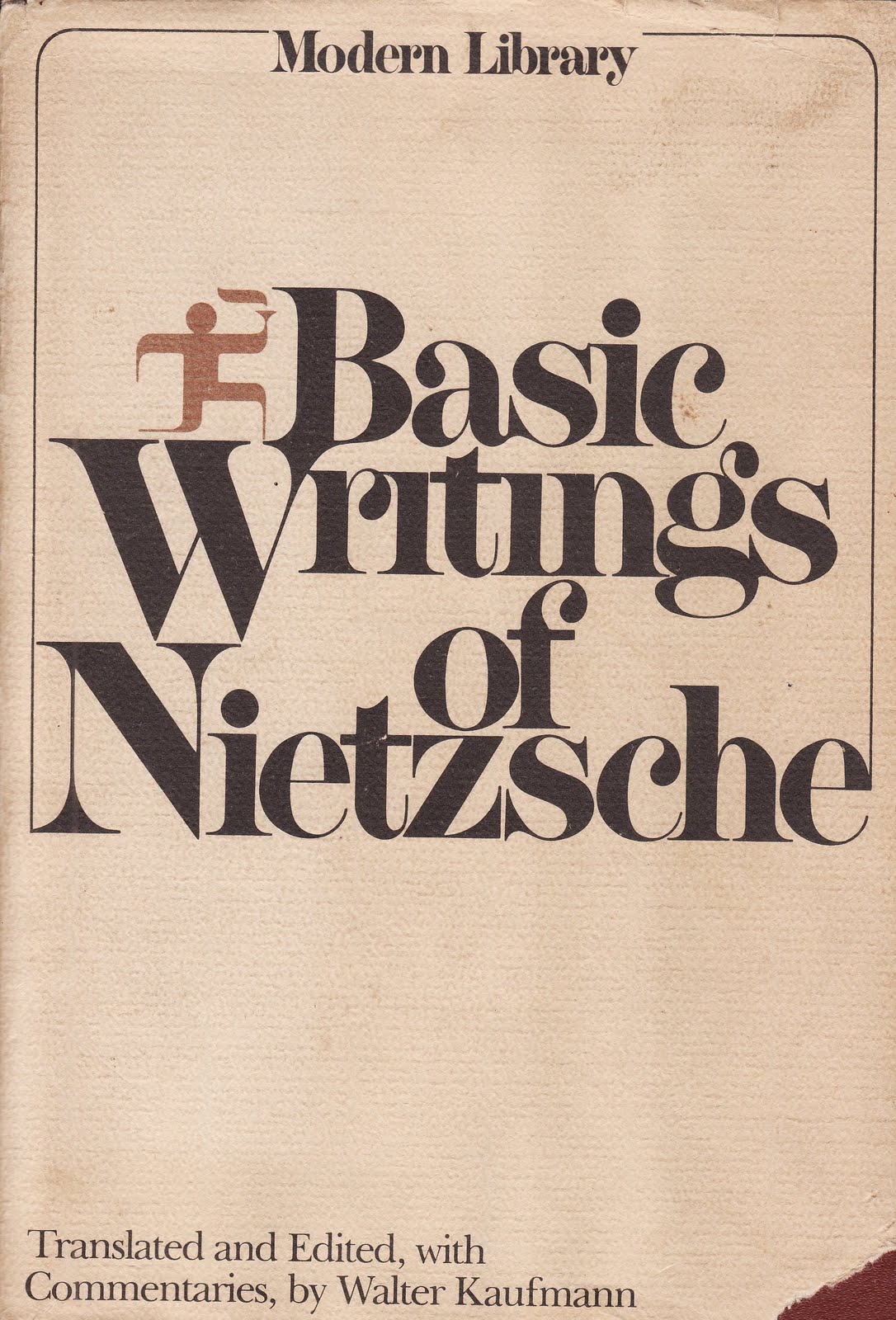
Methinks I really need to read this book. A couple of items I had read about before was Mencken’s role in promoting Nietzsche on this continent and the other was the accusation that Walter Kaufmann ‘sanitized’ Nietzsche. Because, yes, I came to Nietzsche through Kaufmann and his ubiquitous translations (particularly the one pictured).

The Poetry Room


The Library of Congress has some very underrated poetry programs, beyond just inviting whoever is the current Poet Laureate to come read at the beginning and end of his or her tenure. Unfortunately, they also tend to be at times when working men like myself just can’t make it (noon? really?).

But, they do at least have a Poetry Room with some great views (actually, the various Library buildings have a number of great views – the advantage of living in a city with height restrictions is that even buildings that aren’t so very tall by urban standards can provide some lovely vistas).

In case you were curious, those framed photographs in the picture are of former Poet Laureates.

Hitchens & Poetry


Christopher Hitchens on Auden.

Though I shuddered to read him call Pound’s writings as ‘the sinister gibberish on the page.’

How Will Essayists Be Remembered?


I’d never heard of this Epstein fellow (which is, no doubt, a flaw in myself, rather than in him), but it does make one wonder which, if any essayists, will be remembered a century from now.

Michel de Montaigne seems timeless. Likewise, Ralph Waldo Emerson and Henry David Thoreau seem like they should have longevity.

Conversely though, it feels like Alan Mencken and Edmund Wilson are already fading.

And among today’s essayists, who will know the names ‘Christopher Hitchens’ and ‘Joan Didion’ in fifty years, except as historical curiosities (‘though little read today, Didion was a well known prose stylist in the late twentieth century, loved for her witty, though shallow analyses of the political mores of the day…’)? And in hundred or two hundred years? Will they be anything but ancient books to picked up at a flea market and then set down, never to be purchased nor read again?

Ezra Pound: Canto LXVI


This another Canto taking place in either the late eighteenth or early nineteenth century. I would hazard to say it is the eighteenth century.

I say this because if there is one thing Pound does well is capturing the style of that period. If you have done any reading of English letters from the seventeenth through the end of the eighteenth century, you’d see a unique style. Things like writings of Samuels Pepys and Johnson or of Lawrence Sterne’s comic masterpiece, The Life and Opinions of Tristram Shandy, Gentleman. The French have a wonderful term for the sort of shapeshifting, genre-less writings of the period: belles letres.

In terms of contemporaries, I think of the scene in Ulysses (the Scylla and Charybdis episode, I believe) when Stephen is drinking with the medical students and entire chapter progresses, stylistically, through the history of English literature, from the Anglo-Saxon through Middle English through Shakespeare through Dickens…

That same commitment to capturing the particular voice of periods in literature is something that Pound clearly shares.

Whereon said Lord Coke, speaking of Empson and Dudley,
the end of these two oppressors
shd/ deter others from committing the like
that they bring not in absolute and partial trials by direction
…by every legal measure, sirs, we recommend you…
More Poets & Politics


The poet Robert Hass, in particular, got some press for his involvement in an Occupy protest in Berkeley. He probably got more press than other poets who participated by virtue of his status as a former poet laureate.

But this piece asks the question: would we have paid as much attention to what he had say if he had said it, not as he did, in a newspaper op-ed, but in a poem?

Depressingly, I think we all know the answer to that.

Bookshelf Porn


New Medieval Literature Imprint


I am a big fan of the Loeb Classical Library with their distinctive red and green volumes (red for Latin works and green for Greek). Now they HUP is putting out a new imprint focusing on the works of medieval Europe.

Books like the Latin (and most will probably be in Latin or Old English, one suspects) bible translated by Saint Jerome, the Benedictine Rule, plus far more earthy works, will be published under the imprint of the Dumbarton Oaks Medieval Library.

Even better, the physical presence of Dumbarton Oaks is right here in Washington, DC.