 Ron Silliman muses about the various California poetry ‘scenes.’
The link between historic preservation and deranged, gothic panopticons.
Kafka was born on this day in 1883.
On a semi-related note, do you know that when Grandpa Coffee Philosopher was young, MTV used to show music videos? It’s true. They also used to do these little PSA type things that promoted reading literature. And not just Dickens, but also Delta of Venus by erotic novelist Anaïs Nin. These PSAs were called ‘Feed Your Head.’
Here’s one of Aidan Quinn reading from Kafka’s The Metamorphosis.
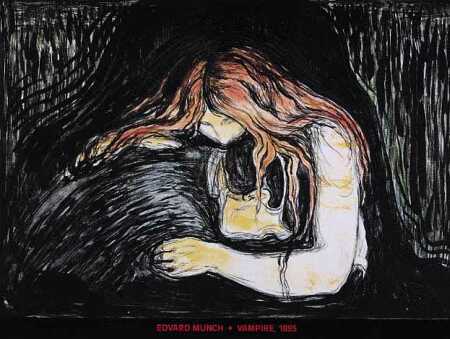 Edvard Munch was as dark as his famous Scream is what this article seems to be saying.
Beyond the ridiculous overuse of The Scream (I dated a girl who, in addition to suffering from a chronic tendency towards infidelity, also owned and displayed a three foot inflatable copy of the titular screamer, which should have been some sort of signal, but to be frank, I was in college and she was a delightfully proportioned c-cup), I do have a certain affection for him.
Firstly, I am unduly proud of some praise I received from the professor of my one art history course in college. The midterm consisted simply of a series of slides of art works we hadn’t studied and we were to write a paragraph explaining who we thought was the responsible artists and why. I was writing my answer for one of the slides and had written a goodly length bit, when, with time running out, I suddenly wrote something like, ‘Scratch that – I have a gut feeling this a Munch.’ I was correct and the professor read my answer aloud in a later class as an example of the need to rely on instinct and ‘gut’ as well as research when studying art. For some reason, I’m still inordinately proud of that, some twenty years later.
Finally, when I lived in Atlanta, I was just a few blocks away from the High Museum of Art and was also a member. They had a beautiful exhibit of the later works of Munch, titled ‘Munch: After The Scream.’ Munch would sometimes leave his painting outside deliberately, so that the damage and changes wrought on it from the elements, particularly the snow, would become part of the work. That struck me – it reminded me of the opening of Lawrence Durrell’s Balthazar when the narrator praises a baby for its destruction of pages from the narrator’s book as being an honest form of editing.
That’s what this article claims.
I didn’t realize that 2012 was the centenary of Durrell’s birth, but I will certainly honor it. He was a big influence on me for a while, but I have trouble see him as being anything but very much tied to his time, partly because he will always be linked in my mind with Henry Miller. But also, his experimentalism seems very much of a time with his contemporaries. And the ‘globalism’ of his Alexandria was the globalism of the Mediterranean, which had always been multinational because of the relative ease of sailing its calm (compared to the nearby Atlantic) waters. It was global when Alexandria still had its library.
 So, I finished book eight of the Wheel of Time (WOT) series by the late Robert Jordan (he died, so Brandon Sanderson of Mistborn fame is finishing up the last couple of novels in the cycle).
This all started because my field director left the second WOT book lying around. But just six more books to go (I think).
Let me just sum up briefly. You’ve got the chosen one who uses special magic only available to males (but it also, eventually, drives them insane). You’ve got women who can use magic (mostly members of an order called Aes Sedai) who don’t trust male magic because, you know, the insanity part. But many do understand that chosen one (his name is Rand) is the only one capable of defeating the evil force threatening the world. And he’s got a bunch of friends. The total cast of characters from who ‘viewpoint’ (I put it in quotes because the novels are written in third person omniscient) is Song of Fire and Ice sized, which can be unwieldly. Jordan generally handles it well, though sometimes it seems to slip out of his control.
In the past, I’ve talked about some of the weaknesses, like Jordan’s laughable inability to depict romance with any realism (it can get really bad in Path of Daggers; one character tells another how to better relate to his wife, saying you should do x because your wife is thinking y, and he follows that advice and the wife literally thinks to herself, ‘thank heavens my husband did x because of I was thinking y before’). Also, Rand, the ostensible main character, was okay in the first few books, when he was basically Frod-esque, country boy cipher, but now he’s simply insufferable and the sections featuring him are just a pain to read for that reason.
All that was a digression, actually. To begin anew, ‘In the past, I’ve talked about some of the weaknesses, but now I want to talk about some strengths.’
Jordan gets some of the politics and difficulties right. One of the most frustrating parts of the book is the way that challenges and obstacles keep mounting for the intrepid heroes. It can be overwhelming for the reader and sometime I want to scream, ‘for heaven’s sake, quit dumping c–p on the heroes and let them win the freaking war against evil, already.’ But…
But this is, like most fantasy novel worlds, a roughly medieval style society, except with magic. And while some characters can ‘Travel,’ or move long distances instantly via magic, most can’t. This means long, long delays in communications and movement, which causes grand schemes to constantly unravel because the people who think they’re in charge are unaware of a crisis occurring half a world away. Which is about right. It’s frustrating, as a reader and empathizer, but it’s ‘realistic.’
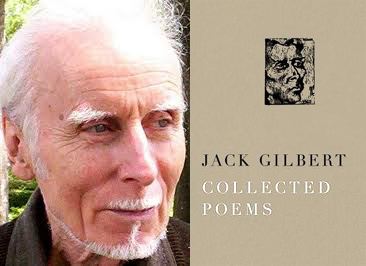

 Poetry from our new poet laureate.
 I notice that this list of fast changing neighborhoods includes downtown Tampa and the neighborhood just east of Logan Circle in DC.
 the coffee philosopher