The Rules


Is E-Reading Reading?


This guy doesn’t necessarily think so (though he also admits to owning a couple of e-readers).

Like most critiques of e-readers (critiques I don’t necessarily disagree with), the focus is on the physical, because that is, isn’t it, the real, or perceived, point of difference.

You are not holding a copy of Notes from Underground. You are holding a sort of computer that may or may not hold Notes from Underground. But that can’t be it. Not really. Words, letters, sentences are still just a form of coding, just like the mystical sparks that hold the codes for Notes from Underground on an e-reader (I don’t actually have that book on my Nook – but it’s a great book, one of those things angry young men should read in their teens and twenties before graduating to The Brothers Karamazov).

No, where the essayist (Andrew Piper, I should name drop him, or hat tip him, or whatever the proper yet hip terminology is for giving him credit here) gets it right is in referencing the estimable and readable Saint Augustine of Hippo:

Augustine is sitting beneath a fig tree in his garden, and upon hearing the voice he takes up the Bible lying near him and opens a passage at random and begins reading (Romans 13:13-14). At this moment, he tells us, “I had no wish to read more and no need to do so. For in an instant, as I came to the end of the sentence, it was as though the light of confidence flooded into my heart and all the darkness of doubt was dispelled.” Augustine closes the book, marking his place with his finger, and goes to tell his friend Alypius about his experience. His conversion is complete.

Weekend Reading – Presidential Poets


It’s like pairing wine and cheese, only it’s presidents and poets.

This happened. That’s right, a ‘poetry boulder’ was dropped by helicopter near Stratford-upon-Avon (Shakespeare’s home, in case you didn’t already know).

Last, major, independent Canadian book publisher goes into bankruptcy.

But nobody panic.

Where You Should Spend Your Money On Black Friday


Reading Batman On The iPad


You’ll recall that I indulged in reading a bound trade copy of the first seven issues of DC Comics ‘New 52 Batman.’

Well, it quickly became clear that if I wanted to continue the story, I’d either have to wait until next spring, when the next six or seven issues were bound, or catch up by reading the latest issues on my iPad, because comic book stores don’t have space to keep back issues like that.

In any case, the title of this darn thing should have given away what I eventually chose.

The physical technique for reading (scrolling?) through on an iPad took a few moments for me catch on to. But the effect is dwnright cinematic. My two complaints are that if you choose to pull back and view an entire page rather than a single panel, the resolution suffers greatly, particularly when reading the dialogue; and that sometimes, you just need to see a larger image because of how the panels are arranged (smaller panels placed over a larger panel, for example), but it doesn’t always make clear when you should pull back and it gets a little confusing. The latter, though, can be mended by practice on the reader’s part.

When I left off, Batman was looking more than a little battered and he remains that way when issue #8 opens. Which, artistically, is a good thing. One of my complaints was that square jawed men tend to look alike and that the only way I could differentiate Bruce Wayne from the character of a particular politician was by Bruce Wayne’s boyishly tousled hair (and I didn’t like him with boyishly tousled hair; too young and hip when I feel he should be formal and old money styled).

Now Bruce Wayne’s hair is tousled from having been been beat up and battered. He looks appropriately aged and appropriately unique. Not just another squared jawed hero, but a particular one. Of course, that also runs contrary to an earlier criticism, which I implied that I almost wanted the earlier Wayne to be more generically handsome and rich than uniquely something. So I hold two ideas at once? So what? Read Kant’s Critique of Practical Reason, ’cause he totally says that’s cool, at least sometimes. Or, at least, he writes about it a lot.

As if taking advantage of the cinematic appearance on the iPad, several action sequences are broken up in that ‘Bourne’ style – with fragments of the body seen, rather than a complete whole. Frankly, that style works a whole lot better in a comic than in a movie. Assuming the comic pulls back to show the whole every so often. Christopher Nolan’s first two Batman movies suffered from incomprehensible action sequences on account of never pulling the camera back to give the viewer an idea of geography – of where characters were situated in relation to each other.

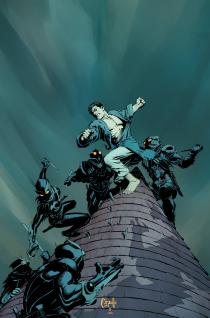
#8 comes dangerously close to the error of making what had been a dangerous, nearly unstoppable villain before (in this case, a sort of owl ninja – which is a lot more impressive than it sounds) into something a little more manageable. In the first seven issues, Batman struggles to fight even a single one of them. Now, he’s fighting a bunch of them and having too easy (though still a difficult) time of it (particularly as he’s still hurt).
Generation Theory


One of the more interesting things I remember reading by David Foster Wallace was an essay where he noted that his generation of writers was the first to be as influenced by theories of writing as by writing itself. Specifically, French structuralist and post-structuralist, but I don’t think that specific is as important nor as revelatory as the notion of the influence of theory on ostensibly non-theoretical work, i.e., not works of philosophy or literary criticism.

Anyway… read this cool essay from the pages of the always enjoyable N+1.

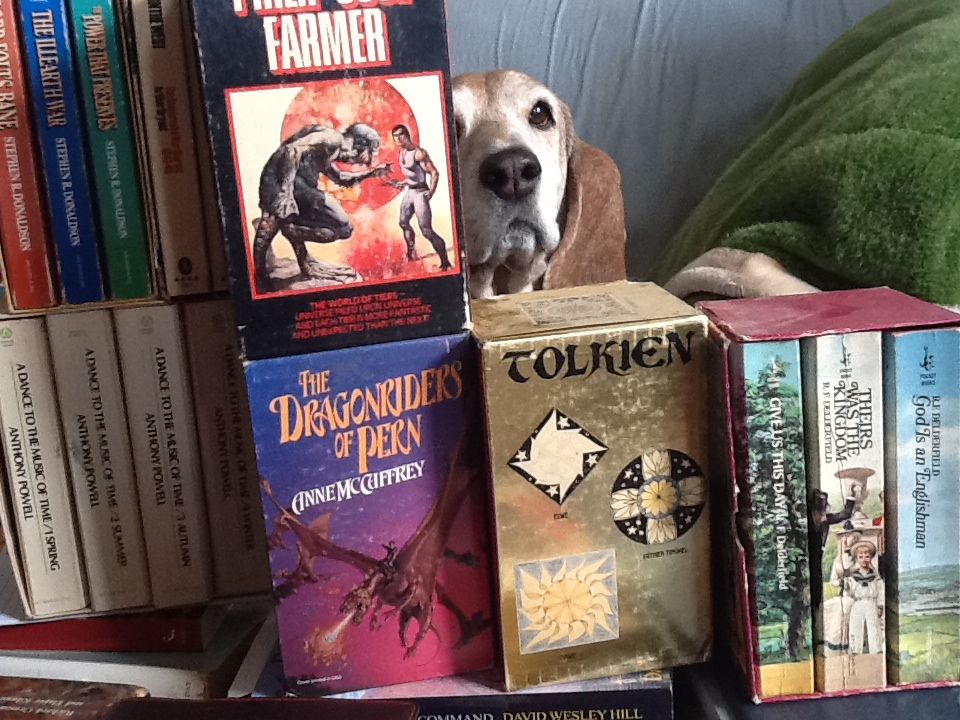
Whither Boxed Sets?


So, I read this fun little piece about box sets by Steve Donoghue in Open Letters Monthly, but rather than reveling in the potential playfulness of box sets and the implied seriousness of box sets, I wondered ‘whither box sets?’

It’s no surprise that of the six boxed sets featured over there, four are of science fiction or fantasy series.

After all, the last boxed set I purchased was of books seven through nine of the the Wheel of Time series.

With the rise of e-books, do they make much sense?

Or perhaps they do.

Boxed sets of music are generally of higher quality musicians (a lot more Miles Davis and Led Zeppelin than Backstreet Boys and Justin Bieber), but what if that is because fans of (say) Sonny Rollins are more likely to feel attached to the physical object of the CD or LP and more likely to desire it.

Similarly, science fiction and fantasy readers tend to be obsessive and completist types. Might’n we be tending that way, too?

But, of course, all that goes back to the issue of books becoming less items of mass consumption than something for rarefied and (generally) older collectors. Like fans of jazz. Jazz hasn’t been truly popular since the sixties (I once read an article that blamed Dave Brubeck’s rarefied style for helping establish jazz as arty and intellectual and laying the seeds for it’s decline as part of the vocabulary of popular music).

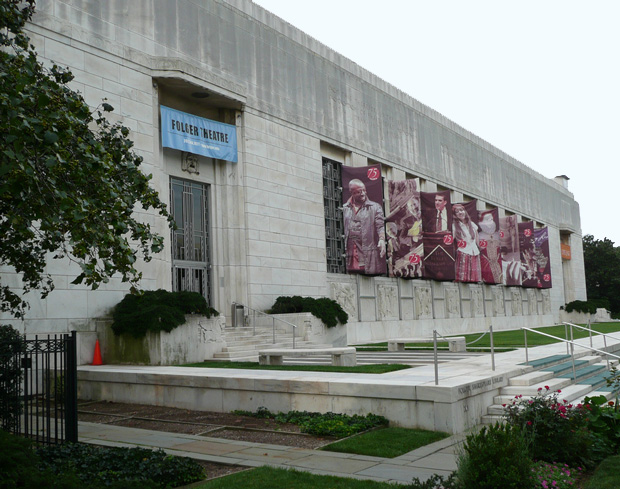
Chris Andrews & Mark Strand At The Folger


The most recent winner of the Anthony Hecht Poetry Prize (given to a manuscript of what would be a poet’s first or second collection) is an Australian poet named Chris Andrews.

Andrews and the judge who picked him, Mark Strand, read their work at the Folger Shakespeare Library on Monday night (November 19th).

Mark Strand is not a poet I’ve read much. I don’t own any of his collections and have only read a handful of his poems in some lit mags (mainly Poetry).

Andrews, naturally, was not a poet I had read at all previous to that night.

Usually, I like to get in a little early, go to the gift shop, where they stock the available books by the featured authors, and take a look at what’s available and see which one I want. That way, I avoid the ugly line at the table they set up after the reading and don’t have to wait in line for thirty minutes to get my book signed.

For various reasons (involving a bottle of twelve year old bourbon of which I drank not a drop), I arrived at the Folger Shakespeare Library pretty close to the wire. What with there being a line to pick up my will call ticket, I was feeling a little time sensitive when I ran into the shop.

I decided to pick up Chris Andrews’ Hecht Prize-winning first book, Lime Green Chair. Mainly because I didn’t have strong feeling towards Strand (actually, I briefly confused him with Mark Doty, who have some mistrust towards because I found the Best American Poetry of [Whichever Freaking Year It Was] that he edited to be less than inspiring) and figured it was better to put my money in the hands of a new(er) poet.

Both men were good readers, though in different ways.

Andrews spent less time in chit chat than any other poet so far this year. He very nearly dove straight in and read with a quiet, but compelling voice and diction that caught a musicality in his work that I had missed when glancing through it in my seat. I seemed to catch flutterings of slant rhymes within the lines (more than half the collection consisted of unrhymed, sonnet-like pieces with a first stanza of thirteen lines and an eight line second stanza).

Strand sometimes stumbled over the words, but projected an experienced (and gently dirty-minded) humor as he mostly read from a collection of prose poems.

Probably the best combination of quality poems and quality reading since Theo Dorgan and Paula Meehan read there more than a year ago.

Anyway, I’m nearly done reading Lime Green Chair and I’ll write about it after I’ve had a chance to digest it a bit more.

Midweek Staff Meeting


They also have a great collection of Pre-Raphaelite paintings.

Benjamin’s afterlife.

What are we supposed to have learned from the Dead Sea Scrolls?

Chief Justice William Rehnquist: An unreconstructed, hypocritical, pill popping racist or a left handed albino Eskimo pipe welder?