31 Poems: 1998-2008 (New Year’s Resolution, Book Two)


deanyoung

So, I begin to keep my New Year’s resolution to read one book a week.

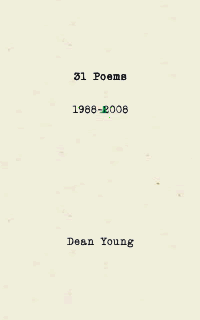
When I ordered a copy of an edition of Forklift, Ohio, (‘A Journal of Poetry, Cooking, & Light Industrial Safety’) a hand assembled poetry and art mag, they also sent me 31 Poems, a chapbook by Dean Young.

I hadn’t heard of him before, but this is good introduction certainly, especially since it seems that most of the poems were previously published in earlier of Young’s collections. Which goes to something tragic in the publication of books for smaller authors and virtually every poet. Your book has one print run. That’s it. It never appears again. We think everything is out there, available on Amazon. But it’s not.

That book of poems published by the university press in the early nineties? It can fall off the map entirely.

Something like this is an admirable way to keep some of the poems (31 of them, to be exact) alive.

As for the poems themselves, I’d rate them as… improving?

I wonder if these aren’t in chronological order, because, for me, the poems improved considerably. I read someone compare him and his style to the New York School poets. He does have poems (the better ones) that definitely remind me of O’Hara’s conversational, urban folksiness. Others bring to mind Ashberry, but those… Ashberry is such a large figure in American poetry over the last fifty years that resembling him will always be to the detriment of the inevitably inadequate resembler.

Once he’s hits his stride, about one third of the way through, it gets good. He drops some of the angry f-bombs for more wry wit colored with some not maudlin melancholy.

ON BEING ASKED BY A STUDENT IF HE SHOULD ASK OUT SOME GIRL is a great one. It’s the internal monologue of a teacher (I envision a junior high teacher) describing scattered advice and also veering off into his own regrets and disappointments. It’s a melancholy piece, bringing to mind the helpless feelings of a pre-adolescent in love and not knowing what to do or how to handle, as well the disappointments of maturity. I wish there were some passage I could quote, but because it’s all about a distracted, stuttering flow, and enjambment, a line or even a couple of lines wouldn’t capture what’s there.

I will quote from the last line of my favorite poem contained therein, and of the one least like the others. It’s New York School filtered through Richard Howard’s sad historicism (though less annoying; I read Howard’s Inner Voices and immediately wondered what possessed me to put my brain through that kind of turgidly pointless experience). From I SEE A LILY ON THY BROW:

but above you, the assistant holding you down,
trying to fix you with sad, electric eyes
is John Keats.

It’s the ‘story’ of a young worker in London whose minor injury gets infected and finds himself being operated on a teaching hospital, with students looking down on him. A young worker who will die, despite the amputation. The Keats brings the whole thing back to the matter of poetry and the ability or inability of poetry to bring meaning, to bring succor, to turn suffering into something that can be shared to alleviate the suffering of others – almost like the poor young worker, by virtue of his (eventually) fatal operation being witnessed by the great Keats, is an organ donor who is donating beauty.

I should add that Dean Young has a new, traditional, i.e., hardcover, collection out: Bender: New and Selected Poems.


tumblr_mfs6rpAqpE1r616oeo1_500

Holy Librarians, Batman!


Holy libraries, Batman!

Booksellers’ Favorite Books


Guernica published some favorite books of 2012, as named by some independent bookstore owners.

Included in that list is Mojo, an indie book and music store in Tampa, and Atomic, which is located in Baltimore and is also the place where I bought myself a copy of Andre Breton’s Mad Love to tide me over just an our before checking myself in for surgery (though I more bought the book to tide myself over for the recovery, rather than surgery itself, for which I was thankfully, chemically knocked out).


J R by William Gaddis

J R by William Gaddis is a novel that comes recommended not just for its relevance to various financial crises and burst bubbles that have afflicted us since its publication in 1975, but for its unique style and meticulous genius that made Gaddis quintessentially representative of post-modern literature and a direct influence on an immeasurable glut of novelists to come. At over 700 pages, comprising mostly of unattributed dialogue and no chapter breaks, J R is a sometimes rather difficult and often hilarious and prophetic epic about the role of money in twentieth-century America told through a middle-school student who learns about stock and commodities trading from a field trip and builds a financial empire over his school’s payphone. Gaddis has an unmatched ear for human speech and the kind of characteristic patience that is necessary to construct tomes like this and his first novel, The Recognitions, a masterful thousand-pager about authenticity and forgery published twenty years prior. A dense and rewarding modern novel, J Ris made of the stuff that will make any hungry reader feel full.

Mojo Books & Music is located in the USF area of Tampa, FL. Mojo features a wide array of used and new books, vinyl records, cds and dvds—not to mention a serious coffee and tea bar.


Vacant Lot And Modular Chain-Link Fence Set by Gary Kachadourian

Local artist Gary Kachadourian has made a number of posters and booklets of seemingly mundane items found largely in urban areas over the years. On the surface, his projects seem like lo-fi photocopied photographs, but they are actually incredibly detailed, hand drawings that are hyper realistic. Vacant Lot is a 1/32nd scale, cut-n-fold paper set of a far too common image in the city—a fenced off, vacant lot, complete with a discarded shipping pallet. It’s an interactive work of art, in handmade, booklet form.

Atomic Books is Baltimore’s famous, weirdo, underground, alternative indie bookstore.
Literary Finds for Mutated Minds!

Benn Ray, Co-owner, Atomic Books

Weekend Reading – Here To Stay


CE-books on the wane, printed books here to stay?

I’m more the traditional type.

Binary poetics.

The best bikes around (but why are they acting so surprised? DC the living city is different from DC the short hand for what’s wrong with Congress).

Le Poseur.

Favorite philosophers.

Do it like the French.

D–n It


Barnes and Noble, Union Station, DC

This sucks.

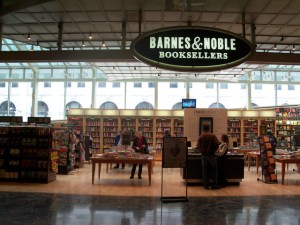
The Barnes & Noble inside Union Station is closing.

I know it’s not very big, but it actually had a very good magazine section with lots of interesting literary and academic journals and an underrated collection of science fiction.

And, it was only a mile way. I could walk to it quite easily.

Man this sucks.

The Intellectual Indiscretions Of Youth


Atlas Shrugged might have been a sin of youth, like Siddhartha and Thus Spake Zarathustra, except that Ryan never repented the sin.

That’s a quote from a Leon Wieseltier piece on Paul Ryan in The New Republic.

As someone who resides on the left, I have the some mixed feelings about that publication’s cheerleading of the Iraq War (and harsh admonition’s that the rest of the Left’s moral and factual doubts were immoral and counterfactual). But that line (which was not favorite line; there were a good many barbed witticisms like one that says that Bill Kristol once tried ‘establishing the definition of the intellectual as a person who knows how to talk to William Kristol’).

Having gone back over, not so long, another Herman Hesse book (I am not so foolish as to suspect that revisiting his Siddhartha would reveal anything more than a westerner’s self help guide, feel good vision of a complicated religion).

But the left does have its youthful extravagances, but they seem more easily outgrown. At the very least, the themes of both Siddhartha and Zarathustra involve throwing aside illusions. And the latter, certainly, can be an entré into much better, deeper works by Nietzsche.

School Book Fairs


work 2Do you remember school book fairs? Where you were left to wander an elementary school library with the tables stacked with copies of books whose information could be written on a card and then taken to a grown up for purchase?

At Larchmont Elementary School in Norfolk, Virginia, these events took place after school and with our parents.

Being a precocious little p—k, I passed by most of the tables of books as too far beneath me, but still being a creature of the id (monsters from the id! Forbidden Planet!), I did gravitate towards anything with monsters: dinosaurs, dragons, etc.

This resulted in some flops: especially some Hardy Boy’s book about a dragon (hint: it’s actually a freaking train). I never read the Hardy Boys before nor after that. Not my thing.

I also got Madeleine L’engle’s A Swiftly Tilting Planet. It had a youngish man riding a winged horse. But I was not ready for it, not in the least because, as it happens, it’s the third in a trilogy, beginning with the fantastic A Wrinkle in Time.

My mother was always very generous about letting me pick out a bunch. I’m not sure what my limit was nor whether it was based on volume of books or combined cost, but I always left with a selection of five or six books. But you didn’t get them right away – they always had to be ordered and were then delivered to the school. And while an adult my describe delaying gratification as delicious suffering, as an eight year old, I found it freaking irritating.

Midweek Staff Meeting – The Rumble In The Journal


5917-Books-WomenKuhn versus Popper.

The habits of the Victorian reader.

What is ‘Yellowism?’

The makings of a successful chapbook press.

Baldwin’s Book Barn


barnfront-good


Yes. It’s a bookstore.