 I felt a little bad reading this because I have a nice, inexpensive copy of The Rights of Man which I have never finished and here I am putting the cart before the horse and reading about it before actually reading it. I suppose that makes me like most readers of this book but, to be honest, I have always thought I was better than most people, at least as regards my reading habits, if not morally and hygenically.
We read Hitchens, of course, for Hitchens, regardless of the ostensible focus, but we can see the appeal: a polemicist and pamphleteer in the Enlightenment tradition who made a widely recognized contribution to the course of human events. In dedicating the book to the then president of a post-Saddam Iraq, he must have been hoping, somewhere, that one day he might be recognized in some small way as contributing to a similarly successful product, even if the years appear to have only proven him more wrong on that particular adventure than it seemed even when he wrote this.
I had never heard it before and won’t vouch for its provenance, except to express my belief that Hitchens would have made a good faith effort to examine its sources, but I love the anecdote about William Blake, the mystical poet, warning Paine, the (small ‘r’) republican pamphleteer, that he was in danger of arrest, inspiring the latter to immediately cross the water to revolutionary France.
Learning about Paine’s career was the fascinating. My own knowledge, prior, was rather thin. While no substitute for a biography by a professional biographer or historian, I am not likely to read one, so I’m glad that I got this brief look at his career.

 What began as an admirable effort to show the wide ranging influence of an eighteenth century London club whose members included Samuel Johnson, James Boswell, David Garrick, Edmund Burke, Adam Smith, Joshua Reynolds, and Edward Gibbon rapidly devolved into an unsatisfying biography of Boswell and Johnson.
 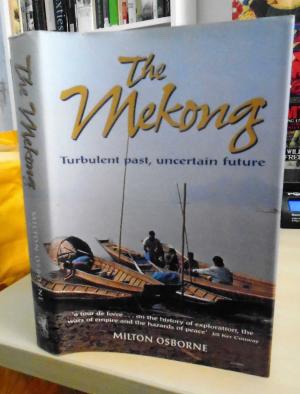 Apparently, and I didn’t know this before, no one really explored the Mekong River until intrepid white folks arrived. Sure, many of them were racist, cruel, and exploitative, but we should admire them for… reasons?
 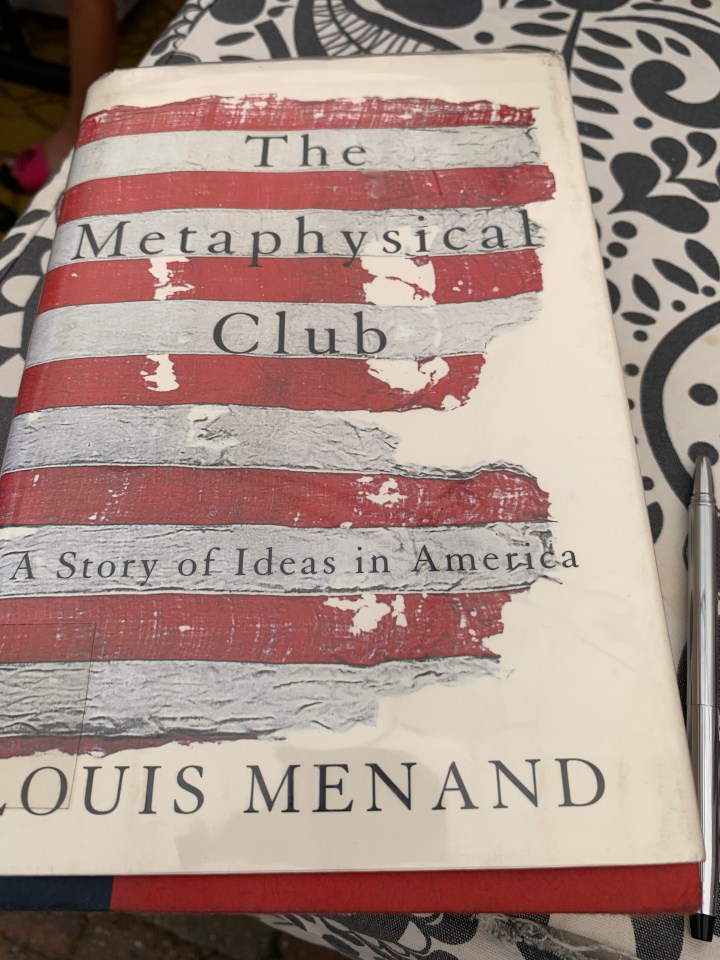 What might be most interesting about The Metaphysical Club is that it purports to be about how figures like Oliver Wendell Holmes, Jr, William James, Charles Pierce, and John Dewey (among others) created a new and modern American from the ashes of the Civil War, it manages to never explicate James’ nor Peirce’s nor Dewey’s philosophy nor that the first two are both considered the founders of American pragmatism (James association with it is mentioned once or twice; Pierce never) nor that Dewey’s has work might be connected to it over the course of three fourths of the book. Instead I found a series of frustrating threads, connecting Holmes to James and James to Peirce but not Peirce to Holmes in any meaningful sense. Supposed schools of thought like the Burlington transcendentalists (shouldn’t transcendentalist be capitalized, too, in this case, if it’s a legitimate, albeit no longer extant, school of American thought?) appear, are discussed in not insignificant length and then noted to be almost entirely meaningless to the topic and not influential at all. Jane Addams is the only woman noted beyond her relationship to a man and she gets briefly shoehorned into a lengthy rumination on Dewey’s Chicago.
  Did I need to read another Jefferson book? Probably not. My fifth in the last two years, though the first traditional biography (the others being guided by conceits or else by Christopher Hitchens and so read to understand him rather than Jefferson).
 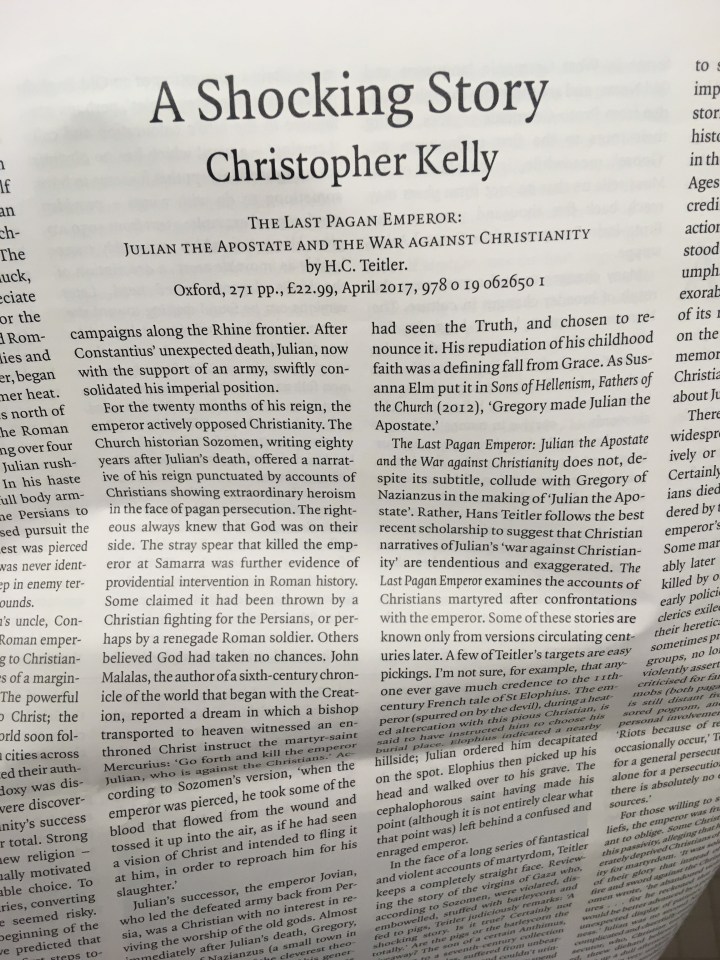 Of course, this article from LRB drew me because of Gore Vidal’s novel,
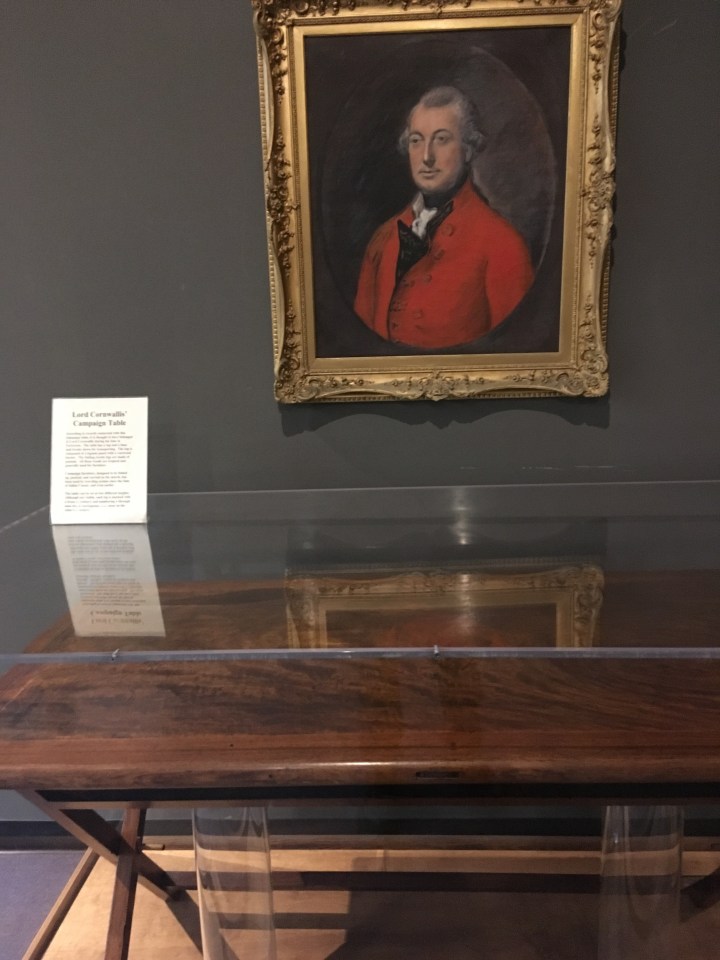




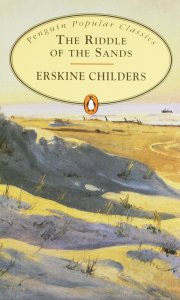 My father explained that The Riddle of the Sands was about sailing, as he watched the seventies film version (with, of course, Michael York). I didn’t understand much of pay attention much at the time, but the memory stuck with me.
 the coffee philosopher