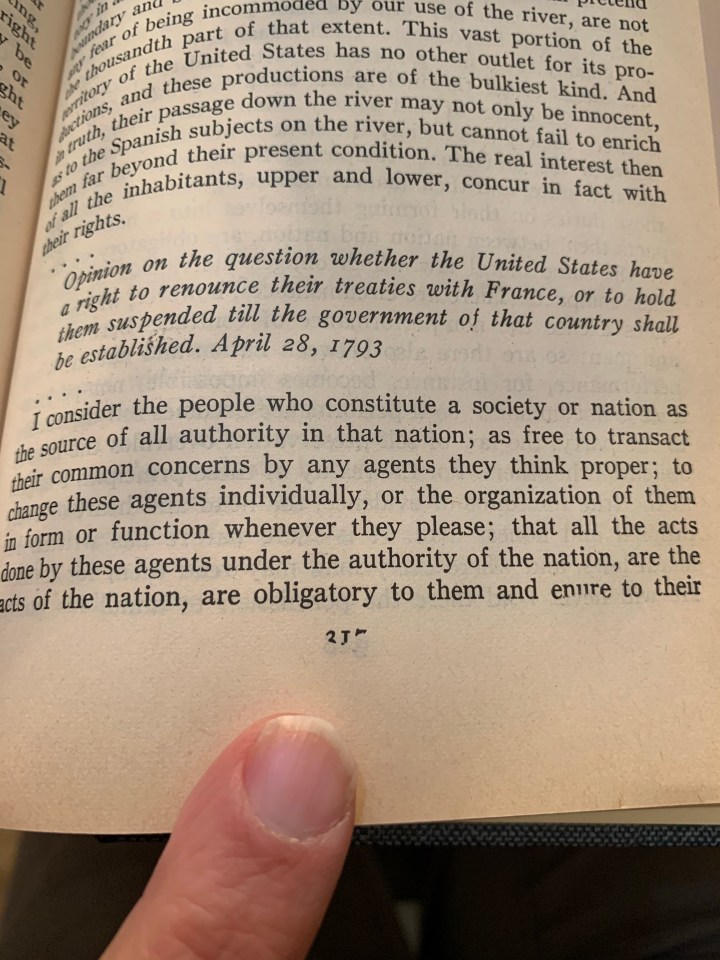
 In an otherwise only marginally interesting answer to the question of whether the United States should renounce its treaties with France until it had established a government. While it’s not clear who needs to establish a government, because both countries had some ups and downs, the date of 1793 suggests it was France that needed to sort itself out.
In terms of practical politics, of course, America needed to adhere to its earlier treaties, barring some truly exceptional occurrence (the French Revolution, arguably, would qualify).
Here is what caught my eye:
The law of nations, by which this question is to be determined, is composed of three branches. 1. The moral law of our nature. 2. The usages of nations. 3. Their special conventions.
It’s an interesting bit of morality, couched in enlightenment terminology (Lockean?), which seems out of place in the Jefferson I have been reading.

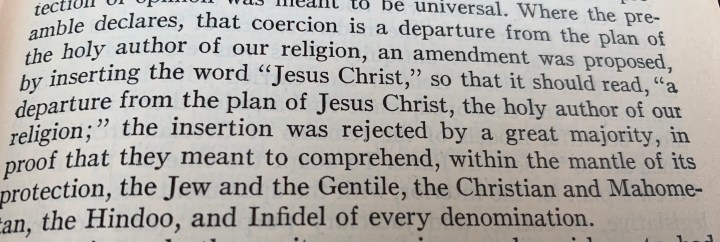
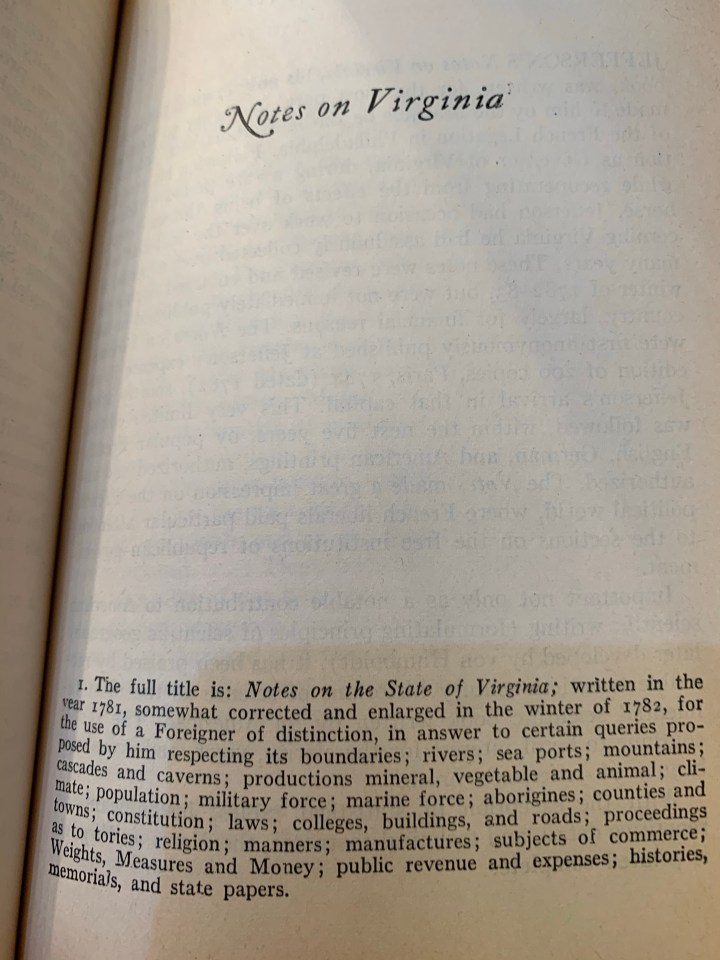 You can see Jefferson’s regular topics and conceits clearly here. A chapter on religion is mainly about the religious freedom he so assiduously (and successfully; he wrote the statute) championed in Virginia. On education, it reflect the inadequacy of both the physical and curricular structure of William & Mary, then the state’s only college; arguments no doubt in support of his quest to establish the University of Virginia at the base of his mountain. You see Jefferson the amateur scientist (and a fascinating digression into some amateur archaeology that he undertook on a Native American burial mound.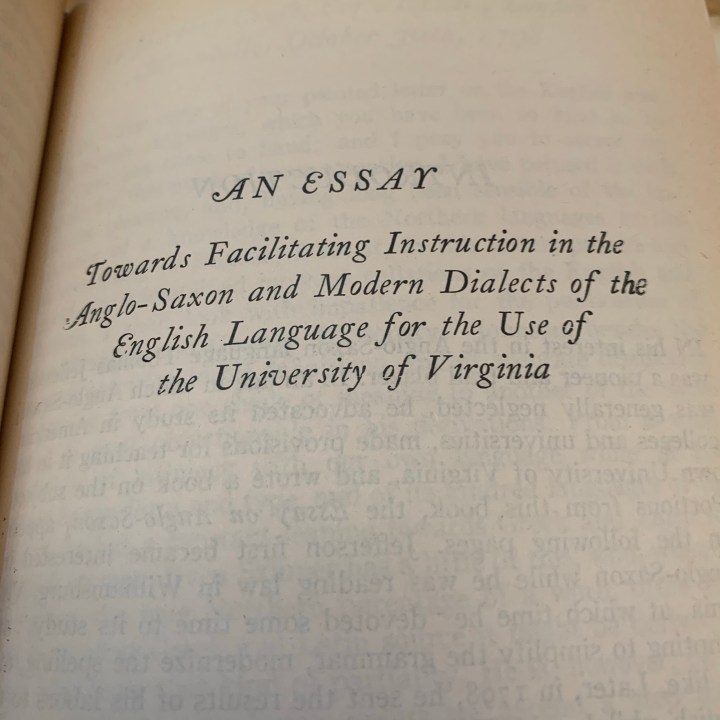
 This slim book, which or may not have been intended for publication, is quite modest and circumspect. He does not speak much of personal matters (alluding obliquely to his wife’s death) but much of legislative comings and goings and you would barely know he was key figure in American history if this was all you had.
 It is perhaps because of also reading
  the coffee philosopher