Dumbarton Oaks Museum & Research Library


I’d visited the Dumbarton Oaks Gardens (which are an absolutely fantastic way to spend a nice afternoon; I brought a collection of essays by the nineteenth century critic and essayist, John Ruskin, because these gardens deserve to be appreciated next to some eighteenth or nineteenth century literature; in point of fact, I actually brought a collection of poems by William Cowper, just in case we could also visit the gardens, but there wasn’t enough time), but never the attached museum. So, on Sunday, we went.

A couple of decades ago, I was very intrigued by the architect Philip Johnson. One of his notable buildings was the Dumbarton addition, designed to display its Pre-Columbian art. It’s an amazingly well designed little wing. Circular rooms adjoining each other to create a larger circle, with the floors being golden wood radiating out to an outer green, white veined marble ring. The move away from lines and edges helped take me away from Western European modes of geometric thought (I wouldn’t necessarily say that the art therein enclosed was necessarily non-linear nor circular; the important part was the dislocation from ingrained modes of thinking). The golden wood matched the reappearance of wood and especially gold in the materials used in the art, while the marble reflected the use of jade, especially, but was also in dialogue with the turquoise.

The art itself is amazing, but there is always a ‘but.’ It was too disconnected. Not enough effort was made to help us see the pieces in context. There were so many varied and wildly different cultures in Mexico and Central and South America before my people (broadly speaking) gifted two continents with small pox and influenza, but the viewer is never given enough to understand Olmec versus Moche cultures, so that the collection becomes little more than an assemblage of beautiful and stunning bric-a-brac.

 

‘The Rise And Fall Of The Man Of Letters: English Literary Life Since 1800’ By John Gross


9781566630009Firstly, so glad that I read this book. Incredibly interesting and shines a light on a fascinating aspect of literary history. This book is not about the Charles Dickens of the world. It is about the editors and publishers who published Dickens’ novels in serial form in Victorian magazines and papers. It is about the critics who shaped the tastes of the reading public. In a book like this, the towering figures are men like Matthew Arnold, not Tennyson.

But… the early stages are a lot more interesting. Matthew Arnold, Thomas Carlyle, and Charles Lamb. The milieu of Gissing’s New Grub Street. I was reminded of the frenetic literary world that I read about in Balzac’s  Lost Illusions. But as it got more contemporary, it got less appealing to me. And, unfortunately, I took a long time to read this book. Not for lack of interest, but because, for some reason, it became a fall back book. I would take it with me and read bits of it on the metro or while waiting for a doctor or, yes, in the bathroom. I didn’t sit down and plow through it in a brief period. Which means, that my memory of the best bits is fuzzier than my memory of the other bits.

But don’t let me turn you off from this – I can guarantee that you’ve never read this side of English literary history.

Shakespeare’s Birthday Bash At The Folger


Sunday was one of my favorite days of the year: the day when the Folger Shakespeare Library opens up its backrooms to the public and serves up cake and swordfighting in honor of Shakespeare’s birthday.

We brought two boys with us – our friends’ children, age 7 and 10 (perfect ages to appreciate the offerings).

I love sitting in the library, listening to classical quartet (this time, it was two violins, cello, and flute) and then going and looking at some of the paintings. The Folger has a wonderful collection of art about Shakespeare, like paintings of scenes from his plays or portraits of Shakespearean actors, as well as portraits of Shakespeare himself (mostly posthumously painted). Their crowning glory is a portrait of Queen Elizabeth (the ‘Seive’) and one of her one-time favorite, Robert Dudley (which was, sadly, not on display).

The fight director for the Folger gave a couple of presentations on historical fighting techniques, with references to Shakespeare. Of course, the boys were rapt.

A couple of notable things stuck out with me. Firstly, that swashbuckling used to be a sort of insult. A swashbuckler didn’t know how to fight. A ‘swashing’ blow was a reflexive swing which, if it landed on a buckler, made a lot sound and fury, signifying nothing (do you see what I did there?).

Secondly, in Romeo and Juliet, they keep asking Mercutio if he’s hurt, because they cannot tell. Mercutio was stabbed with a continental rapier, which creates a small wound – what would now be called a sucking chest wound. While terrible internal injuries have been suffered, it won’t actually bleed. Romeo literally cannot see a wound, so doesn’t know that Mercutio has been dealt a fatal blow.

Thirdly, he noted a scene in Julius Caesar where Caesar exits the stage to take care of some bureaucratic matter and then the conspirators enter the stage and engage in some silly dialogue about whether some person giving them the eye means that they’ve been uncovered. He said that was not something to build tension – there’s already plenty of tension and, arguably, the scene actually deflates some of the tension. No, it is entirely intended to give the actor playing Caeasar time to attach some Elizabeth special effects – namely a bladder filled with blood – around his chest. And when, having done the deed, the conspirators decide to get their hands bloody and walk the streets to show they are not ashamed or hiding their action, it was actually a stagecrafty way to help mop up the blood on the stage.

Finally, there was a roundabout argument for gun control. Shakespeare lived in the first age when the growing middle class would walk to streets with swords – that they often weren’t trained to use. Fights were more deadly, as a consequence. He argued that Shakespeare was constantly commenting on the culture of weapons and violence. At the end of Romeo and Juliet, an entire younger generation of two families have been killed as a consequence of escalations resulting from a culture of weapons and violence. Literally, it snowballs from anger at Romeo crashing a party held by a rival family and ends with a trail of corpses.

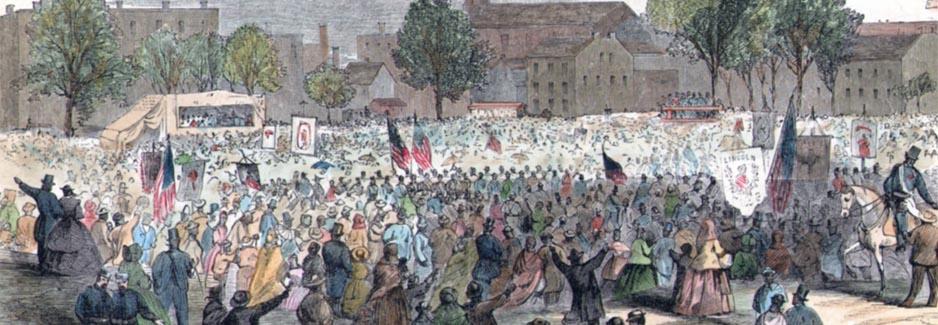
Happy Emancipation Day!


Emancipation_celebrationIn most of the country, the Emancipation Proclamation, which followed the hard fought American victory at Antietam in 1863, is the big one.

But in Washington, DC, there is a more localized and very important day – a city holiday – called Emancipation Day.

The DC Compensated Emancipation Act of 1862, enacted by President Lincoln, ended slavery in Washington, DC, freed 3,100 individuals, reimbursed those who had legally owned them and offered the newly freed women and men money to emigrate, if they so desired.

Midweek Staff Meeting – Who’s In Charge Here?


I volunteer to take charge of the Library of Congress, so feel free to contact me anytime. One hundred percent available for the job.

I actually have read Raymond Williams, a Verso Books publication of The Politics of Modernism, a nice little volume of aesthetics. I would recommend him, too, so, by all means, rediscover him.

Bronze age beer. Word.

A person, a democracy, a nation – all are nothing with the liberal arts.


IMG_0421.JPG


IMG_6786.JPG

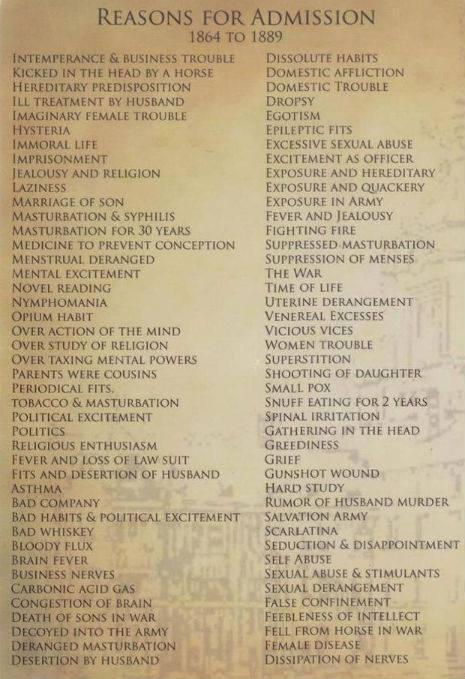
‘Novel Reading’ Was A Reason To Send Someone To A Lunatic Asylum


BvdsJauIUAEsvQz

Weekend Reading – Young ‘Uns


We are being surpassed by a younger generation (in reading; what I’m saying is, people under thirty read more than you do, unless you’re under thirty, in which case… good job!)

Reading in wartime.

An essay by the poet Matthew Zapruder (no relation the JFK assassination film) on political poetry, but which opens up with discussion of a poem by W.S. Merwin from The Lice. If you have read much of this blog, you will probably know that I have decidedly mixed feelings about Merwin, but I do not have mixed feelings about The Lice. My mixed feelings stem from the belief that he wrote two great collections – one being The Lice and the other being Carrier of Ladders – and that the rest of his career has been a case of writing poems that always pale before those early collections.

Why do we like first editions?

It’s always nice when the venerable gray lady publishes reviews of poetry.


Midweek Staff Meeting – Philosophy, The Opera


Yes, they made an opera out of Wittgenstein’s Tractatus.

Assigned reading that’s worth reading.

Ringing church bells for exercise and mathematics (group theory, to be exact).