Power & Pathos & Trios


Next weekend, I’ll start working for my better half for the foreseeable future, which made using Sunday well more than usually important. At the National Gallery of Art, an exhibit called Power and Pathos: Bronze Sculpture of the Hellenistic World was going to be winding down and having blithely ignored numerous opportunities to see it, today (or, rather, that day) needed to be the day.
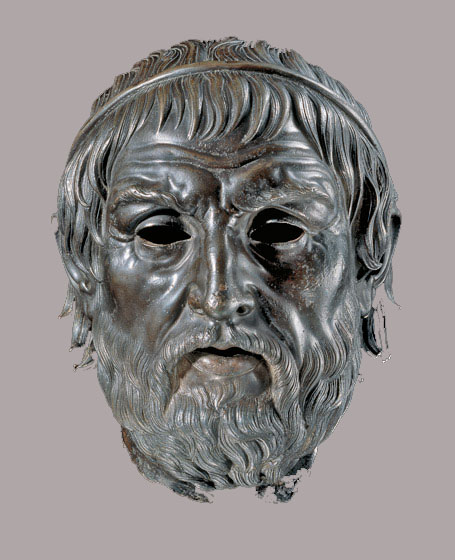
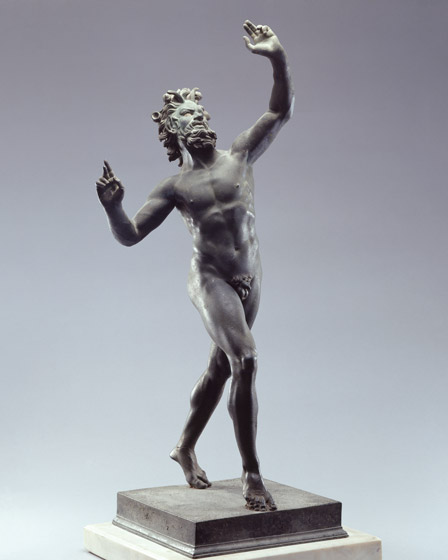
00309897001_HI’m sorry, but I was disappointed. There were some wonderful pieces (a weary Herakles leaning on his club and the head of a poet), but only one that was truly powerful (a statue of the god Pan) and more than a few ‘meh’ pieces and, certainly, I didn’t feel much power nor pathos (besides alliteration, what was the ‘pathos’ supposed to be?).

You still try to get a nugget of something interesting from any exhibit and for me, that was the head of a poet. It was labelled a poet because his hair was longish and his beard full and those were the signs of a poet. philosopher, or intellectual (and, in the late ancient world covered by this period, an intellectual would frequently also be a philosopher and poet; there wasn’t so much parsingDancing-Faun of the difference back then). The idea was that they were less influenced by vanities, so let their hairs grow out. So, the idea of the shaggy poet or thinker wasn’t an invention of Parisian bohemians, nor Greenwich Village poets, nor any other group from the last two thousand years, but dates all the way back to ancient Greece.
After finishing the exhibit, I kept wandering around the museum, stopping in some galleries to look at some nineteenth century landscapes. I walked towards one of the atriums when a woman walked in front of me, handed me a program and asked me if I was here for the concert.

Naturally, I said, yes.

Apparently, the National Gallery of Art had spent the previous two days doing several concerts a day in order to complete a cycle, as it were, of Beethoven’s trios. This particular concert would be his final string trios (which were actually early works; he moved on to string quartets after composing these).

The first one was a string trio in G Major and the players ended the trio so abruptly that we (the audience) was stunned into sudden and sustained applause. It was a very odd moment, as if a long silence had been ended by an invisible man suddenly clapping in our ear. We kept to our feet not because the performance was good (though it was), but because shock impelled us.

The second trio, in D Major, had a menuetto as its penultimate movement and I just loved it. Beethoven should have done more dances.

The third, in his famed C Minor key, was surprisingly upbeat for a chamber piece in a minor key.

The acoustics felt good, which is not always the case in there. The sound was clear and very, very bright, with the inevitable echo being an inconsequential factor.

Just an awesome coincidence that I walked in on it.

Parades & Upshur Street Books


 Much of Valentine’s Day was spent in some solitary wanderings on crowded streets. My better half was away (the third year in a row we have spent February 14th apart, which, in a way, is not so bad, because, like New Year’s Eve, Valentine’s Day tends to pile on such overwhelming expectations of joy, romanticism, and impossibly good sex that it tends to crush the possibility of all three; that said, I’d rather she were with me, if I had my druthers), so I took a bus to Chinatown and carelessly browsed the Smithsonian Museum of American Art until it seemed a good time to find a spot on the street to watch the Chinese New Year (or Lunar New Year) Parade. Last year, I was on my own, I walked randomly about town and found my way to Chinatown and, unexpectedly, the parade. So I thought maybe I’d start to make it a tradition. Or not.

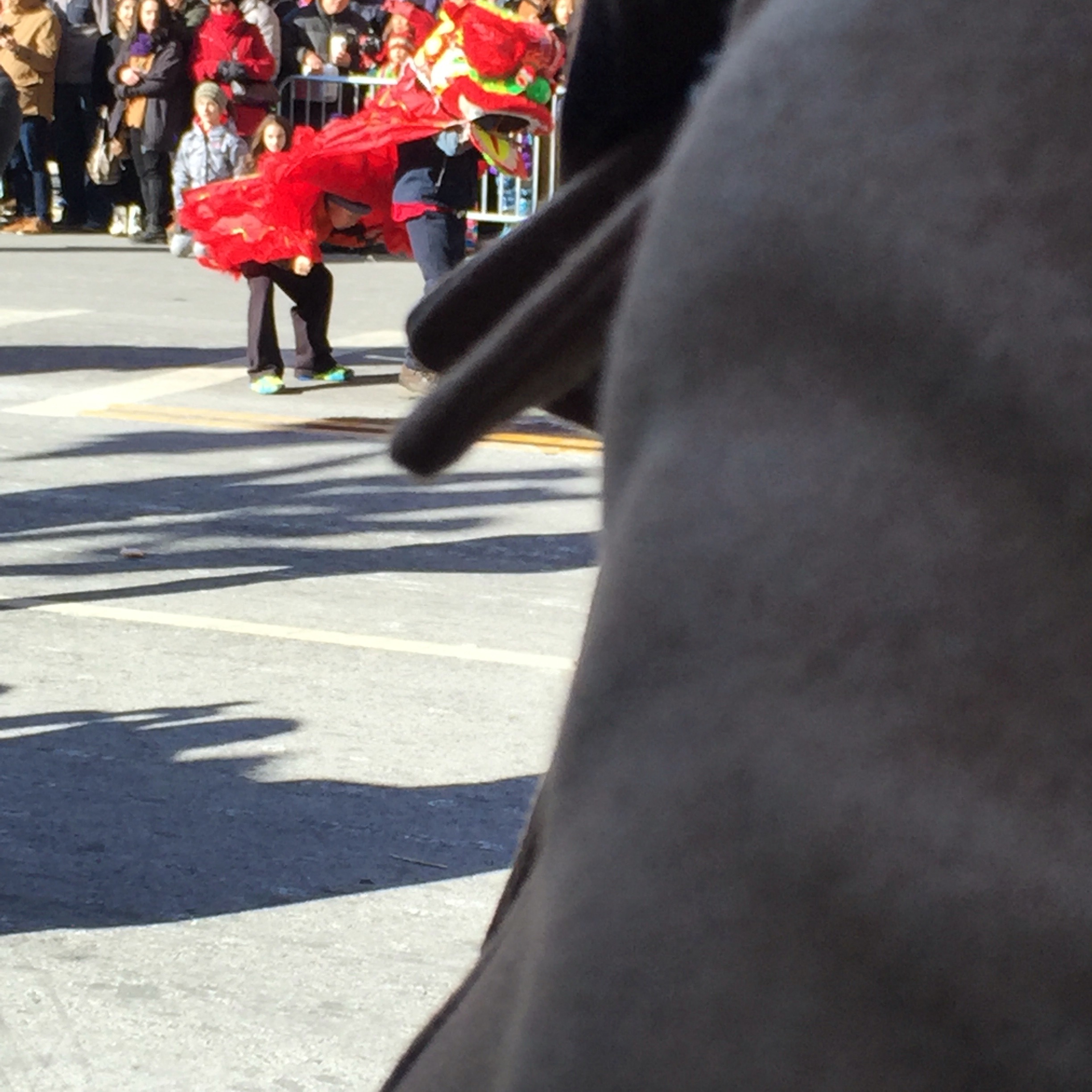
The parade itself contains a surprising number of white people and while I’m never exactly sure when these things cross the line from solidarity to appropriation, I suspect that that said line was, indeed, crossed. Whatever. I just watch it to see the little kids trying to manipulate dancing dragon costumes and props.

When the parade was over the subsequent parade of pols marching to the podium to speak was too much, even for me (in case you’re interested, Jack Evans was the straw that broke this camel’s back), I took a metro up to Petworth to make my first visit to Upshur Street Books.

It’s a nice little bookstore, but the selection is not very large, particularly the poetry shelves, which were few. Unusually for me, I did not buy anything. Something will, no doubt, bring me back, but it’s not going to be a regular thing.

I walked back (taking about an hour) and met a friend for a movie and then another friend and his wife for noodles.

Staged Reading Of A New Play At The Capitol Hill Arts Workshop


I’d had a ticket for this, but then the blizzard came and it was rescheduled. It wasn’t a full on production but a staged reading of a new play titled First Citizen, presenting the little performed Shakespeare play, Coriolanus, from (mostly) the point of view of four ‘citizens’ who more or less represented different classes and different political viewpoints. Rather like Stoppard’s Rosencrantz and Guildenstern Are Dead, the play interspersed actual dialogue from Shakespeare with the new dialogue of First Citizen. Afterwards, was a talk back session; I had been expecting it to be more question and answer, but it was more like an open critique.

Some of the critiques I disagreed with, especially since most centered around historicity. Whether characters accurately reflected socio-economic realities of that time (late Republic) of Roman history. Whether we needed more background on Roman politics (what are the roles of the Consul and Tribunes?).

My personal response was different. As to historicity, first of all, it’s in dialogue with Shakepeare who, despite writing plays known as ‘history plays,’ should not be considered a historical source, so let’s not ask it to be historically accurate (but let’s do ask it to be presently relevant). Secondly, knowing some of the basics of the political system of one of the founding civilizations of what we know as western civilization is not, actually, too much to ask. I don’t want to get into (relevant) questions of euro-centrism in education, but knowing the barest minimum about the Roman Republic is pretty basic stuff (and does not preclude nor exclude also having a basic knowledge about Imperial China’s bureaucratic system).

On the positive side, the play handled political questions well. It was a political play about the best path for change that benefits the mass of people and it did an excellent job of not reaching conclusions, by which I mean, every point of view was challenged, so that the audience was denied a pat, self-satisfied answer and was instead given more questions.

On the negative, and it’s a small point, I thought that the non-‘direct from Coriolanus‘ dialogue was too much in the middle. It bounced a bit between colloquial and vaguely Shakespearean. Don’t try to compete, I say. I would have liked the original dialogue to be more colloquial and more modern in tone.

But really good and if it is put on around here, I would go see it.

Chinese New Year Concert


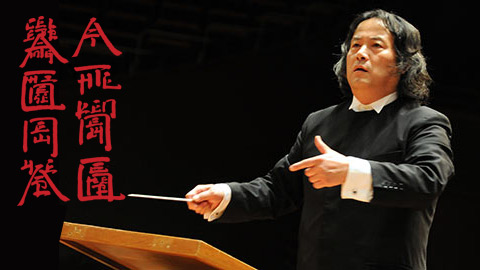
The Shenzen Symphony Orchestra played at the Kennedy Center for several nights of performances to ring in the Year of the Monkey. Honestly, I bought the ticket because it was immensely cheap, but it turned out to be a great night.

ShenzenSome music based on regional folk music by Yuankai Bao was a great listen. Bucolic, pastoral, folksy. Very enjoyable. The Yellow River Concerto by Xinghai Xian left me a little underwhelmed though.

Violinist Dan Zhu was absolutely amazing. He played in Carmen Fantasie (if you’ve heard that famous Carmen music on NPR, it probably wasn’t from the original opera, but one of two orchestral arrangements on themes from Carmen; this was the one by Franz Waxman) and his bowing was wonderful powerfully and masculine.

The Peony Pavilion is a Kunqu Opera. I’d never heard of it either. It’s something between western opera and Chinese opera and musical theater. Some of the singing by the male lead was done in a falsetto that sounded odd to my ears and to many of the other in the audience (but that doesn’t excuse some of the juvenile responses; thought folks get a pass for giggling at some of the lines: Let me shower your thirsting flower is not subtle innuendo).

And then there were excerpts from Turandot. Even if you’re not an opera fan (and I am an opera fan), it’s hard not to be moved by a stirring, romantic aria by Puccini. It goes right to your heart and makes you want to stand up and pour it all out.

Selected Poems Of Li Po


One of the advantages (and distractions of moving) is unpacking your books and seeing tomes you had forgotten about, reappear, as if by magic.

9780811213233I remember very clearly buying this book. I also remember that I didn’t really like it at the time. But, it came with me on a walk recently. It was the proper size and I had just unpacked it, so it went into my satchel and onto the road with me (or, rather, onto the sidewalk with me; actually, roads, too, because the recent Snowzilla had left many of the sidewalks unwalkable, so us pedestrians took to the streets, drivers be damned!).

Now, I’m wondering why I didn’t realize before how awesome it is.

And credit must go to the translator. While I don’t read classical Chinese, from what I know, a direct translation would be almost meaningless and certainly poetry-less. Of course, let’s be totally honest and acknowledge that classical Chinese poetry (and even contemporary Chinese poetry) translations are, in their style, vastly influenced by Ezra Pound’s translations and his interpretation of baroque spareness.

Avoiding Farewell in a Chin-Ling Wineshop

Breezes filling the inn with willow-blossom scents,
elegant girls serve wine, enticing us to try it.

Chin-ling friends come to see me off, I try to leave
but cannot, so we linger out another cup together.

I can’t tell anymore. Which is long and which short,
the river flowing east or thoughts farewell brings on?

‘A Midsummer Night’s Dream’ At The Folger


MSNDWide

Loved it.

Went on a whim. Found some cheap tickets online, bought that day for the show that evening.

When I was a child, my mother took me to see this play, making it my first encounter with live Shakespeare. If I’m honest, I don’t really have any firm memories of it. Nor had I read the play since then, so, rather unusually, I was able to go into the performance with only the barest knowledge of the plot (star-crossed lovers, Puck, fairies, and a donkey).

The production was befittingly playful, with some fun, extra-textual touches (a lovelorn Helena introduced singing a sad song by Adele). Puck was played by Erin Weaver as less a trickster, than a pan-sexual cupid (actually, all three fairy characters were pretty hypersexed). Lovers Lysander and Hermia were twenty-something, backpacking travelers; Helena as a stylish young woman (except that when first seen, she’s wearing the sweats of a depressed and jilted lover); but Demetrius was merely… I don’t know… millennial? He didn’t really get the kind of identifying costuming that the others did.

And it ended with an onstage dance party by the cast.

There’s still time. Absolutely worth seeing. Arguably, the second best production I’ve seen at the Folger (number one has to be their amazing Richard III).

Also, because of all the extremely valuable primary documents in the exhibit hall, they opened up the library itself for wine, water, and snacks (not wanting to risk a priceless letter to Shakespeare being wine-stained). Unless you’re a legitimate scholar, you don’t get much chance to wander back there, so that was exciting.

Midweek Staff Meeting – I Saw That!


6-F1903.309-768x411So, I finally got around to seeing this amazing Sotatsu exhibit at the Sackler. It’s around until Sunday, so go see it!
This is super awesome: century old audio recordings of Guillaume Appolinaire!

Whatever he chooses to write about, David Brooks is always hilariously wrong.


Last Moments Outside


Singapore Botanic Gardens


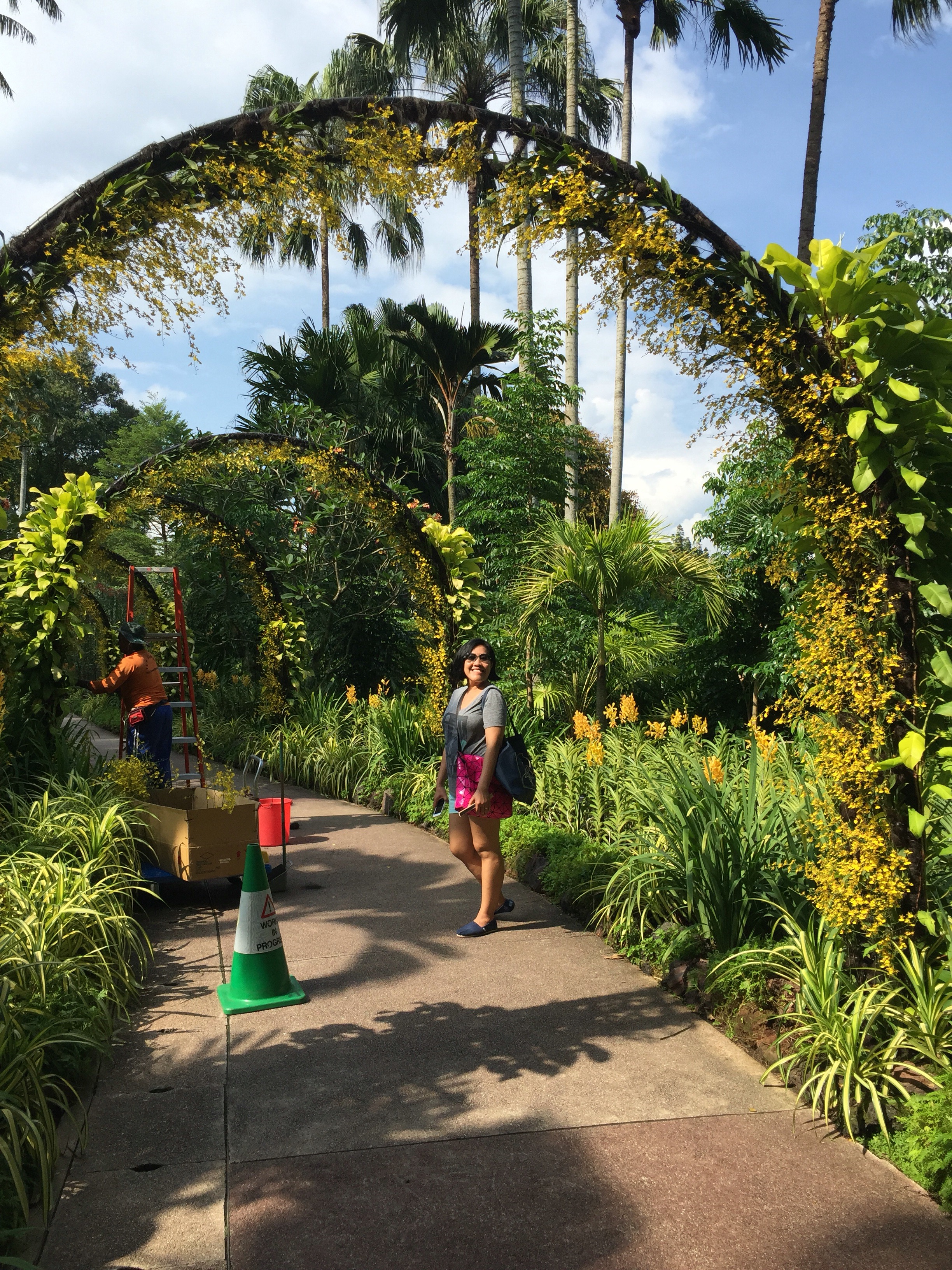
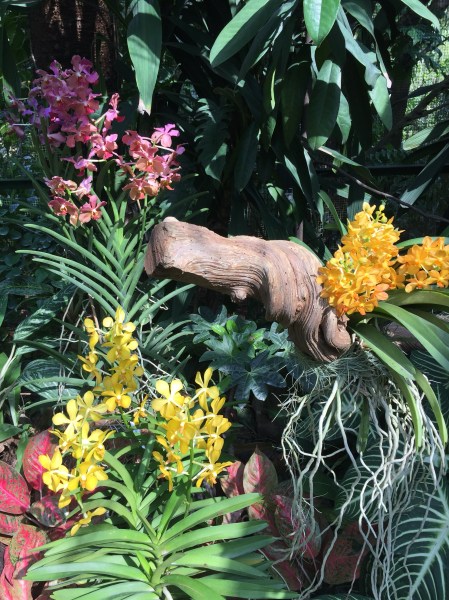
 That’s not a typo – ‘botanic,’ not ‘botanical.’ Less like an American botanical garden, which are rather like educational centers or nature museums, this was more like Rock Creek Park – a huge, public park for walks, jogs, exercise, and picnics. Only tropical. I say Rock Creek rather than Central Park, because it is sprawling, irregular, and a touch wild.

In case you hadn’t gathered, we spent a couple of days in Singapore – just a two hour trip from Thailand – and I’ll probably have more to write. But it may be a bit fragmented. I’m writing this at the airport (though the lack of internet means it will be posted later), but I suspect later ones (and much of what I write about this trip to the east) will transcriptions of haphazard notes that will make only partial sense.

Reading At Work


 I don’t read (except, infrequently, at lunch) at my regular job as minister of propaganda. However, I have a second job working for my better half, usually as a cashier/salesperson. On many such occasions, I read very nearly whatever I want and have recently been reading Remembrance of Things Past at Eastern Market. But lately, I have been at the Downtown DC Holiday Market and it is markedly more busy. It’s not impossible to read, but it is not conducive to the languorous hypnotism of Proust.

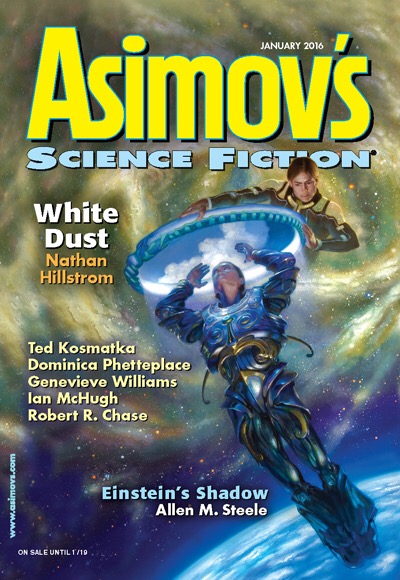
What turned out to be nearly perfect was the January 2016 edition of Asimov’s Science Fiction.

The big three of scifi are all owned by the same parent company: Analog Science Fiction and Fact, Asimov’s Science Fiction, and Magazine of Fantasy and Science Fiction. The last is thicker, but also a little more expensive, whereas the middle is so affordable as to be practically a negligible expense and is also named after the greatest science fiction writer of the last century (yes, I know we wasn’t actually a good writer, but he was so influential, especially in using hard science, that we have to give him his due), so the choice is easy. There are other magazines, like Lightspeed and Interzone, but they are but so easily found at my local bookstore.

So this edition was very, very good. Good writing, good ideas, good stories. One weak story near the end and there was a historicalish novella about Einstein that simply didn’t capture me and which I didn’t finish, overall, this boded well for the future of the genre.