Derrick Weston Brown’s “Wisdom Teeth”


Busboys and Poets featured a reading by their poet-in-residence Derrick Weston Brown in honor of his first collection of poetry, Wisdom Teeth.

I had not heard Brown before the reading. I never went to the open mics nor the slams he hosted. In fact, when I looked online for some of his poems, I felt pretty sure that I would not like his writing.

Much of the reason for this is cultural differences – differences at least partly resulting from race. I am white. I was raised by white people who primarily inculcated me in the cultural specifics white American and Anglo-European culture. The culture of the poetry at Busboys and Poets is inextricably tied to Washington, DC’s African-American history and culture.

The disconnect for me is that, for me, poetry is always most deeply informed by the written word. By the physical page and appearance of the words upon it (my parents each spent much of my childhood reading in silence, especially during difficult or upsetting times, and this made my ties to the written word almost unavoidable). Slam poetry, hip hop inflected poetry – these are forms more deeply informed by the oral word.

But…

Once I was able to flip through Wisdom Teeth, I loved it. Really loved it.

Brown’s poetry is still intimately and predominantly informed by oral culture, but also by the formal techniques of the written word. A series of poems near the beginning about a group of slaves in the American south is especially affecting in its combining of colloquial language and oral traditions with the contemporary forms of written poetry.

Of course, now the question becomes, do I like his poetry only because it touches on the poetic traditions of “my” (read: white, European) culture?

Such tricky ethical, philosophical, and sociological questions aside, check out Wisdom Teeth.

How to Celebrate National Poetry Month


The poet Kim Rosen suggested (among other things) making thirty copies of poem you, in particular, love. Then, to read that poem to someone in your life and hand them a copy.

It’s a wonderful idea, though I will probably never do it (I am too non-confrontational, too uncomfortable with salesmanship). I like it because it gives the people who receive it a very manageable way to enter into the world of poetry and forces them to look at it and try to understand and appreciate. They are forced to this because they know that this poem is uniquely meaningful to the giver.

Should someone actually attempt this, I would hope that it would not just be something by Robert Frost or a sonnet by Shakespeare, but something that digs down deeper into the world of poetry.

And now that I have pondered this further, I think I will do it. I will bring a copy of a poem by Cavafy to my Dungeons & Dragons group (I named my character after him, so the idea of a poem by Cavafy will have some meaning for my compatriots) and maybe even embarrass my significant other by handing some out to her fellow vendors at Eastern Market. Or maybe I will forget or lose my nerve and not do it after all.

Though for me, National Poetry Month is something to be celebrated, however flawed, others see the flaws as far outweighing whatever positives may exist.

Charles Bernstein, for example, is very put out by the whole spectacle. I cannot disagree with his arguments, either. He posits that NPM (National Poetry Month) becomes a means to promulgate the safest and most milquetoast poems. Even worse, that the Poetry Foundation (which is behind NPM) does not actually promote poems and poets during April, but merely the idea of poetry. In general, the critique is well worth reading and I suggest you click on it and read.

Nonetheless, though I tend to agree with every word Bernstein writes in that article, I still treasure NPM. Not because the Poetry Foundation takes out full page ads, filled with the names of their sponsors rather than poems and poets. But because of what people unaffiliated with them do with it. Independent bookstores rush to bring in poets for readings. Even the big chain bookstores will have enterprising managers put books of poetry on the tables near the entrance. So what if the books in question are by Billy Collins or (heaven forfend) Jewel. It’s still poetry. People like me make a conscious effort to support poetry even more than usual this month. Isn’t that worth something? No one loves NPM for what the establishment does with it, but what individual people, libraries, teachers, students, and bookstore managers do with it.

I myself will not do as much with it as I should. But damn it, I will celebrate it.

How I’m Celebrating April


April is National Poetry Month, but frankly, you should already have known that. Certainly, you should be thinking of how you will be supporting poetry in your community.

I took advantage of my local Borders closing to purchase Robert Hass’ collection Time and Materials. I figured that I would bring it when he reads on May 21. Things are a little tight, so this may be my sole poetry purchase for the month (or maybe not – I’ve got some Barnes & Noble gift cards I haven’t tapped out yet, plus store credit at my favorite local used bookstore, Capitol Hill Books).

Naomi Shihab Nye is reading at the Folger in a week and I don’t like to miss those – especially during National Poetry Month. The next day, Language Poet Kit Robinson is reading at Bridge Street Books. To be quite honest, if it’s a choice between the two, I would probably prioritize Kit Robinson.

Maybe I’ll use my B&N gift card to pick up something by Nye (since Robinson is reading at Bridge Street Books, it seems downright shameful to show up with a book purchased at a chain bookstore). While it won’t help me support either of these poets, I could check the nifty poetry room at Capitol Hill Books and trade in my credit for something poetic.

Analysis of E-Book Consumption


Someone did a(n imperfect) analysis of the states and their consumption of e-books. They compiled Smashwords e-book sales data from Barnes & Noble from December 2010 through March 2011. This is, of course, a limited and limiting sample, using a single e-book publisher and only looking at sales on one e-book device (of course, that’s my device – the Nook), presumably because the Kindle doesn’t support Smashwords books.

They put together two charts. The first is basically useless. It measures what percentage of total e-book sales take place in each state. Unsurprisingly, the four states with the greatest percentage are… the four states with the largest population (Texas, California, New York, and Florida).

The second chart puts together a list of per capita e-book consumption, which could actually tell us something. The first four states are among the most rural and sparsely populated in America (Alaska, North Dakota, Utah, and Wyoming). States where visits to a bookstore could become problematic.

My own “state” of Washington, DC is actually dead last in the per capita sale of Smashwords e-books. Again, despite my own ownership of a Nook, I can understand this. DC is just chock full of bookstores – Politics & Prose, Busboys & Poets, at least two Barnes & Nobles (and we used to have two Borders), Second Story Books, Capitol Hill Books, Bridgestreet Books, Kramerbooks & Afterwords… In other words, there’s no lack of access to bookstores in this town.

Oddly (or not – the state does have some great independent bookstores), California, the home of Silicon Valley and much of nation’s tech industry, ranked next to last.

Feeling Better Every Day


I had some fairly major surgery on February 2nd. While the first week afterwards was more than a little scary and frustrating, it’s been amazing how much better I feel. I need less sleep, I don’t feel tired all the time. One of my favorite diversions is walking. Not necessarily for exercise, but as more of a meditative activity. Before the surgery, I was still walking but not more than half a mile a day. Now, I’m walking two miles more on a regular basis. And even though I get tired after walking a particularly long ways (more than five miles on one day – though not all during the same outing), it’s a different kind of tired. Before, I would feel a kind of bone tired, numbing exhaustion. Now, it’s the normal muscle fatigue. The difference may sound academic, but doesn’t feel that way to me.

A benefit more relevant to this blog is that I am able to read and write again. While ill and early in my recovery, it was impossible to concentrate long enough to read more than a few pages at time. Similarly, I was almost completely unable to write poetry or fiction. Now, the both these favored activities are slowly returning to me.

Not the Best Coffee Anymore


I was thinking about my recent post about Pound, a new coffeehouse on the Hill. In particular, about the comparison with Peregrine Espresso. I have to admit something. It’s hard to admit and not something I like to talk about.

Peregrine‘s coffee isn’t as good as it used to be. It’s better than Waffle House or Denny’s or IHOP. But it’s otherwise no better than your average coffeehouse (though I’m talking about coffeehouses that do spend some time on their coffee; not the kind that primarily function as a gathering place for budding anarchists). Their cappucinos (I don’t normally drink lattes) are still the best around, but I’m not sure their coffee is still worth an extra trip. Or rather, I’m more likely to go a little ways down the street to either Pound or Port City Java.

Bach’s Birthday


Johann Sebastian Bach was born on March 21, 1685, so his birthday has already past. Fortunately, Classical WETA in Washington, DC (90.9) has been celebrating all month long. Sadly though, March is almost over. I’ve loved being able to turn on the radio in the car and know that there is a darn good chance of being able to hear some baroque (generally, my favorite period of classical music – love me some harpsichord).

On a vaguely related note, coming up on April 17, the Folger Shakespeare Library is celebrating Shakespeare’s Birthday and for the last three years WETA has sponsored the event and a brass quartet representing the station has played in one of the book rooms.

It’s also a great event for kids (I brought friend’s daughter last year).

Oh, and my father’s birthday is coming up, too.

New Coffeehouse on the Hill: Pound


While my better half was away doing real work, I took the opportunity to head up to Pound, a new hipster coffeehouse on Pennsylvania Avenue. While the coffee is not nearly as good as that at Peregrine Espresso, the ambiance is certainly more inviting to sitting down and staying for a while (though this may be a bad thing for the long term financial prospects of Pound; Peregrine’s ability to get someone inside, make them a great cup of coffee, and then get them out the door is certainly a recipe for better financial turnover). I brought my laptop with me, but the wireless at Pound was password protected and I felt too embarrassed to get up and ask what the password is. Of course, it might not even be available to the public. They don’t have cash registers or credit machines, just iPads and Squares to calculate tax and run credit cards. Certainly they’d want that running on a secure network.

Anyway…

The place manages to be bright and airy without sacrificing the dim and cramped vibe one expects from a coffeehouse. I know the first adjectives are pretty much entirely in contradiction to the second two, but I stand by my statement. If you are suffering from some sort of brain lock from that, pick up a copy of Kant’s Critique of Practical Reason and read until he starts talking about antinomial thought and then come back and complain to me if you still don’t understand, but keep in mind, I will be quizzing you about the book, so make sure you’ve really read it and made a good faith effort to understand what Kant is trying to say. And also keep in mind that I could just tell you that Critique of Practical Reason is part of a philosophical trilogy and insist that you read the first book, Critique of Pure Reason, and call me back in two weeks. This is all for your own good. If you can’t be bothered to read canonical works of western thought before pissing and moaning about me holding two seemingly contradictory beliefs (bright, airy – dim, cramped), then I’m not sure I can be bothered to listen to your small minded complaints.

Pound also has a small but interesting menu. I haven’t eaten anything yet, but they seem to be trying to focus on just a few things, so there’s more chance they’ll get it right than if they tried to cram the supplies to run a full kitchen in their narrow space.

So Pound basically gets a conditional thumbs up from me. I’ll bring a book here and notebook here every so often and settle down for a while, though until I (or they) figure out a way to get me some free wireless, I won’t be bringing my work here on regular basis to have lunch or a snack and a large coffee. And if all I want is a really good cup of coffee and to get back home or wherever I’m going, I’ll still go to Peregine.

Mary Karr’s Reading – Was I Unfair?


Sandra Beasley responded to my criticism of Mary Karr’s appearance. It made me wonder if I had been too harsh. Specifically, whether my own take down of  Karr was any different from her take down of Armantrout?

Perhaps it was. Part of my response was purely literary. I found her poetry to be quotidian and uninspiring (though isn’t saying that a repeat of the same behavior by her that angered me and the same behavior by me that has caused me to question my judgment?).

I think a lot of my frustration was caused by how much I enjoyed listening to Van Clief-Stefanon’s poetry and her remarks and how much a very little of Karr goes a long way – and there was a lot of Karr relative to Van Clief-Stefanon.

So, in short, my attempt to re-evaluate whether I was fair or not to Karr has resulted in me basically repeating all my complaints. Not really a successful effort after all.

In an effort to make up for that failure, let me end by suggesting that, at the very least, many (or most or all) of my criticisms of Mary Karr could quite fairly be directed at me.

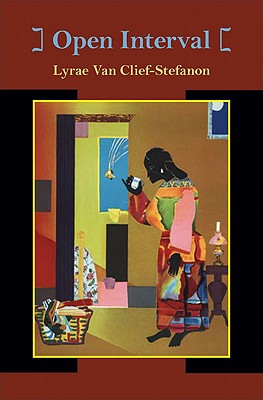
Poetry Review: Lyrae Van Clief-Stefanon’s “]Open Interval[“


Lyrae Van Clief-Stefanon’s reading at the Folger Shakespeare Library was wonderfully done, but also read beautifully on the page. With the rise of performance poetry, slam poetry and the like, we have seen the rise of poetry that doesn’t hold up well on the written page (if you don’t believe me, take a song and write it out  on a page and see if it’s as good on paper as it is being performed; chances are, unless you decided to write out a Leonard Cohen song, it’s looks like a poor piece of poetry when written out, however beautiful it was when sung).

While at that reading, I purchased her most recent collection, ]Open Interval[.

One of the poems she read was called “Bop: The North Star.” Reading it on the page, it was far more complex and rich than the reading implied. Lots of formal play and grammatical games. For example, check out the last stanza:

At the prison at Auburn I cross the yard. Inmates whet tongues against
my body: cement–sculpted–: poised for hate–: pitch
compliments like coins:–(wade)–their silver slickening–(in the water)–:
uncollected change. A guard asks Think they’re beautiful? Just wait
til they’re out here stabbing each other.
Oh, Harriet, the stars

throw down shanks–: teach the sonnet’s a cell–: now try to escape–

Read it out loud and you can hear how it might read gorgeously. But also compare that to the written word and notice what a purely oral transmission might miss.

I have loved these sorts of grammatical ever since I discovered Adrienne Rich in high school and noticed the way she would bring the reader to a startling halt by putting an extended break (ten spaces or so) within a line. The strategy would stop a reader even more than a simple line break.

Van Clief-Stefanon also recognizes the power of this sort of play to force the reader to stop and think, but never at the expense of a readable, enjoyable line or poem. Again, the comparison to her reading compatriot, the memoirist cum poet, Mary Karr, and her formally simple, narrative poems works strongly in Van Clief-Stefanon’s favor.