Tabletop Letterpress


I spent my Sunday last the Pyramid Atlantic Art Center in Silver Spring, Maryland taking a class on how to use to tabletop letterpress.

The machinery used in this session was about the size suited to print stationery, business cards, or the like. While it would be possible to print your own, modern day Thomas Paine cri-de-coeur, I wouldn’t suggest it.

Nonetheless, it was very enjoyable. I even enjoyed to slow process of setting the little metal type in place, row after row of them (actually, just five rows – but it was still quite laborious).

Of course, I lack any real artistic talent, besides (arguably) literary. What that means is that the visual arts potential of the letterpress is wasted on me. I can appreciate it, but I lack to eye to reproduce it myself.

For me, the pleasure of the letterpress is in it being another expression of personal anachronism – like my manual typewriter and fountain pen.

That said, I may go back and try again, though it would take an awfully long time to do an essay or a longer poem in one of them.


Poetry East


I know that I’ve been slacking on my Cantos, but in my defense (and isn’t there always an excuse?), I just started a new job doing communications for a labor union, I am writing a review for my good friends at Literatured, and have been trying to remedy some backwardness on writing a review of a book by a Washington, DC area poet. Also, please notice that I have not abandoned the Oxford Comma, though Oxford itself may have. Suck it.

But it is lunchtime and I do have a few spare minutes, so let me promote a truly awesome poetry magazine, Poetry East. I’m working off of a small sample size (one, to be precise – the Spring 2011 issue), but was instantly blown away.

The magazine is associated with DePaul University in Illinois and one can assume is part of the rich cultural and literary heritage of Chicago.

I was in a Barnes and Noble at the Christiana Mall in Delaware, with a gift card burning a hole in my pocket. I picked up a copy of Tony Judt’s devastating jeremiad, Ill Fares the Land (read it, weep, and then commit yourself to changing this country), which I already knew I was going to do. But I always make a point of browsing through the literary magazines.

And that’s when I saw Poetry East. No commentary. No reviews. Just page after page of poems. Translations. New poems. Poems by well known names like A.R. Ammons. Poems by poets I had never heard of before. But poem after poem.

Nothing hackneyed (not even the one by Billy Collins!). Many touched by the influence of twentieth century European avant-gardists (there was even a translation of a Bertolt Brecht poem). And in case you haven’t noticed, that is my favorite influence (shout out to brother surrealists Eluard, Char, and Desnos! rest in peace).

Now that I’m working regularly, I may even indulge in a subscription to this one.

‘Paroles’ and ‘Men in the Off Hours’


While digging through some old books while visiting the family in Florida, I came across two poetry collections that hold particular places in my personal archaeologies.

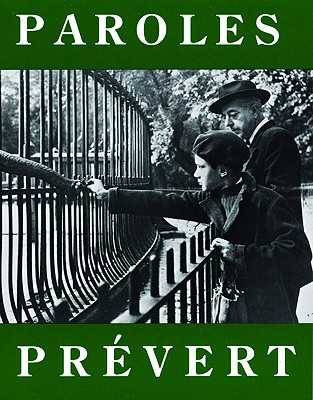
The first is Jacques Prévert’s Paroles.

The second is Anne Carson’s Men in the Off Hours.

I purchased the first towards the end of the nineties. I was attracted to the idea of the book… to its history… as much as to its actual poetry.

This edition was translated by Beat godfather and proto-Beat poet Lawrence Ferlinghetti and was published by his own press, City Light Books.

Paroles struck a chord with the young people who lived through Pétain, the Occupaion, la Resistance, even though Prévert, who was born in 1900, was part of an earlier generation. The book sold hundreds of thousands of copies.

For me the early nineties was a special moment. The economy sucked, but I was discovering poets like Adrienne Rich and Ezra Pound. We gathered in homes and at scruffy coffeehouses and read from notebooks and cheap printouts of our original (though frequently derivative poems), we drank coffee and parsed the finer points of Marxian philosophy, and we read so damn much. Unsurprisingly, these were the days before the internet was much of anything and thirty channels of television seemed like a lot.

Reading about Paroles reminded me that maybe we were part of a longer literary tradition of young people running heedlessly towards poetry for understanding and solidarity.

The poems themselves are heavily tinged with Existentialism, Surrealism and Symbolism. They are not spectacular, but I can easily see the attraction of theses stanzas.

The second collection, Men in the Off Hours, I found in 2001 in a Books-A-Million on Dupont Circle (it’s still there). I don’t know why it struck me. I had already picked out Beauvoir’s novel, The Mandarins. I didn’t need another book. At least not on that day.

Carson’s combination of classicism and contemporary media – imagining television interviews about or of Lazarus and Antonin Artaud. Poems about the works of painter Edward Hopper combined with quotes from Saint Augustine’s Confessions.

This book mattered because Carson has since gone on to become my favorite poet.
Boskovic Out for the Season


Branco Boskovic, after finally starting to round into form, is out – almost certainly for the season – with a left ACL tear. That’s a minimum of six months out.

Though he was starting to earn his keep, I wouldn’t be surprised if the Montenegrin was on his way back to the Balkans next season. He just wasn’t producing enough to justify his salary.

But this still leaves the question of where the creativity will come from.

Fortunately, Coach Olsen is no longer pushing Dax McCarty forward into the playmaker role, which is a plus. And left midfielder Chris Pontius is really starting to show his stuff. His off the ball movement (what one does without the ball is as important as what one does with it; it’s when you don’t have the ball that you slip into dangerous positions to receive the ball and force opposing players to take their eye off the ball to keep an eye on you) is looking very good. On the opposite wing, teenager Andy Najar has reclaimed his spot on the right side of midfield from Quaranta (who is playing more centrally now).

There’s nothing wrong with a traditional 4-4-2, where most of the chance creation comes from the work of the players on the wings – as long as you have the players to pull it off. For now, it looks like DC United might.

Of course, their record is still mediocre, at best (3 wins, 4 draws, 3 losses), but if they’re finally finding their best offense shape and players, that’s a start.

Now if we could only fix the defense…

Used Books


The annual Flower Mart was taking place at the National Cathedral the other weekend. A wonderful used book sale was also taking place on the Cathedral grounds underneath a long tent.

I found some lovely books and LPs, though I missed out on an anthology of stories by John Campbell, better known as the editor of Astounding Stories, where he ushered in the Golden Age of Science Fiction,  publishing early stories by Isaac Asimov, Ray Bradbury, A.E. Van Vogt, Robert Heinlein, and Andre Norton. I would even go so far as to say that Campbell was the Maxwell Perkins of sci fi – driving his writers in the direction of more and better characterization and hard science. Of course, after the Golden Age era of the late thirties and the forties, both he and the magazine he edited became better known for crackpot conservatism, new age-y hocus pocus, and a racism that was both weirdly expressed and unforgivable.

What I did pick up included Virgil, Jorie Graham, Otto Rank, and Goethe; along with vinyl records including a Glenn Gould performance of Bach’s The Well Tempered Clavier and Leonard Bernstein conducted performances of Mahler and Beethoven (which, much like reading Heidegger on Nietzsche, one listens to more for Bernstein’s vision than the composer’s).

Will I live to see the day come when printed books, like vinyl, are only available used? Or else in limited release, deliberately anachronistic editions that merely supplement the work in some other form (like REM’s orange tinted vinyl pressed single of Orange Crush, released to help generate buzz for the album on which it appeared, Green)?

After all, I am still old enough to faintly remember the days before cassette tapes fully replaced vinyl LPs.

In such an event, it becomes to easy to envision one’s self as a cantankerous old recluse, surrounded by the detritus of a dead age: manual typewriters with each ribbon wrung dry of the last particle of ink before being replaced, fountain pens, mouldering books with brittle pages, and vinyl records etched by time with deep scratches, skips, and crackles.

Specialty Bookshops


One of the great tragedies of the seeming decline of brick and mortar independent bookstores is that one of the casualties is the specialty bookseller. Already, LGBT bookstores have almost disappeared (I wonder if the one that used to exist just a few blocks from my home in Midtown Atlanta is still extant?).

Like the Bodhi Tree in LA, these specialized bookstores take you far beyond your pre-existing knowledge of an area and expose you to a far end of publishing “long tail.”

This came up because I was browsing the selections of the surprisingly extensive bookstore beneath the National Cathedral in Washington, DC. Religious history, theology, social justice, art history, meditations and prayers – all books I would likely never have happened upon in Barnes and Noble.

W.S. Merwin at the Library of Congress


As his last official act as our nation’s Poet Laureate, W.S. Merwin read at the Library of Congress (inside the Thomas Jefferson building – the beautiful one, not its sterile and practical siblings).

Though I still have doubts about his poetry and his appointment as Laureate, I enjoyed his opening remarks greatly. He remains dedicated, in both his life and work, to the style of eco-poetics developed early in his career. The Lice is still the best collection of eco-poetry out there. Unfortunately, that was published in 1969 and it feels like he’s been imitating himself ever since (except for his follow up to The Lice, called Carrier of Ladders, which is a great work of political, anti-war poetry).

In person, Merwin is a small man with a thick white comb over and voice that was both clear and quavering. His opening remarks were pleasantly political and he attributed to Thomas Jefferson a wonderful quote, “The only excuse for government is the good of governed,” which came as a rebuttal to the knee jerk small government rhetoric which is so uncritically spouted by so many these days.

The poetry he read was good, but as I suggested before, three quarters of the poems he read sounded too much like each other. I also felt an urge to grab him by the collar and shout, “Yes, we get it, you live in a tropical paradise in Hawaii and your life is so super awesome compared to ours.”

I brought a copy of Flower & Hand to be signed. Merwin generously spoke to everyone in line. Unfortunately, the line was incredibly long and it took me more than ninety minutes to reach him (I was one of the first folks to line up) because he spent so much time with everyone who walked up. While very considerate in many ways, not so muc.h in other ways

Branko Boskovic Gets His Shot


Though he recently hobbled off the field with an injury, as I had hoped, has been getting more and more minutes and he has managed to strut his stuff. Most obviously, he’s provided a much better option than Dax McCarty on set pieces. But he’s also given the team those flashes of unpredictably and creativity.

The players most able to change a game, in terms of the offense, have a tendency to disappear in games. Zinedine Zidane, who could sometimes be omnipresent in a game, but who could also be utterly useless for 89 minutes and then, in a single flash of inspiration, make the most utterly transcendent pass that split the opposition’s defenders in absolute futility, leaving a teammate freely able to bury the ball in the back of the net. Similarly, the great Brasileno striker Ronaldo could be lazy and ineffectual for almost an entire game, leaving his team with effectively only ten players, instead of eleven; then suddenly he would peel off the shoulder of his marker, flip the ball over another defender and chip the ball over the goalkeeper with shameless cheek to win the game.

Boskovic is neither a Zidane nor a Ronaldo. But the best teams need that player who cannot be counted out because he will try the most surprising and unexpected plays without warning to break down a formerly stubbornly impenetrable offense.

Myself, I will always remember my  hometown Tampa Mutiny and the great Carlos “El Pibe” Valderrama, the best player to have ever graced Major League Soccer. Valderrama was a difficult player, in many ways. You had to build the team’s style entirely around him or else watch everything fall apart. And sometimes, he just wouldn’t show up, figuratively speaking. But then other times, he would work magic.

I don’t even say that Boskovic is Valderrama (in truth, he was unique – the only player that compares to him in style is the Argentina’s Juan Roman Riquelme). But I will enjoy watching United so much more if they have that ability to startle, which right now only the striker Charlie Davies’ brings – and he needs a good midfield creator to serve up those chances to him (did I mention that Zidane and Ronaldo played together in Madrid?).

Watching “Atlas Shrugged: Part I”


I dragged Mu with me to catch a Monday afternoon matinée of that Tea Party monstrosity: Atlas Shrugged, Part I.

And it was every bit as famously and hilariously bad as we had been led to believe.

It followed the events of the book (at least the first third of it, for this is a trilogy) with exacting, religious devotion (taking into account that the action was moved from the fifties to the year 2016 – not coincidentally, I imagine, coinciding with the end of Obama’s second term). This devotion extends so far as to turn Ayn Rand’s embarrassingly awful literary sex scenes into embarrassingly awful cinematic sex scenes. In fact, the sex is so awful to behold that you might almost suspect it of being self-conscious parody were the filmmakers not obviously being so painfully earnest.

I don’t (or shouldn’t) need to tell you about Atlas Shrugged‘s (the novel and the movie) painful didacticism and ridiculously constructed straw men nor how the first quality makes for a turgid novel and how the second makes for a poor excuse for “philosophy.”

What I do want to tell you is my dream, wherein Atlas Shrugged turns into a midnight movie cult classic, with people shouting something or doing shots whenever some painfully unrealistic villain appears or when the people on screen are pouring themselves a drink (the world of Atlas Shrugged: The Movie is filled with people who drink so much alcohol [mainly what is supposed to expensive looking scotch] that you’d think the ghost of Hunter Thompson had helped write the stage directions).

Some small part of this dream came true as one of our fellow moviegoers (there only five or six of us) was constantly laughing or exclaiming “Who is John Galt.” I can’t be sure whether he was a liberal parodying the ripe for parody dialogue or whether he was a true Tea Partier expressing his deep appreciation for all that grand, Randian genius on screen. Either way, he acted like a brilliantly senile Greek chorus to the proceedings. Mu was not amused, but I felt he added a real touch of meta to the experience.

Borders Restructuring


Supposedly, Borders needs $50 million in additional financing to emerge from its restructuring – and this in addition to the $505 million “debtor in possession” loan they already have access to. Their fear is that, following closing over a third of their stores, their annual sales will drop to half of what it was just two years ago (has the ebook revolution really moved so quickly?).

It’s been almost a week since I gave up on Borders and my anger is starting to fade. I still hope they succeed in surviving and I will still browse their shelves and even sometimes purchase something  from them when I find myself near one (which happens fairly often; my better half often shops for business supplies next to a Borders and I often drive her there, which means I meander over to see what’s new on their poetry shelf).