Kramerbooks, one of DC’s many fine independent bookstores, was perused by President Obama last Saturday.
He shopped there explicitly in support of small businesses. Good for him.
Kramerbooks, one of DC’s many fine independent bookstores, was perused by President Obama last Saturday.
He shopped there explicitly in support of small businesses. Good for him.
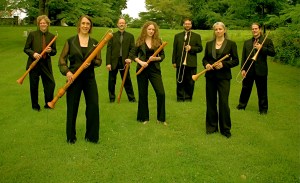 You still have a few days left to catch a performance of O Magnum Mysterium at the Folger.
The collaboration between singers Roger Isaacs, Rosa Lamoreaux, François Loup, William Sharp, and Aaron Sheehan, and instrumentalist Joseph Gascho and the hilariously named ‘Piffaro the Renaissance Band’ was surprisingly great fun.
The use of period instruments was both enlightening and entertaining and the obvious joy the performers took in the music was wonderful. The way they bobbed and swayed to some of the music could have fooled you into thinking they were playing the latest catchy song on the radio, rather Spanish music from the 1500s.
All in all, a welcome respite from the hurly burly goings on at work and the sadness of the news of George Whitman’s death.
There are not one but two different Warhol exhibitions in DC right now.
And both can be seen for free.
One is at the Hirschorn Museum and the other at the National Gallery of Art.
And here is an article blaming Andy Warhol for excesses in the contemporary art market. Just thought I’d throw that in there.

Last night was the last Folger poetry event of the year (though only half way through the season).
The raison d’etre was the upcoming birthday of Emily Dickinson. The reader was the poet Aracelis Girmay, who interspersed readings from her own work with poems and letters by Dickinson. Afterwards, there was a delicious black cake, made according to Dickinson’s own recipe (very rich, with a strong flavor or brandy, and pleasantly and slightly gooey).
Girmay is not a particularly good reader. She rushes too much sometimes, too many ‘ums’ and the like, but her clear enthusiasm, especially her enthusiasm for Emily Dickinson, carried her past those faults. Passion goes a very long way. Plus, she came across as very sincere and generous.
After her reading, there was a conversation moderated by Alice Quinn, the executive director of the Poetry Society of America.
I say ‘moderated,’ but actually, something more than half of the ‘conversation’ was a monologue by Quinn. While I appreciate her passion for Dickinson and her appreciation for what a Ms. Susan Howe has written about Dickinson, I was under the impression that the whole point was hear was Girmay had to say about Dickinson and her own work and also to take audience questions. But, hey, what do I know?
While I believe Quinn’s intentions were genuine and that she just caught up in the opportunity to rave about a much beloved poet who has been of great importance to many women poets, in particular, the effect was of someone who wanted to lecture and show off her own erudition, rather than do anything like moderate a conversation.
I purchased Girmay’s Kingdom Animalia before the reading started from the Folger’s bookshop. I was very impressed by just a casual glance at her work and have been more impressed as I have read more. She isn’t someone I had read before, though her name has come up frequently when following the doings and goings on of poetry.
I was also fortunate enough to be the first in line to get my book signed and so got a bit more time with her than I otherwise might have and she was just as generous and sincere sounding one on one as she was on the stage.
She is definitely a poet I might recommend to a parent who has an adolescent child interested in poetry. Understandable and clear, but not lacking in formal or thematic complexity, I could see it as the kind of thing that might act as a bridge for a sixteen year old, would be poet, connecting him or her to contemporary, ‘grown up’ poetry.
The list (check it out here) seems more driven by a city’s current ‘literary vibe.’ Washington, DC makes the list based more on the presence of the Library of Congress as a resource for the literary minded than on any history of literature within the city. Similarly, Portland gets in for its aura of cultural and literary hipness and for the presence of the sprawling, iconic Powell’s Books.
And I’m not arguing with those decisions. If you want to live in a literary city, surely you want to live in one where the culture of the written word is alive rather than mostly entombed in the past?
In this case, it is not a comment about Mitt Romney’s moral center, but rather refers to the Shakespeare play by that name. Which I saw last night. At the Shakespeare Theatre Company.
I bought the tickets a while back and took with me my friend, the punk rock pixie girl.
The setting was pre-revolutionary Cuba, which worked fine in most ways. “Messina,” like most Italian locations in Shakespeare, were not real. To my knowledge, he walked on a single speck of Italian dirt. Italy was just a stand in for “passionate, hot blooded, and exotic.” And, just like the Caribbean today, it stands in for a more relaxing, easy going environment.
The use of a faux Spanish accent by a handful of characters was disturbing, especially since the only male characters to utilize it were an African-American and a couple of bit part characters playing variations on Speedy Gonzalez’s slow and lazy cousin, that the female who used it was doing a lusty, raunchy, latina thing – so a touch of racial stereotyping, to my ears. Especially when the major players did not use a Spanish accent.
But otherwise, the appearance of an occasional Cuban flag, dropping “Havana” into conversation, and some Cuban style music (plus, the watchmen singing Guantanamera) was just fine.
Having never seen a production on the stage before, my main point of comparison was Kenneth Branagh’s movie of the play.
Like the movie, when Don Pedro jokingly proposes to Beatrice, you can hear that he’s not really joking, just trying to protect his dignity in the (likely) event of ‘no.’
And, at first, I felt that Don John was channeling Keanu Reeve’s reprehensible performance, but then also saw that whoever plays Don John is really given very little work with.
Though the plot is ostensibly about the ups and downs Claudio and Hero’s love/wedding, the main characters are actually Benedict and Beatrice.
I remember that Branagh played Benedict as a bit of fool, but here, he is played much less the fool and much more the world weary wit. And the affection that underlays his back and forth with Beatrice is visible even before other characters plot to bring them together, which makes their eventual coming together more real, more mature and much more a marriage of equals.
Which also puts the Claudio/Hero romance in a poor light. They look young and callow in comparison. This isn’t a bad thing – Shakespeare, in this play, really does show the difference between youthful, moody, crushes and two people who come together as much over a union of mind and nature as over each other’s good looks.
Fortunately, Benedict and Beatrice (Benedict, in particular) were the stronger actors.
I have been reading (and am nearly finished with) A Canticle for Leibowitz by Walter Miller. It’s been on my list for a while as one of the classics of the sci fi genre and as a book which has reached a bit beyond genre writing and touching onto ‘literature’ (not that I’m opening a discussion of that issue right now). I think I found it at a library sale or maybe it was at my neighborhood used bookstore.
While I was on the metro the other day, reading Canticle, a man, sitting perhaps ten feet away, asked me if I was indeed reading A Canticle for Leibowitz. He was a white man, in his fifties or sixties. I was struck by the fact that he reached across a fairly significant social space. It is not terribly uncommon on the metro for the person sitting next you (the seats are arranged in pairs) to comment on or ask about the book you are reading. But he was in a different social space and it is very uncommon to interact with someone on the metro at that distance.
Another day, not long after, I was reading it while waiting for some laundry to dry and another white man (I don’t know if his race is significant, but I’m just noting the similarities) in fifties or sixties walked over to tell me what a great book it is and also mentioned a radio teleplay done of it in the seventies.
Though a small sample size, I am very much struck by how these two men felt strongly enough about the book to approach a stranger and, in one case, push the envelope of social convention to make contact.
I am now wondering if A Canticle for Leibowitz is not some sort of shibboleth – a secret code to identify some fellow traveler on a road deeply loved. Having noted their age and race, I also wonder if this book isn’t also something that had an effect I am not aware of on people who read it in the sixties or seventies (when sci fi would have been primarily, though by no means exclusively, read by white males), such that it stuck with them for decades after?
The prophecy of the end of Starbucks.
Actually, it’s more about the rise of a new kind of coffee snob. And there’s little doubt that Starbucks, as a legitimate place to get good coffee, is on the decline. I’m not saying that they’re going anywhere, but the used to have a certain cachet. Yes, you knew you were walking into a national chain, but it still had a certain air to it. Not anymore.
So I’m perfectly happy with this third wave of coffee in modern America. My favorite places – Pound and Peregrine Espresso – both take special care about where and from who they buy their beans.
Let’s hope not, but these are some unsettling numbers from the Alabama based Books-A-Million.
I actually saw and shopped at my first Books-A-Million while living in Alabama. Though it devolved from a basic, big box bookstore like a Barnes and Noble into something that sold calendars and overstocked books, they’re not all like that. There’s one on Dupont Circle here in DC. I even bought my first Anne Carson book there. But’s also right by the great indie bookstore, Kramer’s Books. Hard to compete with that. Especially when Kramer’s serves alcohol and has a bar. My friend Dzifa and I used to drink there all the time after work some ten years ago. Good times.
 the coffee philosopher