My mother-in-law was thrilled to meet the first Thai-American ever elected to Congress. She had asked if knew Ms Duckworth when she arrived here from Bangkok. I did not but she stopped by Eastern Market just in time for me to snap this picture.

My mother-in-law was thrilled to meet the first Thai-American ever elected to Congress. She had asked if knew Ms Duckworth when she arrived here from Bangkok. I did not but she stopped by Eastern Market just in time for me to snap this picture.
 Some time ago, I picked up a book at Capitol Hill Books (I can’t remember whether it was filed under theology or philosophy) on existentialist theologians (the cover design, for all you fans of those Masterpiece Mystery title sequences, is by Edward Gorey). It began with Jacques Mauritain.
I first came across his name in a book my father got my some two decades ago called Inventing the Middle Ages, a fascinating work of historiography (which also led me to read The Waning of the Middle Ages by Huizinga and a couple of others).
Mauritain was a dedicated Thomist for most of his intellectual life. Now, I can’t pretend to have read much by Aquinas and I understood not all of what little I read (though I’ve read plenty about his writings, so I understand the basics, unless everyone I’ve read who wrote about Aquinas was lying to me).
Anyway, he (we’re back to talking about Mauritain) puts a nice spin on Aquinas’ teleology, making it far more palatable.
If, like me, you were taught about Aquinas spin on Aristotle’s ‘unmoved mover,’ you were probably less than impressed. Purely philosophically, I don’t think I’m generating controversy by saying that it’s lacking.
But Mauritain is looking at things as more of a hybrid theologian/philosopher (I don’t mean that he was necessarily trained or studied theology; but that hybrid role could, perhaps, could be said of all philosophers who come at their studies from a specifically religious-minded position; also, this rather suggests that if the book wasn’t filed under theology, maybe it should have been, except the theology section is a lot more Purpose Driven Life and a lot less I and Thou). He comes at his teleological argument implicitly tolling the primacy of faith. For him, likely as it was for Saint Thomas, the ‘unmoved mover’ is not so much a way to ‘prove’ the existence of God as it a way to create a means for fellow men of faith to improve their understanding of God; not by truly ‘understanding’ God (impossible, surely?), but by rather by providing a framework to understand one’s relation to God.


Actually, DC was ranked #29 on this list of the top cities for hipsters.
While I can’t argue with the top four (Seattle, Portland, San Francisco, and the other Portland), it is complete and utter bulls–t to suggest DC has fewer hipsters and/or is less hip than Anchorage, Alaska!
No disrespect to Anchorage, but seriously?
And somehow Savannah and Charleston, too? Both cities have many, many charms, but the adoption of Brooklyn-born subcultures is not one of them.
Oh well. At least Busboys & Poets came in at #2 on the list of America’s coolest coffeehouses.
 The most recent winner of the Anthony Hecht Poetry Prize (given to a manuscript of what would be a poet’s first or second collection) is an Australian poet named Chris Andrews.
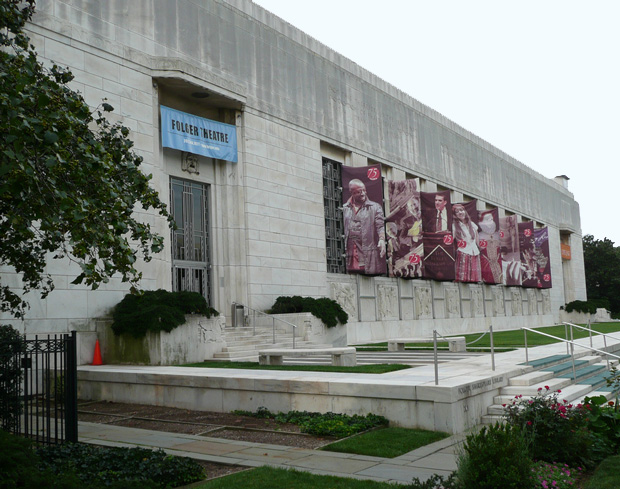
Andrews and the judge who picked him, Mark Strand, read their work at the Folger Shakespeare Library on Monday night (November 19th).
Mark Strand is not a poet I’ve read much. I don’t own any of his collections and have only read a handful of his poems in some lit mags (mainly Poetry).
Andrews, naturally, was not a poet I had read at all previous to that night.
Usually, I like to get in a little early, go to the gift shop, where they stock the available books by the featured authors, and take a look at what’s available and see which one I want. That way, I avoid the ugly line at the table they set up after the reading and don’t have to wait in line for thirty minutes to get my book signed.
For various reasons (involving a bottle of twelve year old bourbon of which I drank not a drop), I arrived at the Folger Shakespeare Library pretty close to the wire. What with there being a line to pick up my will call ticket, I was feeling a little time sensitive when I ran into the shop.
I decided to pick up Chris Andrews’ Hecht Prize-winning first book, Lime Green Chair. Mainly because I didn’t have strong feeling towards Strand (actually, I briefly confused him with Mark Doty, who have some mistrust towards because I found the Best American Poetry of [Whichever Freaking Year It Was] that he edited to be less than inspiring) and figured it was better to put my money in the hands of a new(er) poet.
Both men were good readers, though in different ways.
Andrews spent less time in chit chat than any other poet so far this year. He very nearly dove straight in and read with a quiet, but compelling voice and diction that caught a musicality in his work that I had missed when glancing through it in my seat. I seemed to catch flutterings of slant rhymes within the lines (more than half the collection consisted of unrhymed, sonnet-like pieces with a first stanza of thirteen lines and an eight line second stanza).
Strand sometimes stumbled over the words, but projected an experienced (and gently dirty-minded) humor as he mostly read from a collection of prose poems.
Probably the best combination of quality poems and quality reading since Theo Dorgan and Paula Meehan read there more than a year ago.
Anyway, I’m nearly done reading Lime Green Chair and I’ll write about it after I’ve had a chance to digest it a bit more.
Ten rules for riding public transportation from a poet.
I can enthusiastically support the first four, at least. Some of the latter ones are a mixture of illegal (at least in DC) and too England-centric.
 And the hottest new poetry scene is in… Queens.
Or Forklift, Ohio (not a real place).
Sadly, none of these places are Washington, DC or St. Petersburg, Florida.
DC is, perhaps, a little too institutional. Though it’s got a thriving visual arts scene. But the local poetry scene is very slam-centric. There is the Beltway Poetry Journal, but that’s exclusively online and I’m looking for more. I’m just not a slam person, as I’ve said before. I love poetry on the page, even when I read it aloud. Yes, there are the readings at the Folger Shakespeare Library, which I attend religiously, as well the Poet Laureate and other readings at the Library of Congress. But nothing which seems half so interesting as what’s happening elsewhere. But they – the residents of elsewhere – they feel that way too, don’t they?
And Florida is Florida. We elected Rick Scott for governor, for heaven’s sake. The man ran a company that in a very real and tangible way defrauded the taxpayers of this country for billions. You can’t write an elegy that depressingly sad.
I’m a big fan of DC United’s Chris Pontius. He’s a creative attacking player, able to play wide and also play a center forward.
I also understand why he may never get a real shot at playing for the U.S. Men’s National Team (USMNT), because we have a lot of those players.
Graham Zusi is skillful and confident in possession and if you give him half a yard of space, he can loft some beautiful, accurate balls into the box towards his fellow attackers or even get off a sweet shot himself. The much maligned Freddy Adu has that same ability to hold onto the ball and give his teammates time to get in place before he slips a pass through. Jose Torres, when he’s been played wide left, also uses that position to set the tempo.
What we don’t have much of are players who can burn you for pace. Go flying up the wing or drive towards goal with frightening speed. Really, just Brek Shea comes to mind and he’s been something of a head case for the last six months.
Donovan still has that quick first step, but that’s about creating some separation between himself and a marker, rather really than running up down for a game. At thirty, that’s not his game, not anymore.
Dempsey’s game has always been about brute force and timing, rather than speed, because he’s never been exceptionally speedy.
So Pontius will go down on the same list as Danny Pena: talented American players who rarely played for their country because, as good as they were, they weren’t what their country really needed.
They also give some shout outs to some fine bookstores, including local favorite, Bridge Street Books, and my old haunt, Skylight Books.
I’d once visited University Press Books in Berkeley (though I can’t remember what I bought there) and of course I’ve been to City Lights.
Embarrassingly, I’ve never been to Prairie Lights in Iowa City, Iowa, despite having lived in the Hawkeye state for a political cycle. On my way out of there, I stopped in Iowa City to visit former (then current) Iowa House Minority Leader, Dick Myers (great man; a little crazy, but great). It would have been a perfect opportunity to stop by Prairie Lights and pick up a literary memento, but I never did.
I’ve been carrying around a little leather bound copy of the collected poetry of John Keats. It’s a little smaller than a trade paperback (though larger than a mass market paperback). It’s a beautiful piece of art and not the sort they make anymore. Leastways, I only ever see such things for sale in used bookstores.
My mother-in-law and father-in-law have been in town and the latter and I have been spending a lot of time together.
I don’t speak much Thai and he doesn’t speak a great amount of English (though vastly more than my Thai), but we both like to get out and about and do things. We went to see some museums over the weekend (the Library of Congress’ Jefferson Building and the National Gallery of Art) and I carried that copy of Keats with me, on account of it fitting so nicely into a coat pocket and on account of it always being a good time to read good poetry. When moments presented themselves, I pulled it out, opened it to the section marked by the satiny ribbon, and read snippets of Endymion.
I do wonder that, as the e-books over take books, will books like my Keats come back? As physical books become as much objets d’art as anything else, will little, beautiful things like this come back into fashion? But will that also presage the end of something else? After all, don’t I love my collection of pulpy books, the symbol of a great error of mass publishing and also of mass reading?
 the coffee philosopher