Ross Douthat Apparently Now Believes In Big Government


That’s the only conclusion I can reach by the fact that the only people to get up and leave last Sunday when a priest at the church began to make a pitch for the Cardinal’s Appeal were led out by Ross Douthat.

The money raised from the appeal does not go to priest salaries or administration, but goes to things like homeless shelters, care for foster children, and education.

Because he left just after hearing what the priest was going to talk about, I can only assume that he has dismissed the idea of private contributions and civic/community groups taking the place of publicly funded social investments and so now supports increased spending on government social programs.

Or maybe he was just in such a hurry that he couldn’t wait sixty seconds to hear what the priest had to say.

Weekend Reading – Save The Books!


201212-w-americas-coolest-bookstores-politics-and-proseNo. Seriously. Save them.

Even the weird ones.

You can start here.

Poetry to look forward to in 2013.

Poetry and the casualization of academic labor.

“I say you have to be a visionary, make yourself a visionary. A poet makes himself a visionary through a long, boundless, and systematized disorganization of all the senses. All forms of love, of suffering, of madness; he searches himself, he exhausts within himself all poisons, and preserves their quintessences.” – Rimbaud

Booksellers’ Favorite Books


Guernica published some favorite books of 2012, as named by some independent bookstore owners.

Included in that list is Mojo, an indie book and music store in Tampa, and Atomic, which is located in Baltimore and is also the place where I bought myself a copy of Andre Breton’s Mad Love to tide me over just an our before checking myself in for surgery (though I more bought the book to tide myself over for the recovery, rather than surgery itself, for which I was thankfully, chemically knocked out).


J R by William Gaddis

J R by William Gaddis is a novel that comes recommended not just for its relevance to various financial crises and burst bubbles that have afflicted us since its publication in 1975, but for its unique style and meticulous genius that made Gaddis quintessentially representative of post-modern literature and a direct influence on an immeasurable glut of novelists to come. At over 700 pages, comprising mostly of unattributed dialogue and no chapter breaks, J R is a sometimes rather difficult and often hilarious and prophetic epic about the role of money in twentieth-century America told through a middle-school student who learns about stock and commodities trading from a field trip and builds a financial empire over his school’s payphone. Gaddis has an unmatched ear for human speech and the kind of characteristic patience that is necessary to construct tomes like this and his first novel, The Recognitions, a masterful thousand-pager about authenticity and forgery published twenty years prior. A dense and rewarding modern novel, J Ris made of the stuff that will make any hungry reader feel full.

Mojo Books & Music is located in the USF area of Tampa, FL. Mojo features a wide array of used and new books, vinyl records, cds and dvds—not to mention a serious coffee and tea bar.


Vacant Lot And Modular Chain-Link Fence Set by Gary Kachadourian

Local artist Gary Kachadourian has made a number of posters and booklets of seemingly mundane items found largely in urban areas over the years. On the surface, his projects seem like lo-fi photocopied photographs, but they are actually incredibly detailed, hand drawings that are hyper realistic. Vacant Lot is a 1/32nd scale, cut-n-fold paper set of a far too common image in the city—a fenced off, vacant lot, complete with a discarded shipping pallet. It’s an interactive work of art, in handmade, booklet form.

Atomic Books is Baltimore’s famous, weirdo, underground, alternative indie bookstore.
Literary Finds for Mutated Minds!

Benn Ray, Co-owner, Atomic Books

Well, It’s About Time


photo

Weekend Reading – Here To Stay


CE-books on the wane, printed books here to stay?

I’m more the traditional type.

Binary poetics.

The best bikes around (but why are they acting so surprised? DC the living city is different from DC the short hand for what’s wrong with Congress).

Le Poseur.

Favorite philosophers.

Do it like the French.

D–n It


Barnes and Noble, Union Station, DC

This sucks.

The Barnes & Noble inside Union Station is closing.

I know it’s not very big, but it actually had a very good magazine section with lots of interesting literary and academic journals and an underrated collection of science fiction.

And, it was only a mile way. I could walk to it quite easily.

Man this sucks.

Mean Girls of Capitol Hill


Just a fun, d–n tumblr.


Mean Girls of Capitol Hill


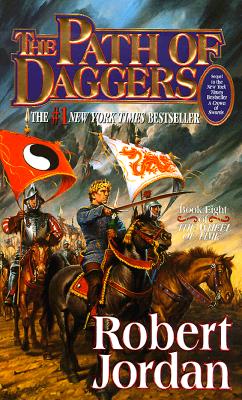
The Path of Daggers


9780812550290So, I finished it. It helped, of course, being able to start around the midpoint.

I was reading it while helping out at the Downtown Holiday Market, using my usual sales pitch of ignoring customers while burying my nose in a book. I think this tactic works because people feel compelled to actually buy something, because otherwise they’ve risked interrupting me in the midst of expanding my mind whilst reading for absolutely no purpose.

A man in his late thirties (good Lord, my age!) stopped, after having bought a onesie and a dress for his fourteen month old daughter, to talk with me about the book and series.

His feelings seemed similar to mine. It’s not that it’s great series, but there is something compelling and addictive about it and once you’ve invested something in what is, really, a huge investment overall, you feel like you have to see it through to the end.

The Path of Daggers is a pretty good. The best in a couple of books, at least. It is quite sprawling and Jordan doesn’t have the feel for sprawl that George R.R. Martin has. Martin is able to create and maintain a wide variety of very interesting secondary characters, but Jordan isn’t as able to make them compelling. But, he does give some good space and good story lines to several of the main companions. Also, the main character, Rand al’Thor, is allowed to be less grating and depressing to read.

It’s the Lord of the Rings effect. Frodo, on his own, would be insufferable to read about. Thankfully, he is always in the company of more enjoyable fellows (Samwise Gamgee, mainly) and plenty of column space is devoted to the always fun to follow adventures of Merry and Pippin and the gentle ribbing and budding love (yes, love; not romantic love, of course, but The Lord of the Rings is ultimately about the great love between friends and brothers in spirit) between Legolas and Gimli.

Tolkien possibly could write about romantic love, but chooses not to, on the whole (I have always suspected that he lacked the talent for romance, knew it, and so chose not to; but he does do some good depictions of comfortable, conjugal love, as between Tom Bombadil and Goldberry). Jordan can’t write romance, but chooses to do so anyway.

All that criticism, I know. But I did say that ‘The Path of Daggers is a pretty good.’ And it is. The propulsion of the plot picks up and you can start to feel as if he’s not just adding plot threads to drag this out, but is starting to pull things together. Conflicts are coming to a head and you can taste resolutions in the air.

“Mistakes Were Made…”


Our little band of D&D’ers (fourth edition, to be specific) first got together sometime in 2010. I think. Maybe it was 2009. Let’s just say “over two years ago” and call it close enough for horseshoes and hand grenades, shall we?

I got very lucky. I was in my mid-thirties (and am now closer to forty than thirty) and had heard horror stories of men my age walking into games filled with angst and acne ridden teens. Actually, not so much “stories” as a single story related to me by my friend Ryan, who is also my sci-fi/fantasy friend (sort of like I also have my “soccer buddy” and “politics friends”).

There were six of us to start with: three hard core gamers (including the DM); one sitting somewhere between journeyman and master player; and a newbie. And me, who was skating by on memories of playing Advanced Dungeons & Dragons (and also Star Frontiers – anyone remember that game? highly underrated) back when there was such a thing and when the whole franchise was owned by TSR and no one had heard of a company called “Wizards of the Coast.”

We played in the post-apocalyptic desert world of Athas. I was a half-elf mage named Cavafy (so named after the great poet and chronicler of Alexandria’s demi-monde). Players came and left. One left, ostensibly to become a DM somewhere else, but mostly, I think, out a certain frustration with the less experienced players (no doubt including myself). Another became a new father. A third’s (the truest newbie) heart simply wasn’t in it. We added a new player, a congressional staffer who, like me, was able to draw on memories of playing as a younger man, when we all had more hair.

As a wannabe writer, ideas kept rolling around in my head for a campaign of my own – an opportunity for me to take on the sacred mantle of Dungeon Master and show off my imagination (which, as I learned, was exactly the wrong way to look at it).

I broached the matter with our DM and (still) de facto leader of our band who, agreed, in theory, to let me try my hand for one or two sessions. But the right moment didn’t arrive until suddenly, it did.

A proper moment in the lives and schedules of both our real selves and our characters emerged simultaneously and we shelved the old world and picked up a new one. Mine.

And I had so many ideas. Too many actually.

It is not, I found, like writing a short story. It is more, to dip into what I’ve learned in my former and sometimes profession, more like managing a political campaign: you’re going try something, but you know there will always be a reaction from the other side and a you’ll be surprised by it a significant portion of the time.

For example, I grew enamored of the idea of “natural rolls.” By which I mean, the players roll their ability scores the very old fashioned way: 3d6 in order. Then, they would create a character based on the randomness of the scores they got, rather than shaping to scores to the kind of character they wanted to play.

Which was cool in one way. It forced the players to get out of some preconceived notions of what they wanted to be and experiment with something they maybe hadn’t expected.

Too bad I didn’t do the same thing (escape from my preconceived notions, that is). Also too bad that I didn’t do anything with the conceit of the characters being “ordinary.” Instead, I’ve wound up giving the players to option to boost their scores up a bit to make things more “normal” (for a D&D character, that is).

And the first session was, well, only moderately successful. I hadn’t developed the knack for keeping the action moving nor for seeming authoritative (which is not the same as authoritarian, which is a pretty negative quality in 99.9% of life’s little moments).

Worst of all, it was too guided. An opening session, with new characters in a new world, tends to be a little directed, pushing the characters down a path. And that’s okay. But I didn’t leave nearly enough room for player agency and that’s something I’ve been struggling with. Sometimes my solution becomes almost like those old, Endless Quest books (also published by TSR), where choice becomes “do you want to do A or would you rather do B?” rather than true freedom.

But I had done it. My first campaign, created (though only partially built as yet) from the ground up. A new world, with peoples, nations, and history.

The continent of Loa, home of a small band of (semi) heroic refugees from the now fallen Sunward Empire, which fell, despite the characters’ best efforts, on the first day of the imaginary world’s entrance into the (semi) real world on a Saturday afternoon, in the meeting room of the Alexandria, Virginia branch of the Fraternal Order of Eagles.

Midweek Staff Meeting – The Key To A Healthy Relationship Is Roleplaying


You can’t possibly write good literature unless you play Dungeons & Dragons.

DC recognizes that an intersection that has more pedestrians than cars should really be engineered around pedestrians.

Notes from the Cosmic Typewriter

It’s about time the Hirst bubble collapsed (I have a great affection for conceptualist art, but even if you say that Hirst is engaged in meta-commentary on the art market, collectors, and most especially on commodification, it’s just too god d–n much).

The secret lives of used books.

What is lost, what is gained?

Your poetry gift guide.

Amis and Larkin.