Vicomte De Bragelonne


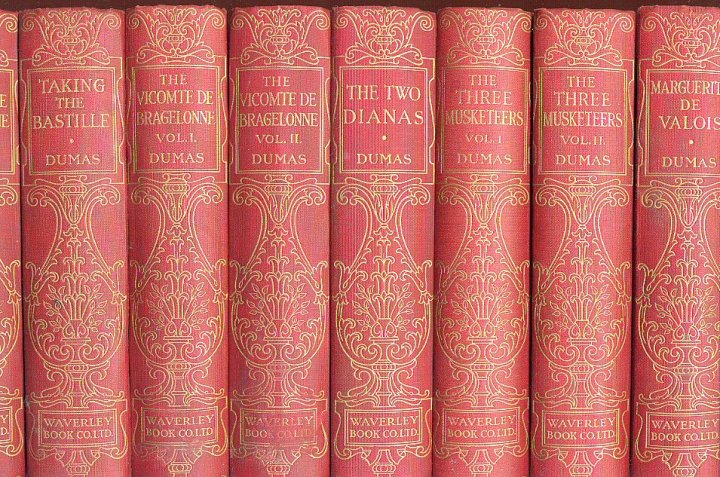
The Vicomte de Bragalonne: Ten Years Later is part of the third sequel to The Three Musketeers (the first sequel being Twenty Years After). I say part of the third sequel, because the third sequel is almost always broken up into three parts, culminating in The Man in the Iron Mask (virtually no resemblance to any of the movies).

While I was deep in my Dumas phase, as a young man in Florida, a time which also happened to be pre-internet, I hunted vigorously through used bookstores for these sequels. Among those I found was The Vicomte de Bragalonne, though in my edition, it was a faded red, smallish hardback titled only Ten Years Later.

I wish I remembered more about the convoluted plot of the lifelong progress of d’Artagnan and his three companions, Athos, Porthos, and Aramis, but it was terribly convoluted.

During my New Year’s Eve supper with my lady friend at the Federalist, I wandered into a room for private dining, mainly to look at the books on the shelves. They were primarily in what I guessed to be Swedish, but among them was  a lovely copy of The Vicomte de Bragelonne and it’s mere appearance struck a very pleasant chord in my memory.

Tinker Tailor Soldier Spy


You can tell I’m talking about the movie because the book puts commas between the words and the movie doesn’t.

My mother is a big fan of the Smiley novels and finally convinced me to read them. I’ve been excited since I heard the movie was coming out – at least once I’d established it had a talented director and an all star cast.

You can’t really compare it to the old Alec Guiness BBC miniseries. This movie is, after all, something like 40% as long as that production.

And they are playing the role in significantly different ways.

LeCarré characterizations in the novel had a certain cold distance to it. While clearly delineated, that distance does allow for some leeway in how an actor could play folks.

Guiness’ Smiley had a certain goofy, cherubic, and avuncular charm to go with his piercing intelligence and wounded soul.

Gary Oldman gives, beyond a doubt, the quietest performance of his entire career. In fact, he barely has any lines. And when not speaking, his expression is so tightly controlled that you find yourself intimidated, even as you try and ferret out what he’s thinking or feeling. This is a cold, dangerous Smiley. He’s still a physically unimpressive specimen – looking very old and even a little feeble. But, without giving anything away, never has an old man awkwardly taking off his shoes looked quite so frightening. It’s not a capacity for violence, but the capacity to see violence done.

Because it’s the small details help keep the plot moving at a surprisingly quick pace, while keeping the attentive viewer abreast of what was happening. Taking off shoes, unwrapping a mint, going for a swim. The little things.

In a stylistically telling note, while Smiley’s wife, Anne, appear in the BBC version, in this movie, she expresses herself as absence, seen only in short glimpses from obstructed angles. We never see her face. This both enables to movie to stay concise and also fits the style of this particular Tinker Tailor Soldier Spy and this particular Smiley.


This Makes Me Feel A Little Better About The Fate Of Western Civilization


Filming of Paradise Lost: The Movie starring Bradley Freakin’ Cooper as Lucifer has been postponed.

This makes me feel somewhat more optimistic that the entirety of western culture won’t be buried beneath an avalanche of Twilight memorabilia.

Of course, I’d be more optimistic if the studio had released one of the following statements:

We realized that making John Milton’s blank verse epic of man’s fall from grace into a 3-D action movie extravaganza was an even worse idea than when we greenlighted more Alvin & the Chipmunks movies. Consequently, we have cancelled production and are donating the entire proposed budget to literacy programs in underserved communities.

or…

Even if you accept that making a Paradise Lost movie was a good idea, surely we can all agree that a smug, shallow, and limited actor like Bradley Cooper is the absolute wrong choice to play one of the most complex and, yes, tragic figures in all of literature. The man’s highest achievement as a thespian was holding his own onscreen next to the non-existent acting chops of mentally challenged boxer, Mike Tyson. We have left messages with Daniel Day-Lewis, Johnny Depp, and Michael Fassbender. And that’s assuming we still agree that this movie should even be made. The money budgeted for Bradley Cooper’s salary will be donated to literacy programs in underserved communities.

Why ‘Labyrinth’ Is Awesome


I just remember it being so seductive and frighteningly overwhelming as kid.

Bridget McGovern explains why it is so damn awesome.

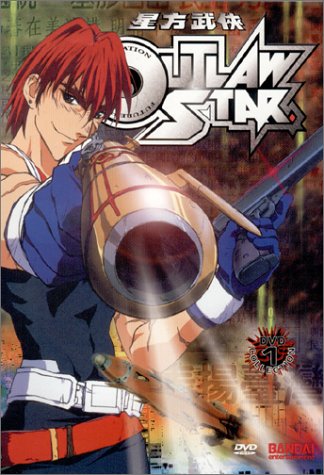
Outlaw Star


I have an obsession with a nearly fifteen year old anime called Outlaw Star. It’s only claim to fame in America is having run Adult Swim for a few months nearly ten years ago.

Lacking enough thematic or artistic innovation to appeal to Cowboy Bebop fans nor enough adolescent silliness to attract Sailor Moon fans, it never really found it’s niche here.

Which is to say, you probably know nothing about it. But I love it. Don’t know why. When I’m sick, I like to watch it on DVD.

So I’m going to write about as if you did know about it and indulge in some embarrassing, overgrown fanboy behavior.

Let’s just dive in then, shall we?

I am struck by how the ghost of the memory of ‘Hot Ice’ Hilda haunts the hero, Jean Starwind. The first so-called ‘outlaw’ he meets (‘outlaw’ referring less to status, re: the legal system, than a certain independent space travelers – more ‘outlaw’ like a biker gang [which may still indulge in criminal behavior] than outlaw like ‘I have the death sentence in six systems’ [and yes, I was quoting Star Wars) becomes the model for him, even though she dies (though dies as she lived, committed to her ‘outlaw’ principles) within a couple of days of their meeting.

Jean recalls some of her words on a couple of occasions throughout the 26 episode series (Hilda died during the fourth episode), almost as if conversing with ghost.

She is a mother figure (Jean has flashbacks to incidents of his time with his father, but there is nothing about his mother; and when his father dies, he appears to be orphaned), an older sister exposing her little brother to the exciting world ahead of him (though, in this case, it’s more about pirates
and space ships than taking him to his first college keg party), and also lover (though it’s not clear whether they ever actually have sex, but she is clearly an object of sexual desire).

Though the ostensible love story is between Jean and the android Melfina, their relationship is pretty platonic. Not necessarily brother and sister, but perhaps like the girl who has a crush on her older brother’s friend. This is in contrast to Jean’s feelings towards Hilda, who represents desire in all its forms – the desire for sex, for adventure, for knowledge of the path one should take. He wants Melfina for the companionship, but it is always the memory of Hilda he turns to in order to show him the way.
New Conan Movie Will Be Terrible


The new Conan is inevitably going to suck donkey balls. There’s no way around it.

The original short stories, written by suicidal masculinist Robert E. Howard, were masterpieces of high pulp. In theory, this new movie would hew much closer to Howard’s vision of the character – a wily, wary, and highly mercenary creation.

The 1982 movie freely abandoned most aspects of the story save a few names and the main character’s physique.

Nonetheless, its crazy right wing subtext; weird, pseudo-Nietzschean mythology (how many men my age first discovered that German grump from the quote opened Conan the Barbarian?); and utter self-seriousness was, in retrospect, the only way to capture the spirit of an outdated (especially in its racial and gender politics).

That an Austrian body builder with compensated for his almost complete verbal unintelligibility and the sort of bad acting normally associated with Keanu Reeves by means of Schwarzenegger’s incredibly improbably charisma.

Instead, we are likely to soon suffer through the bland antics of a beefed up pretty boy starring in a cut rate Kevin Sorbo knock off.

To brilliantly conclude, let ask you this one question:

What is best in life?

Watching “Atlas Shrugged: Part I”


I dragged Mu with me to catch a Monday afternoon matinée of that Tea Party monstrosity: Atlas Shrugged, Part I.

And it was every bit as famously and hilariously bad as we had been led to believe.

It followed the events of the book (at least the first third of it, for this is a trilogy) with exacting, religious devotion (taking into account that the action was moved from the fifties to the year 2016 – not coincidentally, I imagine, coinciding with the end of Obama’s second term). This devotion extends so far as to turn Ayn Rand’s embarrassingly awful literary sex scenes into embarrassingly awful cinematic sex scenes. In fact, the sex is so awful to behold that you might almost suspect it of being self-conscious parody were the filmmakers not obviously being so painfully earnest.

I don’t (or shouldn’t) need to tell you about Atlas Shrugged‘s (the novel and the movie) painful didacticism and ridiculously constructed straw men nor how the first quality makes for a turgid novel and how the second makes for a poor excuse for “philosophy.”

What I do want to tell you is my dream, wherein Atlas Shrugged turns into a midnight movie cult classic, with people shouting something or doing shots whenever some painfully unrealistic villain appears or when the people on screen are pouring themselves a drink (the world of Atlas Shrugged: The Movie is filled with people who drink so much alcohol [mainly what is supposed to expensive looking scotch] that you’d think the ghost of Hunter Thompson had helped write the stage directions).

Some small part of this dream came true as one of our fellow moviegoers (there only five or six of us) was constantly laughing or exclaiming “Who is John Galt.” I can’t be sure whether he was a liberal parodying the ripe for parody dialogue or whether he was a true Tea Partier expressing his deep appreciation for all that grand, Randian genius on screen. Either way, he acted like a brilliantly senile Greek chorus to the proceedings. Mu was not amused, but I felt he added a real touch of meta to the experience.

Finally Seeing the Movie “Howl”


At long last, I saw the movie Howl with James Franco as Allen Ginsberg and a dapper Don Draper/Jon Hamm as the attorney defending the poem’s publisher, beat godfather, poet, and bookstore owner, Lawrence Ferlinghetti.

There was no good reason for me to have waited so long to see it (there was a good reason not to see it in the theatres; during the sole week it was playing in Washington, my parents were visiting and had little interest in making the journey over to the independent cinema to see it, so my suggestions fell on deaf ears), but it was worth the wait.

James Franco gave a restrained and relatively non-meta performance as the poet. Jon Hamm was imperious and noble looking in his defense of art, literature, humanism, and the liberal mind (did you know that once upon “liberal” was not a dirty word, but rather what people regularly aspired to be?).

In high school, myself, Matt, Scott and some others expressly sought to model ourselves on the beats. We argued about the portrayals of Neal Cassady in Howl vs On the Road (Scott’s nickname was even Dean Moriarty on account of his willingness to drive anywhere).

Watching the movie Howl makes one want to be part of something bigger. Something important about literature and expression. But sadly, what has happened instead is that literature and especially poetry has been pushed to the edge of irrelevance.

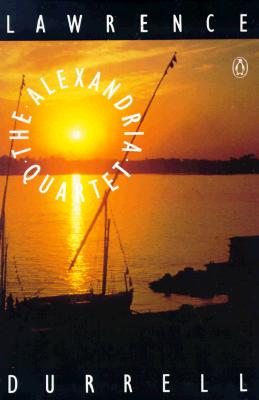
Justine & the Alexandria Quartet


I was watching the Spike Jonze movie, Stranger Than Fiction, and noticed that the literature professor played by Dustin Hoffman had written on the chalkboard a list of name’s and ailments. It wasn’t until the final name that a lightbulb turned on in my head – Pombal (who had gout) from Lawrence Durrell’s Alexandria Quartet.

My Aunt Anna and Uncle Buddy had the Alexandria Quartet high up on a bookshelf in their living room. When I would visit, Aunt Anna and I would stay up talking late into the night. For some reason, those four books kept catching my eye and I would ask her about them, but she was usually noncommittal. Finally, I took down the first book, Justine (not to be confused with the novel by Donatien Alphonse François de Sade, better known as the Marquis de Sade, which I once purchased at Bridgestreet Books in 2001).

I loved it. I am a little afraid to go back, though. I suspect that it is a book best appreciated by a slightly younger man.

Nonetheless, at the time. Such lush writing. The highest literary eroticism, without ever being explicit. The way that the narrative, rather than following chronology, revolved in a circle around a central event and a central theme.

I never finished the quarter, finally stalling while reading the fourth and  final volume, Mountolive. Each succeeding book after the first was less and less satisfying. The second book, Balthazar, while not nearly as good (in my eyes) as Justine, was at least enjoyable.  But the third, Clea, was more a slog. By the final volume, I simply had no more interest in trying to finish the quartet.

I didn’t take Aunt Anna’s copies with me and bought my own copy. I lost that first copy and sometime in my late twenties, I felt the urge to read it again. The only copy I found while prowling used bookstores had an embarrassing cover, with some sort of blonde on it (who I suppose was intended to represent Justine, though I can’t imagine her as a blonde – she was a Jew of Mediterranean descent, after all). Even worse, it made it look like some cheap romance and no guy wants to be seen reading that kind of stuff in public. I don’t know where that copy is now. I may miss those first, heady days reading Justine in high school, but I don’t miss that stupid cover.

Death Knell for ‘Fringe’


I was one of those folks who watched The X Files. Not rabidly. Not religiously. But with great pleasure – at least the first four or five seasons. And like many former X-philes (pun intended), I have taken to watching Fringe. Of all the shows that sought Mulder and Scully’s mantle, it seems the best.

But it seems that the end is nigh.

Fringe started out on Tuesdays. Then it was moved to Thursdays. Fine. Thursday was always a well loved spot for television (remember the old “must see tv” of NBC’s Thursday night line up of Friends, Seinfeld and ER). Now, it is being moved to Fridays. We all know that when a show is moved to Friday from having been on during the week, it is because the ratings are not what they should be and they want to reserve that precious, week night space for something more profitable.

Sure, sometimes a show will hang on for a while in such a poor slot. The X Files was a Friday night show. But this probably presages declining budgets and a painful death for one of my favorite shows.