Kenneth Rexroth, Ezra Pound & Anti-Semitism


Kenneth Rexroth, godfather of the various renaissances of San Francisco and Northern California poetry in the years after the Second World War, was one of the inspirations for diving into the Cantos.

It is impossible to overlook Ezra Pound’s influence on Rexroth. Those great and sometime sprawling efforts to incorporate all his vast corpus of knowledge into poetry. The deep relationships with and advocacy on behalf of other poets (though perhaps no poet can truly match Pound in the tirelessness, efficacy, and importance of his advocacy of other writers). Each was very political and deeply influenced by their politics, yet neither is particularly known for their politically tinged poetry.

But Rexroth, with his liberal politics (veering in anarchism and communism – famously saying, ‘I write poetry to seduce women and to overthrow the Capitalist system. In that order.’)could not countenance Pound’s politics at all.

Regarding the Cantos, he once said:

“Oh, the Cantos! Everybody thinks it’s modern art. But the Cantos are a very specific thing. They are a long survey of history and the point to them is that what is wrong with the human race is usury. And who practices usury? The Jews! the Cantos are the longest anti-Semitic diatribe in literature.”

Of course that’s not true. But sometimes there is something to the third sentence – ‘They are a long survey of history and the point to them is that what is wrong with the human race is usury.’

I have seen something almost Rand-ian about the Cantos thus far, but instead of ‘Producers’ versus ‘Looters,’ it is ‘Producers’ versus ‘Financiers.’

One can also feel the seduction of that. Not the Anti-Semitic undertones which infected so many discussions of the financial system in the twentieth century. Those are unforgivable.

But the anger, the mistrust towards the financial system. After the financial collapse of 2008, who can fail to feel angry towards Wall Street financiers? Nor fail to see the correspondences between the 1929 financial collapse (which Pound lived through) and the recent one that still holds our economy in thrall?
Specialty Bookshops


One of the great tragedies of the seeming decline of brick and mortar independent bookstores is that one of the casualties is the specialty bookseller. Already, LGBT bookstores have almost disappeared (I wonder if the one that used to exist just a few blocks from my home in Midtown Atlanta is still extant?).

Like the Bodhi Tree in LA, these specialized bookstores take you far beyond your pre-existing knowledge of an area and expose you to a far end of publishing “long tail.”

This came up because I was browsing the selections of the surprisingly extensive bookstore beneath the National Cathedral in Washington, DC. Religious history, theology, social justice, art history, meditations and prayers – all books I would likely never have happened upon in Barnes and Noble.

Borders on Sunset and Vine Is Closing


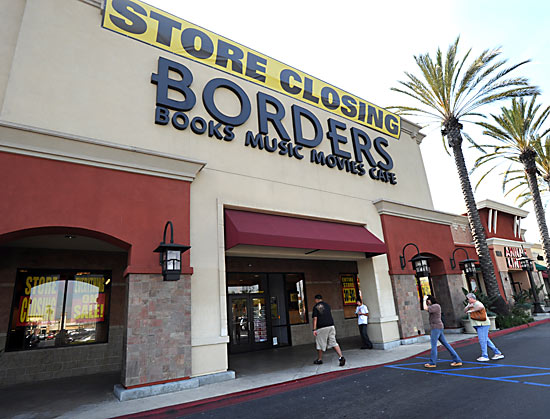
The Borders that used to be my Borders is closing. A short walk from my studio apartment in Hollywood, I went there to browse and discover new books.

And now it’s almost gone. The ones you though would never close are closing.

The same goes for independent bookstores. Places you thought would last forever. The ones you thought inspired to loyalty and devotion to keep going, simply didn’t.

Have we forgotten how to read books?

Amazon is no replacement for a real place where you can browse, chat, and ask questions.

Los Angeles Times Book Prize


Congratulations to Maxine Kumin who won the Los Angeles Times prize for poetry for her most recent book, a collected poems entitled Where I Live.

Game of Thrones


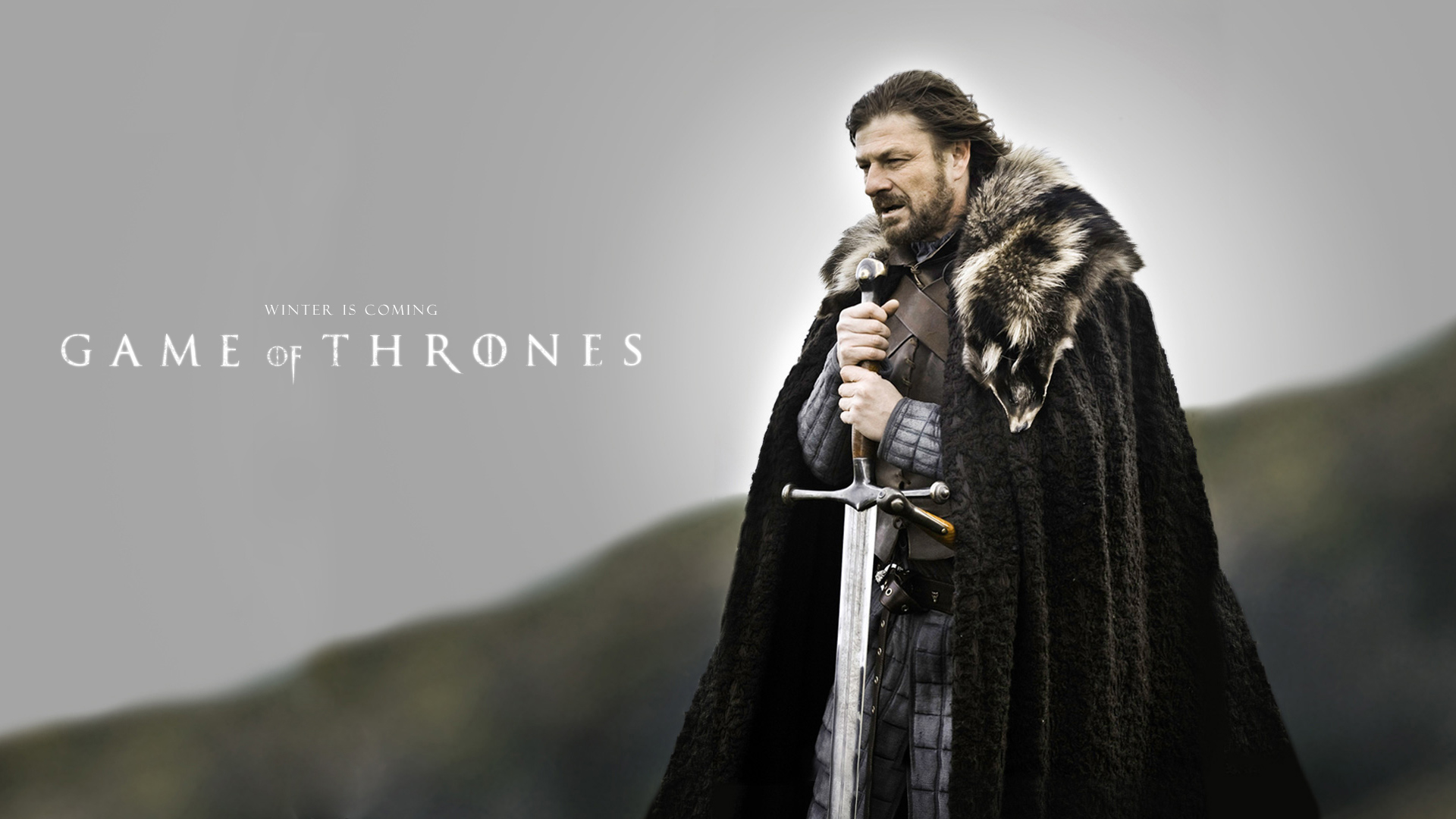
Even though I don’t get HBO, I’m very happy that Game of Thrones is being made into an extended series. I first discovered the George Martin’s Song of Fire and Ice series (of which Game of Thrones is the first volume) five or six years ago when I read a review of the then newly arrived fourth volume, A Feast For Crows, in the Los Angeles Times. I was inspired to read the first one and eventually all the volumes available.

Martin has been promising the fifth volume for years now. Once, when it was rumored that it would finally be released, I re-read the first four books so that I wouldn’t be completely lost when I read the new one (which is supposed to be titled A Dance of Dragons), on account of the series being notably complex in terms of plot and characters.

Part of the reason I’m excited about the series is that maybe Martin’s publisher will tie him down in front of his computer or typewriter or pen and paper until he finishes the damn fifth volume. Unless he speeds up, my grandchildren will have to read the projected final volume to my tombstone.

It is a very gritty series, with characters you love dying and characters you hate being revealed to be more three dimensional and harder to hate (you eventually get to see the good side of a character who in the first tome, pushes a child out of tower window to plunge to his – not death, but a long coma and paralysis from the waist down). The writing style is not necessarily notable, but it is efficient and enjoyable. Like much of the best sci-fi and fantasy writing, it stays out of the way and services the plot, setting, and characters.

Analysis of E-Book Consumption


Someone did a(n imperfect) analysis of the states and their consumption of e-books. They compiled Smashwords e-book sales data from Barnes & Noble from December 2010 through March 2011. This is, of course, a limited and limiting sample, using a single e-book publisher and only looking at sales on one e-book device (of course, that’s my device – the Nook), presumably because the Kindle doesn’t support Smashwords books.

They put together two charts. The first is basically useless. It measures what percentage of total e-book sales take place in each state. Unsurprisingly, the four states with the greatest percentage are… the four states with the largest population (Texas, California, New York, and Florida).

The second chart puts together a list of per capita e-book consumption, which could actually tell us something. The first four states are among the most rural and sparsely populated in America (Alaska, North Dakota, Utah, and Wyoming). States where visits to a bookstore could become problematic.

My own “state” of Washington, DC is actually dead last in the per capita sale of Smashwords e-books. Again, despite my own ownership of a Nook, I can understand this. DC is just chock full of bookstores – Politics & Prose, Busboys & Poets, at least two Barnes & Nobles (and we used to have two Borders), Second Story Books, Capitol Hill Books, Bridgestreet Books, Kramerbooks & Afterwords… In other words, there’s no lack of access to bookstores in this town.

Oddly (or not – the state does have some great independent bookstores), California, the home of Silicon Valley and much of nation’s tech industry, ranked next to last.

An Unexpected Impact of the Borders Bankruptcy


The city of Pico Rivera in eastern Los Angeles County used federal grant money to lure a Borders to their community. Unfortunately, this particular Borders is on the list of stores to be closed. This article suggests that the city may have to continue to subsidize either all or part of the store’s rent for another three years (though the shopping center owner is responsible for making a good faith effort to fill the space).

When I worked for a member of Congress, Pico Rivera was in my congresswoman’s district (and I can attest that the Pico Rivera Councilman Bob Archuleta, mentioned in the article, is a good man, as is his son Matthew, who graduated from West Point last year).

Though this may seem like a cautionary tale, I would argue that bringing a bookstore to a community that lacked one is an admirable and important effort. Too many towns and cities are becoming “book deserts,” where citizens have to drive long distances to find a bookstore. This is an especially bad situation for the next generation – children benefit from being exposed to a culture that values books and reading as civic virtues and part of the common good. In addition, until the closure, the city was pulling in more than three times as much in sales tax revenue as they were paying out in subsidies (and that doesn’t event include the benefits that came from having the creation of jobs and other multiplier effects).

Cool New Word: “Agnotology”


Agnotology: the study of culturally-induced ignorance or doubt.

The concept was developed Stanford University professors of the history of science, Professors Robert Proctor and Londa Schiebinger (who are married, by the way).

The Archaeology of the Last Days of Borders


This article lays out what those of us on Borders email list already know – the sad desperation of the decline (and fall?) of the second largest bookstore chain in America. Once or twice a week, Borders send me an email offering my 30% off or more on virtually anything I want. And despite my oft stated preference for indies, sometimes I acquiesce (mainly when my better half takes me on her shopping trips – she makes baby clothes, by trade, and often takes me to a Jo-Ann’s  a few stores down from a Borders in Columbia, Maryland).

I cannot be happy to see any bookstore go under. Not even a big, evil chain. Especially since I have such good memories of a particular Borders location.

Also, I once remember reading that they kept books on their shelves longer than Barnes and Noble. What that means is that newly published and less heavily promoted books had more time to be seen, perused, and bought by a passing patron. Which means that, if true, Borders was better for new and emerging writers and smaller publishers than Barnes and Noble.

More Marginalia


Apparently, this whole effort to keep marginalia alive is still rolling alone – at least in this New York Times piece.

I am very sympathetic to the idea, but I admit to also being one of those people who cringe at writing in their books. Perversely though, I love finding old books at used bookstores with notes written in it by a prior owner.

One of the few books I have personally marked up is Deleuze and Guattari’s Anti-Oedipus. It has been badly battered (I used to drag it to my favorite LA bar, the Pig and Whistle and read it while drinking and eating their nachos [their secret – using wonton chips instead of tortilla chips]). It’s also filled with tons of bookmarks, with little notes written on them. But I have also done a little scribbling of some marginalia.

The reason that particular book got special treatment is that it has been a real struggle for me. I don’t pretend to truly understand many of the concepts described (the “body without organs,” for example).

I should also mention a exhibit held at the Folger Shakespeare Library called “Extending the Book” about something called grangerizing. In the nineteenth century, folks used to expand their books by adding new pages to them. They would have them rebound to allow for the new, larger size. Often, the additions were illustrations that they thought had some correspondence to the action within the text. While not, technically speaking, marginalia, it is certainly the ultimate in book owners not holding their tomes sacred in its original form.