Bangkok MOCA & ‘Thawan Duchanee, Modern Buddhist Artist’


9786162150562

The efforts to visit the Bangkok Museum of Contemporary Art were surprisingly arduous and I only finally managed to visit it on my next to last day in Thailand.

It was designed by a wealthy businessman, who seeded it with much of his personal collection, including a portrait of his favorite actress. Apparently, the museum was also designed as a tool of seduction and contains a room containing nothing by paintings of scenes from the actress’ most famous movie (this includes a couple of paintings of topless scenes from the movie). There is also a series of paintings of a woman in various symbolically spiritual poses and forms. The woman’s face looks a lot like that actress and the woman is also topless in every painting. It’s definitely art – and good art, a that – and it’s not even very erotic, but it reads like someone said to an artist, “I need some paintings – some fine art that will last the years. It needs to be your masterpiece! One more thing – its needs to have boobs. Lots of boobs.”

By the little coffee/snack place in the museum, was a wall of signed portraits of people like Andy Lau and… actually, there were very few pictures of men. Mostly they were signed pictures of famously beautiful models and actresses, about seventy-five percent of them western.

Once you get beyond that, though, I really liked. You could see these artists influenced by Western artists, particularly surrealists. But those artists were in turn influenced by Asian art, whether directly or indirectly (as through antecedents, like Klimt). So it’s almost a case of Asian artists being influenced by earlier traditions in Asian art, but mediated through the work of 20th century Western artists.

There was a room called the Richard Green Room, actually, it was two rooms, with nineteenth and early twentieth century genre paintings, mainly pictures of people in either eighteen century dress or sort of a fanciful version of Greco-Roman dress (the latter looked a lot like some of my favorite Pre-Raphaelite paintings). There were some wonderful painting and I enjoyed the room immensely, but what on God’s green earth was the motivation behind exhibiting them in a museum devoted to contemporary Thai art?

Apparently, Richard Green is a gallery owner, specializing in those sort of paintings. I reckon those were loaned to the museum, which also makes it free advertising for the gallery and which makes it ethically dubious (most museums would not engage in this kind of thing – exhibiting painting that are simultaneously available for purchase).

They had a large exhibit by Thawan Duchanee, Thailand’s most famous living artist.

When I first saw the exhibition, I wasn’t thrilled by him. Partly, it was the curation. He did a lot of painting in black paint on either white canvass or a saturated red canvass and in a couple of galleries, the walls were painted totally red. The saturation was too much. Bad design.

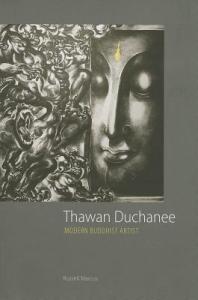
I did buy a book about him called Thawan Duchanee, Modern Buddhist Artist. First of all, caveat emptor: author Russell Marcus is neither an art historian nor an erudite amateur with a keen eye for art. He’s more of a fan boy. But, it did give me an opportunity, as I read it over several days, to revisit him and get a slightly better than understanding of what Duchanee was trying to accomplish. Certainly, he aims to be very traditionally Thai, in many ways, which hampered by ability to appreciate him at first.

I’ve made it sound horrible, but it was actually pretty wonderful and I would go again. But keep an open mind and a sense of humor.
He're
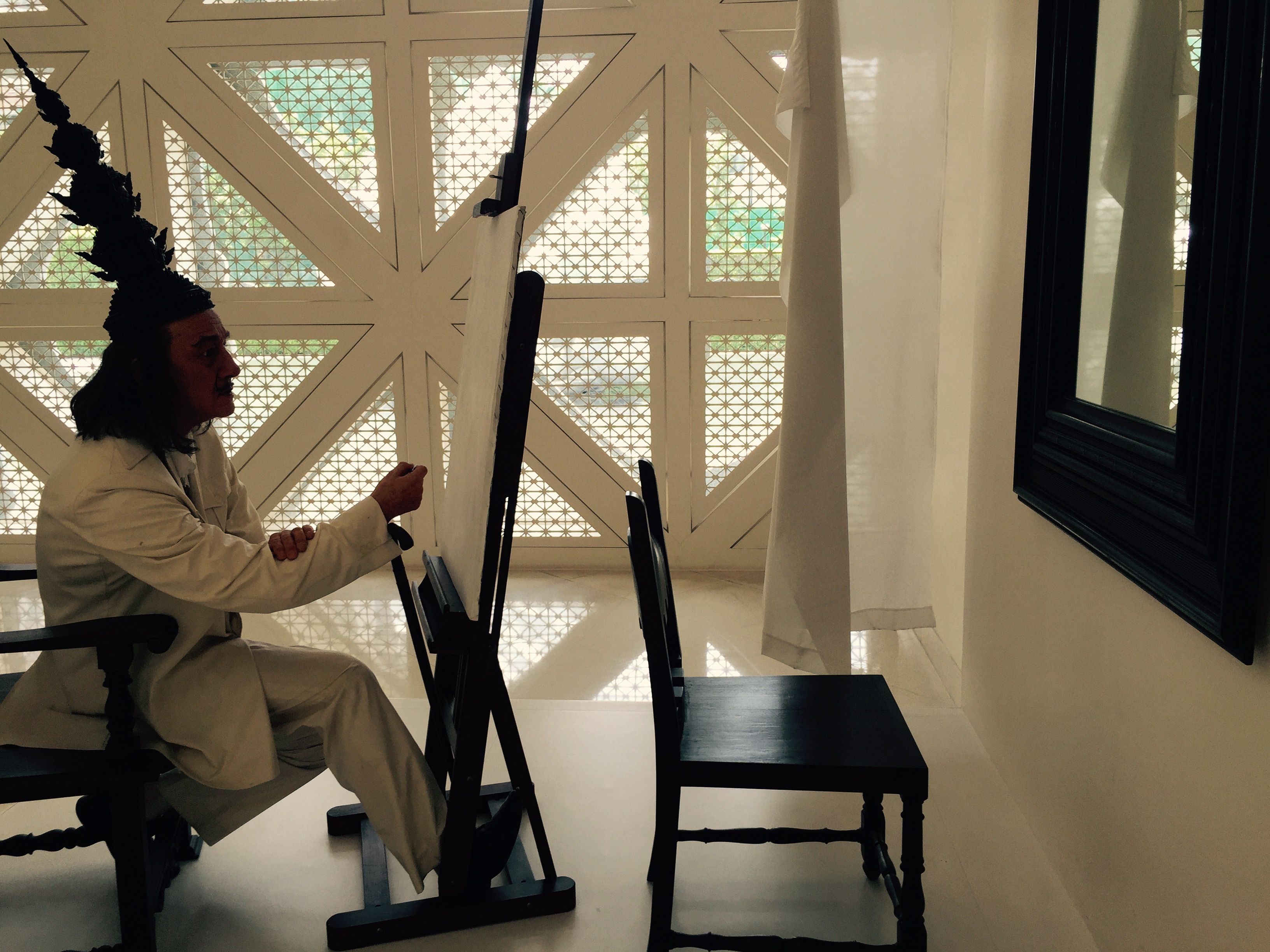
A sculpture of Dali painting. Loved it.

Midweek Staff Meeting – The Man Who Taught Proust To Speak English


A detail from Joshua Reynolds’s ­portrait of James Boswell

Not literally, but if you’ve read and English translation of Remembrance of Things Past, as I have, you probably read his translation (as I have).

The Enlightenment’s most prominent unenlightened.

A review of Charles Simic’s latest books (it’s a generally positive review, but I have become less and less enamored of the poet over time; honestly, most of his poetry from this millenium feels lazy and recycled, whereas his best work is arresting, comic, and faintly melancholy).

And some poetry by Monica Ong. I love that Hyperallergic publishes the occasional poem. Appropriately, for a website focusing on the art world, these poems might be best described as vispo.

Another study of a hypothetical link between madness and creativity (in this cause, examining whether a correlation between increased likelihood of schizophrenia and participation in artistic a/vocations is the result of a shared, causative, genetic root).

Yes. Yes, it can.

On disliking poetry. And, maybe, on learning to love it.

Boulder, The Innisfree Poetry Bookstore, And The Boulder Museum Of Contemporary Art


6b5839277b6e42358aa43af416ce4fcd

I finally made it Boulder. All it took was my niece’s wedding.

Boulder is famous for a lot of things, but if you’re a bookstore aficionado and poetaster, as I am, then the only place that matters is the Innisfree Poetry Bookstore, one of only three poetry only bookstores in America. It was smaller than I expected, but it was also filled with poetry. I might quibble with some of the curation, but have nothing but respect for their focus on Colorado poets and for stocking a good sized selection of chapbooks. Actually, one of the two books I bought was a chapbook by Joshua Corey entiteld Hope & Anchor (the other was Selected Poems by Paul Celan).

While wandering a farmer’s market in Boulder, we randomly hit on the Boulder Museum of Contemporary Art (BMOCA). It was small, but it was free on Saturdays and a pleasant way to pass an hour. Some wall hangings (thought nothing that would properly be called a traditional painting), but mostly larger installations (including a cool sound installation, based on the progression of the chakras).

BMoCA opening

The mountains are beautiful and I love a nice hike or walk, but in the end, Boulder would be somewhat wasted on me, because I’m more of a bookstore and museum guy, than I am a mountain guy.

‘Persuasion’ By Jane Austen; Also, ‘Filthy Lucre’ At The Sackler Gallery


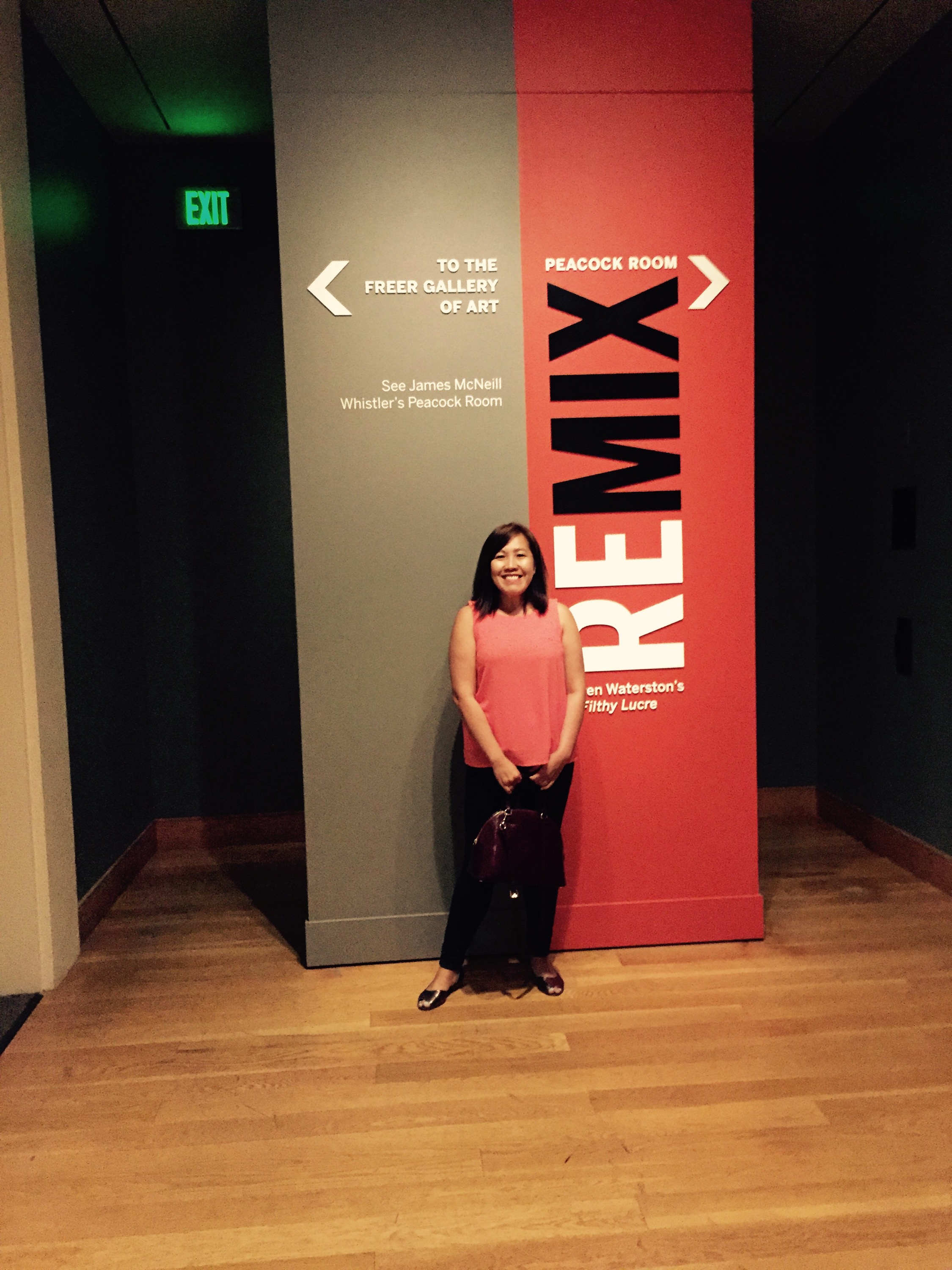
Please note: this is not me (and I don’t mean that in a ‘this is not a pipe’ way)
 I was going to go to a classics book club at my local Barnes & Noble, but instead went to an after hours thing at the Asian Art Museum. But in prep for the possible book club attendance, I picked up the chosen book, Jane Austen’s Persuasion.

When I bought it at the used bookstore, I was told (not unkindly) by the owner that I was the first man to have bought a Jane Austen novel from him. I think it was a compliment, but you’re never quite sure if it reflects as well on you as you think it does.

So, I’d read it before, enjoyed. That’s that.

But I picked it up again for this book club thing and I was… disappointed. Can one say that about Jane Austen? Pride and Prejudice is a model of gem-like perfection. My second reading of Persuasion left me a little unsatisfied.

Anne Elliot’s interior life lacks the richness of Elizabeth Bennett’s. She is frankly less interesting, yet we are held very much within her third person limited perspective. While one does not read Austen for lush geographical details nor for the richness of her descriptions of rooms or people, I dare you to read Pride and Prejudice and not come away with a very personal vision of the environs. Whereas, Persuasion‘s market town and then Bath are very vague. The people, too, leave me with no clear image of them (as for Pride and Prejudice, my generation has a very clear picture of the characters and they look remarkably like Jennifer Ehle and Colin Firth).

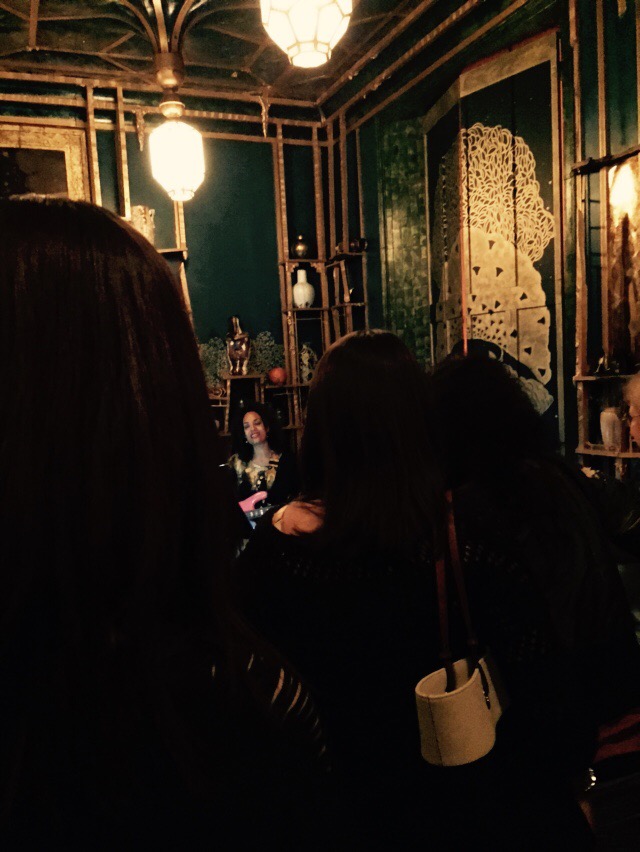
So, instead of that, we went an after hours open house at the Sackler-Freer Gallery (the African and Asian art museums, respectively, of the Smithsonian) where they kicked off an installation project riffing on Whistler’s famed Peacock Room (which is a room he decorated and designed for a wealthy liverpudlian and which has been moved entirely to the Freer Gallery), entitled Filthy Lucre. It’s starting point was the fights over money between Whistler and his patron about the final cost of the Peacock Room. Basically, it’s a closed room installation where the room is redone as someone decaying, sagging. The ceiling bursting with age and water damage; asian pottery shattered; the walls scarred with age and mold and lord knows what else. For the night, the music/performance art group BETTY played within the room. All in all, it was awesome.

Midweek Staff Meeting – It’s Not So Bad In Iowa


Art Center Courtyard bw
Des Moines Art Center

I liked that this list of 19 free art museums included the Des Moines Art Center. I visited that museum at least half a dozen times while living in that city and it’s really a great example of how a smaller museum can build a fun experience. Some great contemporary exhibits, some big outdoor sculptures that are almost landscape installations, and an interesting and fun looking building to house the collection.

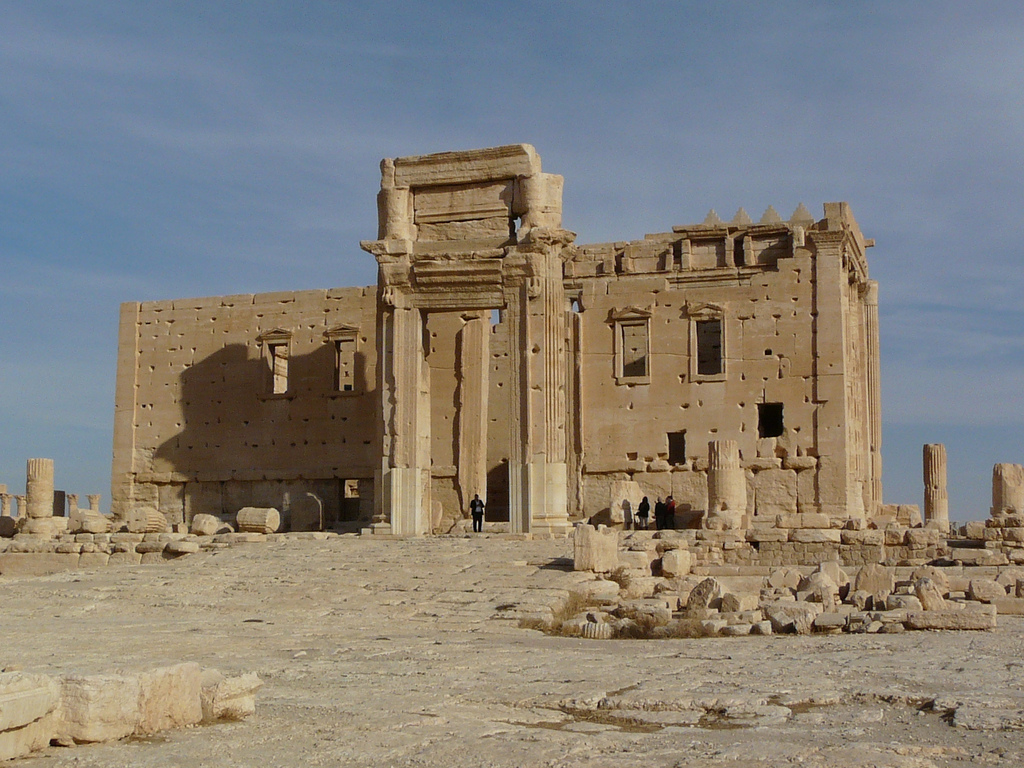
Temple of Baal in Palmyra
There are so many human tragedies occurring around the world, but I would be lying if I didn’t acknowledge that the history major in me feels most deeply hurt by the cultural artifacts being destroyed. Since this was written, ISIS captured the ancient city. Let’s hope they leave them untouched.

This is what walkability creates – fitter, healthier residents.

I have not followed this controversy, nor I have read much by Vanessa Place, except the slim, co-written volume, Notes On Conceptualisms, but I’m going to fall on the side of ‘not cool, Vanessa.’

But that’s certainly not the only point of view.

‘The Pleasures and Pains of Coffee’


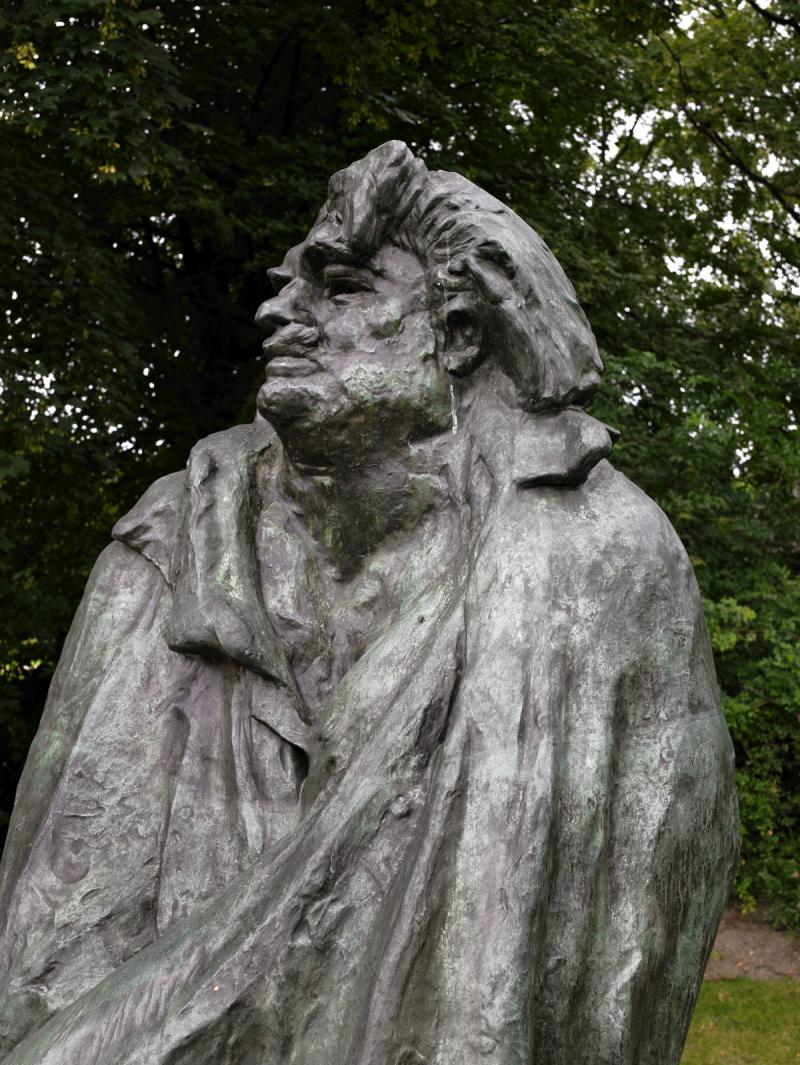
Rodin's status of Balzac
Rodin’s status of Balzac

by Honore de Balzac
translated from the French by Robert Onopa

Coffee is a great power in my life; I have observed its effects on an epic scale. Coffee roasts your insides. Many people claim coffee inspires them, but, as everybody knows, coffee only makes boring people even more boring. Think about it: although more grocery stores in Paris are staying open until midnight, few writers are actually becoming more spiritual.

But as Brillat-Savarin has correctly observed, coffee sets the blood in motion and stimulates the muscles; it accelerates the digestive processes, chases away sleep, and gives us the capacity to engage a little longer in the exercise of our intellects. It is on this last point, in particular, that I want to add my personal experience to Brillat-Savarin’s observations.

Coffee affects the diaphragm and the plexus of the stomach, from which it reaches the brain by barely perceptible radiations that escape complete analysis; that aside, we may surmise that our primary nervous flux conducts an electricity emitted by coffee when we drink it. Coffee’s power changes over time. [Italian composer Gioacchino] Rossini has personally experienced some of these effects as, of course, have I. “Coffee,” Rossini told me, “is an affair of fifteen or twenty days; just the right amount of time, fortunately, to write an opera.” This is true. But the length of time during which one can enjoy the benefits of coffee can be extended.

For a while – for a week or two at most – you can obtain the right amount of stimulation with one, then two cups of coffee brewed from beans that have been crushed with gradually increasing force and infused with hot water.

For another week, by decreasing the amount of water used, by pulverizing the coffee even more finely, and by infusing the grounds with cold water, you can continue to obtain the same cerebral power.

When you have produced the finest grind with the least water possible, you double the dose by drinking two cups at a time; particularly vigorous constitutions can tolerate three cups. In this manner one can continue working for several more days.

Finally, I have discovered a horrible, rather brutal method that I recommend only to men of excessive vigor, men with thick black hair and skin covered with liver spots, men with big square hands and legs shaped like bowling pins. It is a question of using finely pulverized, dense coffee, cold and anhydrous, consumed on an empty stomach. This coffee falls into your stomach, a sack whose velvety interior is lined with tapestries of suckers and papillae. The coffee finds nothing else in the sack, and so it attacks these delicate and voluptuous linings; it acts like a food and demands digestive juices; it wrings and twists the stomach for these juices, appealing as a pythoness appeals to her god; it brutalizes these beautiful stomach linings as a wagon master abuses ponies; the plexus becomes inflamed; sparks shoot all the way up to the brain. From that moment on, everything becomes agitated. Ideas quick-march into motion like battalions of a grand army to its legendary fighting ground, and the battle rages. Memories charge in, bright flags on high; the cavalry of metaphor deploys with a magnificent gallop; the artillery of logic rushes up with clattering wagons and cartridges; on imagination’s orders, sharpshooters sight and fire; forms and shapes and characters rear up; the paper is spread with ink – for the nightly labor begins and ends with torrents of this black water, as a battle opens and concludes with black powder.

I recommended this way of drinking coffee to a friend of mine, who absolutely wanted to finish a job promised for the next day: he thought he’d been poisoned and took to his bed, which he guarded like a married man. He was tall, blond, slender and had thinning hair; he apparently had a stomach of papier-mache. There has been, on my part, a failure of observation.

When you have reached the point of consuming this kind of coffee, then become exhausted and decide that you really must have more, even though you make it of the finest ingredients and take it perfectly fresh, you will fall into horrible sweats, suffer feebleness of the nerves, and undergo episodes of severe drowsiness. I don’t know what would happen if you kept at it then: a sensible nature counseled me to stop at this point, seeing that immediate death was not otherwise my fate. To be restored, one must begin with recipes made with milk and chicken and other white meats: finally the tension on the harp strings eases, and one returns to the relaxed, meandering, simple-minded, and cryptogamous life of the retired bourgeoisie.

The state coffee puts one in when it is drunk on an empty stomach under these magisterial conditions produces a kind of animation that looks like anger: one’s voice rises, one’s gestures suggest unhealthy impatience: one wants everything to proceed with the speed of ideas; one becomes brusque, ill-tempered about nothing. One actually becomes that fickle character, The Poet, condemned by grocers and their like. One assumes that everyone is equally lucid. A man of spirit must therefore avoid going out in public. I discovered this singular state through a series of accidents that made me lose, without any effort, the ecstasy I had been feeling. Some friends, with whom I had gone out to the country, witnessed me arguing about everything, haranguing with monumental bad faith. The following day I recognized my wrongdoing and we searched the cause. My friends were wise men of the first rank, and we found the problem soon enough: coffee wanted its victim.

Pens


This article about judging NYC art galleries based upon their pens seemed like just my kind ‘o thing. I can totally respect the idea of critiquing galleries and of expecting them to have something more than the usual. Pens, too, are a tool for creating art.

Even though my professional writing is almost invariably done on a computer, I am painfully fussy about my pens.

For years, I had single pen; a fountain pen. It had no brand name on it (though it used cartridges made by Waterman), but it had been a gift of Jose and Nico – two friends from Spain – and it was slender and graceful. A perfect writing instrument. It broke after almost ten years during a particularly soul crushing and unhappy Christmas in New York.

I looked for something to replace it and settled on a Cross Century II in chrome. As to pile on the misery, that model has been discontinued, but it has been a sturdy friend so far. The style in fountain pens these days is ostentatious and big and thick. The fountain pen as a tool for Freudian compensation. But I got used to a finer, more elegant style (are you noticing the rhetorical tools that I’m using to dismiss the favored style of fountain pens?) and though I haven’t found anything so slender as the father of my fountain pens, the Century II is comparatively slender, which is why I chose it.

I love this particular kind of notebook – I believe they were originally designed as school composition books – that I used to buy at this shop in LA’s Little Tokyo. They had strange sentences on the front that were clearly more or less literal translations from the Japanese, things like: This notebook is good for writing sentences.

Anyway, a good fountain pen that feels right, fits in the hand and has the correct, tactile feel when you put it to paper, is also ‘good for writing sentences.’


Dumbarton Oaks Museum & Research Library


I’d visited the Dumbarton Oaks Gardens (which are an absolutely fantastic way to spend a nice afternoon; I brought a collection of essays by the nineteenth century critic and essayist, John Ruskin, because these gardens deserve to be appreciated next to some eighteenth or nineteenth century literature; in point of fact, I actually brought a collection of poems by William Cowper, just in case we could also visit the gardens, but there wasn’t enough time), but never the attached museum. So, on Sunday, we went.

A couple of decades ago, I was very intrigued by the architect Philip Johnson. One of his notable buildings was the Dumbarton addition, designed to display its Pre-Columbian art. It’s an amazingly well designed little wing. Circular rooms adjoining each other to create a larger circle, with the floors being golden wood radiating out to an outer green, white veined marble ring. The move away from lines and edges helped take me away from Western European modes of geometric thought (I wouldn’t necessarily say that the art therein enclosed was necessarily non-linear nor circular; the important part was the dislocation from ingrained modes of thinking). The golden wood matched the reappearance of wood and especially gold in the materials used in the art, while the marble reflected the use of jade, especially, but was also in dialogue with the turquoise.

The art itself is amazing, but there is always a ‘but.’ It was too disconnected. Not enough effort was made to help us see the pieces in context. There were so many varied and wildly different cultures in Mexico and Central and South America before my people (broadly speaking) gifted two continents with small pox and influenza, but the viewer is never given enough to understand Olmec versus Moche cultures, so that the collection becomes little more than an assemblage of beautiful and stunning bric-a-brac.


Shakespeare’s Birthday Bash At The Folger


Sunday was one of my favorite days of the year: the day when the Folger Shakespeare Library opens up its backrooms to the public and serves up cake and swordfighting in honor of Shakespeare’s birthday.

We brought two boys with us – our friends’ children, age 7 and 10 (perfect ages to appreciate the offerings).

I love sitting in the library, listening to classical quartet (this time, it was two violins, cello, and flute) and then going and looking at some of the paintings. The Folger has a wonderful collection of art about Shakespeare, like paintings of scenes from his plays or portraits of Shakespearean actors, as well as portraits of Shakespeare himself (mostly posthumously painted). Their crowning glory is a portrait of Queen Elizabeth (the ‘Seive’) and one of her one-time favorite, Robert Dudley (which was, sadly, not on display).

The fight director for the Folger gave a couple of presentations on historical fighting techniques, with references to Shakespeare. Of course, the boys were rapt.

A couple of notable things stuck out with me. Firstly, that swashbuckling used to be a sort of insult. A swashbuckler didn’t know how to fight. A ‘swashing’ blow was a reflexive swing which, if it landed on a buckler, made a lot sound and fury, signifying nothing (do you see what I did there?).

Secondly, in Romeo and Juliet, they keep asking Mercutio if he’s hurt, because they cannot tell. Mercutio was stabbed with a continental rapier, which creates a small wound – what would now be called a sucking chest wound. While terrible internal injuries have been suffered, it won’t actually bleed. Romeo literally cannot see a wound, so doesn’t know that Mercutio has been dealt a fatal blow.

Thirdly, he noted a scene in Julius Caesar where Caesar exits the stage to take care of some bureaucratic matter and then the conspirators enter the stage and engage in some silly dialogue about whether some person giving them the eye means that they’ve been uncovered. He said that was not something to build tension – there’s already plenty of tension and, arguably, the scene actually deflates some of the tension. No, it is entirely intended to give the actor playing Caeasar time to attach some Elizabeth special effects – namely a bladder filled with blood – around his chest. And when, having done the deed, the conspirators decide to get their hands bloody and walk the streets to show they are not ashamed or hiding their action, it was actually a stagecrafty way to help mop up the blood on the stage.

Finally, there was a roundabout argument for gun control. Shakespeare lived in the first age when the growing middle class would walk to streets with swords – that they often weren’t trained to use. Fights were more deadly, as a consequence. He argued that Shakespeare was constantly commenting on the culture of weapons and violence. At the end of Romeo and Juliet, an entire younger generation of two families have been killed as a consequence of escalations resulting from a culture of weapons and violence. Literally, it snowballs from anger at Romeo crashing a party held by a rival family and ends with a trail of corpses.

The Value Of Art


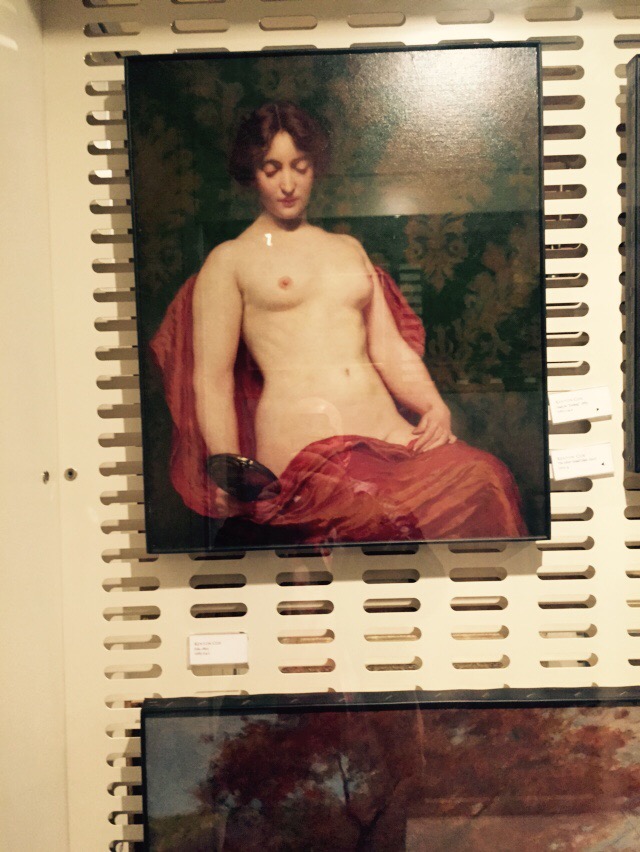
While walking through what I think of as my secret galleries in the American Art Museum, I was arrested by a series of nudes by Kenyon Cox. Something between Manet’s breakfast heresies, classical/traditional nineteenth century nudes, and Pre-Raphaelite romanticism. I couldn’t call them great paintings. They weren’t great paintings – certainly not equal to those predecessors – but inexplicably arresting. And I can’t deny that my interest – my affection – for these nudes was not just aesthetic, but also erotic.

After seeing those paintings, I wandered over to the painting conservation studio where you could watch the conservators work through glass walls. Despite being the painting conservation studio, the only item being worked on was a life sized neo-classical statue of a young woman. A conservator was crouched down, rhythmically brushing below the statue’s right knee with a soft brush. It must be a gift to be able to work in the arts, I thought to myself. I also reflected that it was nice that her co-worker, working on a computer not a painting nor sculpture, flashed me a pretty smile. Less happily, I wondered if they might actually be grad students with little hope for real and decent paying job in the field due to the sequester (recently) and general disinvestment in the arts (long term trend).

The artistic vocation is a bit of unicorn now, isn’t it? Art, including literature, is undervalued and we are no longer taught to appreciate it. Even worse, we are no long taught to engage with it.

I’m going to praise Taylor Swift, here. I know. Crazy, huh? But not for her music. God, no. But for withdrawing from the streaming service Spotify. Services like that teach us that artistic production has no value to the consumer. Swift formally said f–k you, my work has real monetary value and Spotify is not valuing it. That’s worth something.