
Thursday Staff Meeting – The Man, The Myth, The Marx
Transformations

Tuesday Morning Staff Meeting – Poetry For Commuters
Monday Staff Meeting – A People’s Soul Resides In Its Museums

DC Poetry Reading – April 15th
 Next Sunday at 3pm, there will be a poetry reading at the DC Arts Center on2438 18th Street in Adams Morgan (south of Columbia Rd. on the west side of the street).
Admission is $5, free for DCAC members.
Gina Myers, Jim Goar, and Rod Smith are the poets.
You Can See How This Could Be Confusing For Lovers Of Poetry Or Poultry

Thursday Staff Meeting – The Strategies Of Poetry & Politics
Neurophilosophy
I was living in a suburb of Minneapolis with my good friend Ryan.
Part of our relationship is based on shared appreciation for literature, science fiction, and philosophy, but also on our appreciation coming from different directions.
In short, I am am humanities geek and he’s a hard sciences geek.
During this time, I read a book in his collection called Neurophilosophy by Patricia Churchland.
Neurophilosophy indulges in a contemporary brand of scientific reductivism that I cannot accept on a very visceral level. On a more rational level, while I accept that we may one day understand all the problems of consciousness and free will within a scientific framework, I believe that the terms under which they are resolved and the extent to which science will have advance will have the effect of rendering all the claims of neurophilosophical reductivism as meaningless as Churchland finds most efforts by traditional philosophy to address these issues to be.
These memories were brought up when I read this essay debunking the claims and efforts of Churchland and her colleagues. Unfortunately, I can’t say I’m pleased to have the author on ‘my’ side, mainly because he’s tendetiously strident, without showing much in the way of rigor and spends most of the piece tearing straw men without bothering to address the very real issues brought up by applying modern neuroscience to the old questions of philosophy and religion.
I fully understand and participate in the subjective desire to believe in something transcendent – something inside us as conscious beings connected to art, beauty, creation, the divine. But, dude… not the way to make the argument! Thanks for setting us back.
I should also add the my friend’s views have softened and he is, dare I say, closer to ‘my’ side of the argument (‘our’ side?) than where his opinions used to fall. Getting soft in his old age?
What A Gorgeous Chapbook
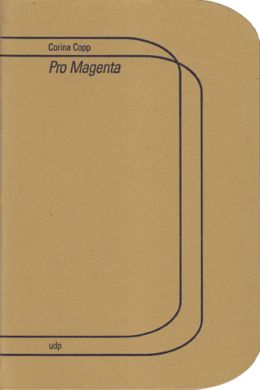 I just wanted to encourage folks to read this post by Ron Silliman.
I don’t know Corina Copp, but Silliman is right in saying that the design Ugly Duckling Presse produced for her chapbook is amazing.
 the coffee philosopher