 Ron Silliman muses about the various California poetry ‘scenes.’
The link between historic preservation and deranged, gothic panopticons.
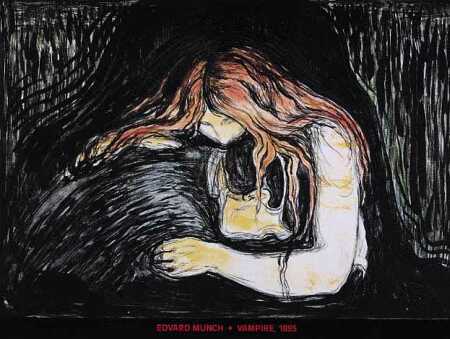 Edvard Munch was as dark as his famous Scream is what this article seems to be saying.
Beyond the ridiculous overuse of The Scream (I dated a girl who, in addition to suffering from a chronic tendency towards infidelity, also owned and displayed a three foot inflatable copy of the titular screamer, which should have been some sort of signal, but to be frank, I was in college and she was a delightfully proportioned c-cup), I do have a certain affection for him.
Firstly, I am unduly proud of some praise I received from the professor of my one art history course in college. The midterm consisted simply of a series of slides of art works we hadn’t studied and we were to write a paragraph explaining who we thought was the responsible artists and why. I was writing my answer for one of the slides and had written a goodly length bit, when, with time running out, I suddenly wrote something like, ‘Scratch that – I have a gut feeling this a Munch.’ I was correct and the professor read my answer aloud in a later class as an example of the need to rely on instinct and ‘gut’ as well as research when studying art. For some reason, I’m still inordinately proud of that, some twenty years later.
Finally, when I lived in Atlanta, I was just a few blocks away from the High Museum of Art and was also a member. They had a beautiful exhibit of the later works of Munch, titled ‘Munch: After The Scream.’ Munch would sometimes leave his painting outside deliberately, so that the damage and changes wrought on it from the elements, particularly the snow, would become part of the work. That struck me – it reminded me of the opening of Lawrence Durrell’s Balthazar when the narrator praises a baby for its destruction of pages from the narrator’s book as being an honest form of editing.
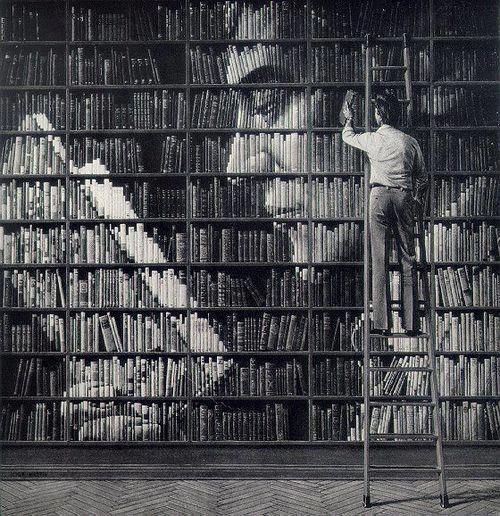
 The other night, I attended a fundraiser for the Center for American Progress, a progressive think tank and strategy clearinghouse at the Corcoran Gallery of Art.
Mostly, it was a crowded room filled with progressive semi-luminaries (Andy Stern, Ruy Texeira, etc), your usual political/policy hacks (no disrespect intended).
But some of the galleries on the first floor were open, containing a beautiful collection of about half American and half European art, mostly from the late eighteenth through the late nineteenth centuries. And that was why I came. In a city filled with free museums, I am resistant to paying for one and the Corcoran is not free, so I naturally finagled myself a couple of tickets so we could go and see what was open to see. We had done the same thing when we went to an inaugural party there in January 2010, though far fewer galleries were open.
My date and I were cornered by two strange men. One man named Bill described his tangential participation in that nastiness in Beirut in 1982 and the other, named Jean-Pierre described how he had begun “treating his glaucoma” at age twelve (I’ll leave you to read between the lines as to his true meaning).

 I actually used to use the L.A. Metro a good deal when I lived in Hollywood.
 the coffee philosopher