Who Would Have Thought That An Article In A Magazine Called ‘The American Conservative’ Could Be So Wrongheaded (Sarcasm)


Headline aside, I actually respect a good deal of what’s in The American Conservative, but this is just such a wrongheaded piece, that I felt compelled to spend entirely too much time on it.

High Art of the Bourgeoisie by Matthew Taylor is just full of… it.

Taylor is presenting some supposedly radical views of Edouard Manet that will just

Primed to see a parade of characters memorialized for posterity by a realist master, a visitor may be struck by how brief and sketchy the characterizations are and wonder at how this limitation only improves their aesthetic.

Who goes to see a Manet exhibition expecting to see realism and who is surprised to find the ‘brief and sketchy characterizations’ that were taken to another level by Monet and the Impressionists? This sounds more like a Matthew Taylor problem than something experienced by anyone who has ever read anything about western art ever in their life. Frankly, I am having trouble picturing what Taylor’s teachers taught him about the birth of Impressionism or European art in the nineteenth century that he would think that Manet is your go to guy for bourgeois realism.

What a betrayal then, of the militants of modernism, that Manet was by turns surprised and despondent at his repeated rejections at the hands of the academy, the critics, and the public.

Who are these militants that are offended that Manet wanted to traditional critical success which was, generally, necessary for, you know, monetary success, i.e., selling your paintings. It’s hard to find an artist, but that artist ever so avant-garde, to take joy in being rejected, not just by the academy and critics, but also by the public that artists depend on to give him or her money in return for the sale of artwork. Oh, and it should be noted he followed that remark up by quoting from a epistolary exchange between Manet and his friend, Charles Baudelaire. Baudelaire, the iconoclastic rebel who wrote a poem about cutting a woman and having sex with the wound as a means of giving her syphilis. Taylor, your non-iconoclastic, bourgeois, middle class man does not ask a man like Baudelaire advice on handle approbation without being just teensiest bit avant-garde.

There is an admirable humility in Manet’s corpus that separates him from his contemporaries. He turned down an invitation to join a dissident art exhibition held by Monet, Renoir, Cézanne, Degas, and other budding impressionists. He preserved that artistic integrity in which art must flow from the soul of the painter, and without which art is merely brittle canvas splashed with resin and oils, without succumbing to the self-satisfied pleasure at the contempt of the ignorant that characterizes the soldiers of the avant-garde.

Okay. Nice straw man there to describe the entirety of every avant-garde movement ever. And Manet didn’t turn down the dissident art exhibition out of humility. Rather the opposite. He wanted to wider acclaim that came with recognition and respect in the official Salon. Also, the Impressionists were the brash, new kids on the block. Manet was from an earlier generation. I don’t go partying with twenty-somethings, but it’s not out of humility.

Taylor even ends his essay with ammunition for the opposite argument he is attempting to make, by quoting Manet: ‘Who is this Monet whose name sounds just like mine and who is taking advantage of my notoriety?’

‘My notoriety,’ Manet said. He was friends with the radical poets Baudelaire and Mallarme. He supported a female painter, Berthe Morisot. And, of course, he was friends with Monet, Degas, Renoir, Cezanne, etc.

No. Manet wanted acceptance and acclaim from the main tastemakers of his time. But he was not a bourgeois painter. He was a radical and did set the stage and tone for modernism in the visual arts.
Washington Celebrities


So, I was walking down to the bank to withdraw some money for the offertory at church when I saw what seemed a familiar sight.

Andrew Schwartz, whose impromptu adoption of the lead role in the Folger’s Henry V had so impressed me, was walking down Pennsylvania Avenue.

Nothing special, but it was nice to be able to tell him in person how much I had enjoyed his performance.

So, that’s kind of what passes as a celebrity sighting in DC – or at least, what passes as a celebrity sighting once you’re bored of seeing Boehner standing outside a bar with a cigarette hanging out of his mouth.

Weekend Reading – The Real Advantage


The reason why Borders went bankrupt and Barnes & Noble is still surviving actually has little to do with differing e-books and online strategies.

College kids still prefer the old fashioned kind ‘o textbook and aren’t really into ‘enhance e-books’ or other such nonsense.

What is ‘the work of art?’

An interview with Michael Moorcock.

For the third year in a row, Washington, DC is ranked the most literate city in America. I can only assume that my New Year’s resolution to read a book a week will help us secure the title a fourth year running, so… you’re welcome, DC.

The Chief Glory Of Every People Arises From Its Authors


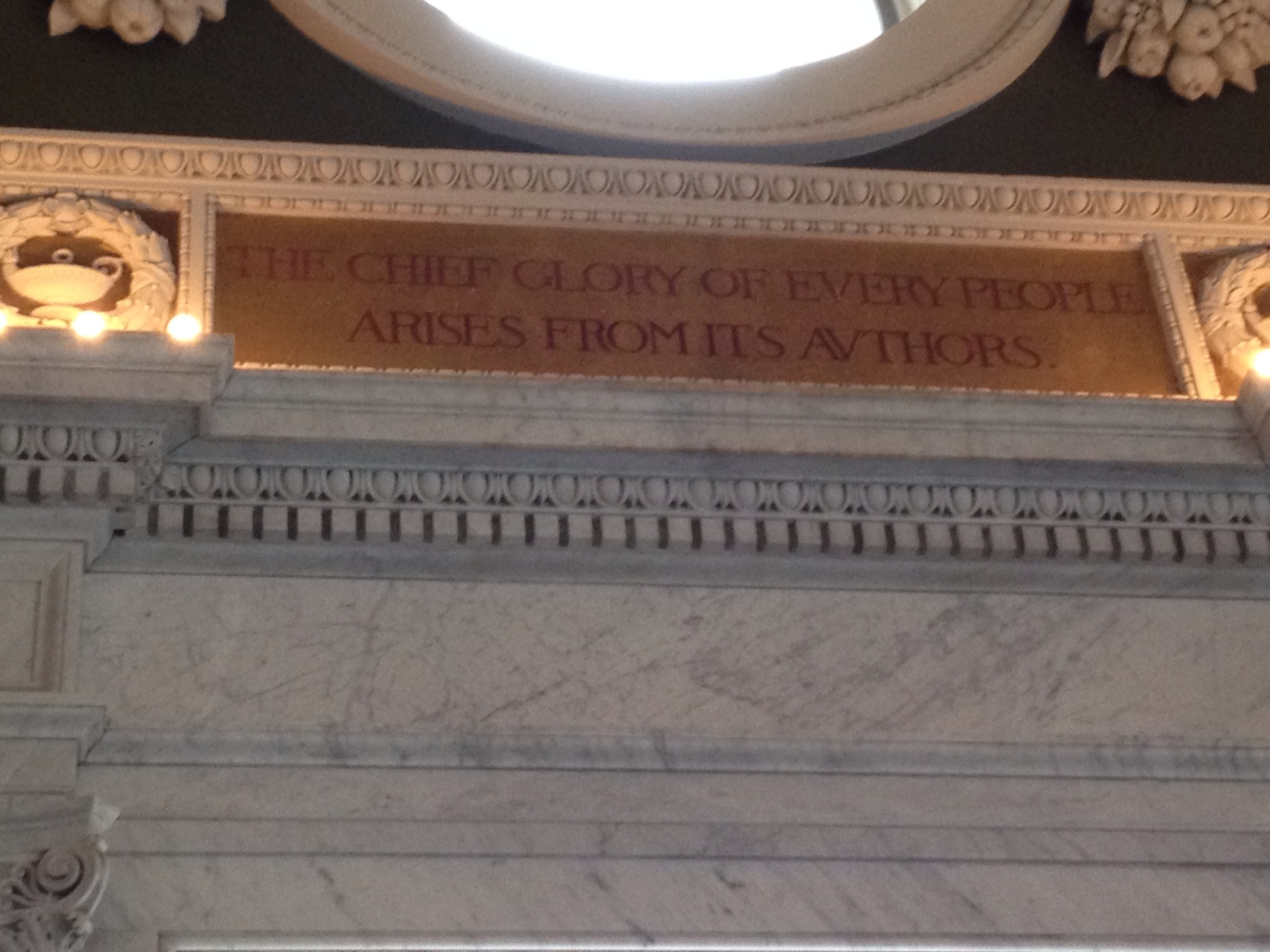
photo-2What a marvelous sentiment!

‘The chief glory of every people arises from its authors.’

I took this picture while visiting the Jefferson building of the Library of Congress with my better half’s father.

Is it true?

In a thousand years, will people remember George W. Bush? Steve Jobs?

Or will they remember Mark Twain?

The glory of Greece and Rome is as much in Homer, Cicero, Plato, and the idea of a Republic and Democracy as it in roads, aqueducts, and temples, however glorious.

The Cloisters


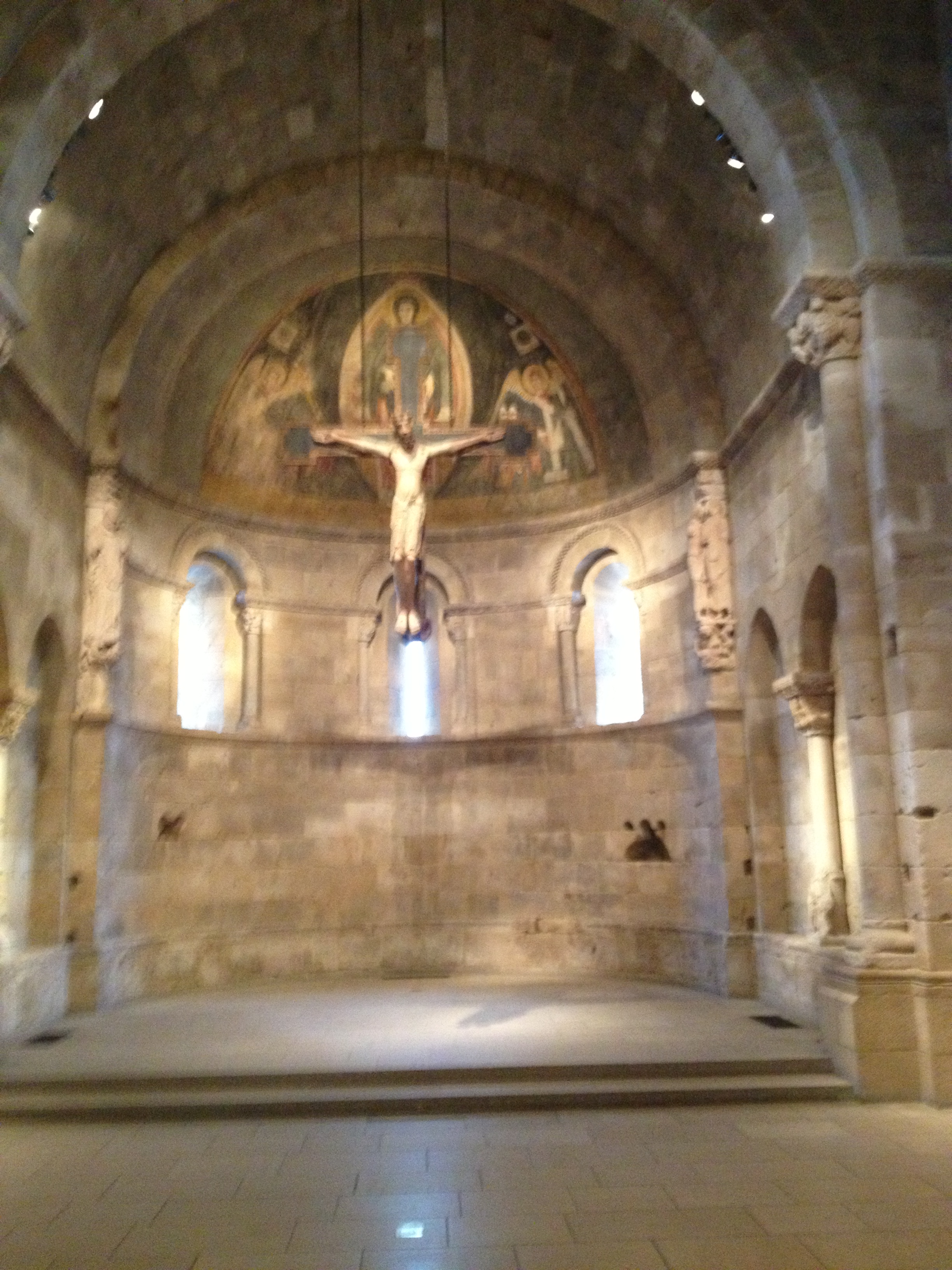
photo-4The Cloisters are a beautiful museum, filled with some of the most amazing sacred art from the high middle ages.

The entire place left me feeling uncomfortable.

Did you know that I’m vegetarian? Did you know why? I was in college and I stopped by my father’s house to raid the fridge and when I opened the freezer, looking for a tv dinner, I saw shelf after shelf filled with great, red chunks of meat. It seemed as if an entire cow might have been slaughtered and stashed in that fridge. The sheer mass of it struck me, by driving home the truth that a living, feeling creature had died so that we might have beef three times a week. That was when I quit.

The picture you see is off an apse taken from a Spanish church. The entire apse disassembled, removed, and then reassembled in New York.

The building is filled with such things. Columns. Door ways. Cloisters. Meeting rooms.

Also altars. Lecterns. Reliquaries.

More. Hundreds of items.

Things taken from churches and monasteries across Europe. Items that were, literally and formally blessed and sanctified. And not just formally, but objects used in the worship and devotion of how many generations? Taken from monasteries sanctified not just from a bishops prayer and holy water, but by the blood and bodies of thousands of monks and nuns who lived and died in those abbeys.

There was an altar and all its trappings and chairs were set up for those who wished to formally respect it. There was a picture of the church from whence they were taken. It was still standing. That church hadn’t been otherwise destroyed. That altar could still have been used for worship, had it not been moved.

The volume was overwhelming and, for me, with rare exceptions, the place felt very secular.

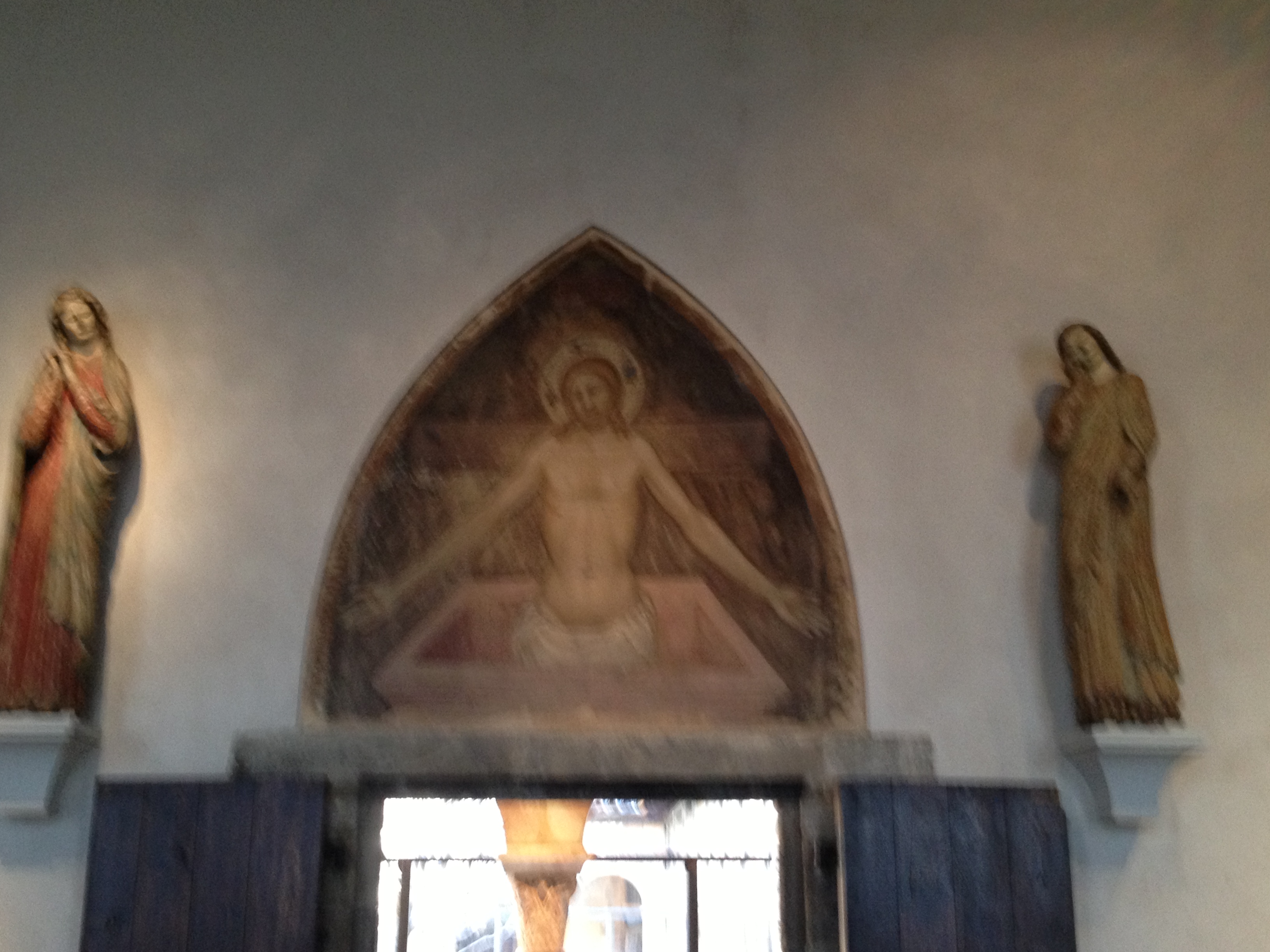
Only a single spot, some art on the wall above a doorway, felt at all holy to me.photo-3

The art was beautiful and I’m glad I came, but…

I went to the Rubin Museum later during my visit to New York City. The Rubin is a museum dedicated to Himalayan art. Essentially, Tibetan art (some work from Nepal and Bhutan and India, but Tibetan culture is at the center of the museum). I realized that the act of collecting the sacred art that was exhibited in that museum was different because of the unique and tragic nature of Tibet’s occupation by China and the Chinese government’s efforts to eradicate Tibetan culture, particularly it’s religious culture. Collecting and preserving that art could be viewed as a means to protect it from destruction or at least usurpation and shameful manipulation by the Chinese government.

But last I checked, western Europe was relatively free from Chinese occupation, excepting tourists.


tumblr_mfs6rpAqpE1r616oeo1_500

Holy Librarians, Batman!


Holy libraries, Batman!

Midweek Staff Meeting – The Rumble In The Journal


5917-Books-WomenKuhn versus Popper.

The habits of the Victorian reader.

What is ‘Yellowism?’

The makings of a successful chapbook press.

Old Magazine Articles


I’m just pitching this website, Old Magazine Articles, which collects (mostly PDFs) of old magazine articles.

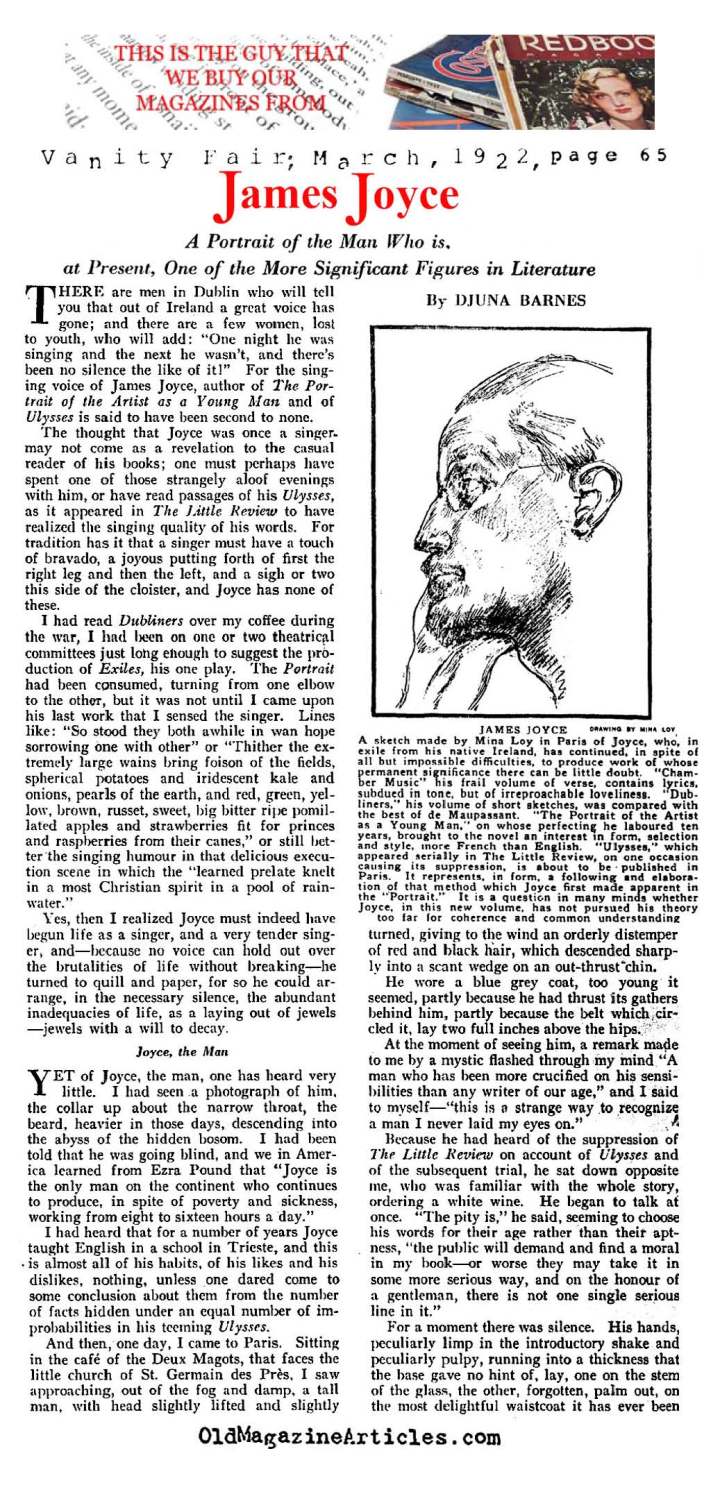
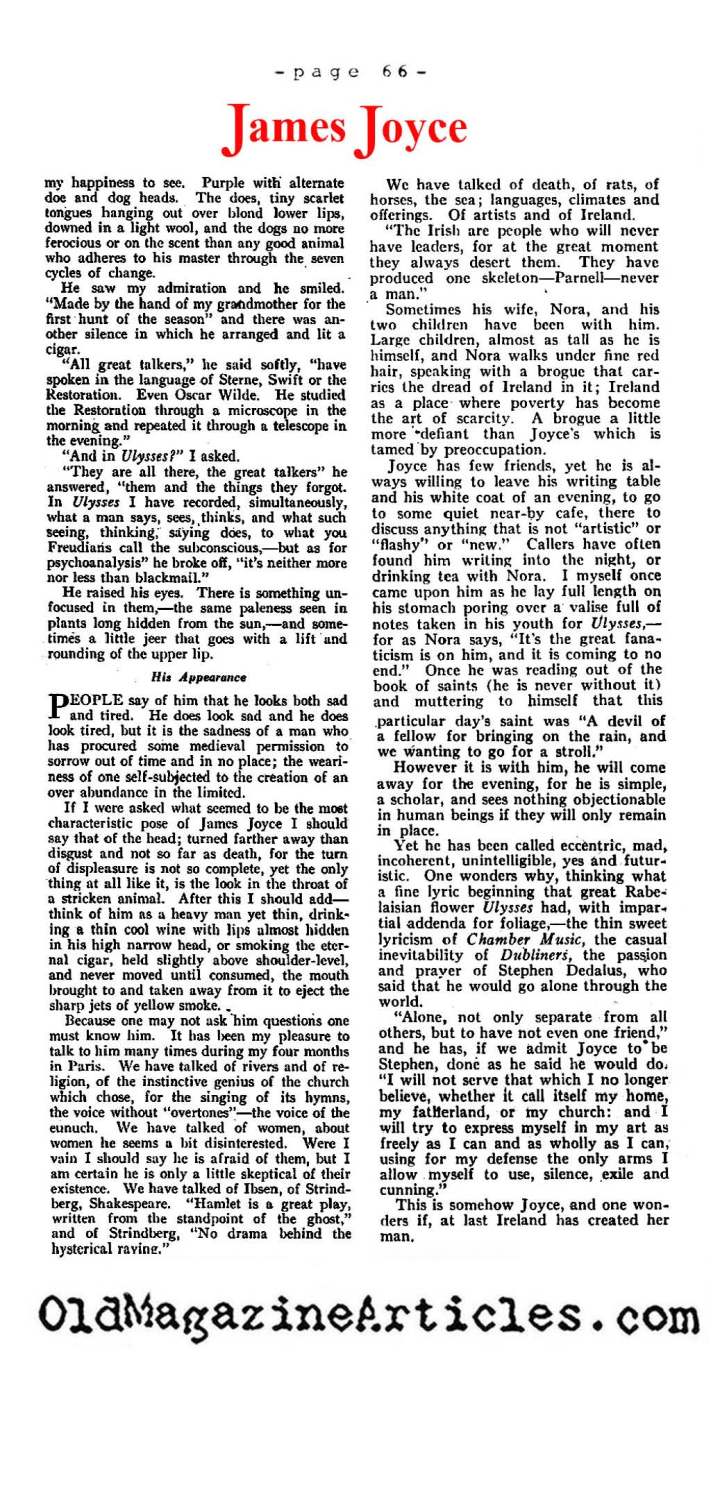
I came across via an article iy posted, a little character piece, but written by Djuna Barnes (of Nightwood fame) about James Joyce (of too much fame to mention).

This Vanity Fair article from 1915 on Marcel Duchamp in New York City or this 1935 article about the rise of secularism in America (not a new topic, as you can see)… so much to explore.


First Staff Meeting Of The New Year – No Kids, Please


Red, 1963, San Francisco Museum of Modern Art, San Francisco, Evelyn and Walter Hass, Jr. Fund Purchase, 82.155, © Ken Price

Philosophers should stop talking about their kids.

What’s killing opera? Hint: it’s not opera.

Philosophy, poetry, Craigslist, and language.

The humanities: not as bad as you thought!

This year, be still.

The theater and drink.

The best of art in 2012.