Perfect… just the way they are.
Monday Morning Staff Meeting – Forgiveness
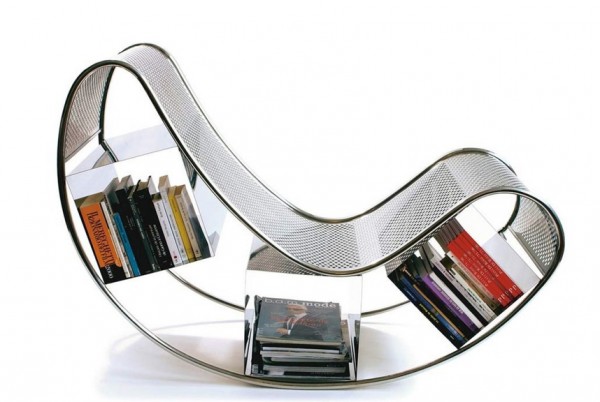
Your New Favorite Chairs








Pre-Raphaelite Exhibit At The National Gallery Of Art
 Last Sunday, we finally made it down to the National Gallery of Art to see the exhibition, Pre-Raphaelites: Victorian Art and Design, 1848-1900.
The Pre-Raphaelites are not the sort of movement you’d normally expect me to be excited about, but a while back, I’d started reading the novel, Possession. That novel is about some literary and archival sleuthing around the relationship between two fictional poets. However, their poetry was based on the that of Robert Browning and Christina Rossetti, the latter of whom is considered a Pre-Raphaelite poet. So I got a book of Pre-Raphaelite poetry and fell in love with the poems by Christina Rossetti, so bought her collection, Goblin Market and Other Poems. Loved it. So when an exhibition about the movement came to town, I wanted to see it.
And it’s great. Really wonderful. Go see it.
First of all, it’s filled with gorgeous art. If you like avant-garde art, you can see traces of Seccessionist art in it, and also just respect it for the fact that it was avant-garde at the time it was created. If you think Kandinsky and Pollock were the worst thing that happened to art, with the possible of the academic-artistic complex conspiring to make ugly, difficult, meaningless art the only good art.. well then, this is a ton of lovely, representational art.
The curating efforts, which revolved around themes like ‘Nature’ and ‘Paradise’ (oddly enough, a room devoted to crafts and furniture), were somewhat lacking in utility, but it was just great to see so much work from this period gathered together.
Hunk Of Skin (New Year’s Resolution, Book Twelve)
I actually bought this for my father. I was browsing the used bookshop run by the Friends of the Library – Montgomery County, when I saw this. My father is great Picasso fan. Naturally, I acknowledge Picasso’s genius and love many of his paintings, but he’s not my favorite (Kandinsky, Pollock, Cezanne would all rank higher for me, for example).
The translation is irritatingly idiosyncratic. For example:
y el clerigo estranados frios
pintados de azafran y verde cargadosThis is translated as:
and the priest standing coldly apart painted
saffron and greenIn the Spanish, pintados, painted, is on the earlier line. Why did the translator move it?
This is a pattern.
Look, Picasso was no poet. He clearly tries to project his visual sensibility into the medium but it is just warmed over surrealism. Does the translator believe that new line breaks, indentations, and spacings will improve it? If so, to what purpose? Surely something like this is more about a historical document about Picasso as it is about publishing very good poetry? But Paul Blackburn, who translated these poems, decided rather on an ill advised effort to… what? Improve? I don’t know. All I know is that these are not particularly good poems (more like your average, MFA style product) but their author gives them a value that an interference minded translator can only diminish.
Blue Rider (New Year’s Resolution, Book Eleven)
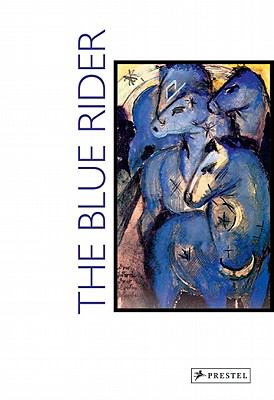 I was at MoMA in New York back in January and they had a wonderful exhibit on abstract art – Inventing Abstraction 1910-1925. There was some kind of an effort to make some kind of a point, but they failed quite masterfully at that. So, as a thematically/narratively curated exhibit… well, it really wasn’t. But as a grab back of awesome, early abstraction, it was freaking awesome. I love avant-garde art from that period. And I love how they incorporated music and especially poetry. Some Mallarme and Appollinaire, some of those lovely old journals and publications, with the poets wild typographies. Good stuff.
They also had some Italian futurist stuff, including a long poem/dramatic prose creation by Filippo Tommaso Marinetti, the manifesto writer extraordinaire of the Italian Futurists. Of course, those folks devolved fairly rapidly into Fascism.
Looking at some of the graphic design on Marinetti’s pieces in the exhibit, I couldn’t help but notice how much it looked those iconic covers of Ayn Rand’s novels (see here and here). They shared an obsession with technology and progress (Rand’s novels, Marinetti, and Fascism). Especially in Atlas Shrugged, her obsession with phallic, thrusting trains and long beams of powerfully strong steel.
But at the very beginning of the of the MoMA exhibit, was a little something about the Blue Rider Almanac, the love child/brain child of folks like Kandinsky (who claimed to be deeply influenced and move by Schönberg’s innovative music.
So, it seemed like fate when, a day or two later, I was in Rizzoli Bookstore (a great place for art books and for Italian language works) and I saw a book on the Blue Rider movement. Since I was on a kind of quest to buy a book at a bunch of famous bookstores and Rizzoli was on the list. I’d been to Rizzoli once before and it’s such an indulgent and decadent feeling place (though also pricey; don’t like for a bargain bin over there; but you do pay for quality).
So, I bought The Blue Rider and I”m now getting around to reading it.
The book itself reads rather like a catalogue or monograph written on an exhibition that never took place. Which isn’t a bad thing. If exhibition catalogues weren’t so darn expensive, I’d own a lot more of them.
When reading about the Blue Rider group on the little placards and seeing the collection of works and documents associated with it, I wanted to learn more about this group. I wanted to read about Kandinsky and Schönberg sitting down at a bar and chasing the same woman and then Franz Marc and August Macke struggling with the typesetting and printing of a broadsheet. I don’t know if these things actually happened (and the first one seems very unlikely), but that’s what wanted that went beyond just a catalogue and I didn’t get it.
Sure, there was some talk at the very beginning about which group drank at which cafe, but for heaven’s sake man, I learned that about some pre-Blue Rider groups! Where in the good Lord’s name did Kandinsky get drunk and take his coffee?! Part of this also about an incredibly drowsy writing style. We’re talking about some of the twentieth century’s most influential cultural figures, yet sometimes, I can hear a voice in my head while reading this saying, ‘Bueller… Bueller… Bueller…’
The book’s progression is also weird. First, there is a description of the cultural environment leading up to the formation of the Blue Rider group. Then there is some description of how they set up their first exhibition. Then there are brief bios of some major figures associated with the group. Then some bios of minor figures. Followed by a narrative history of later exhibitions and activities of the group and its members. And then the author tries to explain what Blue Rider group was about and wanted to accomplish. Then there are a bunch of photos and descriptions of places associated with the Blue Rider group. But those descriptions sometimes appear pulled from brochures. One of these places is actually a walking route across swampy moors. The author recommends that the reader, should the reader take this walk, bring some water. There’s even a recommendation that I, the reader, visit the Wernstein Am Inn in Austria. See what I mean? That’s not history, that’s… I don’t know. Advertising? National park service?
It feels like this whole thing was written without an outline. Like I said earlier, it feels a bit like an exhibition catalogue, but it’s not about an exhibition, so it lacks the unifying drive an actual exhibition might have imparted to it.
But I shouldn’t complain that much. For $19.95 plus tax, I’ve got reproductions of some stunning art work from my favorite period in art, plus some good history about a subject I knew little about (despite a great fondness for Kandinsky, if I ever knew about the Blue Rider group, I’d forgotten it by the time I’d reached MoMA.
The Sunday Paper – The Typewriter From ‘Naked Lunch’ (The Movie) Is Almost Here

Your typewriter can read your mind.
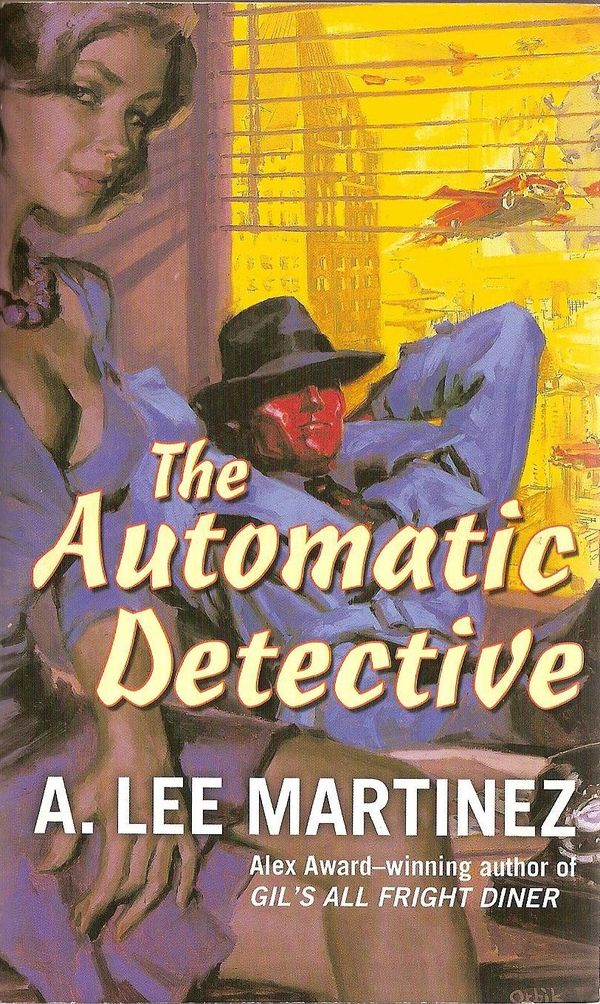
Circle City Books
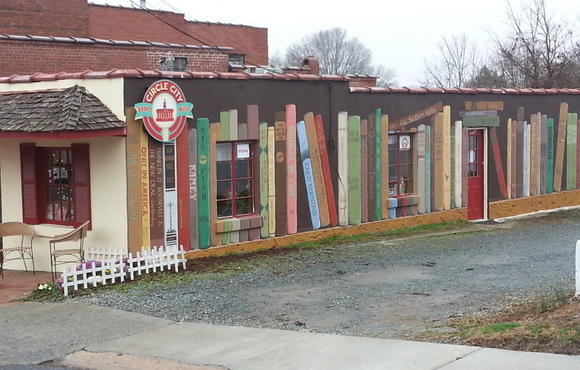
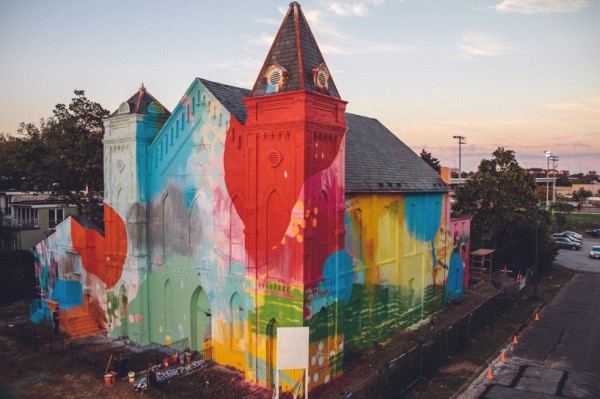
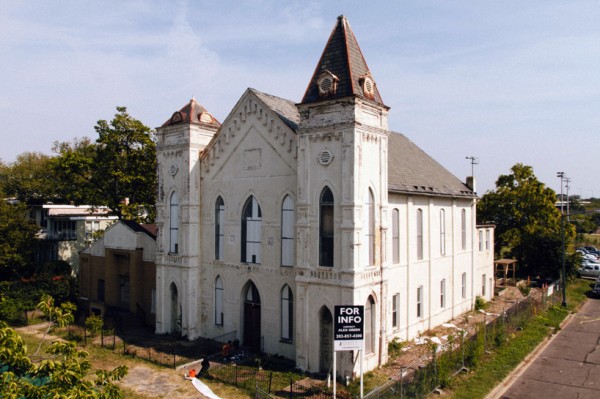
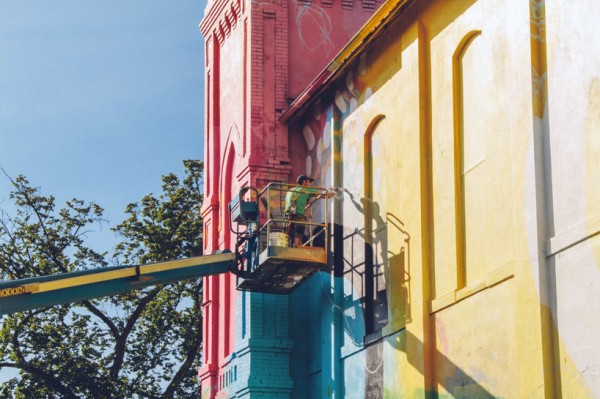
The Abandoned Former Friendship Baptist Church On 700 Delaware Ave SW Is Now Public Art

 the coffee philosopher