IMG_6556.JPG


IMG_6786.JPG


slide_367734_4204716_free

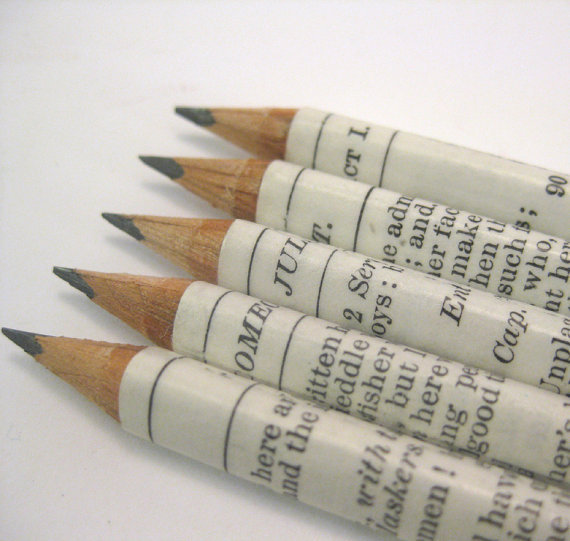
The D.C. Manual Of Style And Usage


Very important tool for the future when writing about this great city, courtesy of the Washington City Paper – The D.C. Manual of Style and Usage

Though I will still use the term ‘DMV’ to refer to the region.


ScienceAndInvention_2402


tow_1940summer

Les Fêtes De l’Hymen Et De l’Amour Ou Les Dieux d’Égypte


lesfetes_banner_text_EditThis was my first time back to see the Opera Lafayette in five years. Probably because it’s been five years since they were offering really cheap tickets (for their twentieth anniversary, they offered twenty dollar tickets; five years ago, for their fifteenth anniversary there were, you guessed it, fifteen dollar tickets; hopefully, I can go back before their twenty-fifth anniversary).

In this eighteenth century opera-ballet by Jean-Philippe Rameau, the word ‘pleasures’ (plaisirs) kept coming up. ‘Pleasure’ was even a character in the slightly connected tableaus that made up the work. Pleasure, really, is what it’s all about. The music, the plots (such as they are) are all about sensuous, though rarely actively erotic, pleasures. It’s like a massive, pleasure generating machine. You can almost see elegantly dressed figures in mid-eighteenth century garb walking about an immaculate garden discussing the pleasure of love and poetry and music and dance.

A classical Indian dance troupe was incorporated into the work and it was absolutely seamless. It blended with the faint orientalism of the work and, unless you already knew, the average viewer would not have guessed that this wasn’t a regular part of any production of the work.

Six dancers played ‘water’ or, to be more specific, the Nile River. Even when they were not the focus, they were also moving in an undulating fashion to represent their liquid nature and their biggest solo dance was the highlight of the show, but later, some contemporary, hip hop style dancing was briefly thrown. While it put a smile on my face, it also took me out of the piece. I was no longer sitting in a bower next a French noblewoman, watching Rameau’s latest piece, but something modern staged for me in Washington, DC.

Anyway, go see it if you can. And while I’m not about to place Rameau above Lully, I do now count myself a fan.

‘The Finite Canvass’ By Brit Mandelo & ‘Swift, Brutal Retaliation’ By Meghan McCarron


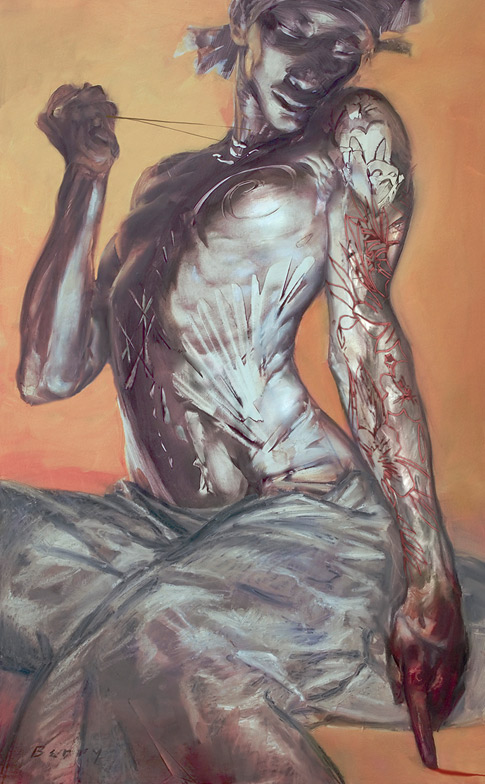
full_finitecanvasI read the later the other day but the first, I read some time ago, but just never got around to marking my thoughts. They were both nominated for Nebula Awards for best short story, which is how I came across them.

The first one is traditional sci-fi taking place in a wonderfully and economically crafted world and is basically a two person show between two people involved in organized crime groups (‘Syndicates’). One is a doctor who crossed them and is now banished to a climate change ravaged Earth and the other is an assassin. Both are women. In a variation on the idea of yakuza tattoos, the hitwoman has scars crafted onto her body to memorialize each assassination. Her final scar, done while on the run after her Syndicate was taken down by law enforcement, is to honor her lover, the man who sold their Syndicate out to law enforcement. She loved him and she wants him well remembered and she tells the tale while the doctor carefully cuts her and ensures that they will form scars. Yada yada. The mob killer is herself killed and the doctor cuts herself scars to remember her. Despire the ‘yada yada’ it’s a gripping little read. It’s available for free on Tor.com, so don’t be shy.

The second one is also available on Tor.com and it’s really a psychological ghost story told from the limited perspectives of two sisters – one on the edge of puberty and the other a little younger – in the days immediately after the death of their older brother by leukemia. His ghost haunts the two girls and causes the household tension to escalate. Oh, and the father is a cruel minded alcoholic and the mother self-medicates herself with prescription drugs. And the dead brother/son… well, it sounds like he was his father’s son, which is to say, a cruel little cuss. The ghost seems to pressure the girls into an escalating series of cruel pranks and retributions (it’s in the title: swift, brutal retaliation) and, during the final one, the ghost of the brother, who had already been engaging in some poltergeist-y destruction, starts smashing dishes and causing all sorts of chaos at dinner. And then it ends. No letdown, no satisfying conclusion – which is satisfying in its own way, because their is no real hope of one from those parents and because it is in keeping with the title. This story is about familial destruction, not happy endings.

Mary Szybist At The Hill Center


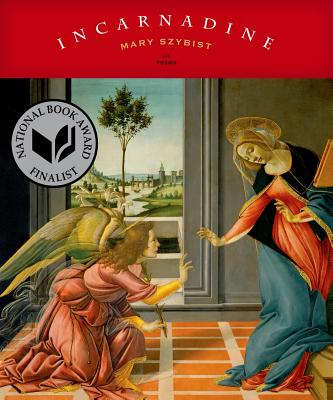
9781555976354Ron Charles, the Washington Post book editor, remains a good, if somewhat charmless host for these conversations with poets at the Hill Center. I’d seen Edward Hirsch earlier in the year and I’ll gladly see more in this series.

Szybist was given more opportunities to read her poems than Hirsch was and she has a wonderful voice for reading her own poems, emphasizing their gem-like (though not precious) qualities. She really is an amazing writer of poems. And though Incarnadine is a clear whole – with the theme of the Annunciation tying everything together – it’s best to be read slowly, one poem at time, over the course of a week or more. Slow reading, as it were. Their lapidary nature demands a gentle pace. When I tried to read them too quickly, I almost felt as if I were suffering from eye strain. Charles made a wonderful point when he compared her very carefully poetic style (this sounds bad; it sounds precious; but it’s really not at all) to John Donne and the Metaphysical Poets. Donne is especially relevant because of the deeply religious – the deeply Catholic – nature of her writing, despite having rather suddenly lost her faith as an adolescent (though, when I asked, she admitted that she still sometimes goes to Mass with her husband). Dickinson, too. Unlike Linda Pastan, Szambist does have that erotic, lapidary quality of Dickinson (though is less elliptical).

In addition to writing for slow reading, she spoke slowly and carefully in response to questions. Almost tentative. Which I can relate to (it’s something I can tend to do and it frustrates the heck out of my wife).

If I have a complaint about the collection, and I am not sure that I do, it is that it is almost but not quite a concept book. The ones that break from the concept, such as the gentle love poem (after a fashion) to an (the) octopus, are wonderful, but why not make the whole book so closely interwoven as ninety percent of it already is?

In any case, a new (to me) poet has not so affected me since I read Fanny Howe (and the two are connected by their sometimes diffident but also deeply ingrained Catholicism). So… two thumbs up?


IMG_6556.JPG